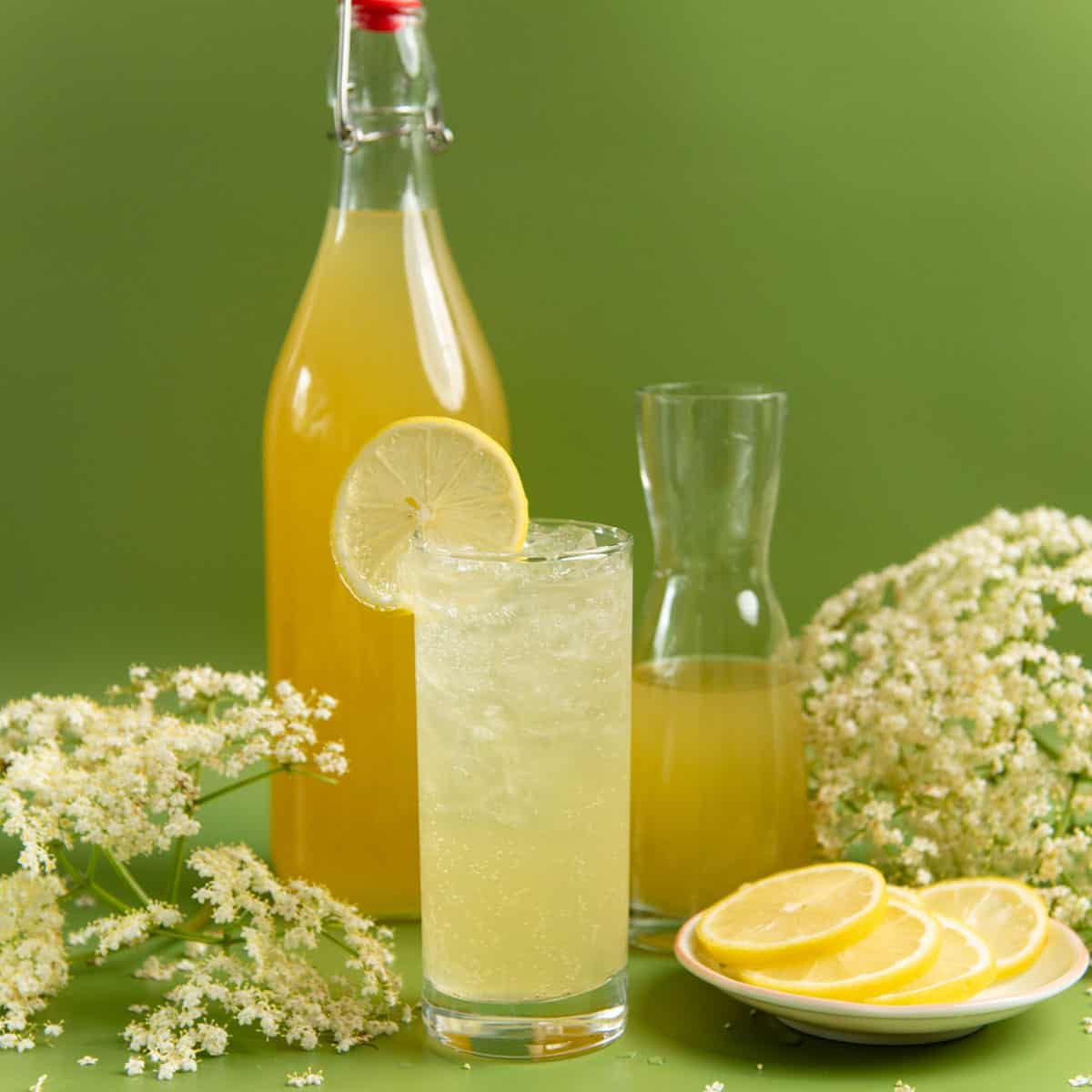
Elderflower Cordial (Elderflower Syrup)
Servings: 34 servings (approximately ¼ cup)
Calories: 142kcal
Incomparably delicious! This syrup is sweet, floral, vegetal, musky, and slightly citrusy, and you can make the most interesting cocktails, mocktails, sodas etc. with it! So much cheaper to make than store-bought or St-Germain liqueur, and tastes fresher too. EASY - Super easy recipe. Make a big batch and enjoy it all summer-long!Makes about 2 L / 8 ½ cups
Print Recipe
Ingredients
- 15 - 20 elderflower clusters / heads about 150 - 200 g fresh elderflowers (you can use more for a stronger flavor)
- 1.25 kg white sugar 6 ¼ cups
- 1.5 liters water 6 ¼ cups
- 2 lemons zest only
- 2 tsp citric acid 1 tsp (extra if needed)
Instructions
- Pick the elderflower clusters preferably on a dry morning so that the pollen hasn't washed off in any rain.
- Pick clusters with freshly opened flowers, without any discoloration. The center of the clusters can contain some flower buds, but should be mostly bloomed flowers.
- Place the clusters in a large bowl. Gently shake them over another bowl or plate to make sure there are no bugs, while not losing any pollen.
- With a gentle touch, remove the flowers from the clusters into a heat-proof container or pot. It's OK to have some smaller stems attached, but avoid as many stems as you can, especially thick stems. Set aside until needed.15 - 20 elderflower clusters / heads
- Zest the lemon with a zester or peeler. Make sure to avoid the white pith to prevent any bitterness.2 lemons
- In a large pot, place the sugar and lemon peel.1.25 kg white sugar, 2 lemons
- Use the water to wash the leftover pollen in the bowls, and add it to the sugar mixture.1.5 liters water
- Heat the sugar water over medium - medium high heat. Stir to dissolve the sugar in the syrup.
- Bring the sugar syrup to a boil.
- Remove the pot from the heat and let it sit for a couple of minutes to let the bubbles subside.
- Pour the syrup over the elderflowers and stir to combine and ensure the elderflowers are completely submerged.
- Transfer the mixture into a container with an airtight lid, and place a piece of parchment paper on the surface of the syrup, so that the flowers stay submerged.
- Let the syrup cool down to room temperature and then transfer to the fridge.
- Let the blossoms infuse the syrup for a minimum of 12 hours, preferably 24 hours.
- Strain the syrup through a sieve and gently squeeze the flowers to release any excess syrup.
- Whisk in the 2 tsp citric acid (or less if you prefer). Taste and add the remaining amount of citric acid if you prefer a tangier elderflower cordial.2 tsp citric acid
- Transfer the syrup into jars or bottles.
- Store the syrup in the fridge for about 1 week. The syrup will last about 2 weeks if you added the full amount of citric acid (at least 2 tsp). Now you can use the syrup right away.
- To freeze the syrup - pour the syrup into wide-mouthed jars. Slightly narrow neck jars can also be used, but avoid syrup bottles. Make sure to leave about 1 inch of head space.
- Freeze the syrup in the jars without the lids. Make sure to keep it upright. Once the syrup is frozen (it may not fully harden due to the sugar content), place the lids back on the jars. This will prevent the jars from expanding and cracking.
Notes
Each elderflower cluster is about 6 - 7 inches wide, with about 80 - 100 g of flowers per cluster. Because clusters can vary widely in size, you can go by weight (g) measurements, if you're unsure.
Nutrition
Serving: 60mL | Calories: 142kcal | Carbohydrates: 37g | Fat: 0.1g | Sodium: 3mg | Potassium: 1mg | Sugar: 37g | Calcium: 2mg | Iron: 0.02mg