

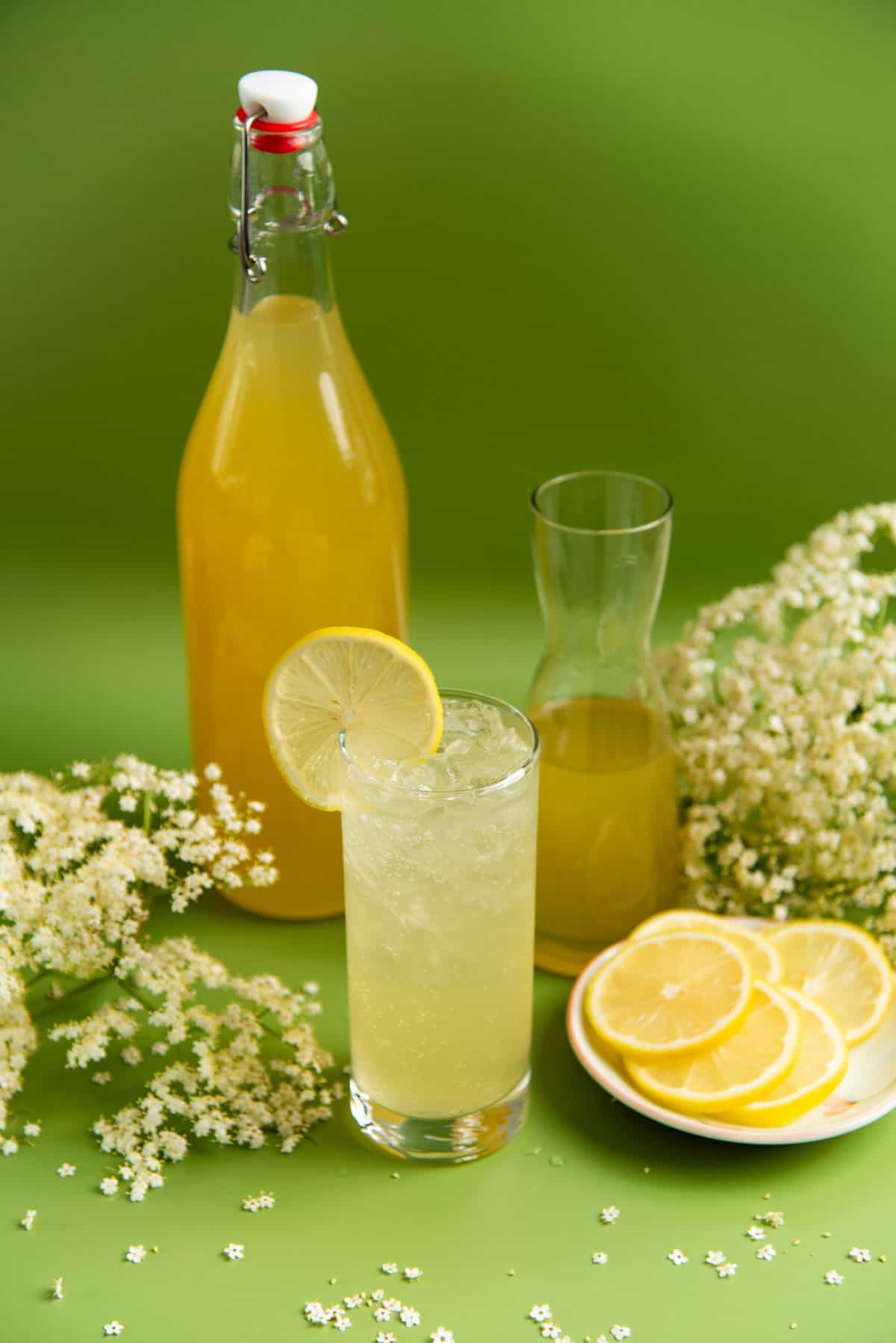
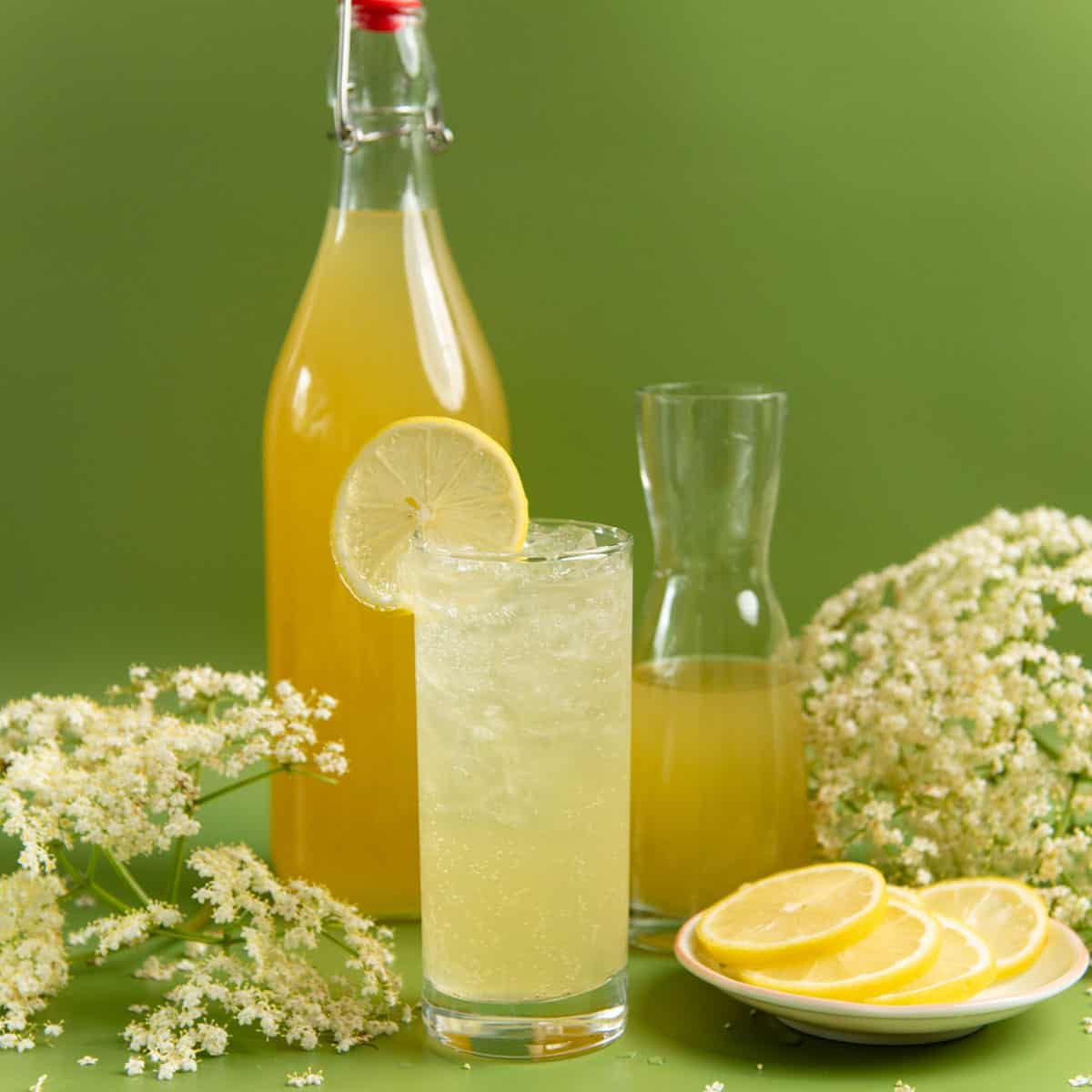
Elderflower cordial (syrup) is one of a kind! The earthy, floral, sweet, musky, slightly citrusy flavor and fragrance of elderflower blossoms make for one spectacular syrup to flavor all your drinks, and even desserts!
If you have access to fresh (or even dried) elderflowers, this homemade syrup is so much better than store-bought, and infinitely cheaper and better tasting than St-Germain liqueur too! Seriously, it’s not cloyingly sweet, tastes more fresh and floral, and you can store it for a loooong time too!
The first time I tasted elderflower cordial, it was all I could think about until I got my hands on a bottle! This was years ago while we were still living in the US.
I remember looking everywhere for elderflowers, and even trying to buy dried elderflowers from the market. But the dried flowers were so expensive. So, I just kept using the store-bought syrup.
When we moved to Canada, I thought it might be even harder to find elderflower cordial or syrup. Except now, we have TWO giant elderberry bushes right in our backyard! And I can harvest the flowers every spring to make a big batch of this elderflower cordial!
This homemade elderflower cordial is so much better than store-bought too! It tastes so incredibly fresh and floral, and less sweet.
Why this recipe works

- I give lots of tips on how to get the best taste and most flavor from your elderflowers to make this delicious syrup!
- You don’t have to use citric acid, but the citric acid adds acidity to draw out more flavor from the flowers.
- SO versatile. You can use it to make mocktails or cocktails, and give these drinks such a unique flavor profile!
- Elderflower syrup and elderflower liqueur (St Germain liqueur) are super expensive! This homemade version is cheaper AND tastes better. That’s a win-win.
- Not as sweet as store-bought syrup or cordial. Instead, it highlights the earthy, floral flavor of the blossoms.
What are elderflowers?
Elderflowers are blooms on the elderberry tree or shrub. There are two types of elder trees;
- Sambucus canadensis, found in North America. Also known as common elderberry.
- Sambucus nigra, found in Europe and the Middle East.
Both species produce the same flower and berries that have huge culinary and medicinal value. The flowers are small, cream colored, and have five petals.
They grow in large umbrella-like clusters called umbels. Usually, a cluster can be about 5 – 6 inches, but my elderberry shrub grows clusters that are even bigger!
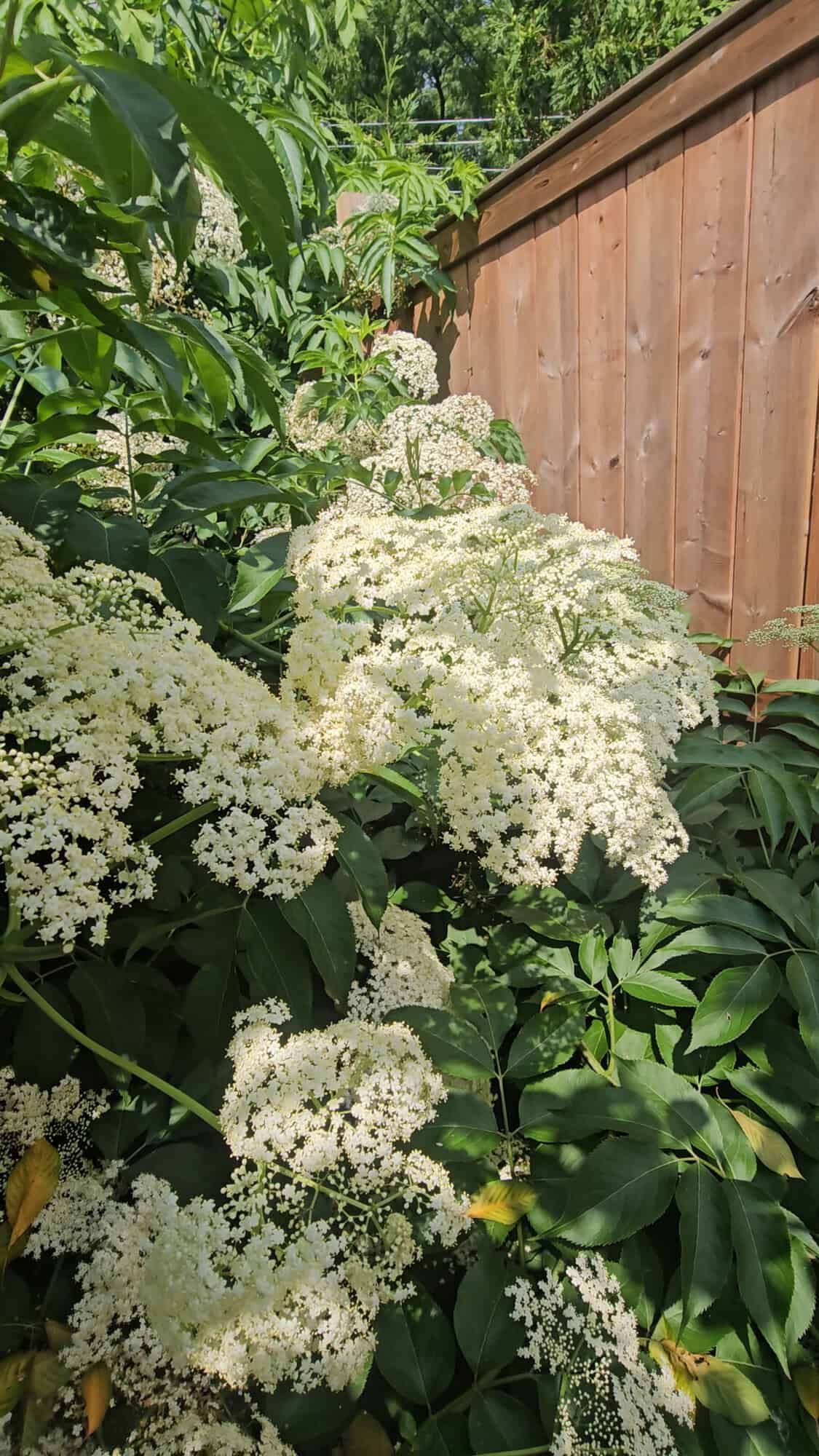
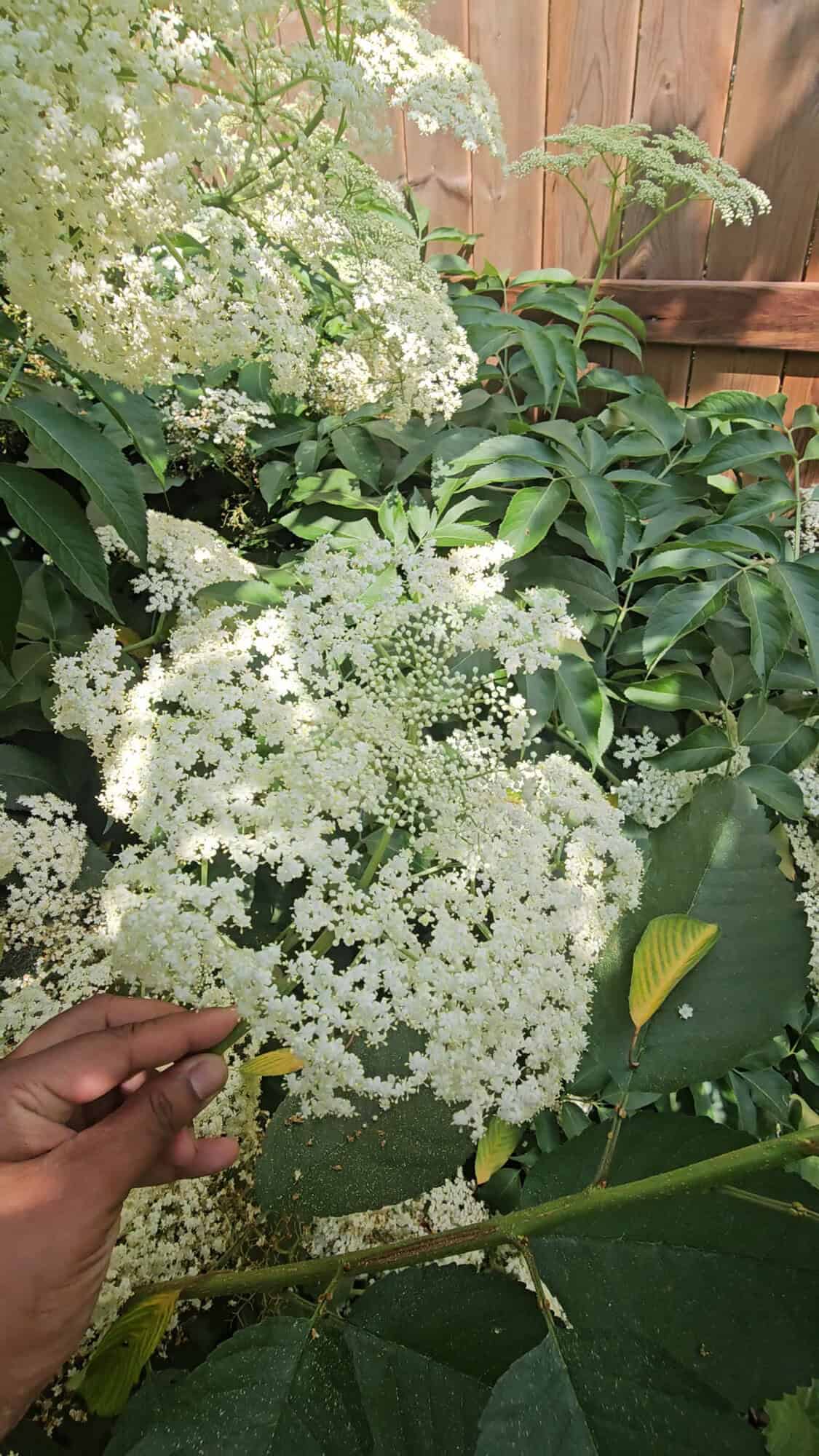
The stalks, leaves, stems, and unripe berries are toxic. But the flowers and ripe berries are very valuable! The berries are perfectly safe to consume once cooked, and are delicious as a syrup, jam / jelly, or in pies!
The flowers have a unique floral, grassy, musky flavor, and can be used to make syrups and to add more flavor to jams and jellies. The berries are rich in antioxidants and vitamin C too.
Ingredients you’ll need
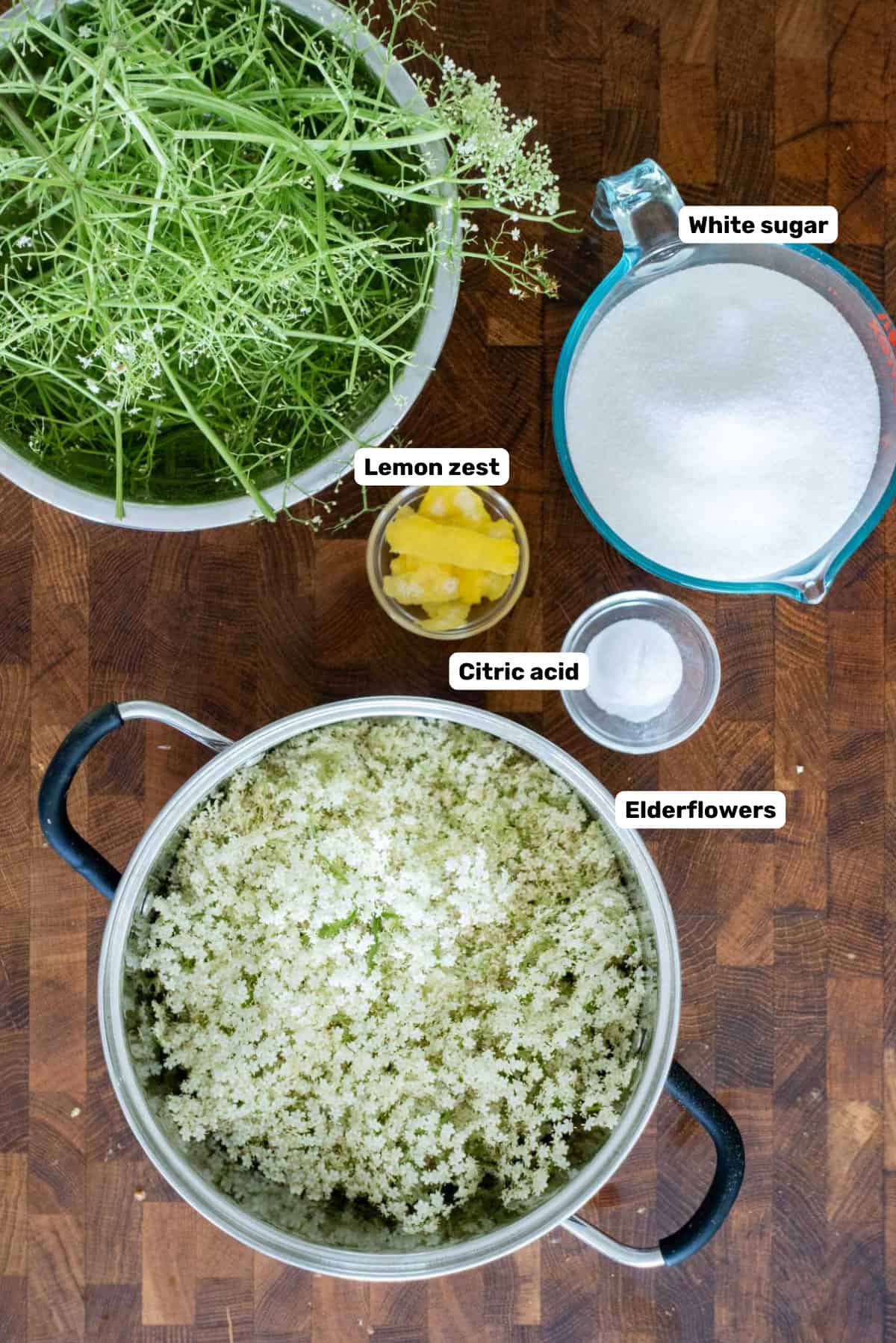
- Freshly picked elderflower clusters (umbels)
- Sugar
- Lemon peel
- Citric acid (optional, but recommended)
Why citric acid is “optional but recommended”?
Elderflowers naturally have citrus notes in their flavor, which is why they are such a great pairing with lemon. However, lemon has a flavor of its own, and adding too much can overpower the floral, grassy flavor of elderflower.
However, citric acid simply adds acidity and brightness to the syrup without altering its flavor. It can also help to preserve the syrup. However, you will need to add about 2 – 4 tsp per gallon (~ 3.75 liters) for it to act as a preservative.
How big is a “cluster” of elderflowers or an elderflower head?
There’s really no specific size for a cluster. It can range from 2 – 12 inches! In general, it can be about 5 – 6 inches. Most recipes indicate how many “heads” you need to make the syrup, but with such a large discrepancy in size, it’s hard to know if you’re using enough.
So, in this recipe, I’m going to make it SUPER simple to follow.
- 1 head or cluster of elderflowers = about 6 – 7 inches in diameter.
- 1 head or cluster of elderflowers = about 6 – 10 g of flowers (without stems)
So, if your elderberry shrub has exceptionally large clusters (like mine), you can use fewer “heads”.

Tips for picking elderflowers
- Elderflowers bloom in late spring to early summer. I wanted to make sure that I was keeping enough of the flowers to turn into berries which I can harvest later in the year.
- If you’re lucky to have elderberry bushes in your yard, or a friend’s yard, awesome! However, you can also forage for these flowers. We have elderberry bushes in a nearby park and nature trails.
- Avoid using flowers from elderberry bushes that are growing by the roadside. These could be covered in exhaust fumes and dirt.
- These flowers do have a short lifespan, so it’s important to pick them at the right stage. They are tiny white buds at the start, and bloom into tiny 5 petaled flowers, and quickly start to turn brown as they’re pollinated or wither. The browned flowers won’t have as much flavor as the flowers that are in full bloom, since the pollen also adds flavor to the syrup!
- Choose clusters that are in full bloom, OR mostly in full bloom with some tiny buds left in the center. Use them immediately to make the syrup, OR place them carefully in a vase with water, so they don’t wilt.
- It’s best to pick flowers mid to late morning, as most buds will be freshly bloomed. It’ll be a bonus if it’s on a dry morning, but living in Ottawa, we do get rain fairly often in spring, so I’ll pick the flowers in the morning even if it had rained. Although, rain can wash away some of the pollen.
- The yellow pollen powder contributes to the flavor AND color of the syrup! So, it’s crucial not to shake off, or wash off the pollen. Cut the flower clusters carefully using scissors, so you’re not disturbing the pollen. Place the clusters in a large bowl, so that the pollen will collect in the bowl if it falls off, and you can still use it in the syrup.
- I have both types of elderberry shrubs in my garden (common elderberry and European elderberry), and they both will work in this recipe!
How to make elderflower syrup (step by step overview)
Step 1 – Carefully pick the flowers
Use scissors to carefully snip the elderflower heads, and place them in a large bowl or container. The pollen can collect in this container. Being able to wash the pollen into the sugar later will also be beneficial.
Make sure to harvest the flowers before noon, so that you can pick freshly bloomed flowers that will have the most flavor and fragrance. You should make the syrup immediately after to preserve the flavor.
Step 2 – Prepare the flowers
Gently shake the flowers over a large plate or bowl. This is to remove any bugs, but to prevent any pollen from going to waste.
Do not wash the flowers or dunk them in water, as this will remove the pollen.
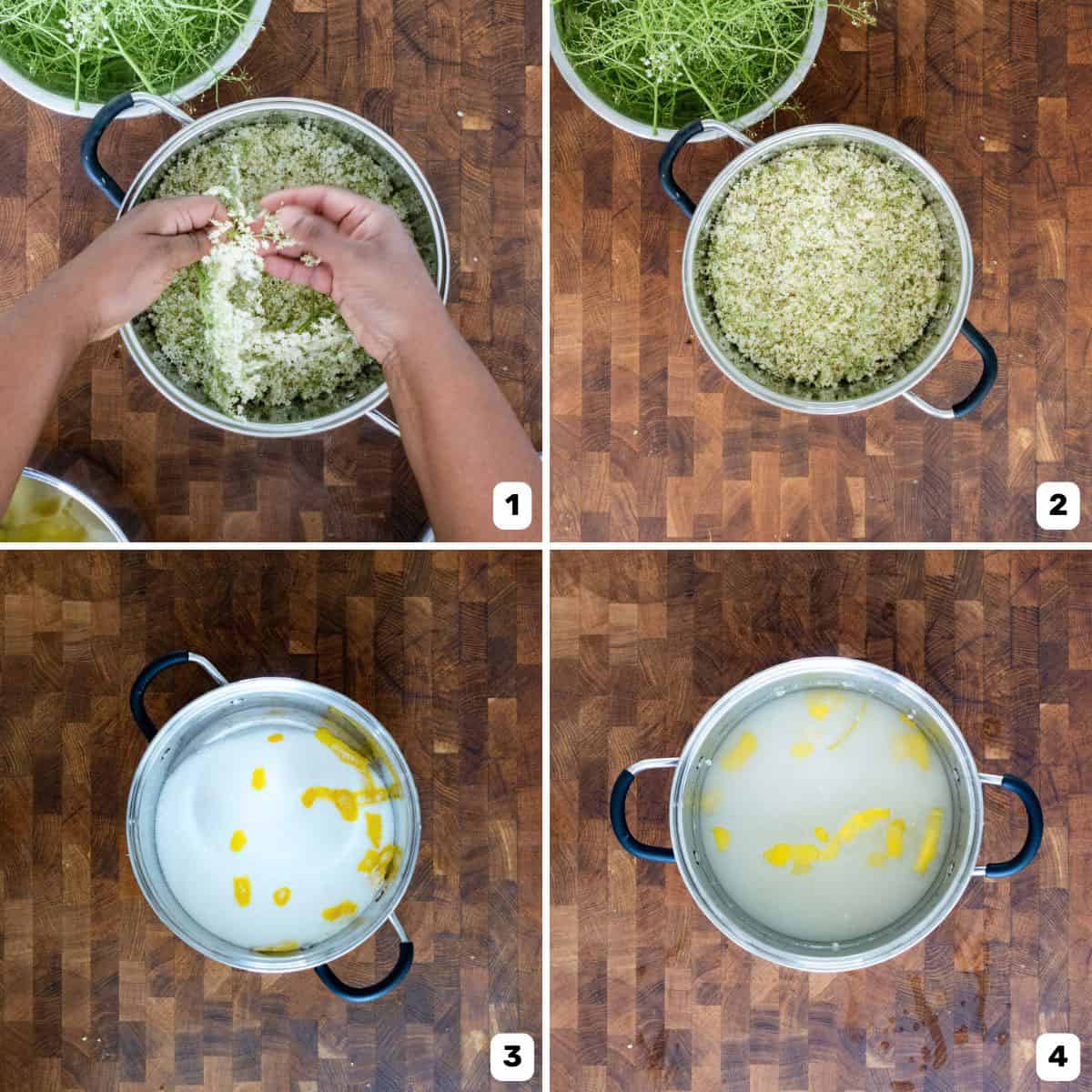
With a light touch, remove the flowers from the stems and place them in a heat-proof container or bowl (images 1 – 2). Avoid as many of the stems as possible, but just a few being included is OK.
Step 3 – Make the sugar syrup
Grate or peel the zest of 2 lemons. Make sure not to include the white pith, as this will add bitterness. Place the zest, sugar, and water in a large saucepan (images 3 – 4).
Heat over medium heat, while stirring to melt the sugar. Bring the sugar syrup to a boil.
Step 4 – Infuse the syrup
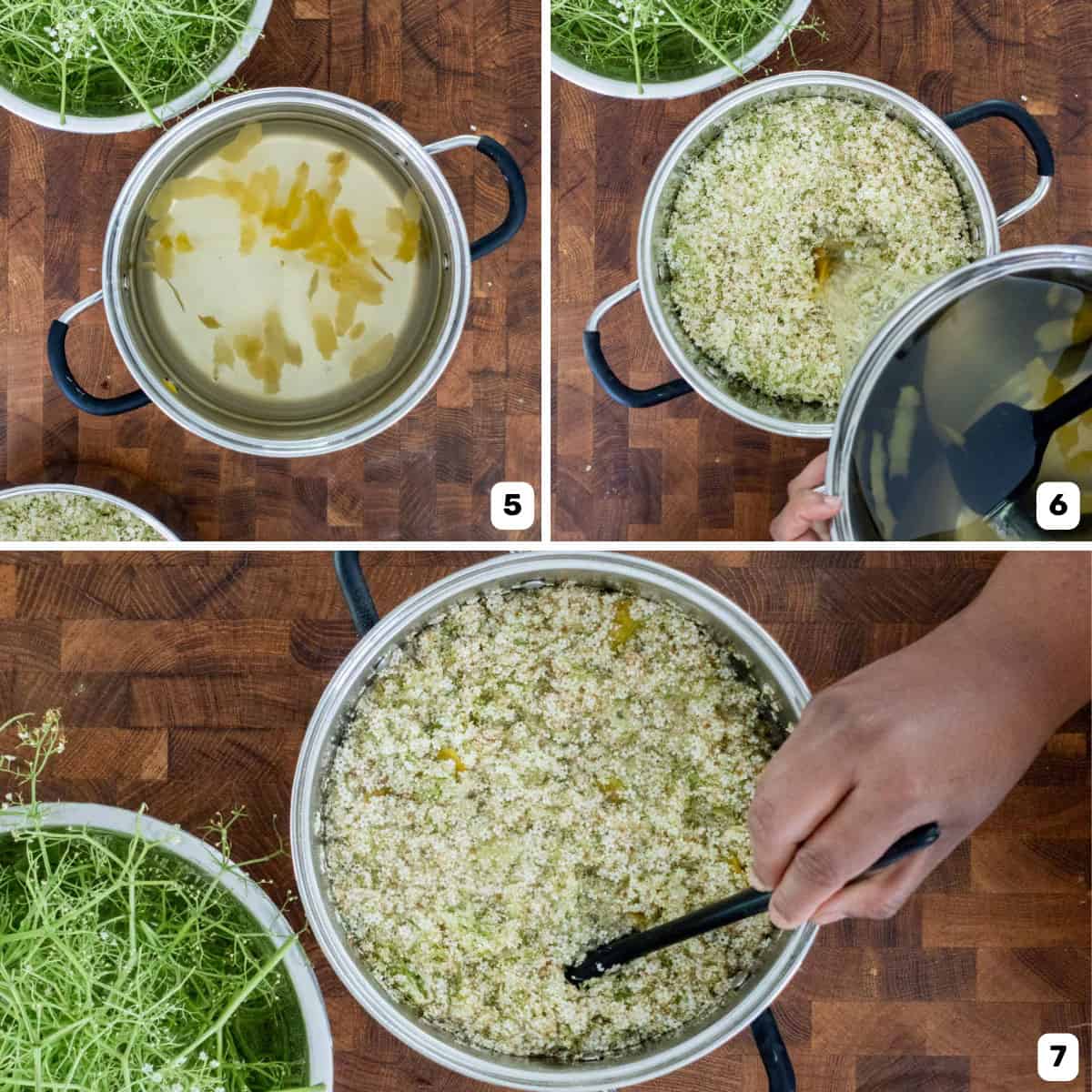
When the syrup comes to a boil, let it sit for a couple of minutes to bring down the heat slightly (image 5). Pour the syrup over the elderflowers (or stir the elderflowers into the syrup), and stir to combine (images 6 – 7). The heat of the syrup will help sanitize the flowers as well.
Place a parchment paper on top of the syrup to make sure the flowers are fully submerged in the syrup. Let the syrup cool down to room temperature. Then let it infuse in the fridge for at least 12 hours, but preferably 24 hours.
Step 5 – Strain
After a minimum of 12 hours of infusing, the syrup is ready to be strained. Pass the flowers and syrup through a fine sieve. Gently press the flowers to release any excess syrup absorbed by the flowers. You don’t need to squeeze them until they’re dry, but a gentle squeeze is recommended.
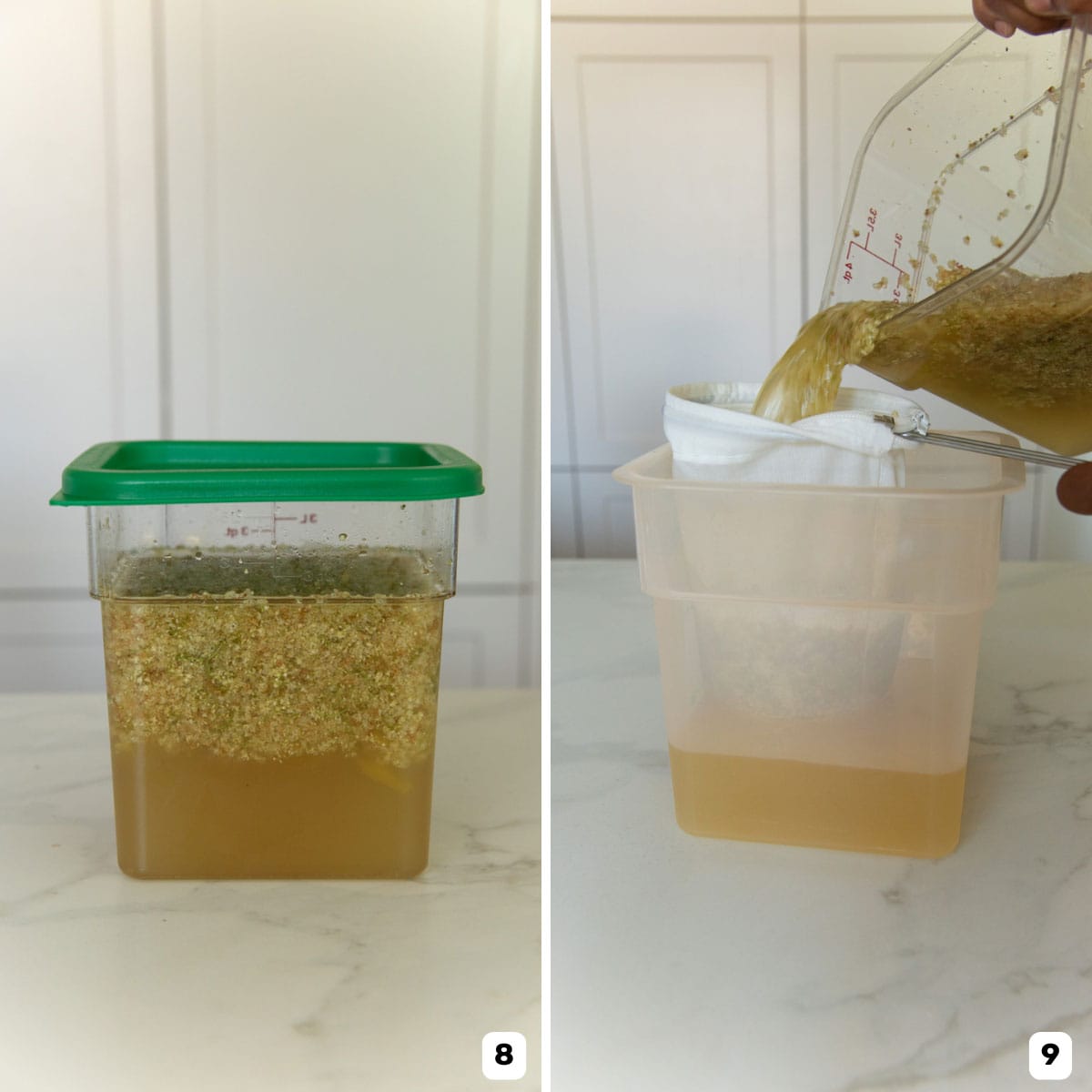
The syrup will be a pale yellow color, and be cloudy. The cloudy mixture is due to the pollen in the syrup, this is normal! Stir in the citric acid. Add half the amount first and taste the syrup. Add any amount of the remaining citric acid to get the taste you like, if you need to.
If you prefer a clear syrup, then heat the strained syrup until it’s hot, but not boiling, and pass it through an orlon filter (a specialized filter used for maple syrup). This will take much longer, so I don’t bother with this!
Step 6 – Storage
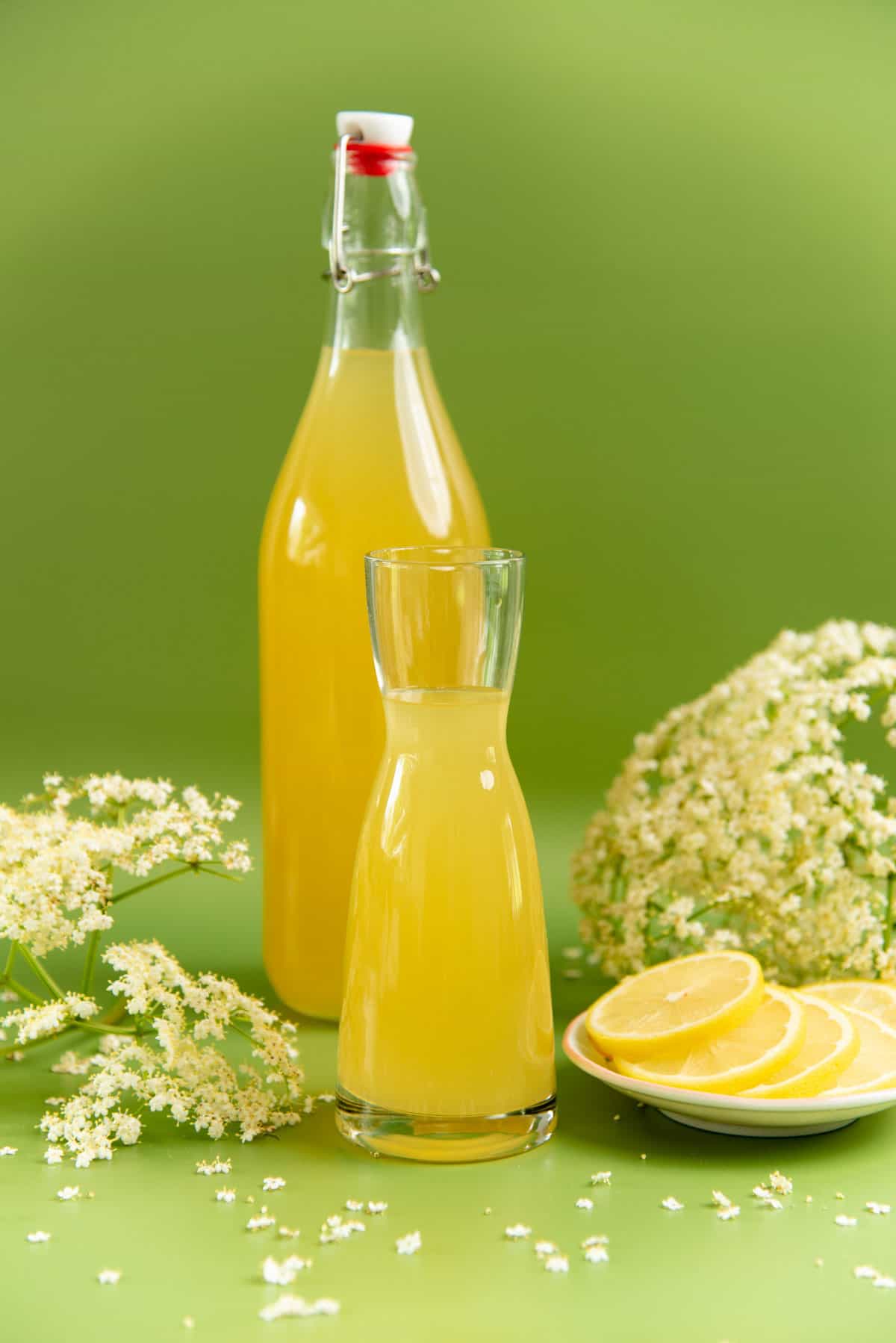
Place the syrup in clean bottles. I like to wash the bottles with boiling water before adding the syrup, just as a quick sanitizing step. You can sanitize the bottles or jars however you like.
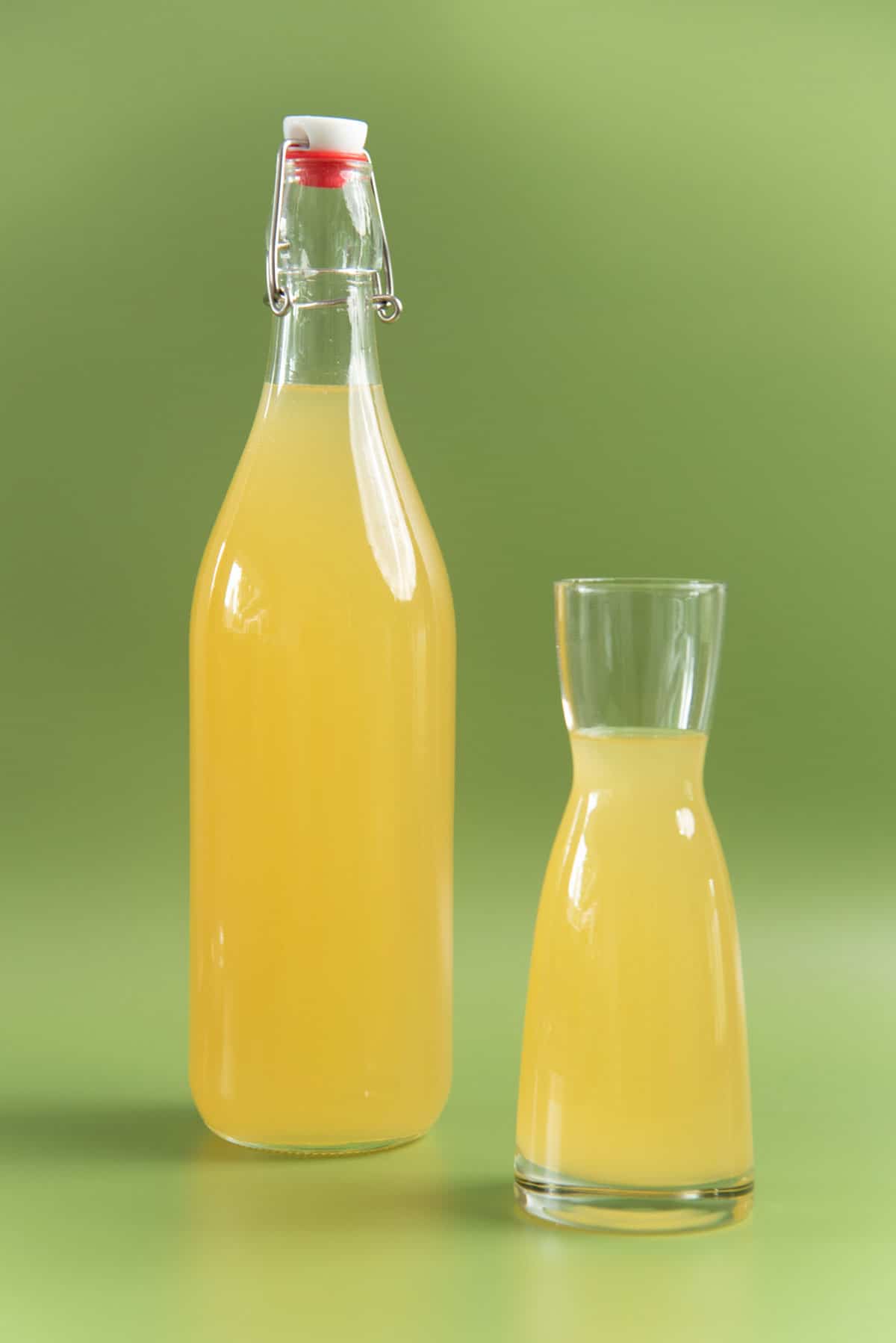
Storage information
Fridge
Make sure the bottles and jars have airtight lids. You can store the syrup in the fridge for about 2 weeks, if you use the full amount of citric acid. Otherwise, the syrup will last for about 1 week in the fridge.
Freezer
Place the syrup in wide neck jars and freeze these jars WITHOUT the lid. Then once the syrup is frozen, screw on the lid. This lasts in the freezer for well over a year for me! Provided you store it with an airtight lid that prevents it from absorbing any freezer smells and such.
Because of the high sugar content, this syrup won’t fully freeze and will be fairly soft. But, you can still store it in silicone ice trays too!
I’m not very well versed with canning, so I cannot give any advice on canning this syrup. I prefer to freeze the syrup in smaller batches, so I can take out small portions as needed.
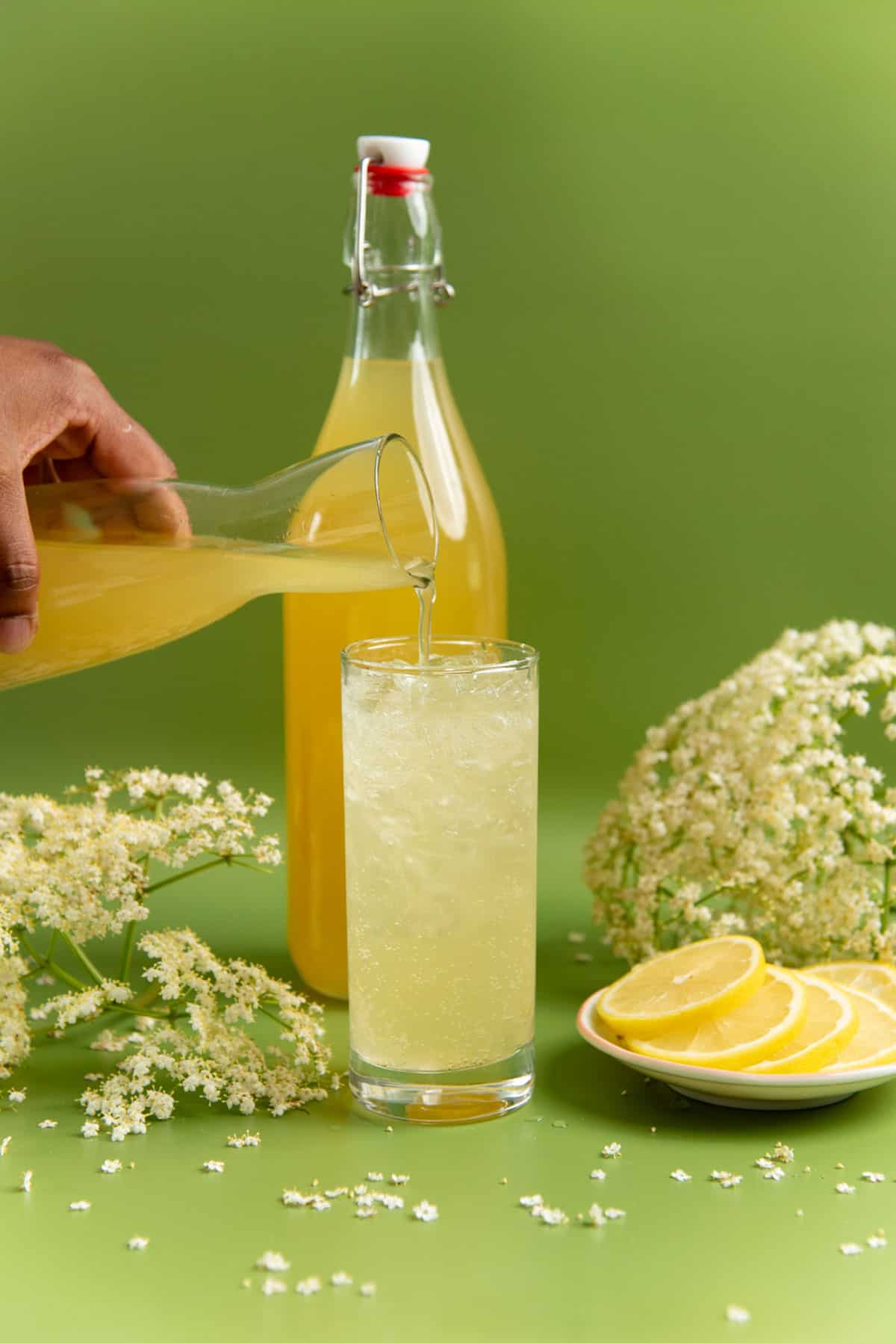
Elderflower cordial uses
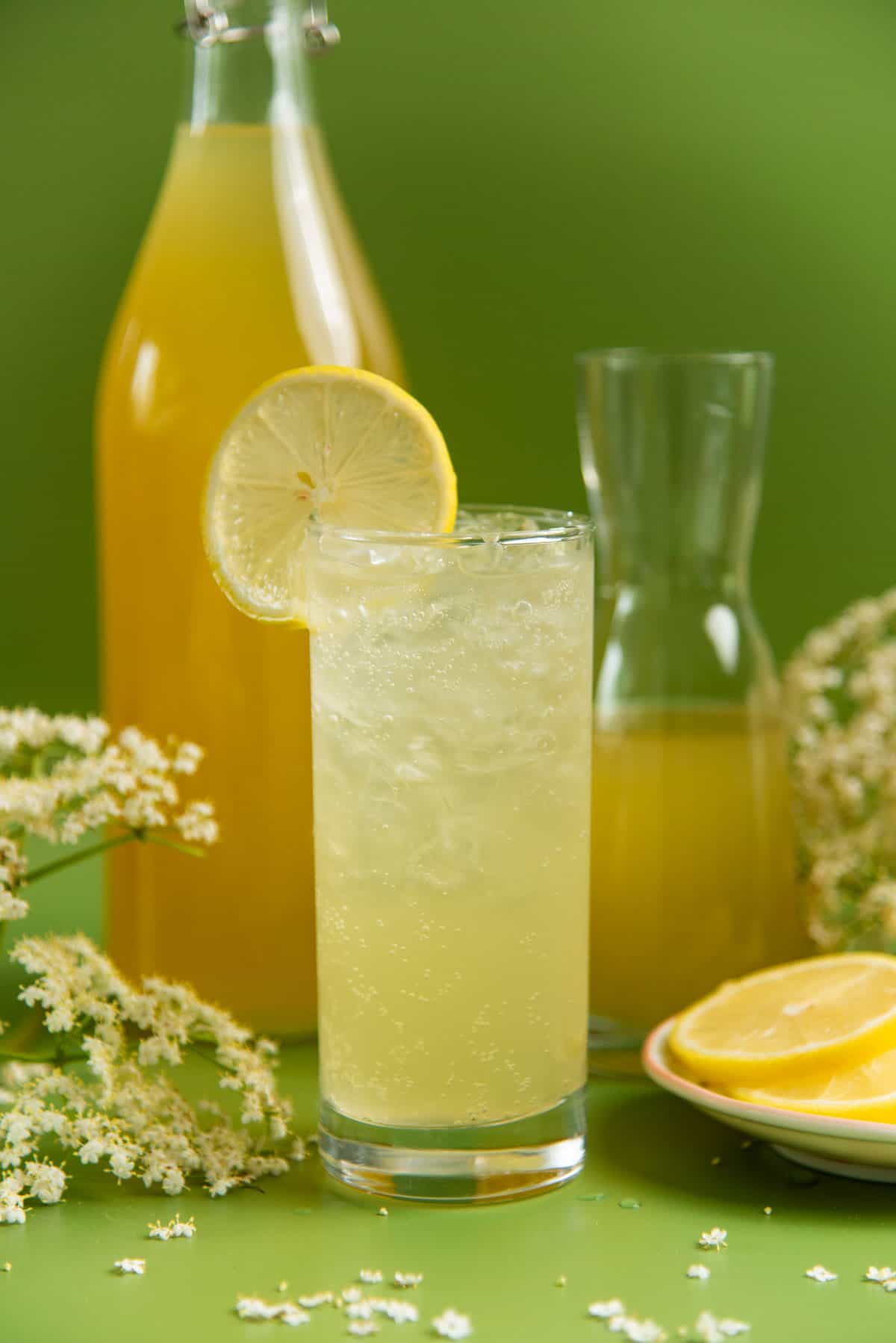
- Elderflower fizz / soda – Add this syrup to soda water to make a refreshing elderflower fizz.
- Flavor summer drinks and sodas – Elderflower pairs so well with many fruits, so you can use this syrup to sweeten ANY summer drink.
- Lemon + elderflower syrup = Elderflower lemonade
- Strawberry + elderflower syrup = Elderflower strawberry soda
- Peach + elderflower syrup = Peach elderflower soda
- Perfect to make elderflower cocktail too!
- Margarita – Use this elderflower syrup in place of simple syrup / agave.
- Lychee sangria – This recipe already uses elderflower syrup, since it complements the flavor of lychee so well.
- Elderflower gin cocktail – This gin and elderflower cocktail is a favorite of mine! Of course, my version of this is spectacular with color changing shimmery liqueur as well!
- Elderflower champagne – Champagne and elderflower are such a perfect pairing! Lovely way to celebrate special events too!
- Blueberry elderflower sour – A refreshing, fruity, delicious prosecco cocktail flavored with elderflower syrup.
- Drizzle this syrup (instead of simple syrup) over warm sponge cakes to add flavor and moisture.
- Sweeten lemonade with elderflower syrup and make lemon and elderflower popsicles! In fact, sweeten ANY fruit puree with this elderflower syrup and freeze the puree to make popsicles.
- Use this syrup to sweeten panna cotta to make vanilla elderflower panna cotta!
Recipe FAQs
What does elderflower cordial / syrup taste like?
Elderflowers have a very distinct but mellow flavor. It has sweet, musky, vegetal, and slightly citrusy flavor notes, and a strong floral fragrance that you can taste too!
The floral and musky flavors are similar to lychee, but with a stronger citrusy tang!
Can I make this cordial with dried elderflowers?
I haven’t tried to, but it’s possible. However, without the pollen in the dried flowers, the flavor will be more muted.
Is there a difference between elderflower syrup and elderflower cordial?
Not at all. Both are sugar syrups that are infused with elderflowers. In North America, this is called a syrup. In the UK (and many other parts of the world), this is called a cordial.
Can I make this with less sugar?
You can, but this will reduce the shelf-life (the high sugar amount helps to preserve the syrup).
If you prefer less sugar in your drinks, you can simply add less of the syrup to flavor your drink.
Recipe
Elderflower Cordial (Elderflower Syrup)
US based cup, teaspoon, tablespoon measurements. Weight measurements are recommended for accurate results whenever available.
Common Measurement ConversionsIngredients:
- 15 – 20 elderflower clusters / heads about 150 – 200 g fresh elderflowers (you can use more for a stronger flavor)
- 1.25 kg white sugar 6 ¼ cups
- 1.5 liters water 6 ¼ cups
- 2 lemons zest only
- 2 tsp citric acid 1 tsp (extra if needed)
Instructions:
- Pick the elderflower clusters preferably on a dry morning so that the pollen hasn't washed off in any rain.
- Pick clusters with freshly opened flowers, without any discoloration. The center of the clusters can contain some flower buds, but should be mostly bloomed flowers.
- Place the clusters in a large bowl. Gently shake them over another bowl or plate to make sure there are no bugs, while not losing any pollen.
- With a gentle touch, remove the flowers from the clusters into a heat-proof container or pot. It's OK to have some smaller stems attached, but avoid as many stems as you can, especially thick stems. Set aside until needed.15 – 20 elderflower clusters / heads
- Zest the lemon with a zester or peeler. Make sure to avoid the white pith to prevent any bitterness.2 lemons
- In a large pot, place the sugar and lemon peel.1.25 kg white sugar, 2 lemons
- Use the water to wash the leftover pollen in the bowls, and add it to the sugar mixture.1.5 liters water
- Heat the sugar water over medium – medium high heat. Stir to dissolve the sugar in the syrup.
- Bring the sugar syrup to a boil.
- Remove the pot from the heat and let it sit for a couple of minutes to let the bubbles subside.
- Pour the syrup over the elderflowers and stir to combine and ensure the elderflowers are completely submerged.
- Transfer the mixture into a container with an airtight lid, and place a piece of parchment paper on the surface of the syrup, so that the flowers stay submerged.
- Let the syrup cool down to room temperature and then transfer to the fridge.
- Let the blossoms infuse the syrup for a minimum of 12 hours, preferably 24 hours.
- Strain the syrup through a sieve and gently squeeze the flowers to release any excess syrup.
- Whisk in the 2 tsp citric acid (or less if you prefer). Taste and add the remaining amount of citric acid if you prefer a tangier elderflower cordial.2 tsp citric acid
- Transfer the syrup into jars or bottles.
- Store the syrup in the fridge for about 1 week. The syrup will last about 2 weeks if you added the full amount of citric acid (at least 2 tsp). Now you can use the syrup right away.
- To freeze the syrup – pour the syrup into wide-mouthed jars. Slightly narrow neck jars can also be used, but avoid syrup bottles. Make sure to leave about 1 inch of head space.
- Freeze the syrup in the jars without the lids. Make sure to keep it upright. Once the syrup is frozen (it may not fully harden due to the sugar content), place the lids back on the jars. This will prevent the jars from expanding and cracking.
Recipe Notes
Nutrition Information:
“This website provides approximate nutrition information for convenience and as a courtesy only. Nutrition data is gathered primarily from the USDA Food Composition Database, whenever available, or otherwise other online calculators.”











Leave a Reply