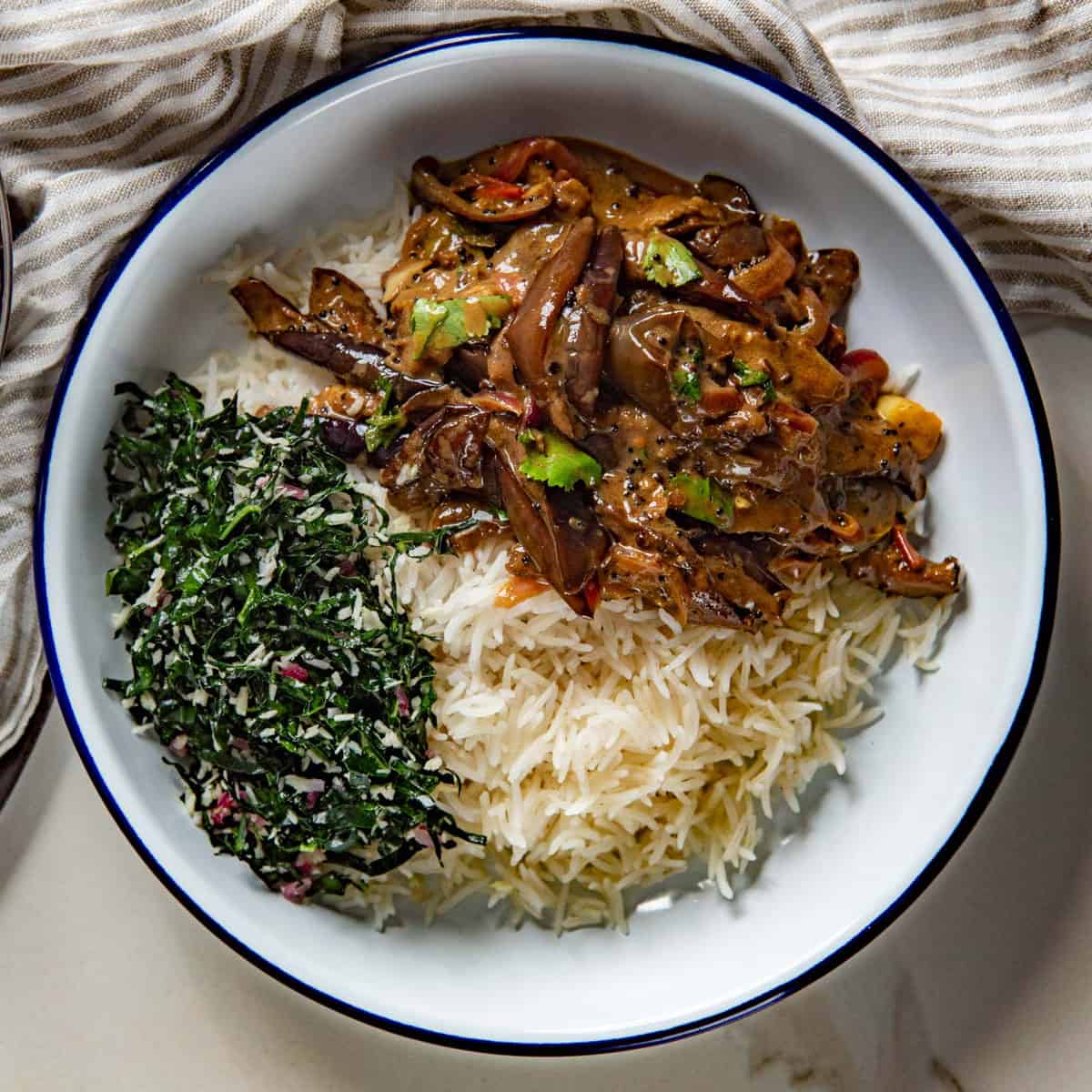
Sri Lankan Eggplant Curry (Brinjal Curry)
Servings: 6 people
Calories: 214kcal
This rich, aromatic, spicy, tangy Sri Lankan brinjal curry is a family classic! The eggplant is deep-fried for that authentic taste and texture, but you can pan-fry or roast it too. Vegan, gluten free, freezer-friendly, and perfect for meal-prepping! EASY - This curry is deceptively easy with rich, flavorful results! There is an extra step of deep-frying, so it does take a bit longer than a regular curry, but it comes together very easily after that.
Print Recipe
Ingredients
For the eggplants
- 1 kg eggplants see recipe notes
- ½ tsp turmeric
- 1 ½ tsp salt
- 1 ½ tsp sugar
- Oil for deep-frying
For tempering
- 3 tbsp neutral-flavored oil
- 2 tsp black mustard seeds
- 1 sprig curry leaves about 10 - 20 leaves
- 2 green chili peppers or serrano or jalapeno peppers, optional
For the curry
- 1 medium onion sliced, can be yellow or red onion
- 5 cloves garlic
- 1.5 inch cube ginger
- 1 medium tomato chopped (optional)
- 2 tsp curry powder
- ½ tsp turmeric
- 1 tsp cayenne pepper optional
- 1 ½ tsp tamarind concentrate
- ¾ cup water
- 1 cup coconut milk
- Salt to taste
- Cilantro to top
Instructions
Prepping the eggplant
- Cut the stems off of the eggplants. Then cut the eggplant into large pieces. With baby eggplants, I prefer to cut them into quarters. With larger eggplants, I cut them into 1 - 1 ½ inch strips, and cut each strip into 3 inch long pieces. These are approximate sizes.1 kg eggplants
- Make sure the skin is attached to each eggplant piece if you want the eggplant to keep their shape as they cook.
- Place the pieces in a large bowl or container. Add the salt, sugar, and turmeric and toss to evenly mix.½ tsp turmeric, 1 ½ tsp salt, 1 ½ tsp sugar
- Let the eggplant sit for about 30 - 60 minutes. This will draw out excess moisture and any bitterness in the eggplants.
- After 30 minutes, take a handful of the eggplant pieces and squeeze out excess moisture and place it in a separate bowl. Repeat with all of the eggplant pieces and discard the liquid.
- Heat enough oil in a large pot to deep fry or shallow fry the eggplant. Heat the oil to 375°F / 191°C.Oil
- Add the eggplant in small batches. It's crucial not to overcrowd the pan, especially since the eggplant does take a little longer to caramelize. If the pan is overcrowded, it will take even longer to caramelize.
- The eggplant can also be grilled on the stove or roasted in the oven (see recipe notes for instructions to do so), but the best and authentic flavor, and even coloring comes from deep-frying.
- Place the deep-fried eggplant in a colander lined with paper towels to absorb excess oil.
- Make sure the oil is reheated to 375°F / 191°C before adding a new batch into the oil (in order to prevent oily fried eggplant).
Preparing the other ingredients
- While the eggplant is sitting with the salt and sugar, prepare the remaining ingredients.
- Slice the onion.
- Either lightly crush the garlic and keep it whole, or slice it. You can use minced garlic as well, just be sure not to burn it while cooking.
- Peel the ginger and finely chop or slice it.
- Chop the tomato, if using.
- Split the chili peppers in half, if using.
Making the curry
- Once the eggplant is fried, you can start making the curry base.
- In a stainless steel pot, pour in the oil. Then heat over medium heat until the oil is hot.3 tbsp neutral-flavored oil
- Add the mustard seeds and move them around until they start to pop.2 tsp black mustard seeds
- Immediately add the curry leaves and green chili and sauté until the curry leaves pop and fry.1 sprig curry leaves, 2 green chili peppers
- Then, add the onion, garlic, and ginger, and sauté for 2 - 5 minutes until the onions start to soften.1 medium onion, 5 cloves garlic, 1.5 inch cube ginger
- Next, add the tomato, turmeric, cayenne pepper, and curry powder. Cook until the tomatoes soften.1 medium tomato, 2 tsp curry powder, ½ tsp turmeric, 1 tsp cayenne pepper
- Mix the tamarind concentrate with about ¼ cup of water. Add this to the curry base. If you’re not using tomatoes, you can add the tamarind with the curry powder.1 ½ tsp tamarind concentrate, 0.25 cup Water
- Bring the mixture to a boil, and let it simmer for about 2- 5 minutes to allow the spices to really blend together.
- Finally, stir in the coconut milk and water and bring it to a simmer. Taste and season with salt.0.5 cup Water, 1 cup coconut milk, Salt
- Now add the fried eggplant and stir to combine the eggplant with the coconut milk curry base.
- Bring the mixture to a simmer and place the lid on top and let the mixture simmer for about 5 - 10 minutes.
- You can add more water if needed, as the eggplant will absorb some of the curry sauce.
- Adjust the seasoning as needed (add more salt or tamarind as needed).
- If you used eggplant with no skin attached, the eggplant pieces will break down into the curry sauce. This is normal.
- Stir well.
- Sprinkle chopped cilantro on top, and serve with steamed rice while still hot.Cilantro
Notes
A note about eggplants
Grilling or roasting eggplant
Nutrition
Calories: 214kcal | Carbohydrates: 18g | Protein: 3g | Fat: 16g | Saturated Fat: 8g | Polyunsaturated Fat: 2g | Monounsaturated Fat: 5g | Trans Fat: 0.03g | Sodium: 644mg | Potassium: 594mg | Fiber: 7g | Sugar: 10g | Vitamin A: 356IU | Vitamin C: 11mg | Calcium: 42mg | Iron: 2mg