




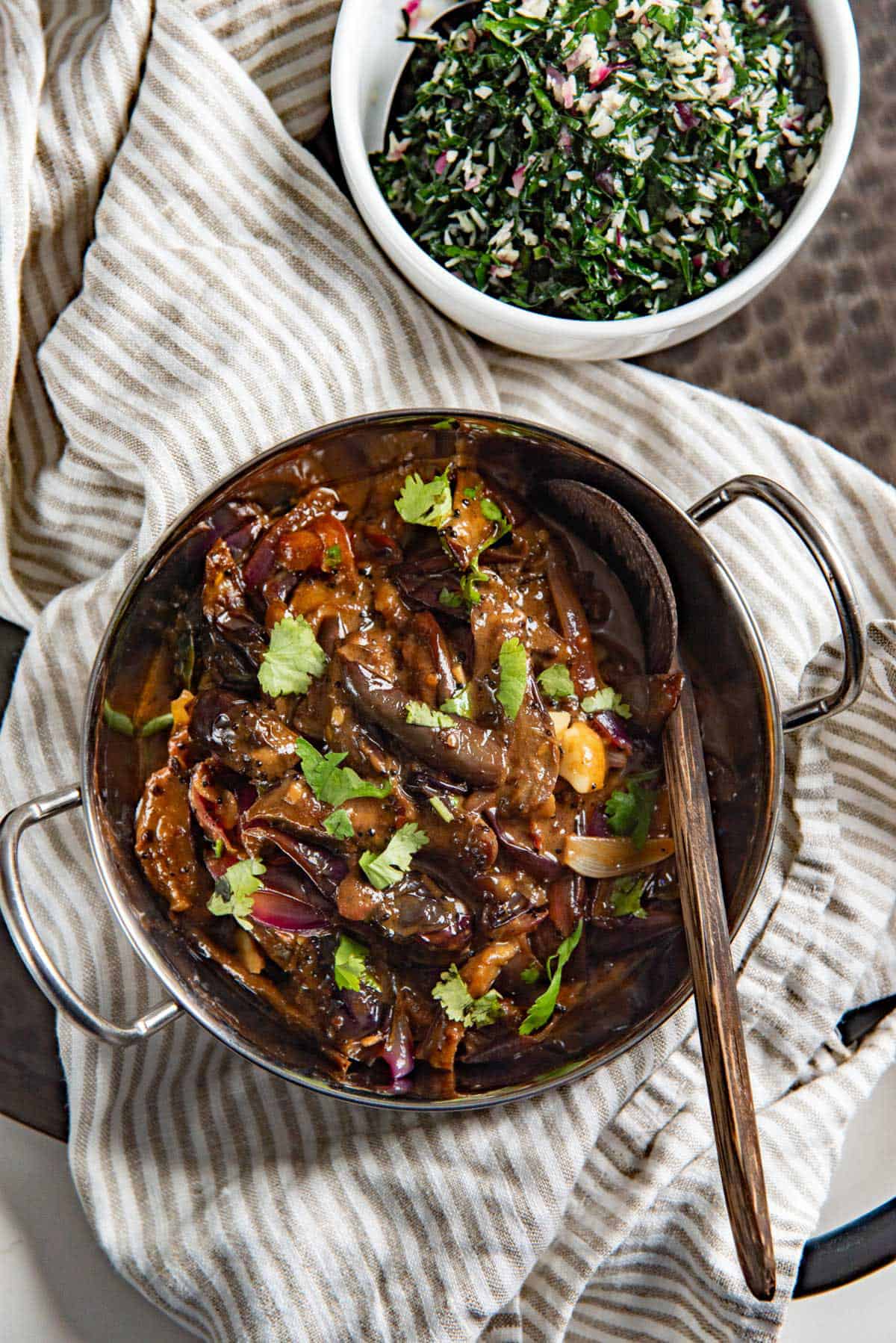
This brinjal curry is a time-tested, family classic from Sri Lanka, with a rich, complex, spicy, tangy flavor profile! I deep fry the eggplant for the most authentic South Asian eggplant curry, but also provide options to pan fry or grill or roast it too.
Tempering the spices (tadka) for the curry base yields incredible flavor, and I show how to keep the eggplant pieces intact with the skin, so you get ALL the taste and texture of this delicious vegan and gluten free curry! It’s super freezer-friendly and perfect for meal-prepping too.
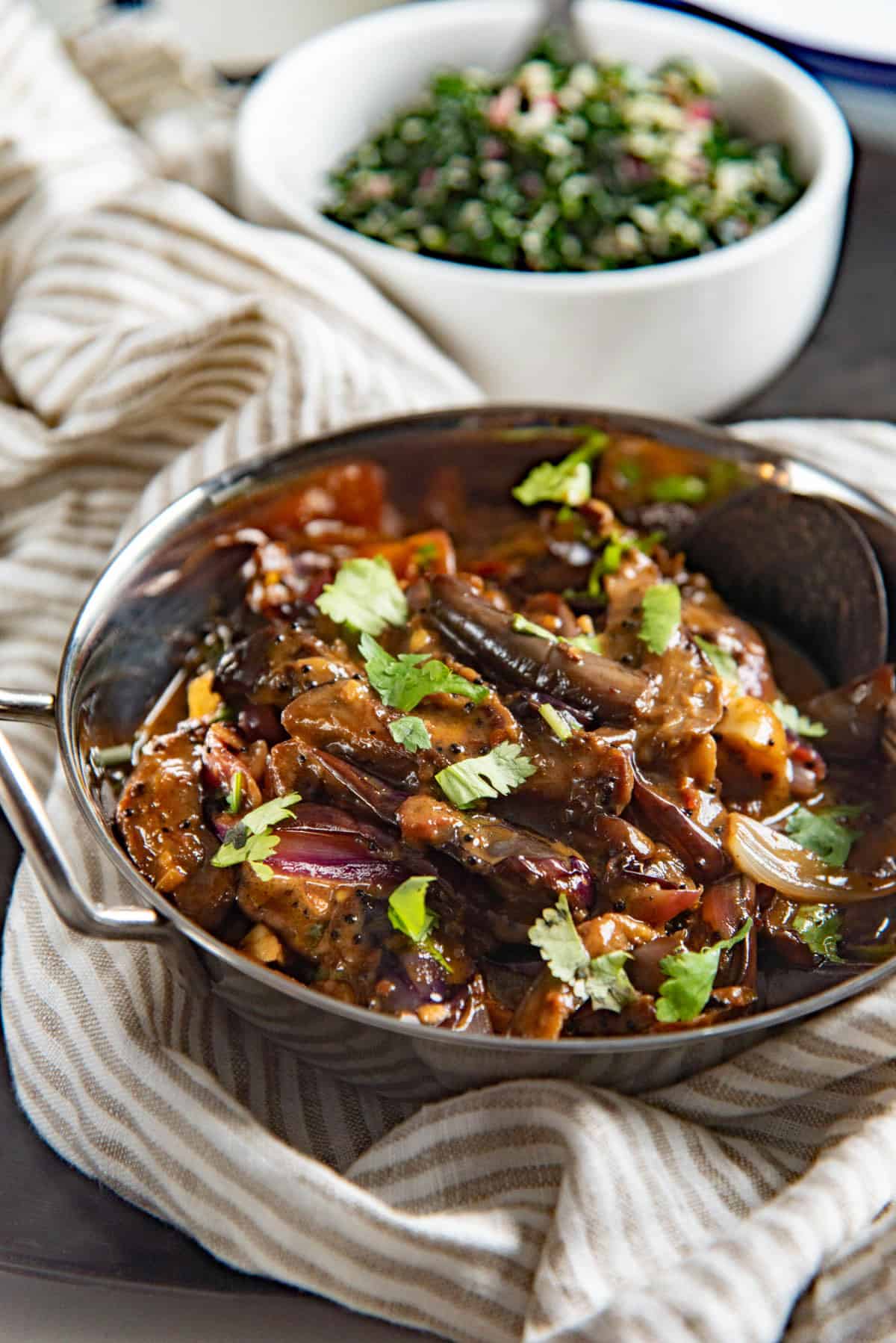
This is my absolute favorite way to eat eggplants, and it’s also one of my favorite curries ever! I don’t know why it’s taken my this long to share this recipe on the blog, because I’ve been eating and making this for as long as I can remember, and it’s one of more common vegan curries we ate, growing up.
However, it wasn’t until I was quite a bit older that I realized that this curry was similar to Indian brinjal curry as well. The main difference between the two is the texture of the curry. I grew up with eggplant curry where the eggplant pieces stayed intact in the curry.
But the Indian brinjal curries I’ve had, usually had the eggplants semi-pureed in the curry sauce.
Both versions are delicious! But, I do prefer the Sri Lankan eggplant curry where the eggplant pieces keep their shape, and are coated with and absorb all the robust curry flavors!
Why this authentic recipe works

- This recipe is a family classic! Made by both of my grandmothers, then my mother, and now myself.
- I show how to keep the eggplant pieces intact without disintegrating, so you get all the flavor AND the texture!
- It’s also very simple to adjust the recipe to make the eggplant more chunky too.
- I explain the types of eggplant you can use for this recipe to get the texture you prefer, and how to increase the flavor of the curry too!
- I share the authentic cooking method to get the best overall flavor, but also how to make the recipe healthier, if you prefer.
- The flavors are rich, complex, spicy, with the perfect amount of tanginess too!
- Vegan and gluten free!
- Perfect as part of a special meal, but it’s also super freezer-friendly, so great for meal-prepping too.
What is brinjal?
This vegetable has a few different names! It’s called eggplant in North America, because the young white fruit resembled an egg when it was first discovered. Aubergine curry is the name for this dish in the UK and other European countries, as well as in Australia and New Zealand.
But in South Asia and the Indian subcontinent, it’s called brinjal. And in Sri Lanka, this curry is also called “wambatu curry” in Sinhalese.
There are also many different varieties of eggplant out there, but not all of them can be used in this recipe.
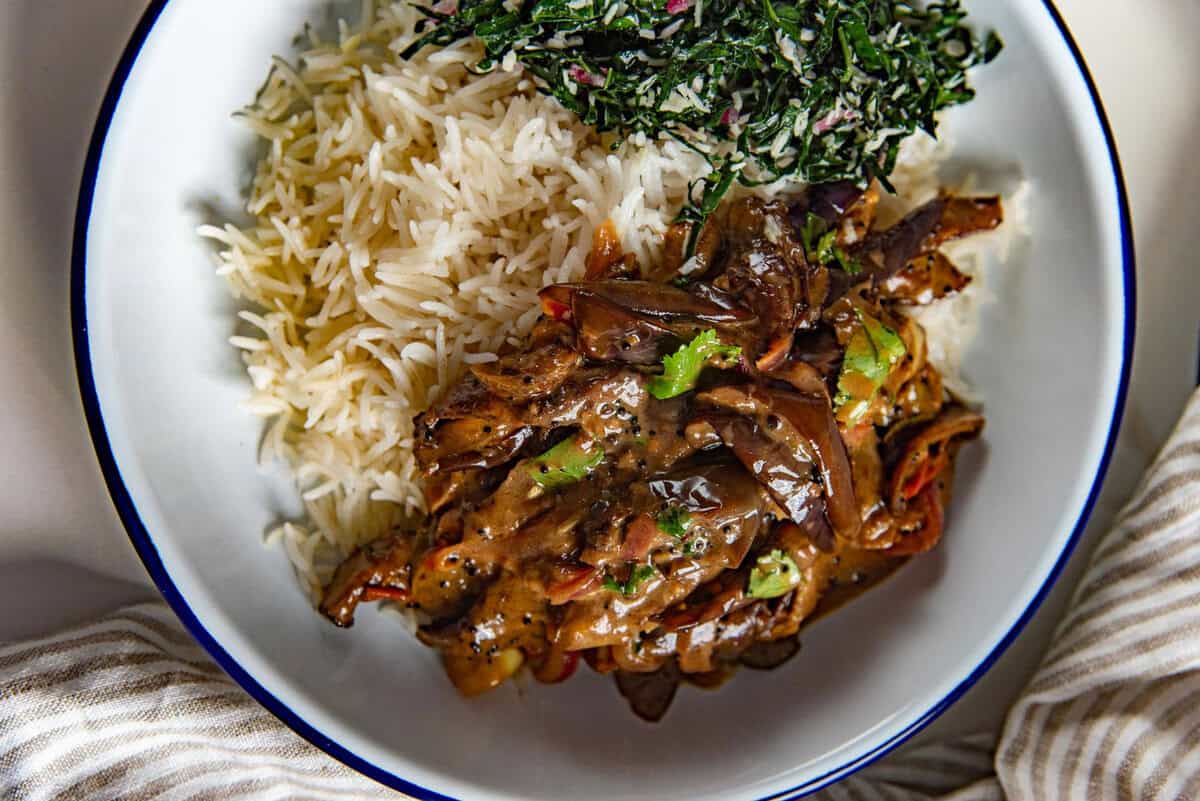
What kind of eggplant is best for this curry?
- Indian eggplant – These are also called baby eggplant and they’re very small, about 2 – 3 inches in length. This is what I use in the curry here. I actually grew these eggplants in my backyard!
- Japanese eggplant and Chinese eggplant – These are long, slender eggplant. The Japanese version is darker in color and shorter. The Chinese eggplant has a lighter colored skin and is longer. I LOVE using these in this recipe, as they are less bitter, and also have a creamy texture after cooking!
- Italian eggplant – A smaller version of American eggplant. Because it’s smaller, it’s easier to cut it into pieces with the skin still attached to each piece. So, you can still keep the pieces intact while cooking, even with slightly larger pieces.
- American eggplant – Larger eggplants that are widely available in grocery stores (in North America). When I make this curry with this type of eggplant, I do expect the pieces to melt into the gravy, rather than holding together. This is because the eggplant is too large to cut into pieces with the skin still attached. The center of the eggplant will need to be cut into separate pieces without the skin.
- You can also use white eggplant varieties and graffiti eggplants as well.
- Thai eggplants that are round, firm, and green in color will NOT work in this recipe.
Ingredients you’ll need (and substitutions)
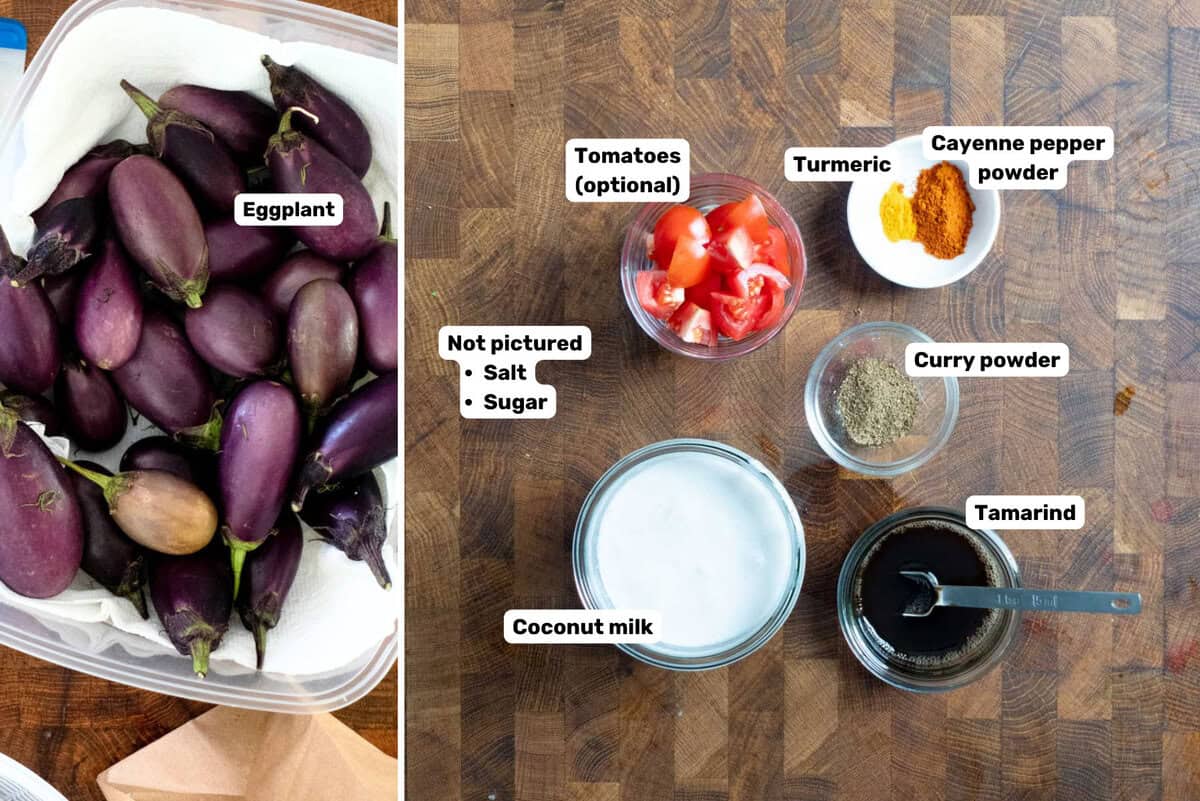
- Eggplants – I’m using baby eggplants here, but you can use other types of eggplant as well. My favorite to use is baby eggplants, or Japanese or Chinese eggplants.
- Onion – Either red or yellow onions.
- Garlic and ginger – Aromatics that help flavor the curry. Fresh garlic or ginger will work better, instead of powdered garlic or ginger. You can use bottled garlic or ginger here too.
- Tamarind – A very important ingredient in this recipe. It provides tanginess to the curry AND color! You can use fresh tamarind here as well, but it’s not as easy to find in some places that I’ve lived in the past. So I’ve adapted to make this curry with tamarind paste instead. Specifically, the concentrated paste.
- Tomatoes – An optional ingredient. It adds flavor, but you can leave out the tomatoes, if you prefer.
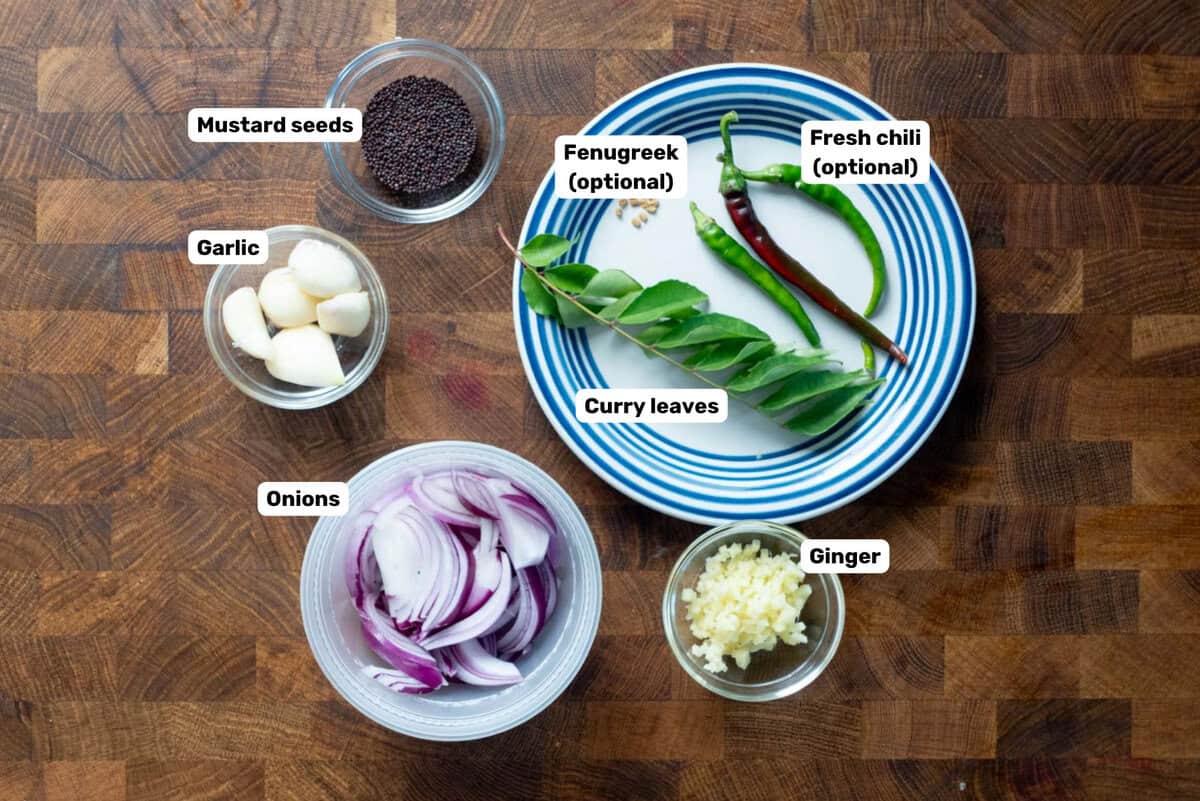
- Curry leaves – These add distinct flavor to the curry, so you can’t really substitute them properly. You can use dried, powdered, or fresh curry powder in this recipe. But if you don’t have access to them, then you can simply leave out the curry leaves.
- Curry powder – I use my own Sri Lankan curry powder for this curry! But you can use madras curry powder instead too.
- Turmeric – Adds color and flavor to the curry.
- Cayenne pepper and chili pepper – Both add spice to the curry. We love our curries with a little spice and heat, but if you prefer a milder curry, you can adjust the amount or leave it out.
- Mustard seeds – In the tempering step (a technique called tadka), mustard seeds are added to the oil and heated until they splutter. This releases the smokiness of mustard which adds a wonderful depth of flavor! While there’s no substitute to this flavor, you can skip the tempering step if you prefer (but I do HIGHLY recommend it).
- Coconut milk – Adds creaminess to the curry, and the nutty coconut flavor. It also works to meld all the flavors together.
Substitutions
- In place of Sri Lankan curry powder, you can use madras curry powder or even garam masala. This will change the flavor a little, since their spice profile will be different.
- You can use lite coconut milk instead of regular coconut milk. The curry will be less rich, as the fat content will be less, but it’s a feasible substitution.
How to make eggplant curry (step by step overview)
Step 1 – Prep the eggplant
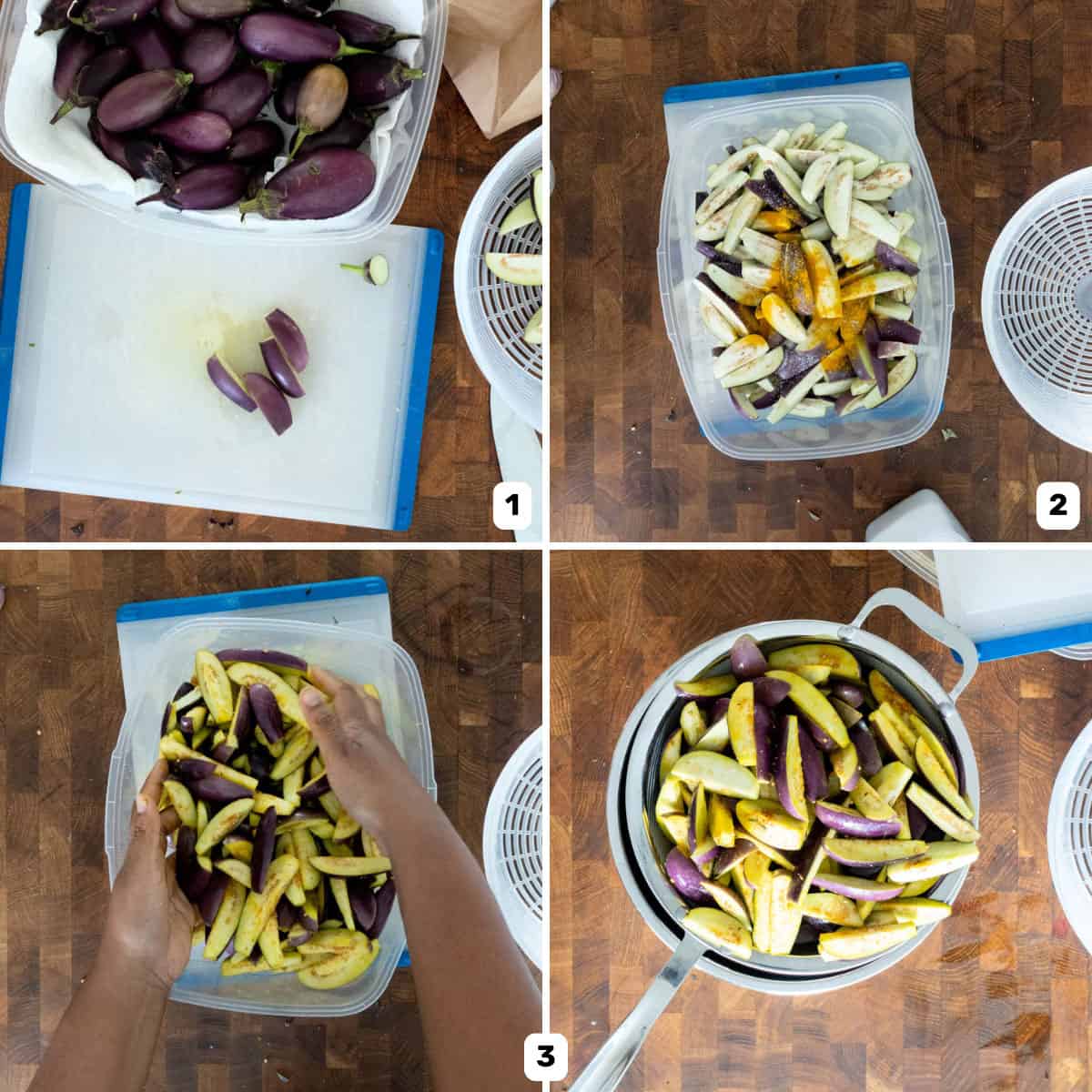
Start by trimming off the tops of the eggplants. Then slice the eggplant lengthwise to get sections that are about 1 inch in depth. For some eggplants, that means just slicing it in half lengthwise. For some, it’s slicing the eggplant into 3 equal sections lengthwise.
Then cut each section into strips that are about 1 – 1.5 inches wide.
Next, cut each strip into 2 – 3 inch long pieces.
For baby eggplants, this means cutting them into quarters lengthwise (image 1). For other eggplants, it’ll be different.
Step 2 – Remove the bitterness
Some eggplants have more bitterness than others, but I like to follow this process regardless of the type of eggplant I use.
Place the eggplant pieces in a large bowl. Add salt, sugar, and turmeric, and mix it all together until all the pieces are evenly coated (image 2). You can keep the eggplant pieces in the bowl, or transfer them into a colander or sieve that’s placed over a large bowl (image 3).
Then let it sit for about 30 minutes (up to an hour). The eggplant pieces will also soften during this time.

Salting the eggplant
This step does more than drawing out the bitterness.
The salt and sugar in the mixture are absorbed by the eggplant, which will make the final curry even more flavorful!
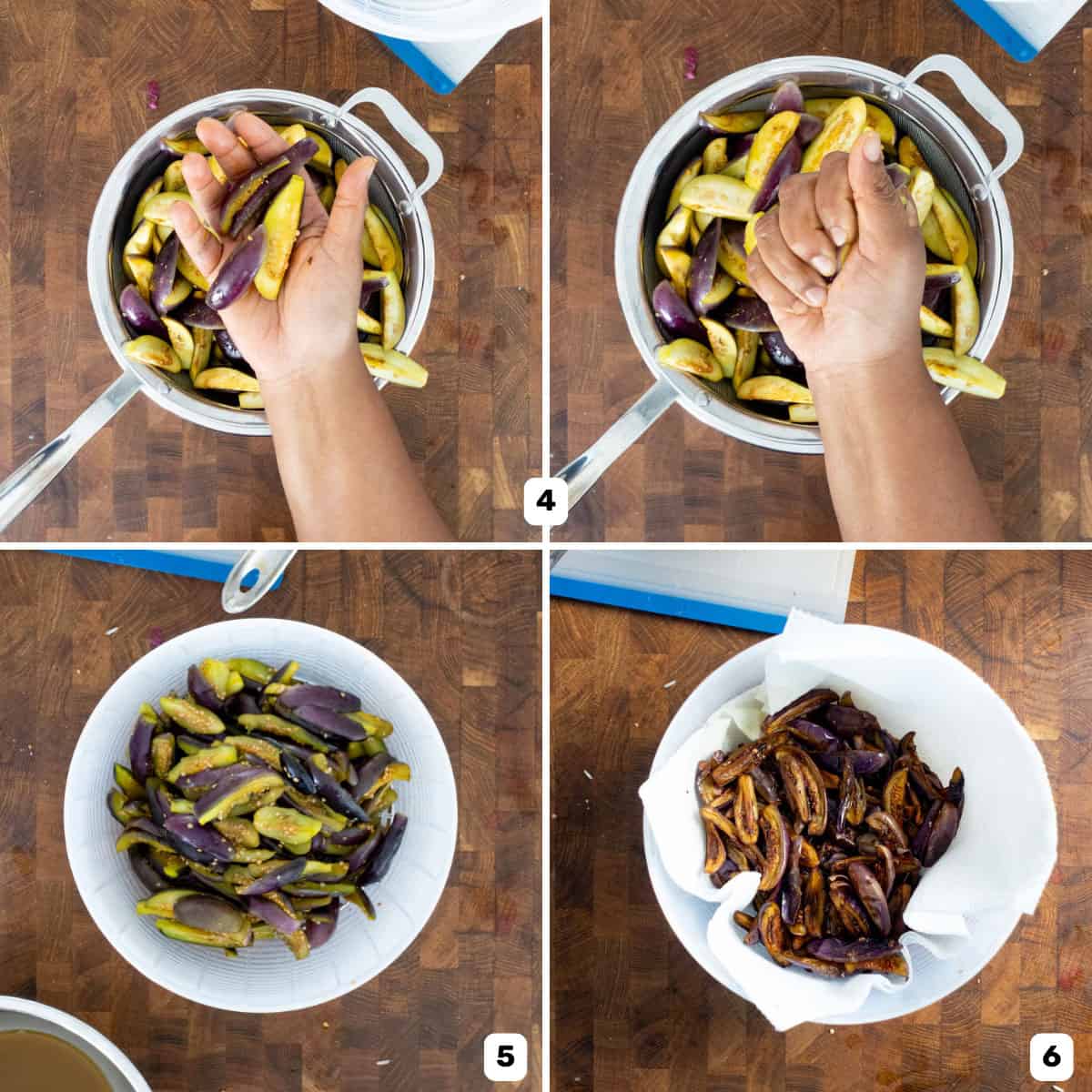
After 30 minutes, squeeze the eggplant pieces to remove excess moisture (image 4). I like to take a few at a time and squeeze them in my hand. Then place the squeezed eggplant pieces in a separate bowl and discard the extra moisture. Repeat with all of the eggplant (image 5).
Step 3 – Fry the eggplant
Heat enough oil in a large pot for deep frying. Heat the oil until it reaches 375°F / 191°C. Then deep fry the eggplant pieces in the oil in small batches.
The pieces will take a little longer to brown because of the water content in the eggplant, so maintain the heat at 375 – 400°F, and don’t let the eggplant pieces burn.
You can pan-fry / shallow-fry the eggplant as well.
Place the deep fried eggplant in a paper towel-lined bowl or colander to absorb excess oil (image 6).

Make sure the oil is heated to the correct temperature before adding a new batch of eggplant into the oil.
If the oil is at a lower temperature, the eggplant is more likely to absorb too much oil and become soggy.
Step 4 – Mise en place (the other ingredients)
Prepare the other ingredients, so it’ll be easier to add them to the curry.
This involves slicing or chopping the other ingredients and setting them aside.
Step 5 – Temper the spices (tadka)
In a stainless steel saucepan, heat up some oil over medium heat.
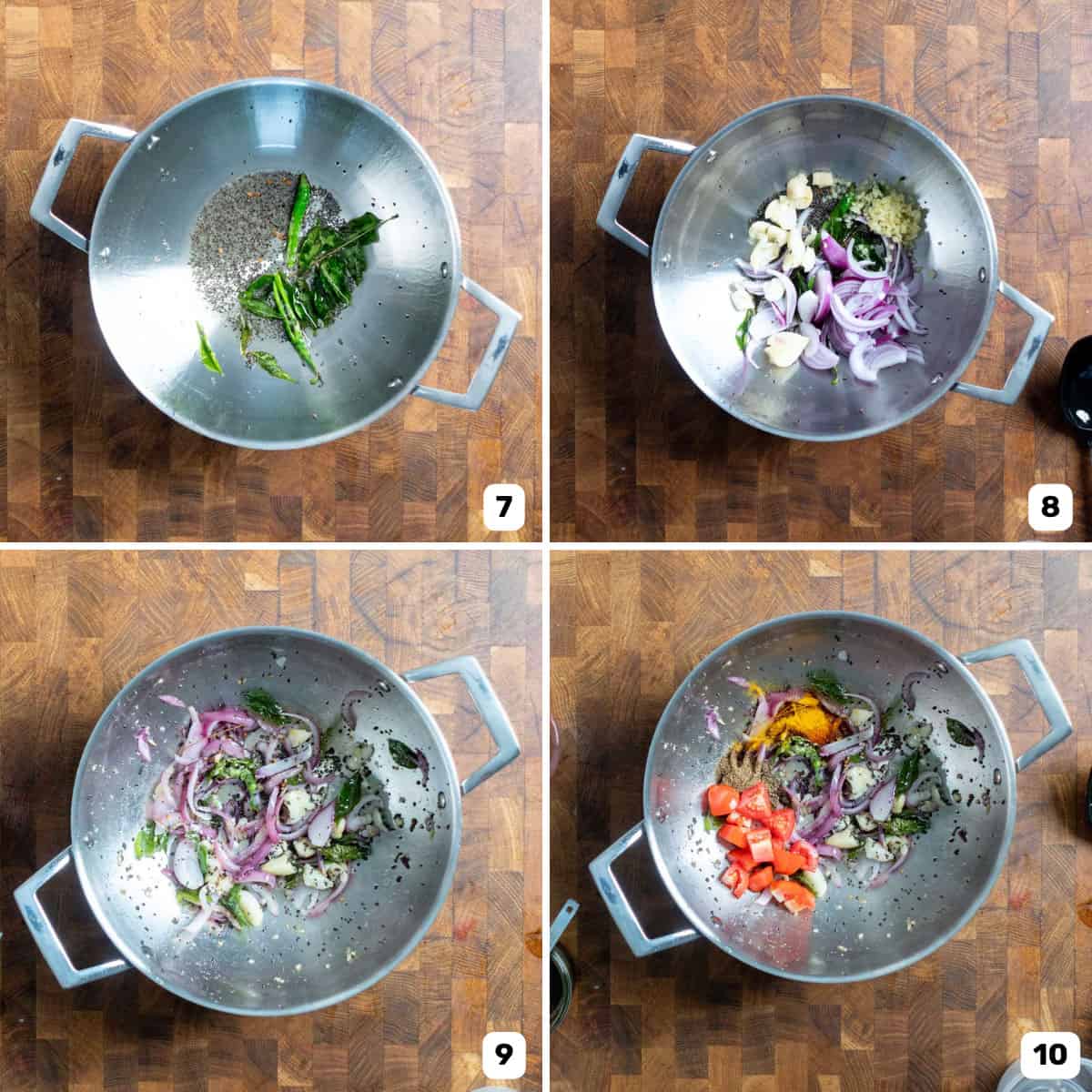
Add the mustard seeds to the oil. The mustard seeds will start to pop as the oil heats up. Immediately add the curry leaves and green chili (image 7). The leaves will start to pop as well, and turn a stronger green color. Don’t let them burn.
This is the tempering step for the curry (tadka).
Step 6 – Make the curry
Add the onions, garlic, and ginger (image 8). Sauté for a few minutes until the onion softens (image 9).
When the onion softens, add the curry powder, turmeric, cayenne pepper powder, and tomato (image 10). Mix all of it together and cook the mixture until the tomatoes break down and thicken.
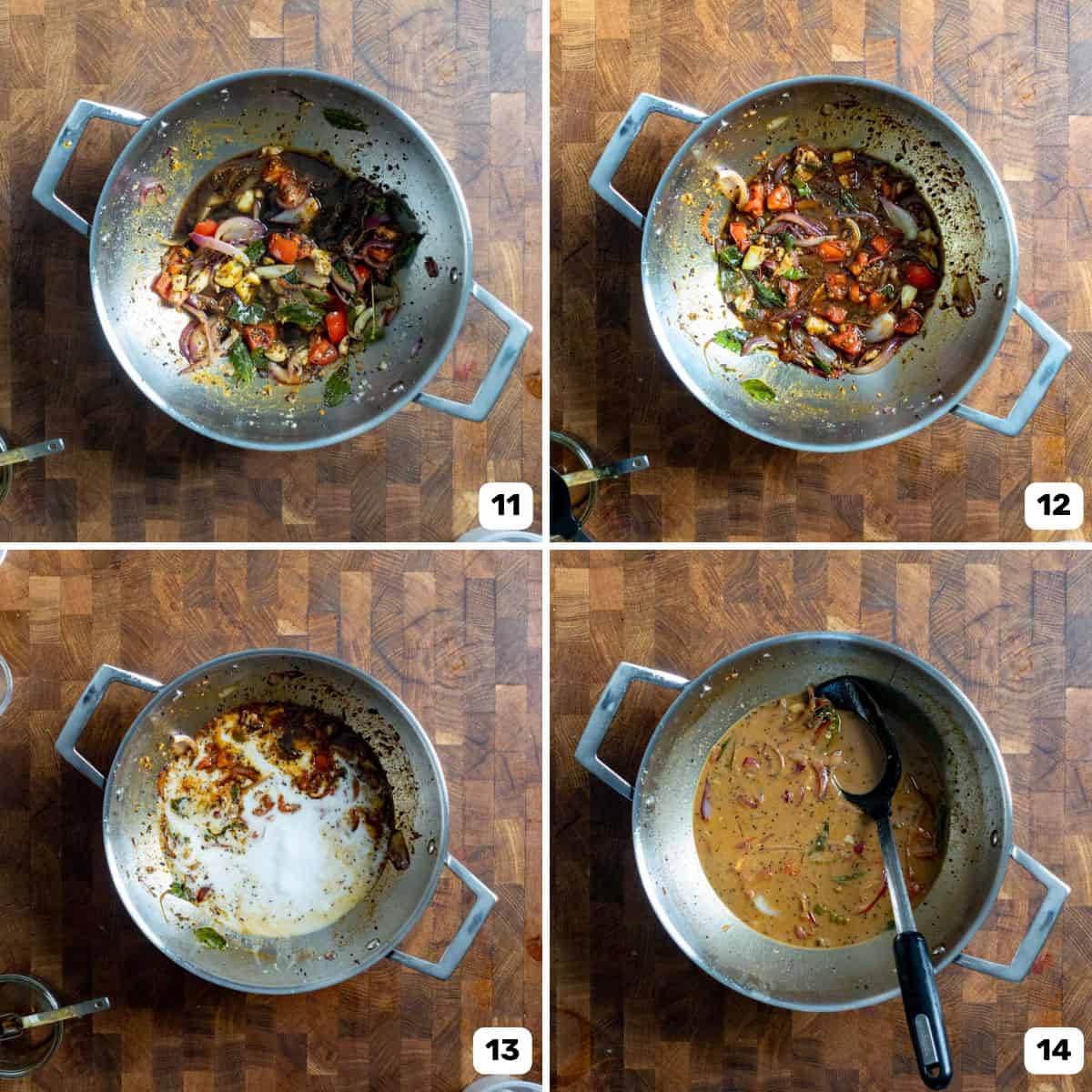
Mix the tamarind with some of the water and add it to the mixture, and stir to combine (image 11). Bring the mixture to a boil, and let it simmer for a few minutes to allow all the flavors to meld together (image 12).
Finally add the coconut milk and stir it in (image 13). Bring it to a boil and let it simmer for about 2 – 5 minutes (image 14). Taste and add salt to season. If needed, you can also add more tamarind for a little more acidity.
Step 7 – Add the eggplant
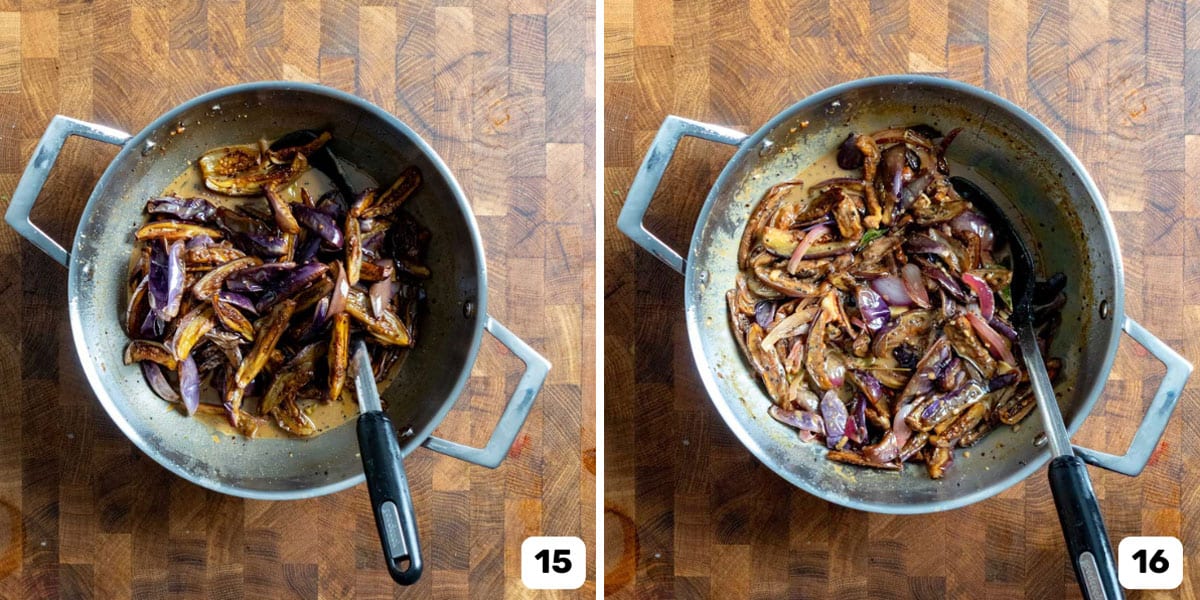
Finally, add the fried eggplant to the curry base and stir in to combine with the coconut milk base (images 15 – 16).
Close the lid and simmer the curry for about 10 – 15 minutes to let the eggplant absorb the spices and coconut milk. You can let it simmer for up to 20 – 25 minutes if needed. The longer the curry simmers, the more the eggplant will disintegrate into the curry (if there’s no skin attached to the eggplant pieces).
Add more coconut milk or water if you want more gravy / sauce, and add more seasoning (salt and / or tamarind or lime juice) to your taste.
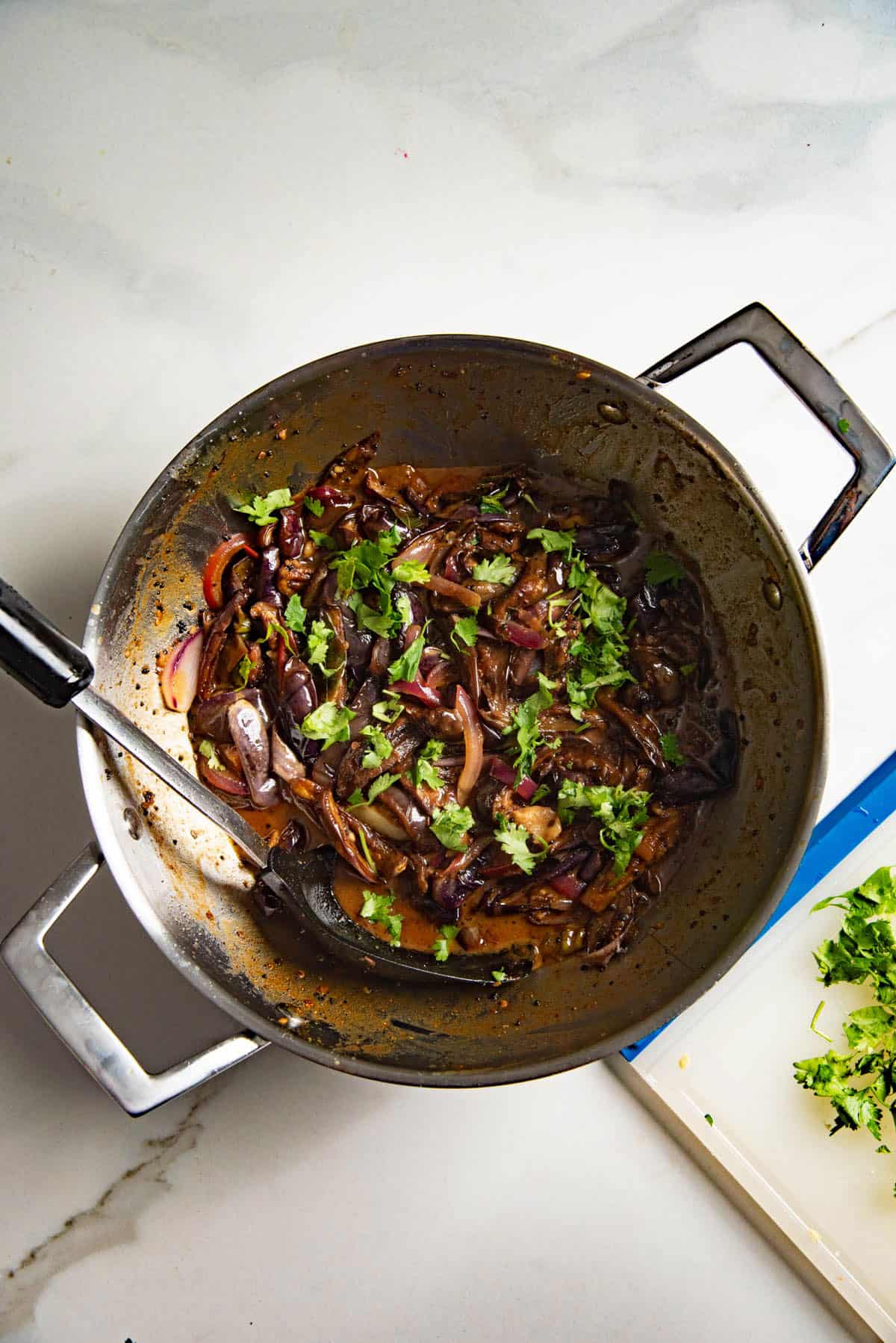
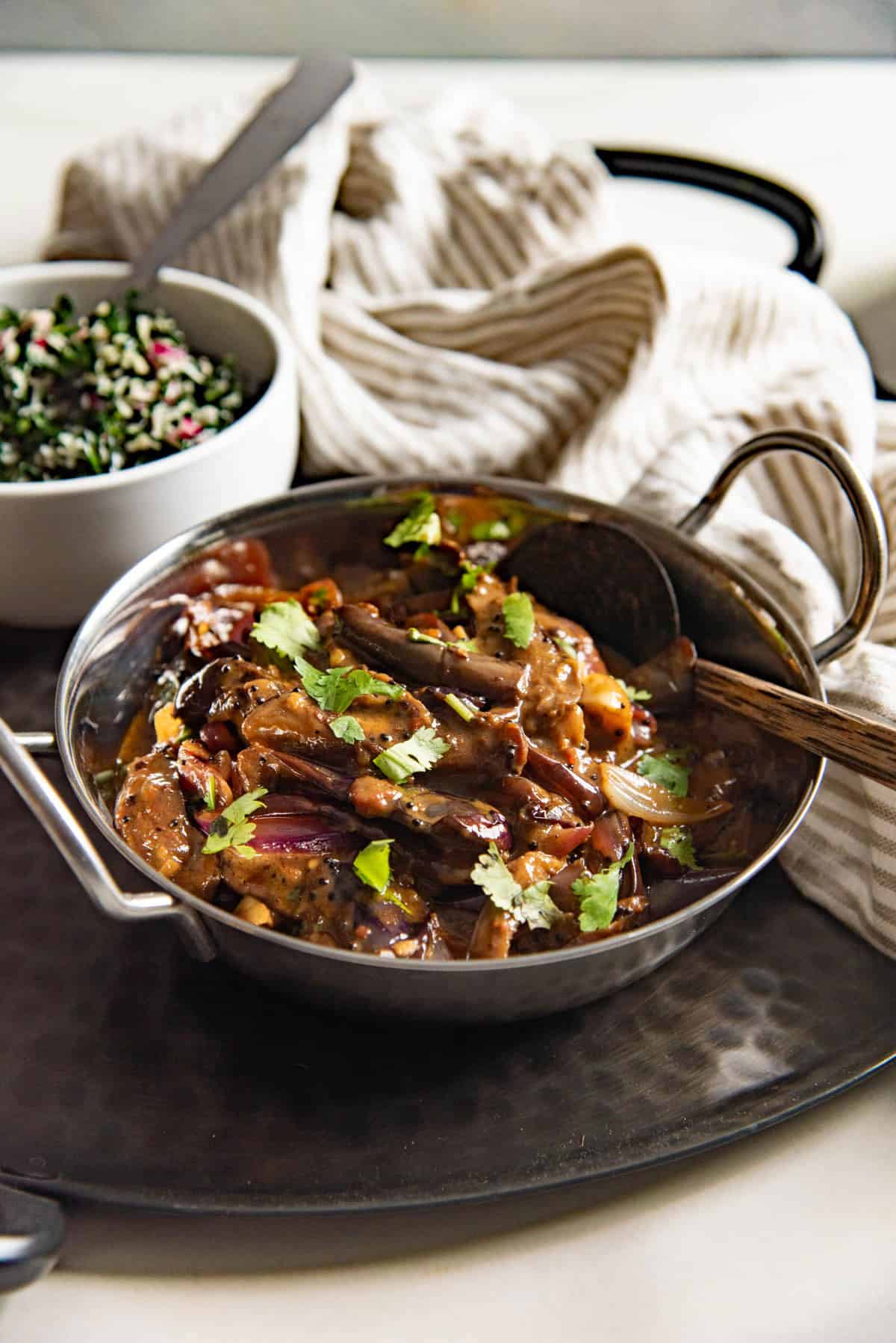
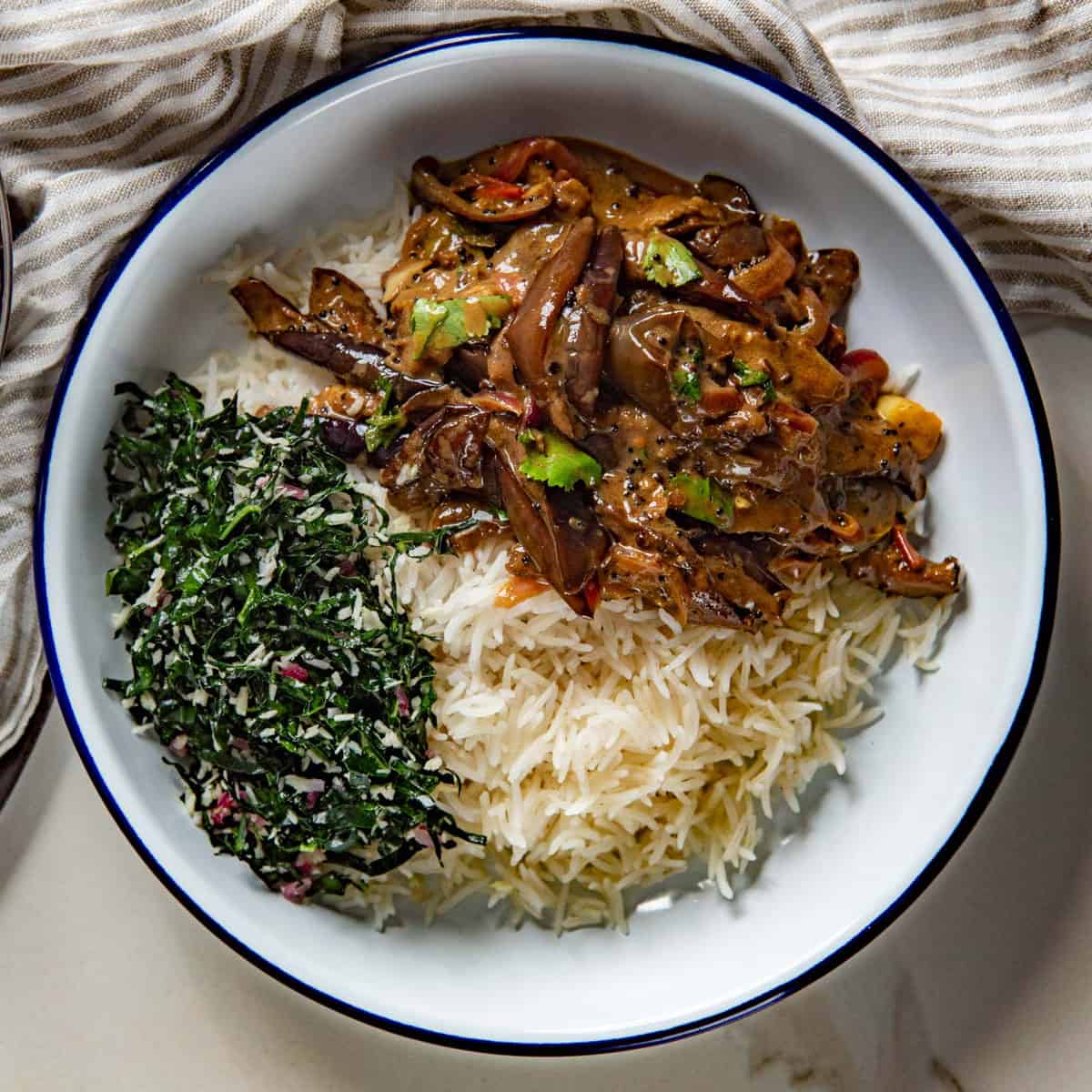
Sprinkle cilantro on top (optional) and serve with rice and other curries on the side.

My best recipe tips
- If you want all the eggplant pieces to stay intact for the best curry texture, then make sure each piece has the skin still attached. Don’t peel it.
- If you prefer an eggplant curry where the eggplant breaks down into the gravy / sauce instead, then you can peel the eggplant and remove the skin before cutting it into pieces.
- Don’t forget to salt the eggplant. This will draw out excess moisture AND reduce bitterness.
- Remove as much moisture as possible from the eggplant before frying it. The more moisture in the eggplant, the longer it will take to fry.
- Maintain the frying oil temperature between 375 – 400°F, so that the eggplant pieces fry properly. Dropping below 375°F will make the eggplant too oily, and going above 400°F will quickly burn the eggplant pieces.
- While tempering the spices for the curry base is an optional step, it tremendously deepens the smokiness and depth of flavor in the final result!
Storage tips
You can make this curry up to 2 days ahead of time, and store it in the fridge. In fact, it’ll taste even better the next day, like most curries!
You can also readily freeze this eggplant curry! Divide the curry into smaller portions if needed, and freeze each portion individually. This prevents you from having to thaw and refreeze the curry, so it’ll last much longer in the freezer too.
Serving ideas
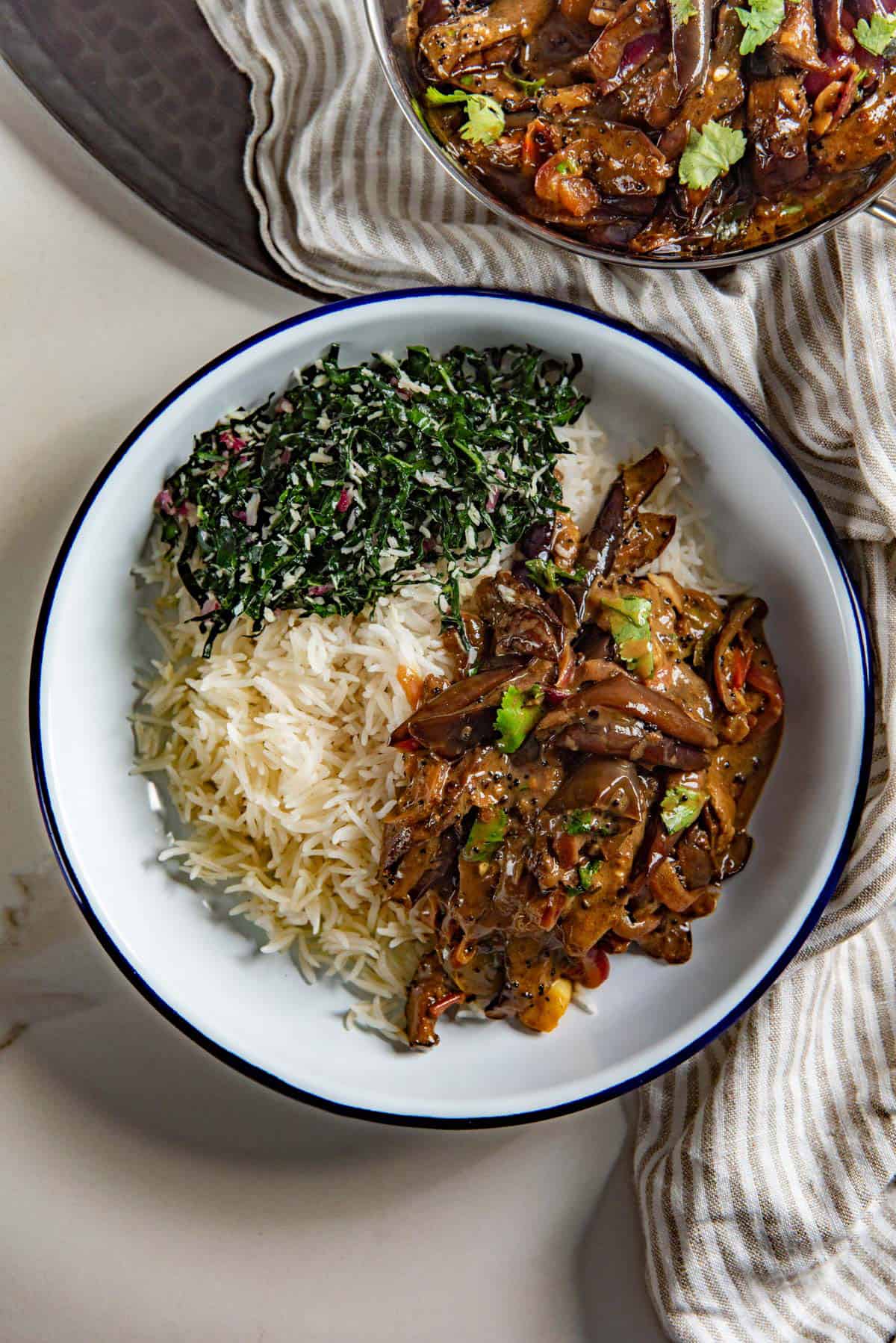
My favorite way to serve this aubergine curry is with steamed white rice!
But you can also serve it with yellow rice, biryani, roti, naan, or bread too.
We also typically serve this vegan curry as a side dish paired with a few other curries. A few vegetarian / vegan options include,
But you can also serve it with other meat curries too.
Recipe variations
- You can add other veggies to this curry if you like, but the vegetables will need to be added early, so that they cook before you add the eggplant. But keep in mind that the extra vegetables will change the flavor profile of this curry as well.
- If you want to add protein and fiber, you can add drained canned chickpeas to the curry.
- You can also totally substitute the eggplant and use the same cooking method to make other veggie curries as well. Such as,
- Okra – Can be fried and made into a curry the same way. Super delicious!
- Plantains – Can also be made into a curry in a similar manner.
- Different cooking methods – If you prefer not to deep fry or shallow fry the eggplant, then you also have the option of grilling or roasting it. You can do this in the oven, where I roast the eggplant pieces until they are caramelized on both sides. You can also similarly roast the eggplant in an air-fryer, although I haven’t tried it myself.
Recipe FAQs and troubleshooting
Can I peel the eggplant?
Yes! The eggplant flesh will soften and mix in with the gravy this way though, as opposed to staying intact separately.
Why is my eggplant curry bitter?
If the eggplant wasn’t “marinated” with the salt and sugar for long enough as indicated in the recipe, then it wouldn’t have had enough time to draw out all the bitterness.
Also, if the eggplant was fried for too long and it burned, this can also make the curry bitter.
How can I get tender eggplant without making it mushy?
This is easy!
Use smaller eggplants, so that the skin is attached to each piece after cutting the eggplant into strips / pieces.
Make the curry base to build the flavor, and add the fried or roasted eggplant at the end.
Shorten the simmering time after the eggplant is added, so that the pieces stay intact as well.
Why is my eggplant oily?
If you fried the eggplant at a lower temperature than instructed, it can absorb more oil. That is why it’s important to maintain the oil temperature at 375°F, and to not overcrowd the pot when frying the eggplant pieces.
Can I make this without coconut milk?
This authentic Sri Lankan eggplant curry contains coconut milk. It adds richness and creaminess! It also helps to mellow out the tanginess and bring all the flavors together.
So, I don’t recommend making this without coconut milk, as I feel the flavor will be wholly inadequate.
Recipe
Sri Lankan Eggplant Curry (Brinjal Curry)
US based cup, teaspoon, tablespoon measurements. Weight measurements are recommended for accurate results whenever available.
Common Measurement ConversionsIngredients:
For the eggplants
- 1 kg eggplants see recipe notes
- ½ tsp turmeric
- 1 ½ tsp salt
- 1 ½ tsp sugar
- Oil for deep-frying
For tempering
- 3 tbsp neutral-flavored oil
- 2 tsp black mustard seeds
- 1 sprig curry leaves about 10 – 20 leaves
- 2 green chili peppers or serrano or jalapeno peppers, optional
For the curry
- 1 medium onion sliced, can be yellow or red onion
- 5 cloves garlic
- 1.5 inch cube ginger
- 1 medium tomato chopped (optional)
- 2 tsp curry powder
- ½ tsp turmeric
- 1 tsp cayenne pepper optional
- 1 ½ tsp tamarind concentrate
- ¾ cup water
- 1 cup coconut milk
- Salt to taste
- Cilantro to top
Instructions:
Prepping the eggplant
- Cut the stems off of the eggplants. Then cut the eggplant into large pieces. With baby eggplants, I prefer to cut them into quarters. With larger eggplants, I cut them into 1 – 1 ½ inch strips, and cut each strip into 3 inch long pieces. These are approximate sizes.1 kg eggplants
- Make sure the skin is attached to each eggplant piece if you want the eggplant to keep their shape as they cook.
- Place the pieces in a large bowl or container. Add the salt, sugar, and turmeric and toss to evenly mix.½ tsp turmeric, 1 ½ tsp salt, 1 ½ tsp sugar
- Let the eggplant sit for about 30 – 60 minutes. This will draw out excess moisture and any bitterness in the eggplants.
- After 30 minutes, take a handful of the eggplant pieces and squeeze out excess moisture and place it in a separate bowl. Repeat with all of the eggplant pieces and discard the liquid.
- Heat enough oil in a large pot to deep fry or shallow fry the eggplant. Heat the oil to 375°F / 191°C.Oil
- Add the eggplant in small batches. It's crucial not to overcrowd the pan, especially since the eggplant does take a little longer to caramelize. If the pan is overcrowded, it will take even longer to caramelize.
- The eggplant can also be grilled on the stove or roasted in the oven (see recipe notes for instructions to do so), but the best and authentic flavor, and even coloring comes from deep-frying.
- Place the deep-fried eggplant in a colander lined with paper towels to absorb excess oil.
- Make sure the oil is reheated to 375°F / 191°C before adding a new batch into the oil (in order to prevent oily fried eggplant).
Preparing the other ingredients
- While the eggplant is sitting with the salt and sugar, prepare the remaining ingredients.
- Slice the onion.
- Either lightly crush the garlic and keep it whole, or slice it. You can use minced garlic as well, just be sure not to burn it while cooking.
- Peel the ginger and finely chop or slice it.
- Chop the tomato, if using.
- Split the chili peppers in half, if using.
Making the curry
- Once the eggplant is fried, you can start making the curry base.
- In a stainless steel pot, pour in the oil. Then heat over medium heat until the oil is hot.3 tbsp neutral-flavored oil
- Add the mustard seeds and move them around until they start to pop.2 tsp black mustard seeds
- Immediately add the curry leaves and green chili and sauté until the curry leaves pop and fry.1 sprig curry leaves, 2 green chili peppers
- Then, add the onion, garlic, and ginger, and sauté for 2 – 5 minutes until the onions start to soften.1 medium onion, 5 cloves garlic, 1.5 inch cube ginger
- Next, add the tomato, turmeric, cayenne pepper, and curry powder. Cook until the tomatoes soften.1 medium tomato, 2 tsp curry powder, ½ tsp turmeric, 1 tsp cayenne pepper
- Mix the tamarind concentrate with about ¼ cup of water. Add this to the curry base. If you’re not using tomatoes, you can add the tamarind with the curry powder.1 ½ tsp tamarind concentrate, 0.25 cup Water
- Bring the mixture to a boil, and let it simmer for about 2- 5 minutes to allow the spices to really blend together.
- Finally, stir in the coconut milk and water and bring it to a simmer. Taste and season with salt.0.5 cup Water, 1 cup coconut milk, Salt
- Now add the fried eggplant and stir to combine the eggplant with the coconut milk curry base.
- Bring the mixture to a simmer and place the lid on top and let the mixture simmer for about 5 – 10 minutes.
- You can add more water if needed, as the eggplant will absorb some of the curry sauce.
- Adjust the seasoning as needed (add more salt or tamarind as needed).
- If you used eggplant with no skin attached, the eggplant pieces will break down into the curry sauce. This is normal.
- Stir well.
- Sprinkle chopped cilantro on top, and serve with steamed rice while still hot.Cilantro
Recipe Notes
Nutrition Information:
“This website provides approximate nutrition information for convenience and as a courtesy only. Nutrition data is gathered primarily from the USDA Food Composition Database, whenever available, or otherwise other online calculators.”
















Leave a Reply