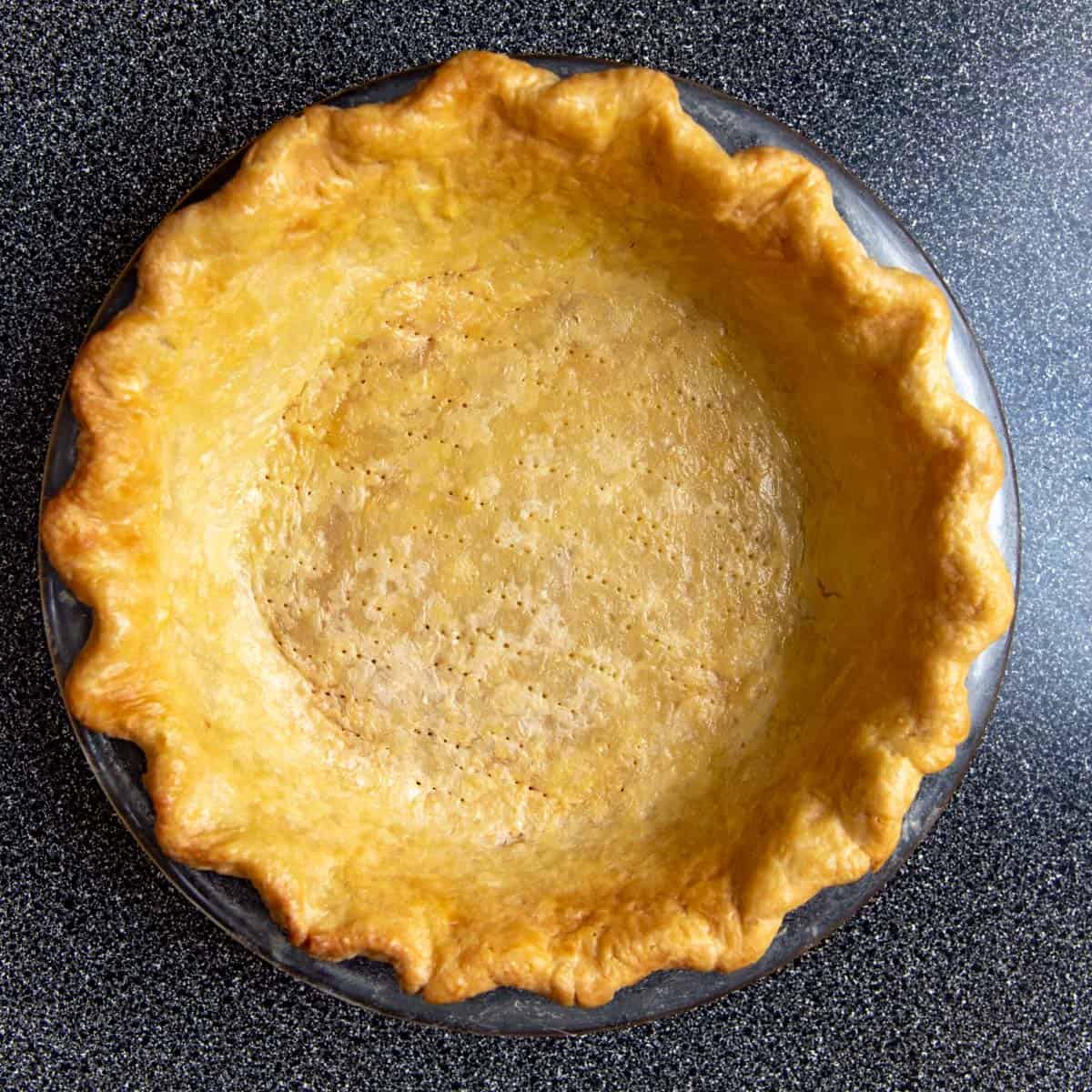
Homemade Pie Crust (All Butter Pie Crust)
Servings: 2 crusts to fit a standard 9 inch, deep pie dish
Calories: 1861kcal
Detailed, step-by-step recipe to make foolproof, tender, flaky all butter pie crust. This extensively tested recipe is perfect for beginner bakers too, with plenty of troubleshooting tips. I show how to make a flaky pie crust as well as a mealy (crumbly) pie crust for different types of pie.INTERMEDIATE - This recipe will be easier for those with some baking experience. However, the detailed step-by-step recipe is designed for beginners.
Print Recipe
Equipment
- 9 or 9.5 inch pie plate (between 1 - 2 inches deep)
- Foil or parchment paper
- Sugar or rice (as pie weights)
- Rolling Pin
- Spray bottle (optional)
Ingredients
- 300 g unsalted butter preferably chilled
- 120 mL iced water
- 30 mL chilled vodka or use the same amount of iced water
- 400 g all purpose flour spooned and leveled when using cup measurements
- 30 g sugar
- ¾ tsp fine sea salt
- Spray bottle with ice cold water optional
Instructions
Prep the butter
- Ideally, you should have all the ingredients chilled well. However, it's crucial that at least the butter, water, and vodka (if using) are chilled well.
- For a flaky pie crust - Cut the butter into smaller portions. Either into ½ inch cubes / batons, or cut the stick of butter into thin slices. Place the butter in the fridge to keep it chilled until you need it.300 g unsalted butter
- For a mealy pie crust - You can grate the butter and keep it frozen until you need it. I prefer to weigh the butter after grating it.
Make the dough
- Mix the flour, sugar, and salt in a large bowl.400 g all purpose flour, ¾ tsp fine sea salt, 30 g sugar
- Add the chilled / frozen butter, and toss to coat the butter with the flour.
- Use your fingers to squish each piece of butter, making sure to toss the butter in the flour periodically so that it’s all well coated with flour. Work quickly to prevent the butter from softening or melting.
- For a flaky pie crust, most of the butter pieces should be larger and flatter. Ideally, at least hazelnut-sized or walnut-sized. For a mealy pie crust, the dough crumbs should resemble coarse wet sand or coarse breadcrumbs. See pictures in the post for reference (images 7 and 8).
- Toss to make sure the butter pieces are coated in flour.
- Mix half of the iced water with the vodka (if using). Drizzle the water into the flour mixture, and mix it in using your fingers or a fork.120 mL iced water, 30 mL chilled vodka
- The lumps will become bigger as you mix in the liquid. Add more water until more of the dough forms larger, stickier clumps.
- Toss the clumps in the flour mix using your fingers to ensure that the water is mixing as evenly as possible. However, you will find that there will be large wet clumps of dough, and lots of dry spots in the flour mix as well. This is OK!120 mL iced water
- To check if there's enough water in the dough - Take some of the dough in your hands and squeeze it to form a large clump. The clump should just hold together, along with some dry spots present. Set this clump aside (either on your work surface or separate bowl). Repeat with the rest of the dough. You should only end up with a small amount of flour in the bowl that won’t clump up.
- However, if there is still a lot of flour mix left in the bowl that won't form clumps, drizzle a few drops of water to help with clumping when squeezed together. Alternatively, you can use a spray bottle to spray iced water on the dry flour spots, without adding too much water.Spray bottle with ice cold water
- The dough will have enough water if you can form a dough that's just holding together when squeezed, AND there should also be a few dry spots of flour. The more familiar you become with this dough, this stage will be easier to recognize. I usually never need more than 150 mL of water for flaky pie crusts, and less for mealy pie crusts.
- Place a piece of parchment paper on your work surface. Turn the pie dough clumps out onto the parchment paper. If the butter softens at any stage, remember to refrigerate / freeze the dough for a few minutes as needed.
- Use the parchment paper to fold the dough over to form a rough dough mound. Add a few water drops (or use the spray bottle) if needed, so that the dough sticks together. Remember that there should be some dry flour spots present.
- If there is too much water, and the dough is sticky, sprinkle more flour on the dough.
- Now slightly flatten the dough mound and cut it into four portions. Stack these portions on top of each other.
- Flatten the dough stack slightly, and cut it in half. You can either weigh the dough and cut it in half precisely, or cut two approximately even portions.
- Form a dough disc with each portion. Be careful and gentle when handling the dough. Wrap each disc with plastic wrap and let it rest in the fridge for at least 1 hour. I prefer to let it rest at least 4 hours, or overnight, to allow the moisture to evenly hydrate the dough.
Rolling out the dough
- Take one portion of pie dough. Unwrap the plastic wrap, and place it on a floured surface.
- Since the butter will be very firm, it'll be hard to roll out the dough right away. Strike the dough disc a few times with a rolling pin, on both sides, to make it more pliable and easy to roll out.
- Roll out the dough while maintaining the shape of a circle as best you can. Squeeze or pinch any cracked dough together to seal. Turn the dough a quarter turn after each roll, to ensure that the dough maintains the shape of a circle and also does not stick to your work surface. Use a light dusting of flour as needed, and also remember to flip the dough over so that you roll it on both sides.
- Roll the dough until it’s about 3 mm in thickness. The diameter may vary, but it should definitely fit a 9.5 inch diameter, deep pie dish.
- If the dough starts to shrink as you roll it, lightly flour the dough surface and either fold it into quarters OR roll it onto a rolling pin, and then cover it with plastic wrap. Let the dough rest in the fridge for at least 20 minutes, and then proceed with rolling it out again.
Lining the pie dish with the dough
- Now transfer the dough onto the pie dish. You can do this by rolling up the dough on a rolling pin and then carefully unrolling it over the pie dish.
- Do NOT stretch the dough to fit it inside the pie dish. This is crucial and a common beginner's mistake. Instead, carefully lift the pie crust and let it gently fall onto the pie dish. Use the back of your fingers to gently press the dough into the bottom of the pie dish, so that it fits neatly in the dish.
- There should be an overhang over the pie dish rim. Using scissors or a sharp knife, cut the excess pie crust, leaving at least a 1 inch (or up to 1.5 inches) overhang for single crust pies. Or a 0.5 - 1 inch overhang for double crust pies.
- For single crust pies - Roll the dough overhang under the pie crust to form a thick border. This should be flush against the rim of the pie dish. Either crimp or flute the crust edge.
- For double crusted pies - Roll out the second portion of dough until it's about 3 mm in thickness. Fold this in quarters and cover it in plastic wrap, and then keep it in the fridge with the pie plate until the filling is ready.
Video
Notes
How to blind bake pie crust
See my post on how to blind bake pie crust for baking temperature and detailed step by step instructions to par-bake or fully blind bake this butter pie crust.How to make and bake a double pie crust
See my double pie crust recipe post for baking temperature and detailed step by step instructions on how to bake a filled double crusted pie (with a solid top crust).Nutrition
Serving: 1crust | Calories: 1861kcal | Carbohydrates: 168g | Protein: 22g | Fat: 124g | Saturated Fat: 77g | Polyunsaturated Fat: 5g | Monounsaturated Fat: 32g | Trans Fat: 5g | Cholesterol: 323mg | Sodium: 893mg | Potassium: 250mg | Fiber: 5g | Sugar: 16g | Vitamin A: 3749IU | Calcium: 67mg | Iron: 9mg