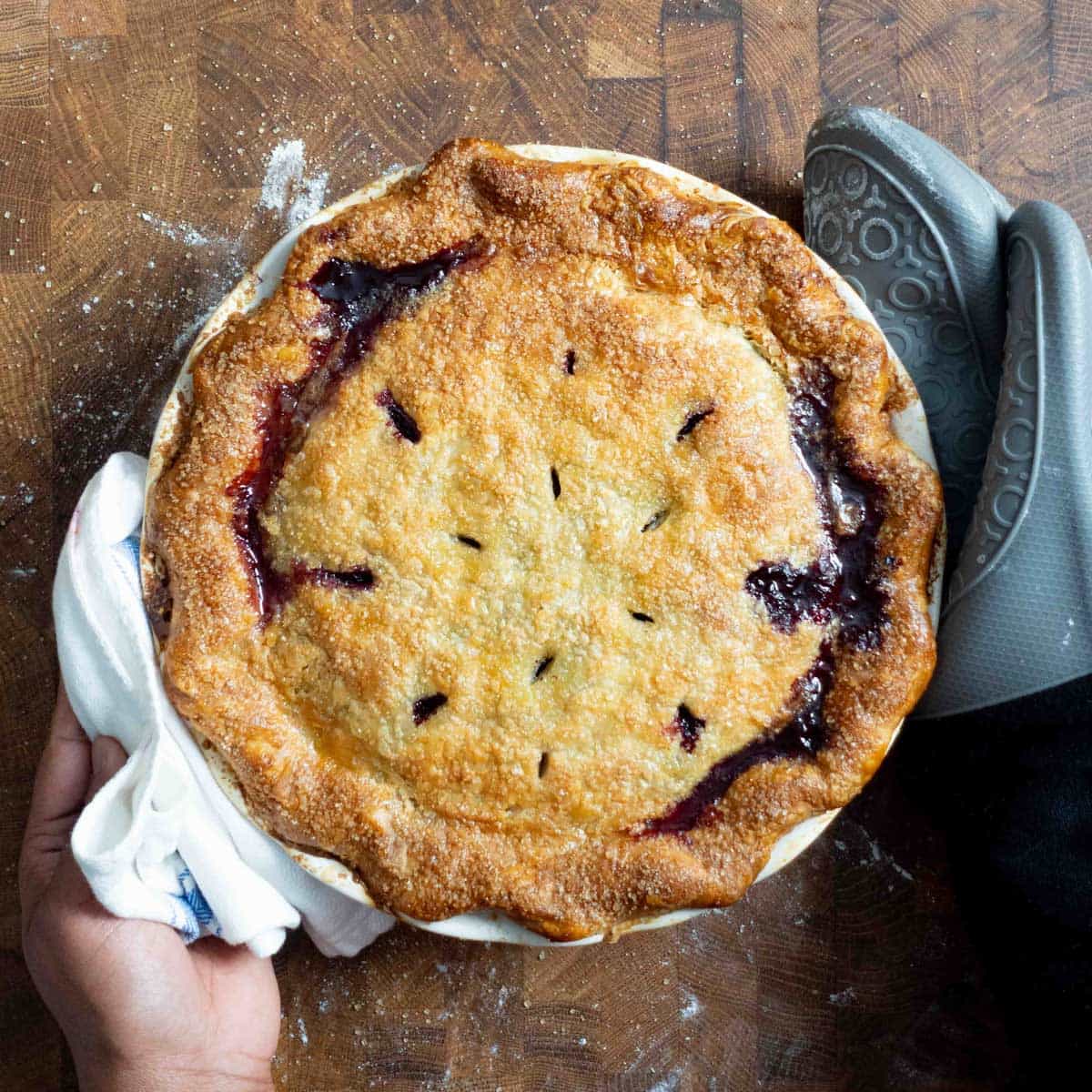
Double Pie Crust
Servings: 2 crusts to fit a standard 9 inch, deep pie dish
Calories: 1861kcal
Detailed, step-by-step recipe to make perfect, tender, flaky, buttery double pie crust, with a bottom crust and a solid top crust. This extensively tested recipe is designed for beginners, with plenty of troubleshooting tips as well. No more underbaked, soggy, shrinking crust!INTERMEDIATE - This recipe is easier for those with some baking experience. However, the detailed step-by-step recipe is designed for beginners. US based cup, teaspoon, tablespoon measurements. Common Measurement Conversions. Weight measurements are recommended for accurate results. You can switch between the measurement types using the toggle button below the ingredients list.
Print Recipe
Equipment
- 9 or 9.5 inch pie plate (between 1 - 2 inches deep)
- Foil or parchment paper
- Sugar or rice (as pie weights)
- Rolling Pin
- Spray bottle (optional)
Ingredients
- 300 g unsalted butter preferably chilled
- 120 mL iced water
- 30 mL chilled vodka or use the same amount of iced water
- 400 g all purpose flour spooned and level when using cup measurements
- 30 g sugar
- ¾ tsp fine sea salt
Instructions
Making the dough
- Make the pie crust dough according to the instructions in my all butter pie crust recipe here. Make sure the dough is well-rested for a few hours before rolling it out. We'll be using both dough portions for this double pie crust recipe.300 g unsalted butter, 120 mL iced water, 30 mL chilled vodka, 400 g all purpose flour, 30 g sugar, ¾ tsp fine sea salt
Rolling out the dough
- Take one portion of pie dough. Unwrap the plastic wrap and place it on a floured surface.
- Since the butter will be very firm, it'll be hard to roll out the dough right away. Strike the dough disc a few times with a rolling pin, on both sides, to make it more pliable and easy to roll out.
- Roll out the dough while maintaining the shape of a circle as best you can. Squeeze any cracked dough together to seal. Turn the dough a quarter turn after each roll, to ensure that the dough maintains the shape of a circle and also does not stick to your work surface. Use a light dusting of flour as needed, and also remember to flip the dough so that you roll it on both sides.
- Roll the dough until it’s about 3 mm in thickness. The diameter may vary, but it should definitely fit a 9.5 inch diameter, deep pie dish.
- If the dough starts to shrink as you roll it, lightly flour the dough surface and either fold it into quarters OR roll it onto a rolling pin, and then cover it with plastic wrap. Let the dough rest in the fridge for at least 20 minutes, and then proceed with rolling it out again.
- Now transfer the dough onto the pie dish. You can do this by rolling up the dough on a rolling pin and then carefully unrolling it over a pie dish, or folding the dough into quarters and unfolding it in the pie dish.
- Once you've lined the bottom crust in the pie plate, repeat the process to roll out the second portion of pie dough for the top crust. Fold the top crust into quarters and wrap it in plastic wrap. Keep it in the fridge until you need it.
Lining the pie plate with the bottom crust
- Do NOT stretch the dough to fit it inside the pie dish. This is crucial and a common beginner's mistake. Instead, carefully lift the pie crust and let it gently fall onto the pie dish. Use the back of your fingers to gently press the dough into the bottom of the pie dish, so that it neatly fits in the dish.
- Make sure the dough lines the sides of the pie dish in one smooth layer as well, with no folds or wrinkles.
- There should be an overhang over the pie dish rim. Using scissors or a sharp knife, cut the excess pie crust, leaving at least a 0.5 - 1 inch overhang. Measure the overhang from the inner rim of the pie dish.
- Loosely cover the pie crust with plastic wrap and let it rest in the fridge for at least 45 minutes. If the butter softens at any stage, refrigerate the crust.
Assembling the pie
- Fill the pie plate with your pie filling of choice.
- Take the second rolled out dough portion. You can keep the crust whole, or create a pattern on the top crust. It'll be easier to cut out the design before placing it on the pie. Instead of cutting slits to create vents, you can cut small decorative holes or shapes.For example, you can use a small star or round cutter to cut out a few holes instead of venting slits.
- You can also cut the second dough into strips, so that you can form a lattice crust on top.
- Next, brush the bottom border of the pie crust with a little water. Place the top crust over it, fairly taut. Then press down the top crust so that it sticks well to water brushed edge of the bottom crust.
- Cut the excess dough from the top crust, while leaving the same 0.5 - 1 inch overhang. Roll this overhang under the pie crust edge to form a pie crust border and crimp it with a fork OR create a fluted edge.
- Refrigerate the pie for at least 30 minutes before baking, while you preheat the oven.
Baking double crusted pies
- Follow your particular recipe instructions for best results for the pie filling you're using. However, these general instructions below should work for most fruit pies.
- Preheat the oven to 425℉ / 218℃ (conventional oven). Place the oven rack in the lower third of the oven, and then place a baking sheet or pizza stone / steel. Allow this to preheat with the oven. Make sure it's properly preheated before placing the pie on top of it (this is crucial for a perfectly baked bottom crust).
- Place the pie on the preheated baking pan / pizza stone and bake at this temperature for about 5 minutes.
- Then lower the heat to 350°F / 180°C (conventional oven). Bake the pie for a further 55 - 60 minutes. If the pie crust edge is browning too fast, cover the edge with a silicone pie crust shield, or with a piece of aluminum foil shaped into something similar.
Notes
All butter pie crust dough
Follow the step by step instructions in my all butter pie crust recipe.Blind baking pie crust
Follow step by step instructions in my post on how to blind bake pie crust to par-bake or fully blind bake pie crust.Nutrition
Serving: 1crust | Calories: 1861kcal | Carbohydrates: 168g | Protein: 22g | Fat: 124g | Saturated Fat: 77g | Polyunsaturated Fat: 5g | Monounsaturated Fat: 32g | Trans Fat: 5g | Cholesterol: 323mg | Sodium: 893mg | Potassium: 250mg | Fiber: 5g | Sugar: 16g | Vitamin A: 3749IU | Calcium: 67mg | Iron: 9mg