

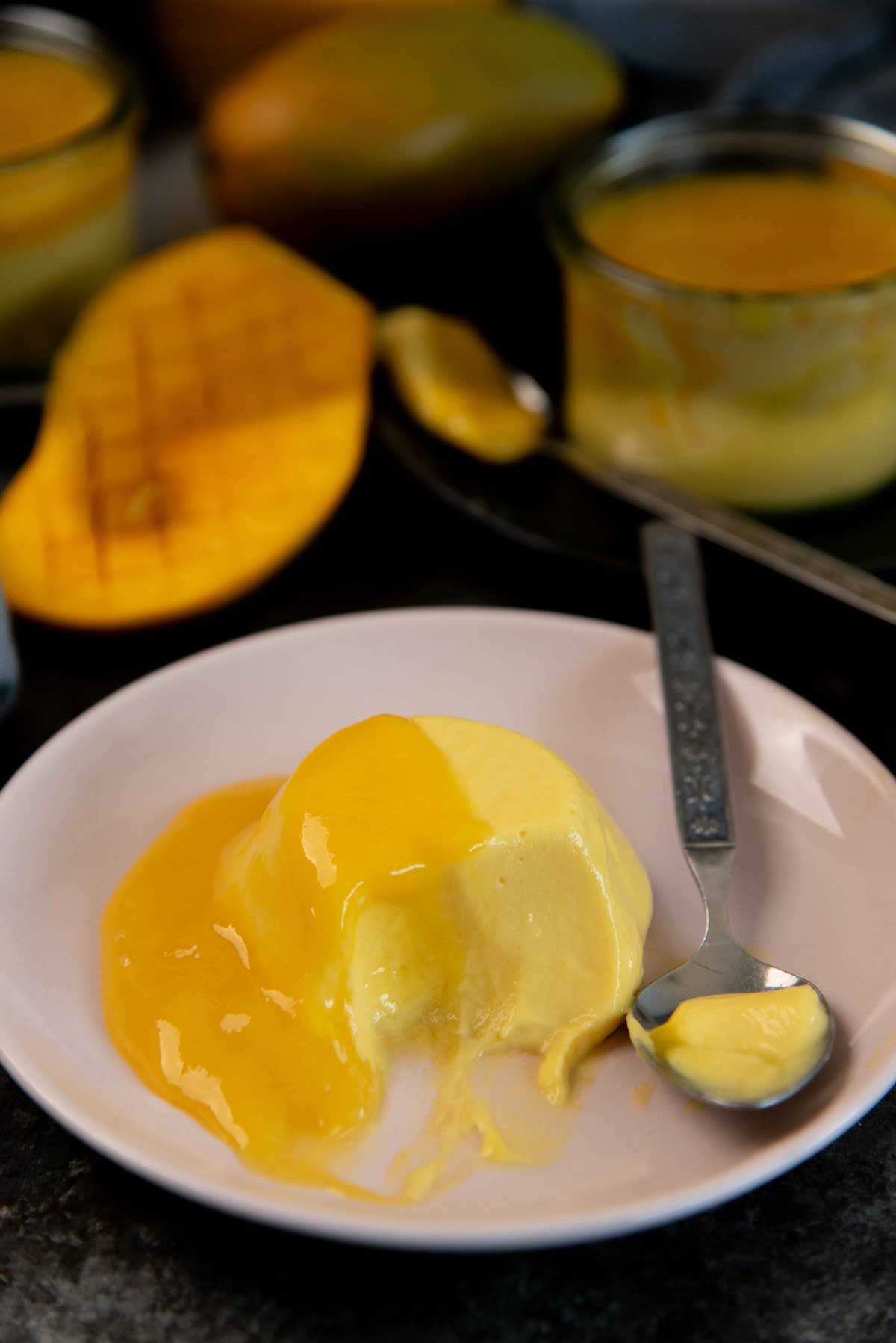
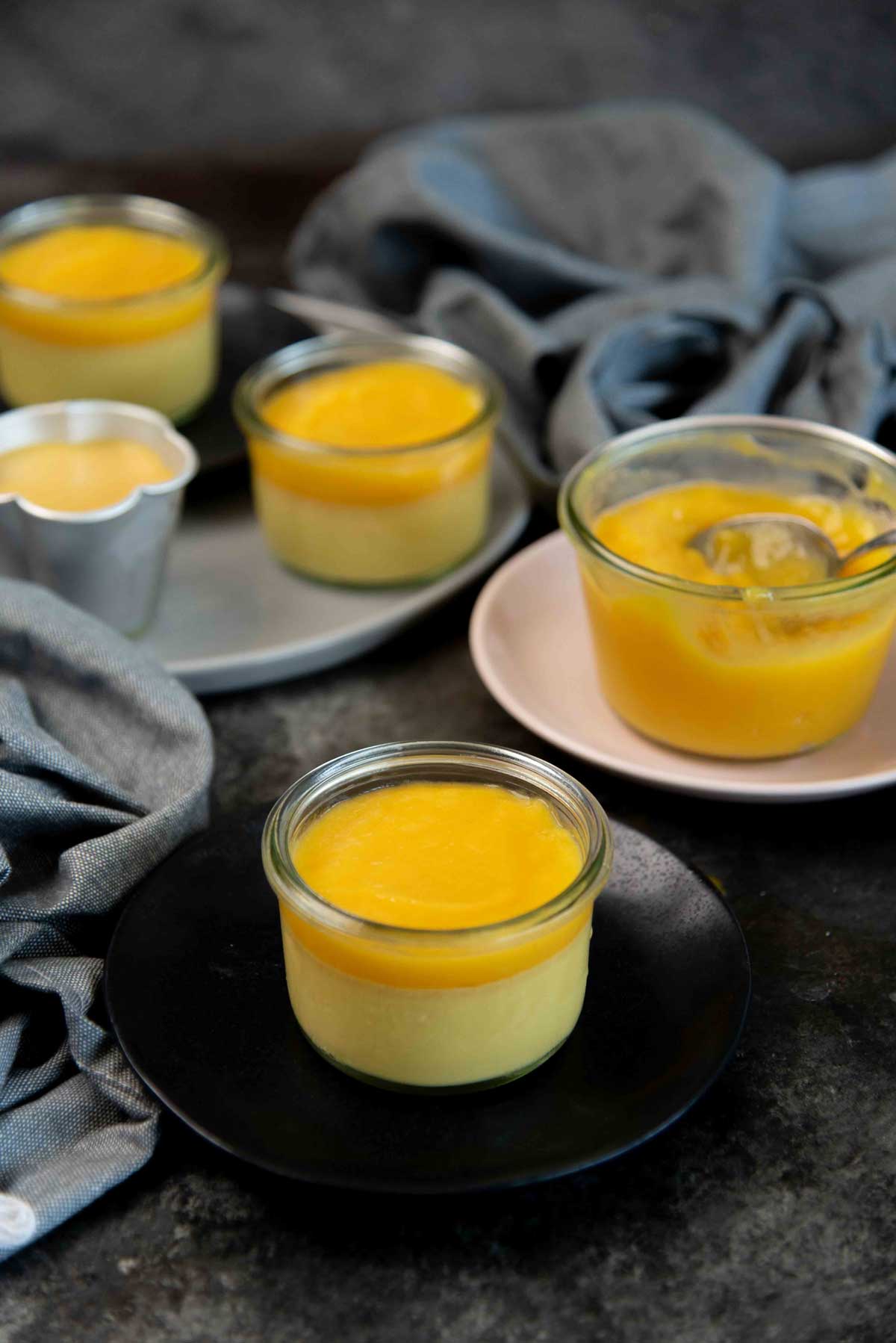
Creamy, silky smooth, delicious mango panna cotta with fresh mangoes or frozen mangoes, or even mango pulp (frozen or canned).
And to top it all off (literally!), I show you how to make an easy mango jello (mango gel) for even more of that sweet, tropical flavor of mango!
Growing up in Sri Lanka, we were always surrounded by mangoes. Ripe, juicy mangoes, straight from the tree, any time we wanted them, any time of the year!
We’d make so much mango curry, mango popsicles, and mango sorbet etc., because there’s only so much you could eat straight out of your hand.
And once I moved away from Sri Lanka, I used to wish I had a never-ending supply of mango, lychee, and rambutan. Well, that’s unlikely to ever be the case now that I call Ottawa my home. But I’ll always find ways to make the most of fresh mangoes whenever they are in abundance here!
This mango panna cotta is another one of my favorite mango recipes, because I can freeze in-season mango and then use them during the long winters here to make this delicious mango dessert!
Why this recipe works

- This mango panna cotta recipe highlights the sweet, tropical flavor of mango, but you can add an EXTRA layer of mango flavor with the mango gel.
- You can use fresh mangoes, frozen mango, or mango pulp (frozen or canned) to make this recipe!
- It’s easy to transform this recipe into a MANGO LASSI panna cotta too, and I explain how to in the recipe as well.
- I share which mangoes are best to make this dessert, and how to make the most of the mangoes that are available to you.
- Panna cotta is such a simple yet impressive dessert to serve, and I show how to enhance the flavor of mango in this version too.
Best variety of mangoes to use
You can use any type of mango as long as it tastes good! That’s the most important tip.
However, there are mangoes with fiberless (or low-fiber) flesh and fibrous flesh. This can affect the consistency of the final panna cotta.


Tips for the best texture
Fiberless (or low-fiber) mango will produce a smoother pulp than fibrous mango, which will result in a smoother panna cotta.
If you only have access to fibrous mango, you can blend the pulp longer in your blender to break down more of the fibers, and then pass it through a sieve to remove larger fibers. This will give you a smoother panna cotta consistency.
Ingredient notes
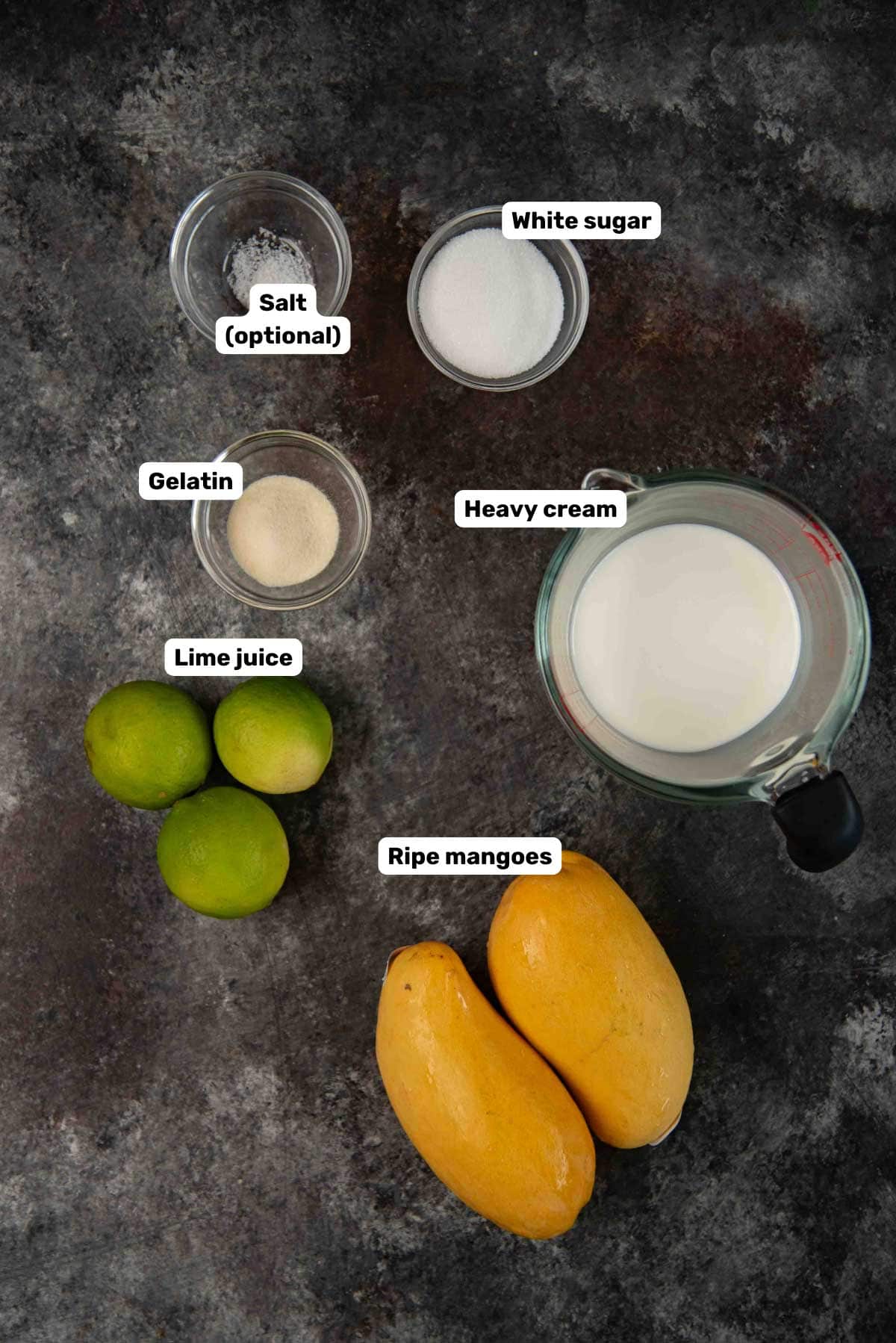
- Mango
- I’m using fresh mango here. Specifically honey mangoes (Ataulfo) that have fiberless, smooth flesh that’s very sweet when perfectly ripe.
- I have made this with frozen mangoes, but depending on the season, they may not be as sweet, and may need a little extra sugar to enhance the mango flavor.
- You can use kesar mango pulp that’s commonly available in Indian / Asian food section, or South Asian grocery stores.
- Sugar – White sugar. Add less for ripe mangoes and more for mangoes that are not at peak ripeness.
- Heavy cream – At least 35% fat. Crucial to give the panna cotta that creamy texture.
- Lime juice – To enhance the mango flavor. Lime is better, but you can use lemon juice.
- Salt – Optional. As a South Asian who grew up eating mango chutney and mango relish, and fresh mangoes with chili and salt, I LOVE a little salty kick in this recipe. But you can leave it out, if you prefer.
- Gelatin – I used powdered gelatin that has a bloom strength of about 225. You can also use gold gelatin sheets that have a bloom strength of about 200.
- Water – To bloom the gelatin.
How to make mango panna cotta
Step 1 – Prepare the mangoes
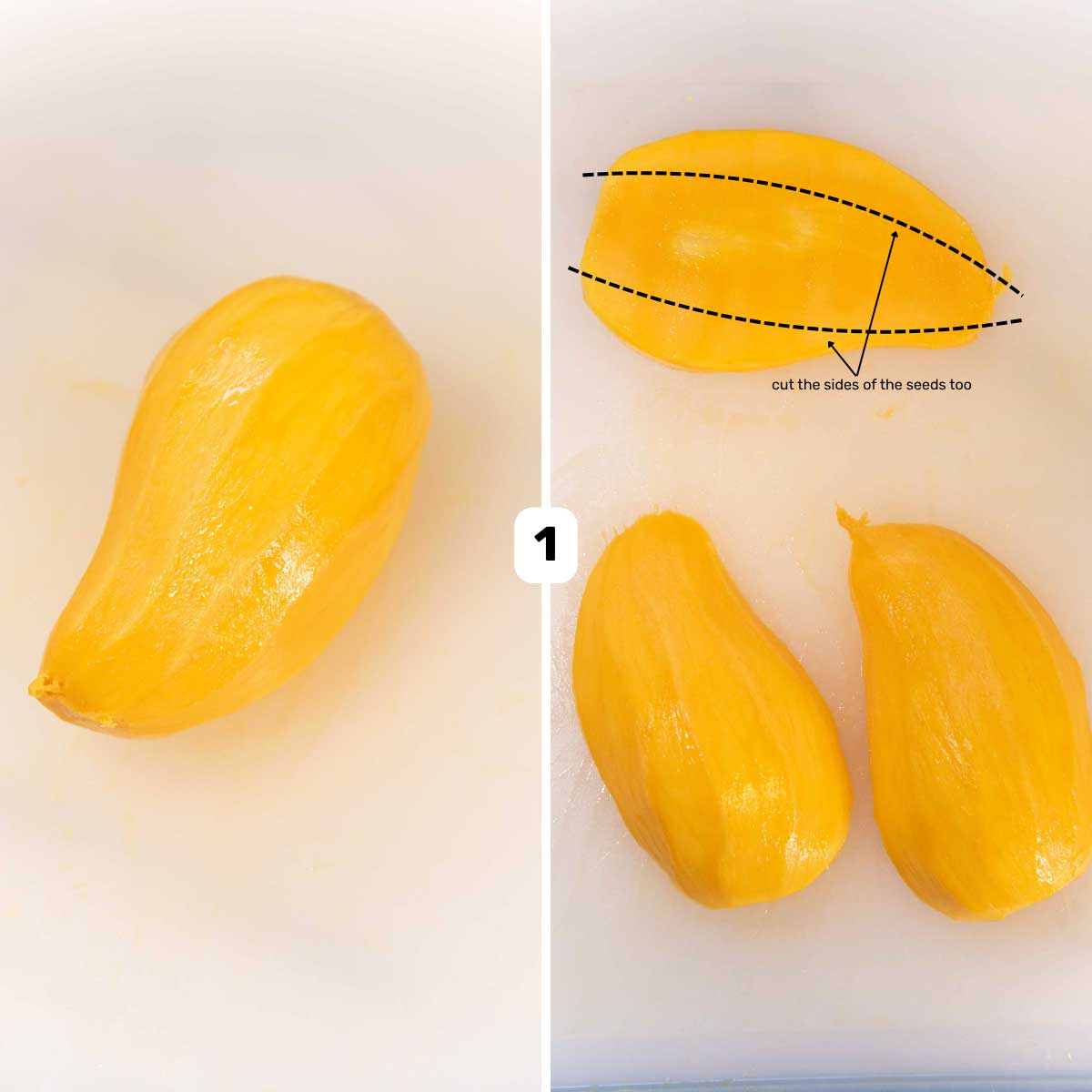
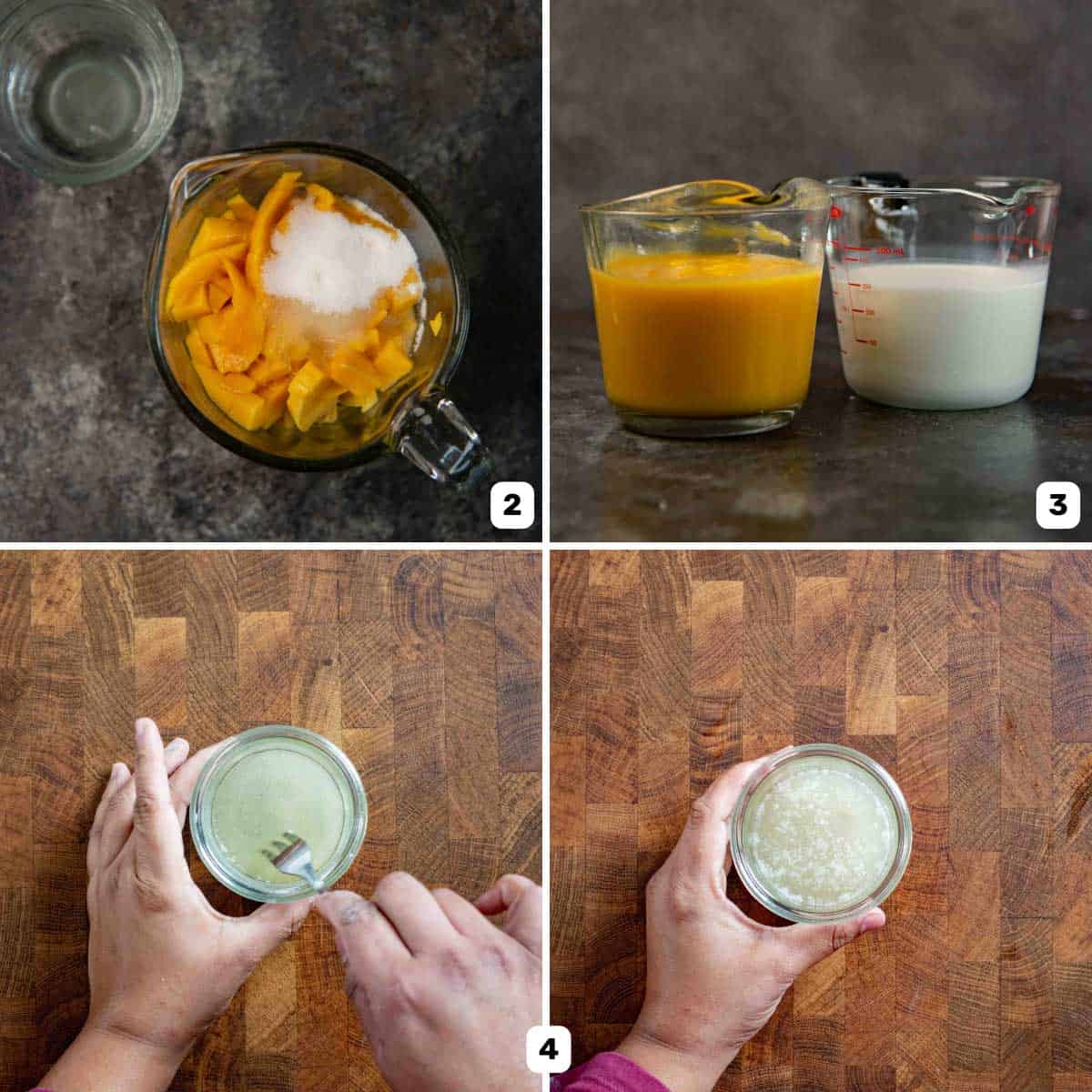
Peel and cut the flesh off the mango seed (image 1). Place the flesh in a blender jug (image 2). You’ll only need to add sugar to make the mangoes (and the panna cotta) sweeter, if you want.
Blend the flesh well and pass it through a sieve to get rid of any large pieces / strings of fiber to get a silky smooth mango pulp.
Measure and make sure you have enough mango pulp for the recipe, and then divide it into two portions – for the panna cotta (image 3) and the mango gel.
Step 2 – Bloom the gelatin (for the panna cotta and mango gel)
Place the water in microwavable bowls. Sprinkle the gelatin into the bowl with the correct amount of water. Stir to combine and let it sit for at least 10 minutes until the gelatin has absorbed all the water (image 4).
Step 3 – Make the panna cotta base
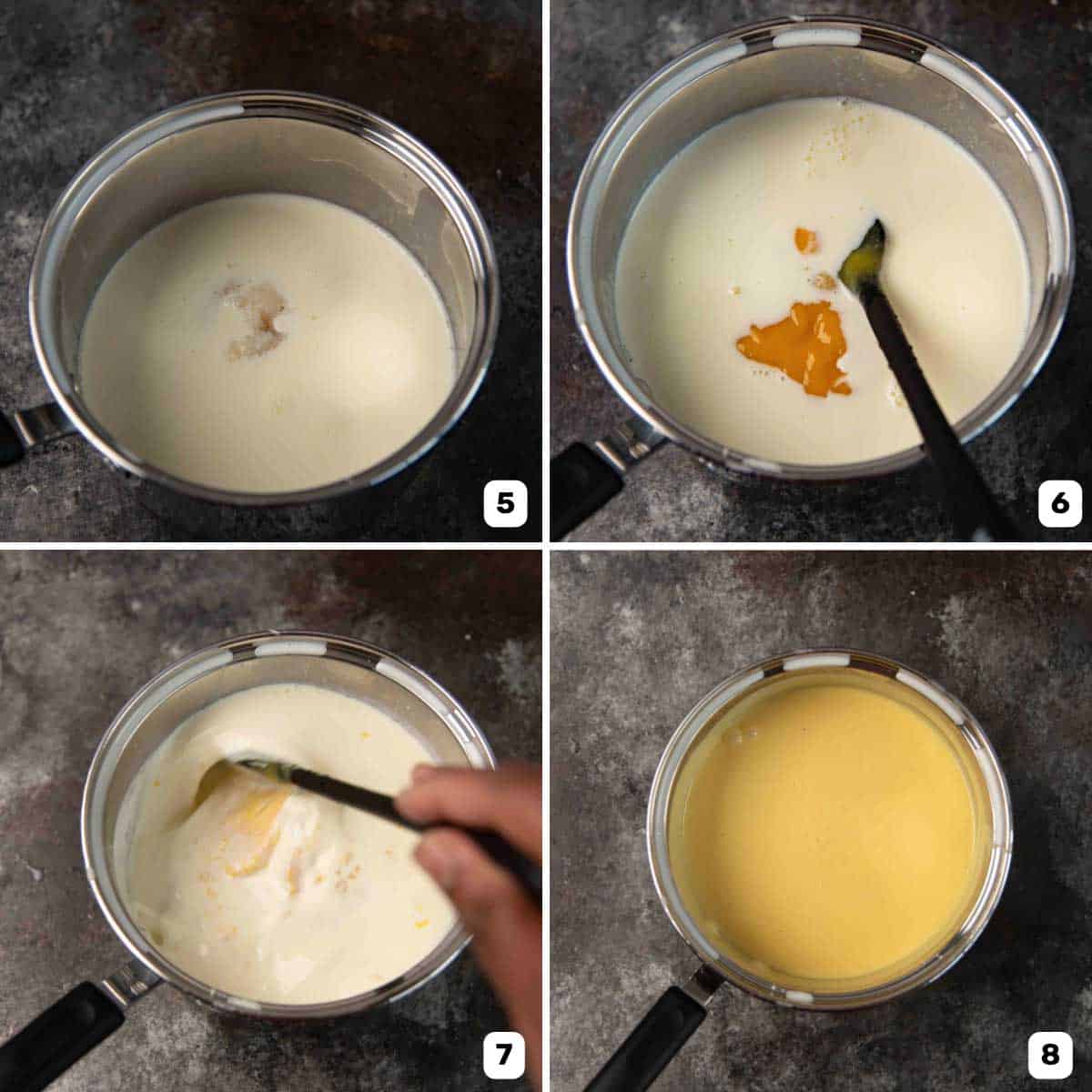
Place the cream and sugar in the pot and heat over medium heat until the cream starts to simmer. Remove the pot from the heat, and add the first portion of bloomed gelatin and whisk to completely dissolve the gelatin (image 5). Make sure there’s no grainy gelatin in the cream mixture.
Once the gelatin is dissolved, add the mango mix and stir until thoroughly combined (images 6 – 7). Taste and add more sugar if needed (depends on the sweetness of the mango).
Step 4 – Divide and refrigerate
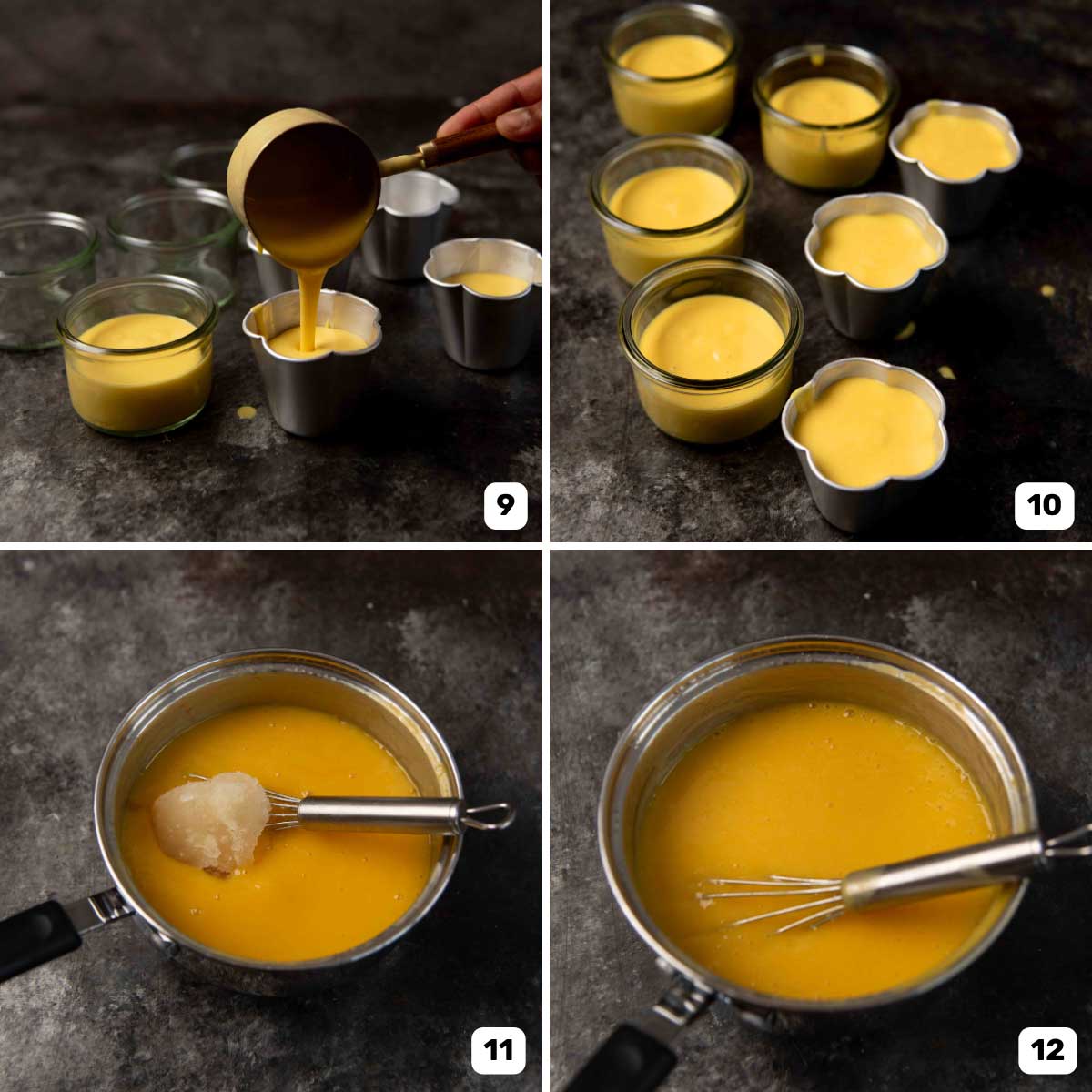
Apply a very thin layer of butter or coconut oil inside 6 ramekins that are about 5 fl oz / 150 mL capacity. Metal ramekins are ideal and easier to unmold than ceramic or glass ramekins.
Alternatively, you can set the panna cotta inside individual serving dishes or one large dish as well.
Divide the panna cotta mixture between the 6 ramekins, i.e. about 130 – 140 mL per portion (images 9 – 10). Refrigerate the mixture to set, ideally overnight.
Step 5 – Make the mango jello mixture (optional)
Place the remaining mango puree and sugar in a pot. Heat over medium heat until the mango puree is just starting to simmer.
Immediately lower the heat to the lower setting and add the second amount of bloomed gelatin (image 11). Stir / whisk until the gelatin is dissolved (image 12).
To make the mango gel, place the mango mixture in a container and let it set in the fridge until set, along with the panna cotta (image 13).
Step 6 – Make the mango fluid gel
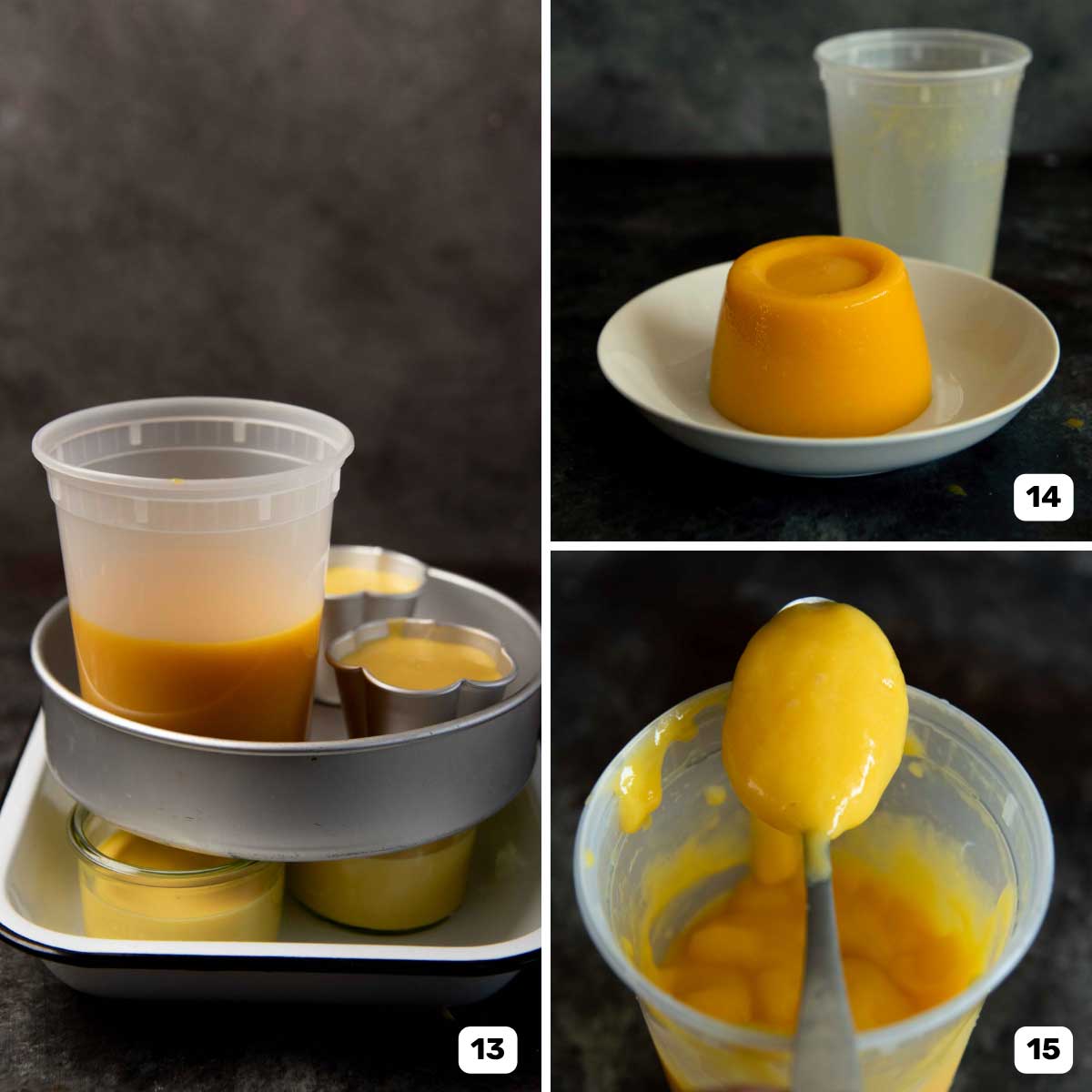
The mango jello will set fairly firmly (image 14). Place this in a blender, OR in a large container that can be used with a stick blender / immersion blender.
Blend the jello to get a smooth paste (image 15). This is the mango fluid gel. You can store this in the fridge until you’re ready to serve the panna cotta. It firms up a little, but can be stirred to make it smooth again.
Step 7 – Prepare mango panna cotta to serve
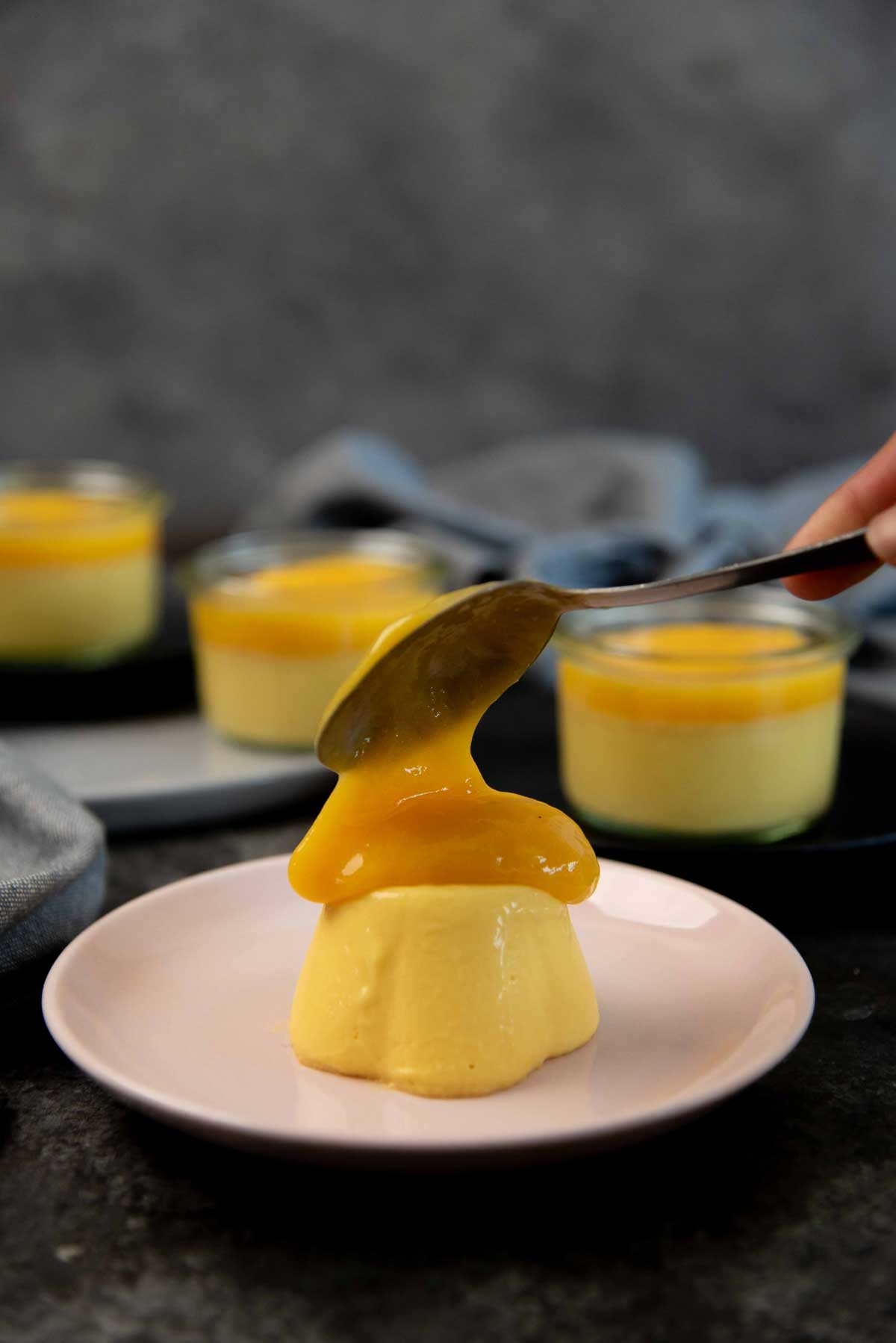
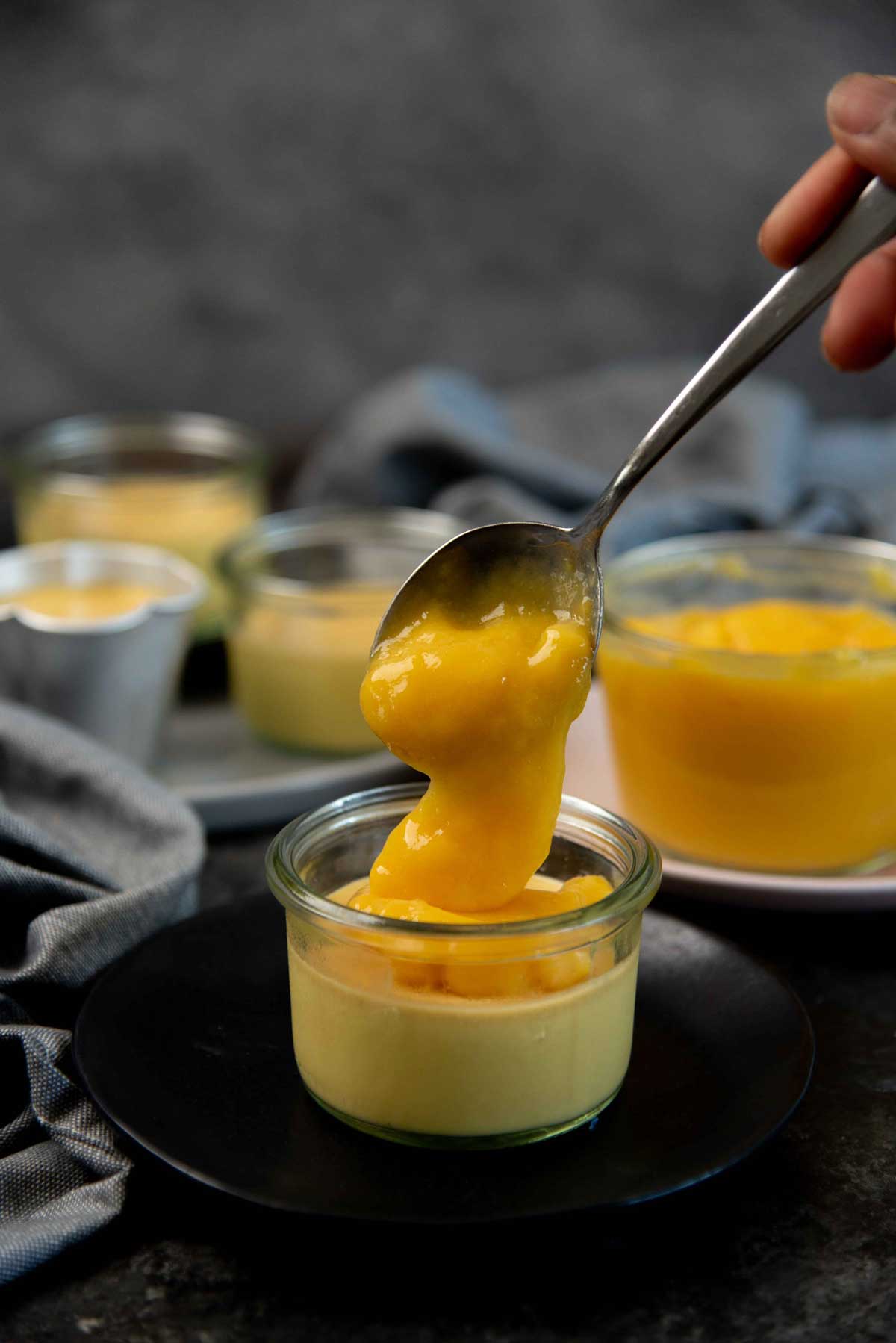
Either unmold the panna cotta onto a serving plate, or serve directly in the same dishes they were made in.
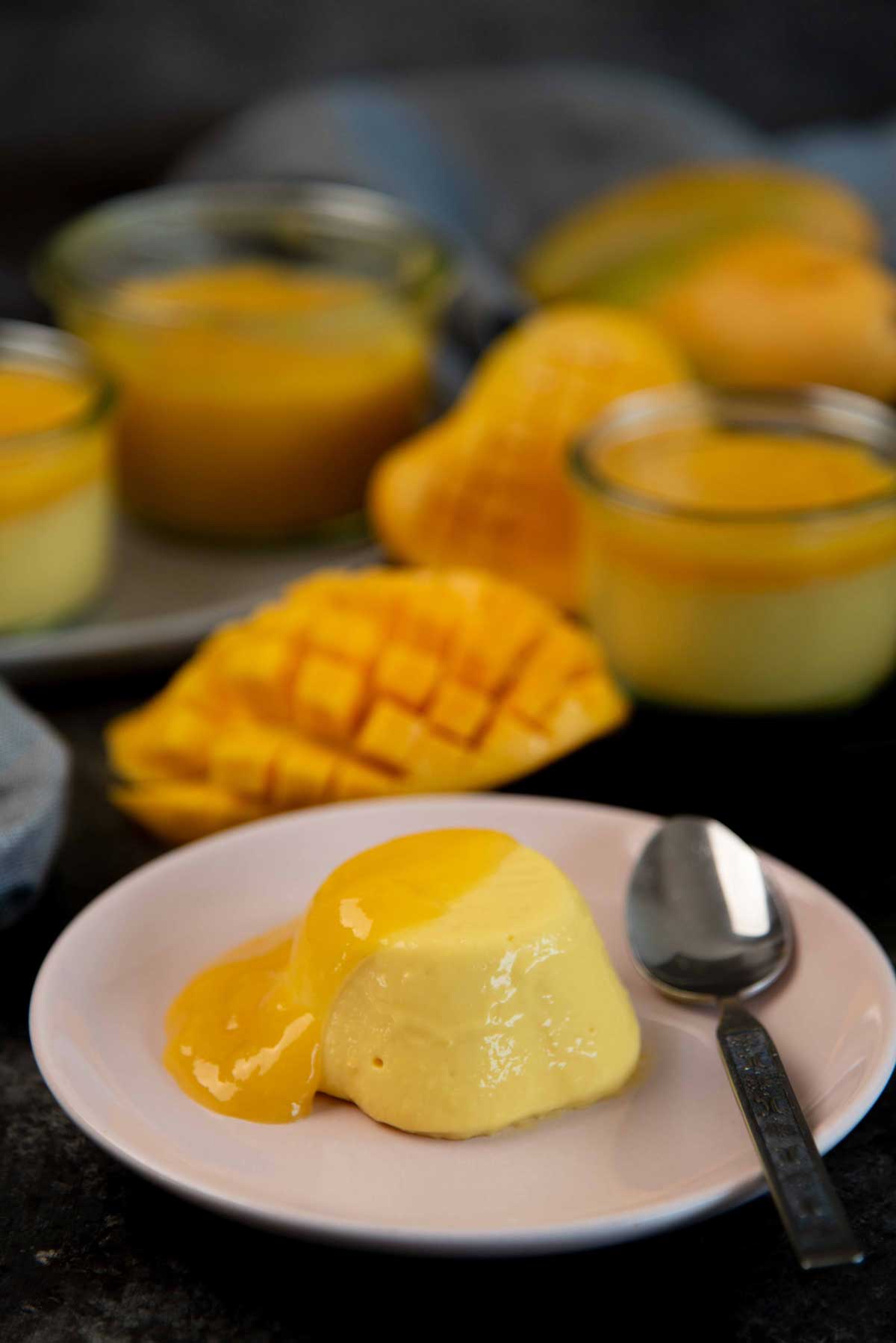
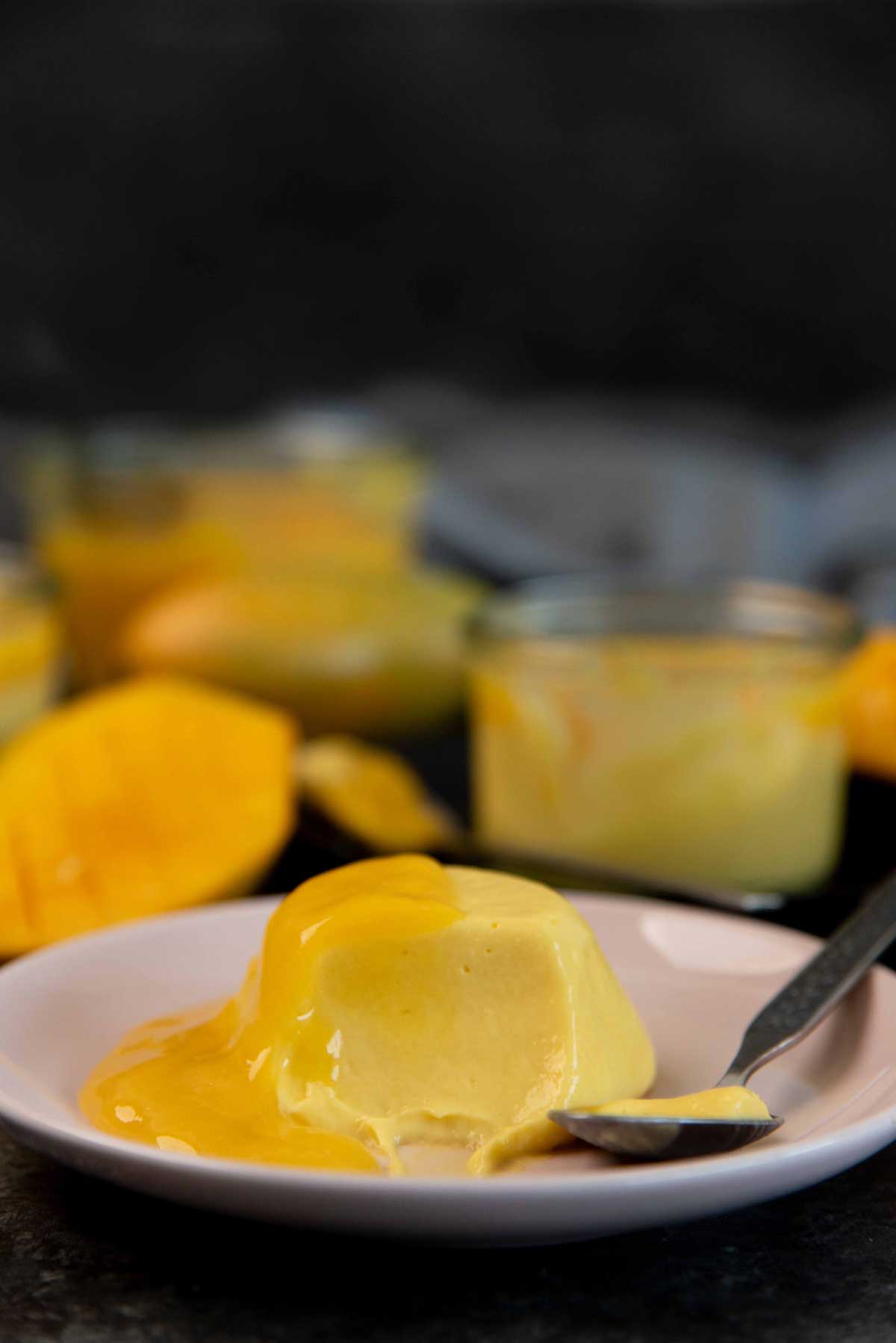
To unmold, lower the metal ramekin into hot water for a few seconds to loosen the sides just slightly. Then turn it onto a plate and tap the ramekin or gently shake it to release the panna cotta.
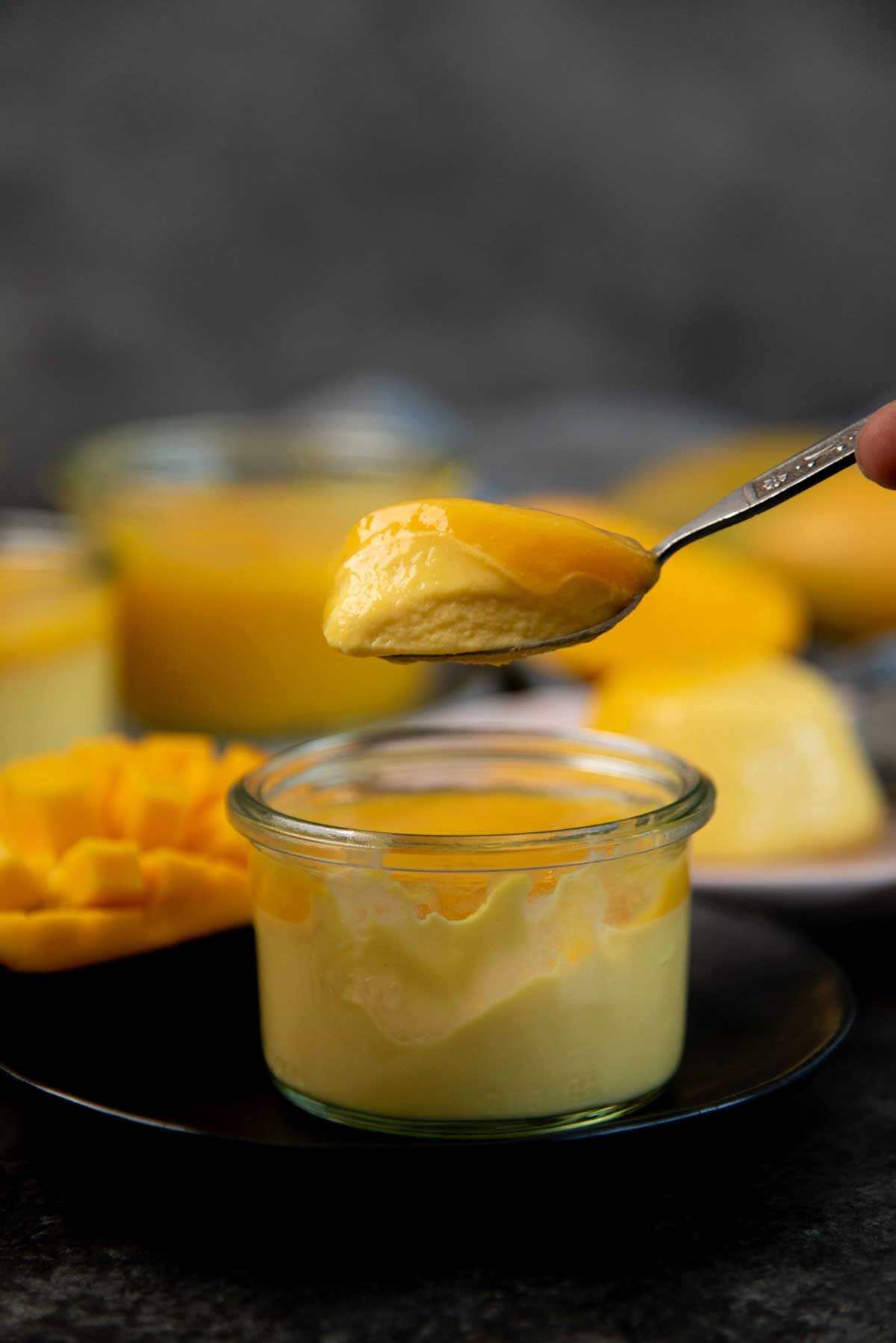
The mango fluid gel can be served on top of the unmolded panna cotta like a “sauce”. Or you can add a thin layer of the fluid gel on top of the set panna cotta that will be served in the dish.

My best recipe tips
- The sweeter the mango, the less sugar you’ll need to add to the panna cotta mixture.
- The sweetness will absolutely enhance the mango flavor!
- Citrus, such as lime juice, also highlights the sweetness and flavor of mango, so don’t skip it.
- If you’re using fresh or frozen mango flesh, make sure to pass it through a sieve to remove any fibers. The smoother the mango pulp / puree, the silkier your panna cotta will also be.
- Don’t skip the gelatin blooming step! This helps to dissolve the gelatin better in the panna cotta mixture.
- Powdered gelatin and leaf gelatin are bloomed differently, so make sure to follow the correct instructions.
- While you can use agar agar in this recipe, it may not have the same texture.
- Gelatin weight should be between 1 – 1.5% of the total weight of the panna cotta mixture.
- Agar agar should be about 1% of the total weight of the panna cotta mixture.
- Gelatin should not be boiled (for too long), as it can reduce its setting capacity. However, agar agar must be boiled to activate its setting capacity.
- Panna cotta has a softer texture than jello, so you have to unmold the dessert carefully.
- Using metal ramekins will make it easier to unmold panna cotta. You can also use jello molds that have sealed lids for easier unmolding.
- If you don’t have metal ramekins, set the mango panna cotta in small dishes that you can use to serve the panna cotta in directly.
Mango panna cotta variations
- Mango lassi panna cotta – Substitute the heavy cream with half buttermilk and half greek yogurt (ideally a rich yogurt with full fat or higher). The gelatin must be dissolved in the buttermilk or mango puree, as the yogurt should not be heated. If you like mango lassi, you’ll love this variations.
- Mango coconut panna cotta – A twist on mango and sticky rice! Substitute the cream with coconut milk or coconut cream. Make sure the coconut contains guar gum or some stabilizer to prevent the coconut milk from separating. Then serve this with the mango gel or fresh mangoes and sticky rice! I love creamy mango coconut popsicles, so this tropical flavor combo for panna cotta is a no-brainer.
Toppings for this panna cotta
I’m already sharing the recipe for a delicious mango fluid gel that’s perfect as a topping here. But here are a few more options for mango panna cotta toppings,
- Fresh mango slices
- Diced fresh mango macerated with a little sugar and lime juice (great option if your mango isn’t too sweet or is frozen)
- Lychee (canned or fresh)
- Whipped cream (like I do with this coffee panna cotta)
- Mango coulis or mango compote (mango cooked with sugar and pureed – similar to the toppings I use in my buttermilk panna cotta recipe or coconut panna cotta or matcha panna cotta).
Recipe FAQs
Can I make dairy free / vegan panna cotta?
You could. You can substitute the heavy cream with coconut cream or coconut milk (with added stabilizers).
Agar agar can be substituted for gelatin, but I haven’t personally made this with agar agar. The amount you’ll need will be similar to that of gelatin, but the texture will be different.
What’s the best way to store this?
This can be refrigerated for up to 5 days. Make sure to cover the dishes with plastic wrap to prevent the top skin from drying out.
Can I make this panna cotta with mango coulis?
You could. I prefer not to add too much sugar to my mango mixture, and some coulis can contain more sugar than needed. If you take this into account, then it’s totally possible.
My mango panna cotta isn’t setting?
Make sure you’re accurately measuring all the ingredients. The gelatin used should be a minimum of 1 % in weight, or up to 1.5 %. Anything less, the panna cotta won’t set properly.
Can I use a muffin pan to set the panna cotta?
Yes, you can! But unmolding them will be tricky. The whole muffin pan must be carefully dipped in hot water, and all the panna cotta portions must be unmolded at once.
Place a large tray (that’s large enough to cover the top of the muffin pan) on top, and flip it over to allow the panna cotta to fall onto the tray.
Using a parchment paper in between may make it easier to move individual panna cotta portions off the tray when needed.
Recipe

Mango Panna Cotta
US based cup, teaspoon, tablespoon measurements. Weight measurements are recommended for accurate results whenever available.
Common Measurement ConversionsIngredients:
Mango panna cotta
- 360 mL mango puree strained, 1 ½ cups (about 2 – 3.5 mangoes)
- 1 – 2 tbsp lime juice or to taste
- 360 mL heavy cream 35 % fat, 1 ½ cups
- 75 g white sugar ¼ cup + 2 tbsp
- Pinch of salt or up to ¼ tsp salt (optional)
- 9 g gelatin powder 225 bloom strength, 3 tsp (see recipe notes for gelatin leaves substitution)
- 45 mL water 3 tbsp
Mango fluid gel
- 240 mL mango puree strained, 1 cup (about 2 – 2.5 mangoes)
- 25 g white sugar 2 tbsp, add more to taste
- 1 tbsp lime juice
- 4 g gelatin powder about 1.5 tsp
- 20 mL water 4 tsp, or up to 1 ½ tbsp / 22.5 mL
Instructions:
For both recipes
Mango
- The amount of mangoes needed for this recipe will depend on the size of the mangoes, and how fibrous the flesh is. Use less if you’re not planning on making the fluid gel. I used honey mangoes that have about 150 – 170 g of flesh per mango.360 mL mango puree, 240 mL mango puree
- Wash and peel the mangoes. Then cut the flesh off the seed of the mango. Cut the cheeks and sides into smaller pieces and place them in a blender or jug.
- If using frozen mangoes – thaw the flesh at room temperature before blending.
- Blend the mango to make the puree / pulp. Either in a blender or with a stick blender.
- After blending the mango well, pass the puree through a sieve (shouldn’t be a fine sieve) to remove any large fibrous / stringy pieces.
- Measure out 1.5 cups (about 360 g) for the panna cotta, and about 1 cup (240 g) for the mango fluid gel.
Mango panna cotta
- Place the water in a microwave-safe bowl and sprinkle the gelatin over it. Stir to combine and let it sit for 10 minutes until the gelatin absorbs all the water. Set it aside until you need it.9 g gelatin powder, 45 mL water
- In a pot, combine the heavy cream, sugar, and salt (if using). Heat over medium heat until the cream comes to a simmer.360 mL heavy cream, Pinch of salt, 50 g white sugar
- Remove from the heat and add the bloomed gelatin and whisk until the gelatin is dissolved.
- Mix the mango puree with the lime juice. Then add this to the heavy cream mixture and whisk to combine.360 mL mango puree, 1 – 2 tbsp lime juice
- Taste and add the extra sugar (2 tbsp) if needed.25 g white sugar
- Lightly grease 6 metal ramekins that are 5 fl oz / 150 mL capacity each if you want to unmold the panna cotta before serving. Alternatively, use 6 individual serving dishes (like glasses) that are about 6 – 8 fl oz / 180 – 240 mL capacity each.
- Measure about 130 – 140 mL of the mango panna cotta mixture for each ramekin. Place them on a tray and cover them with plastic wrap and let them set in the fridge for at least 6 hours.
Mango fluid gel
- Place the water in a microwave-safe bowl and sprinkle the gelatin over it. Stir to combine and let it sit for 10 minutes until the gelatin absorbs all the water. Set it aside until you need it.4 g gelatin powder, 20 mL water
- Place the 1 cup of mango puree in a pot with the sugar and lime juice. Heat over medium heat and stir while heating. When the mango is almost at a simmer, remove the pot from the heat and immediately add the bloomed gelatin and whisk to dissolve.240 mL mango puree, 25 g white sugar, 1 tbsp lime juice
- Taste, and add more sugar if needed while the mixture is still warm.
- Place the mango jello mixture in a container and let it set in the fridge for at least 4 hours.
- Remove the set mango jello and place it in the blender, or in a jug for an immersion blender.
- Blend the mixture until it’s smooth and has no lumps.
- Scrape the mixture back into a deli container or storage container. Cover and keep it in the fridge until needed.
Serving
Unmolding the panna cotta
- If you want to unmold the panna cotta, gently dip the metal ramekins in hot water for a few seconds. I like to bob them in and out a few times, being careful not to get any water into the panna cotta.
- Then place the serving dish over the top of the ramekin and flip it over. Tap the ramekin or shake it while holding it WITH the serving dish at the bottom. The panna cotta should slide out of the ramekin.
- Once unmolded, spoon the mango fluid gel over the mango panna cotta and serve.
Without unmolding
- Serve the panna cotta directly in the dish it was set in. You can spoon a layer of mango fluid gel over the top of the mango panna cotta any time after the panna cotta is set, or just before serving.
- Store in the fridge with plastic wrap covering them until you’re ready to serve.
Recipe Notes
Note on the gelatin
If you’re using gold gelatin sheets, substitute with 10.8 g gold gelatin sheets. That’s about 5 – 5.5 sheets.To bloom sheet gelatin
Fill a large bowl with room temperature water. Completely submerge the gelatin sheets in the water and let them soak for about 10 – 15 minutes, or until the gelatin sheets have softened. When you’re ready to add the gelatin to the heated cream, remove the softened gelatin sheets from the bowl of water and squeeze out any excess water. Then place the softened gelatin mass in the cream and stir to dissolve.Nutrition Information:
“This website provides approximate nutrition information for convenience and as a courtesy only. Nutrition data is gathered primarily from the USDA Food Composition Database, whenever available, or otherwise other online calculators.”











Leave a Reply