



Sweet, salty, and rich with plenty of umami flavor – these jammy Ramen Eggs (Ajitsuke Tamago) are simple, versatile, and perfect in your ramen bowl, or any other way you eat them!
My simple marinade for these ramen eggs includes mirin, soy sauce, and one non-traditional secret ingredient!
What are ramen eggs?
Japanese ramen eggs or ajitsuke tamago, (also referred to as ajitama or sometimes as soy sauce eggs / shoyu tamago / shoyu eggs), are soft boiled eggs that are typically marinated in a sweet-salty soy sauce and mirin mixture. This marinade lends ramen eggs their characteristic umami taste and that brown color on the outside.
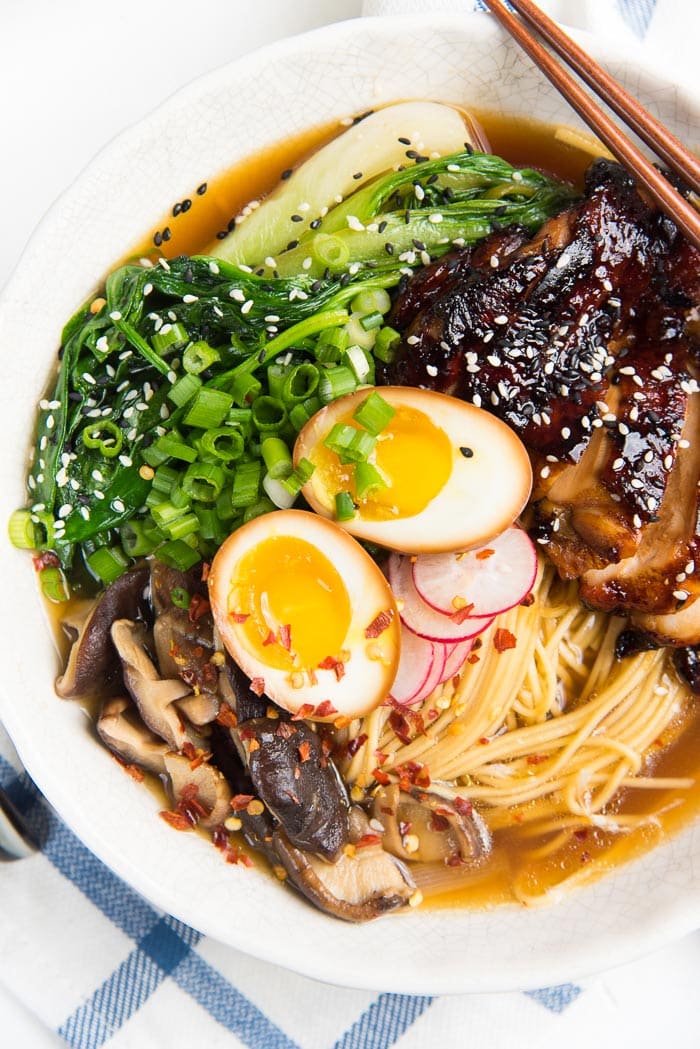
Ramen eggs are of course a popular topping for ramen noodles such as this shoyu ramen or pork ramen.
Hard boiled, soft boiled, poached, fried, omelet, deviled eggs, scrambled eggs…. when it comes to eggs, anything goes in our household. We love to eat eggs!
Marinated or seasoned eggs are one of my favorite ways to eat soft boiled eggs (and even hard-boiled eggs). I’ve tried different versions of seasoned eggs – pickled eggs and Chinese tea eggs being two that I really like.
But Ramen Eggs (Ajitsuke Tamago) have always been my favorite. And with good reason. They are easy to make, and are packed with flavor.
Ramen eggs are a staple in our fridge. It’s not so much that we always eat ramen eggs, but we always eat eggs. Any kind. I prefer soft boiled egg, while my husband likes hard boiled eggs for an on-the-go breakfast or snack.
So invariably, there are seasoned eggs as well, so that we don’t have to worry about salt and pepper when snacking on them.
Why you’ll love this ramen eggs recipe
1. Flavor – This ramen egg marinade has such robust umami flavor, that you only need to marinate the eggs for a minimum of two hours.
Occasionally, I leave the eggs in the marinade for about 24 hours and this will often make the flavor permeate all the way into the egg yolk! This makes the yolks taste extra jammy and rich, almost like they were preserved.
I do recommend leaving them in the fridge at least overnight, but if you’re in a hurry, marinate them for a minimum of 2 hours. Then you can transfer the eggs into an air-tight container and store them in the fridge for up to 5 days.
2. Versatility – The base of this seasoned ramen egg is so simple, but you can also infuse the marinade with different spices. However, if you’re adding other flavors, such as garlic, ginger, star anise or other spices, you have to heat / cook the mixture to allow those spices to properly infuse into the liquid.
My simple marinade for these ramen eggs includes only soy sauce and mirin, and it doesn’t require any heating, so it’s very easy. Sometimes I may add some cayenne pepper for a kick though.
3. Easy recipe – You have the option to make the marinade without cooking it at all. Because of the dark soy sauce, you add more flavor and color to the marinade and eggs. But you also have the option to add more flavor if you prefer by gently heating the marinade.
Since the eggs are cooked in boiling water, the eggs cook faster, and you don’t have to wait around for the eggs to be cooked. As opposed to cooking the eggs in cold water or letting the eggs sit in boiled water.
And if you want to keep the eggs in the marinade for longer, you can simply add water to dilute the marinade so that the eggs can take in the flavor more slowly, over a longer period of time.
Ramen egg ingredients
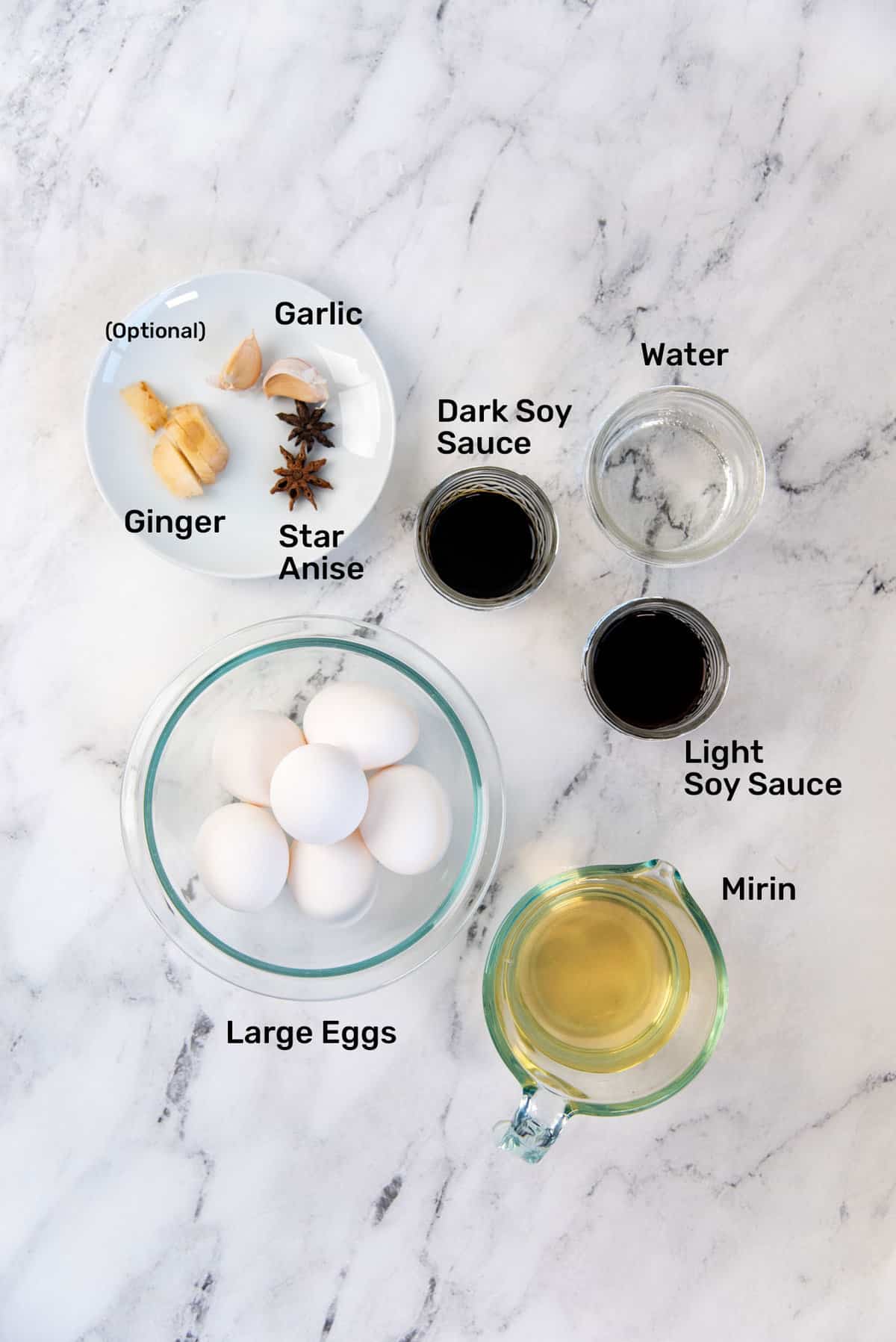
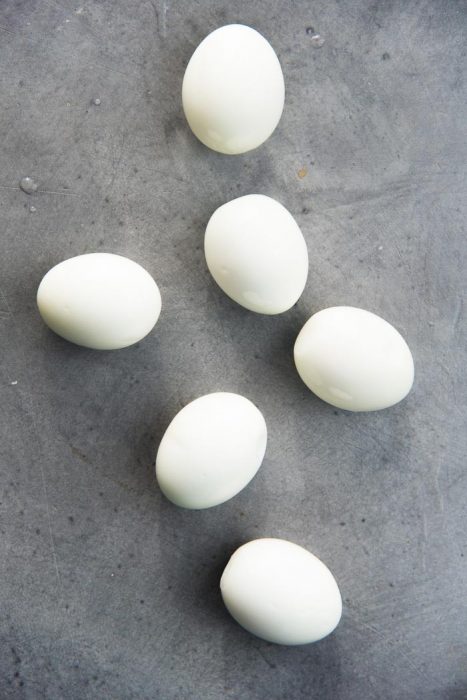
1. Large eggs – Large eggs are about 2 oz / 57 g in weight (with the shell). Make sure the eggs that you’re using are all fairly similar in weight, so that you have a better chance of getting consistent results.
If the eggs you use are significantly smaller than 57 g, the cook time will be shorter. Similarly, the cook time will be longer if the eggs are larger. (Small eggs are about 1.5 oz / 43 g, and XL eggs are about 2.25 oz / 64 g.)
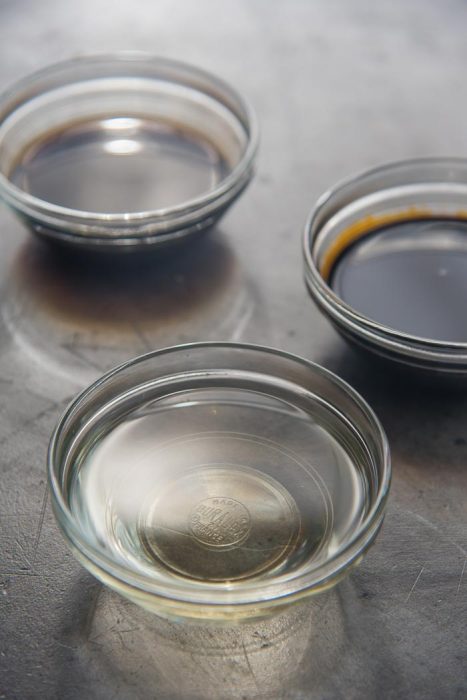
2. Mirin – This is Japanese sweet rice wine. This is a sweeter sake, with a lower alcohol content. However, you can absolutely use alcohol-free mirin as well. It’s a staple in Japanese cuisine, and is used to add sweetness to many dishes such as teriyaki.
Classic mirin might be harder to find and more expensive, but you can easily find AJI MIRIN in the supermarket, which is a non-alcoholic version of mirin. (Aji Mirin, means “tastes like mirin”). If you cannot find mirin, or aji mirin, you can use a dry white wine or sherry wine with a little extra sugar. You can also use any rice wine with added sugar (if it’s not too sweet).
3. Regular soy sauce – The regular soy sauce I’m talking about here is the classic “light soy sauce” (not light in sodium). Chinese soy sauce is more prevalent in the grocery stores, but you can also use any other type of light soy sauce.
Japanese soy sauce or Korean soy sauces work well too. If you are gluten free, then you can also use tamari. If you have any sodium dietary needs, you can also use low sodium soy sauce.
4. Dark soy sauce – This is my non-traditional ingredient for my ramen eggs recipe. Dark soy sauce is a thicker, darker colored soy sauce. It’s not as salty as light soy sauce, and has a much deeper umami, slightly sweet flavor.
It’s also thicker in consistency. You can find regular dark soy sauce in stores, and sometimes it may be labeled as mushroom soy sauce.
This is optional, but if you already have it, or you have ready access to it, I totally recommend it! It’s a Chinese condiment, not Japanese. If you want the Japanese equivalent, you can use Koikuhi sauce instead, but mushroom soy sauce is easier to find.
This is a Chinese dark soy sauce that’s been infused with straw mushroom flavor, giving it some amazing umami flavor on top of the sweet, aged richness of dark soy sauce.
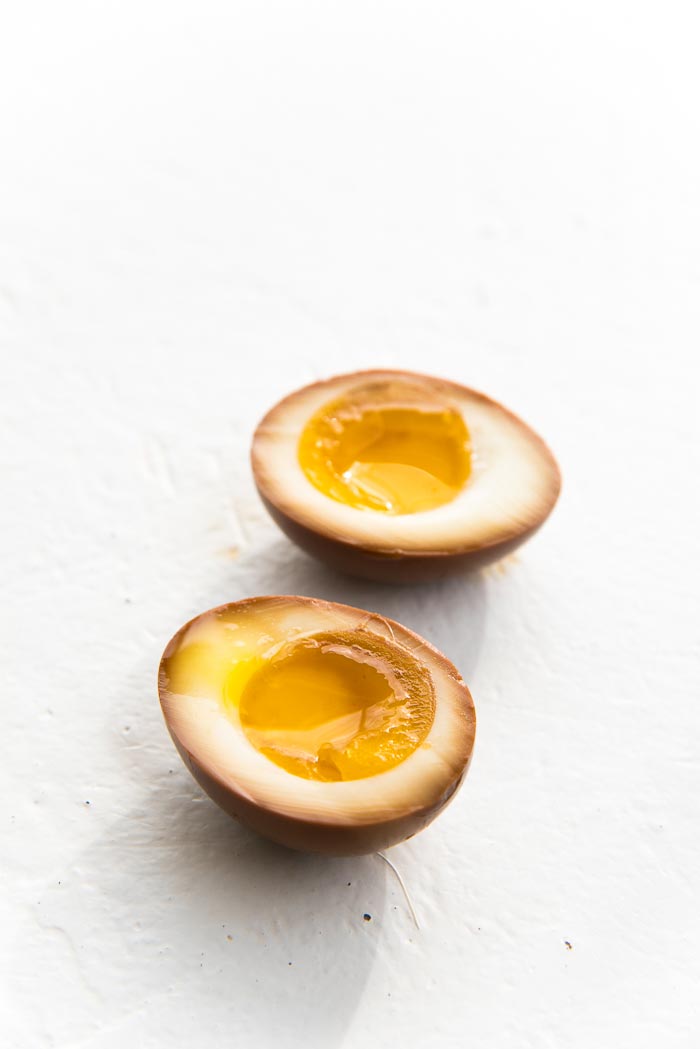
Another feature (advantage?) of using mushroom infused dark soy sauce is the deep color that it yields to the ramen eggs (as you can see in the pictures), in a short amount of time. Rich, sweet, salty… I guarantee these will be the best ramen eggs you’ve ever had!
5. Additional spices – An optional addition. Adding some spices and aromatics will add certainly add more flavor to your marinated eggs.
How to make ramen eggs
Prepping the water for boiling
Start with a large pot of water. This can be cold or hot water. Make sure there is enough water so that the eggs can sit in the pot with a little room (do not overcrowd it), and the water level comes at least 1 inch above the eggs. Place the pot on high heat (without the eggs), and heat to bring to a boil. Add some salt or vinegar to the water as well.
Salt or vinegar in the water will prevent the egg whites from leaking out if there are small cracks. However, this won’t prevent the egg white leaking if the cracks are big.
When the water is at a rolling boil, remove the pot from the heat momentarily. This will temporarily reduce the bubbles in the water.
Now gently lower the eggs into the hot water.
After you add all the eggs, put the lid back on and bring it back to a boil. Then lower the heat to a simmer and start the timer to cook the eggs. This cooking process reduces the chance of the eggs bumping into each other and cracking.
Cooking time for jammy eggs
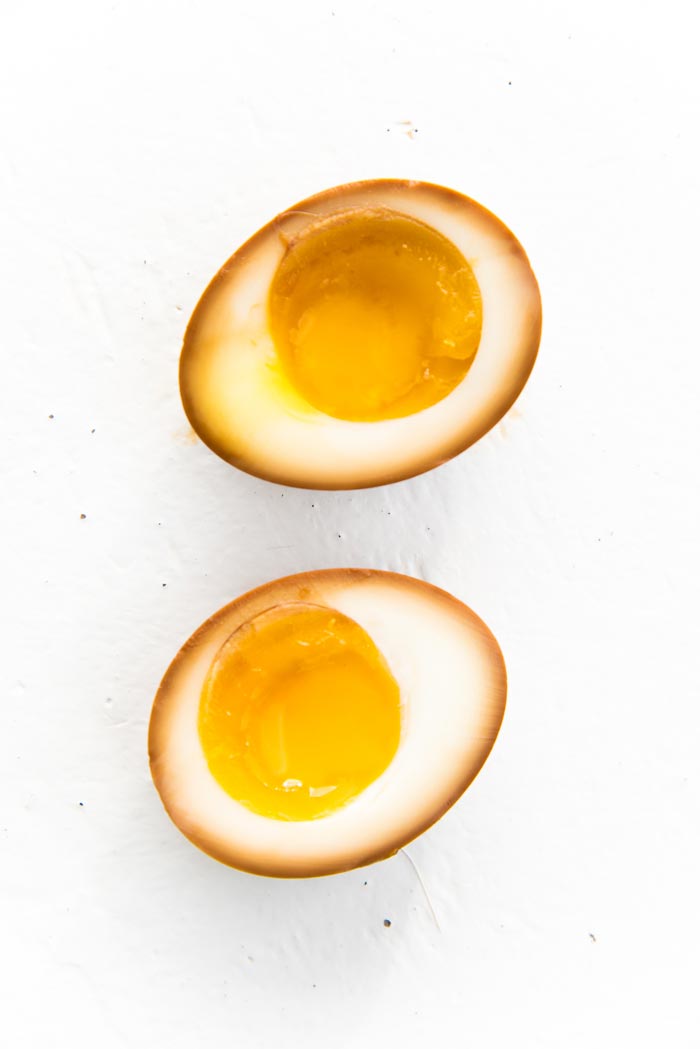
The timing is crucial for soft boiled ramen eggs! For perfect ramen eggs, you want eggs with delicious, jammy yolks. Not too runny, and not completely set either. Room temperature eggs cooked at,
6 minutes for a set white, but runny egg yolk.
6 ½ minutes for a set white, a jammy/runny yolk, as seen in the pictures in this post. This is my favorite.
As soon as the eggs are cooked, they MUST BE cooled down quickly to prevent over-cooking. Remove the eggs and place them in an ice bath, or in a bowl with the coldest water from your tap/sink, but keep the water running for a few minutes. This will only work if the water from the tap is very cold.
Dunking the eggs in the ice water bath immediately stops them from cooking further. You can set up the ice bath while the eggs are cooking.
Once the eggs have cooled down, carefully peel them. Make sure not to damage the eggs as you peel them because these eggs are softer than hard boiled eggs.
Marinating the eggs
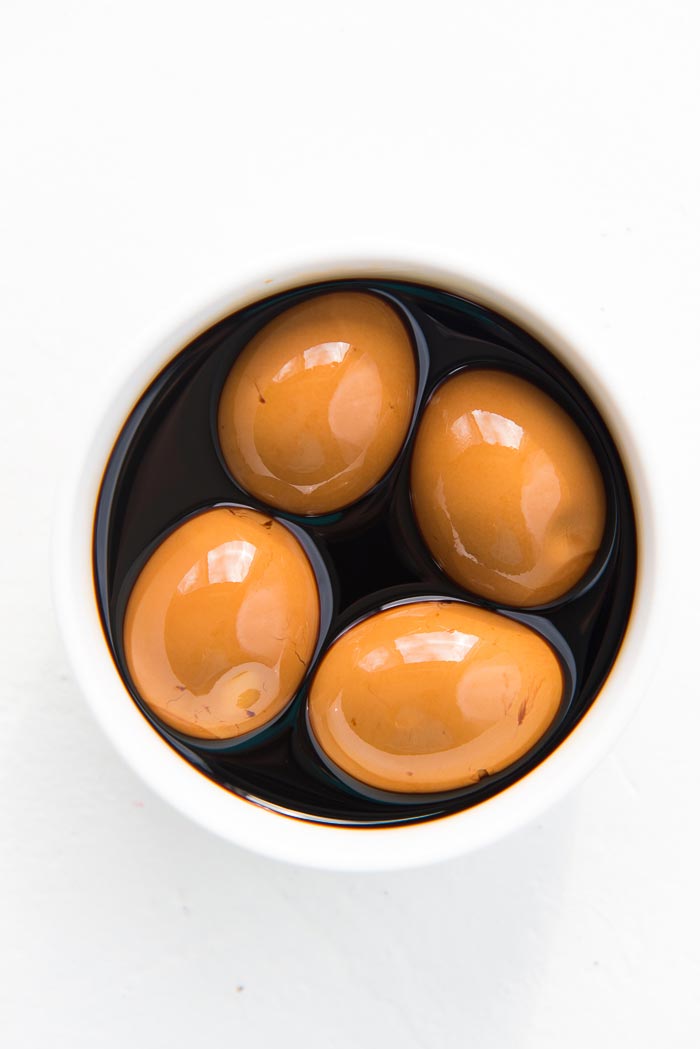
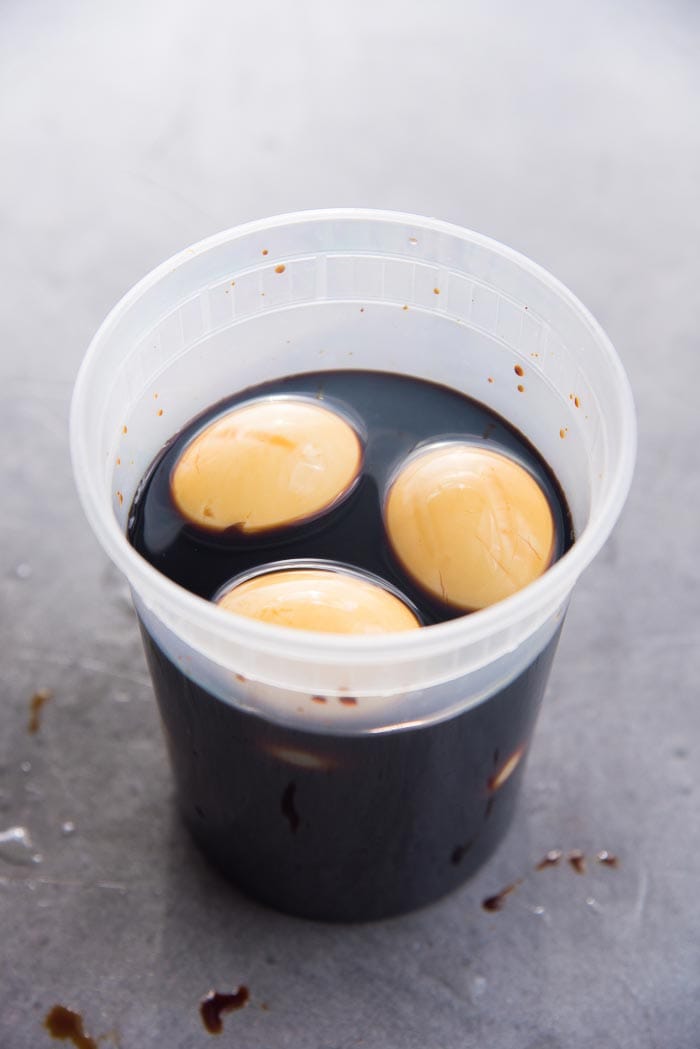
Mix all the ingredients for the marinade in a container. If you simmered the marinade (with spices), make sure that it has cooled down to room temperature. Place the eggs in the marinade, making sure the eggs are mostly submerged. You may need to move the eggs around periodically for the eggs to be well marinated.
Because of the dark soy sauce, the eggs will marinate and color well in about 2 hours, but you can leave them for even longer. If you plan on marinating the eggs for about 8 hours or longer, make sure to add some water to the marinade. This will prevent the eggs from being too salty.
The eggs are now ready to be eaten, however you like!
Important tips for this recipe
Hot water method for cooking the eggs
As mentioned above, I prefer to boil my eggs in already boiling water (hot water method).
You can also boil the eggs with the cold water method (eggs in cold water). This is also a great method to soft boil your ramen eggs. However, I prefer the hot water method because,
- The heating time can vary with the cold water method depending on the pot you use and your stove (how long it takes for the water to come to a boil).
- I don’t have to wait for the water to boil to start timing the eggs.
- It’s faster, and it’s ALWAYS consistently 6 – 6 ½ minutes with the hot water method.
Cooling and peeling the eggs
The easiest way I peel eggs is to gently crack the egg shells from top to bottom. Then starting from the bottom (the wider end) of the egg, I start peeling the shell a little at a time. I do this under running water because it just makes it easier to peel!
You need to make sure the egg surface is smooth for ramen eggs for purely aesthetic reasons. Otherwise, the marinade will very clearly highlight the raggedy surface.
No cook soy sauce marinade
Since this is a no cook soy sauce mixture, you can just place all the ingredients in a container and stir to mix. If you want to add spices like, garlic, star anise and chili etc, you will have to heat the soy sauce mirin mixture to infuse the flavors. Allow the heated mixture to cool to room temperature before you add the eggs.
Let the ramen eggs marinate for a minimum of 2 hours, but you can even let them marinate for 12 hours, and up to 24 hours! If you do want to marinate it longer, I recommend adding a little water to the marinade. This is to dilute the saltiness of the soy sauce-based marinade, because otherwise some may find it too salty.
Tips to ensure a jammy egg yolk
Start with room temperature eggs. This way the cook time is always consistent. If you use refrigerated eggs, you will need to add another minute or so to the cook time.
Cook for exactly 6 minutes and 15 – 30 seconds, and immediately cool down the eggs in an ice bath.

To cleanly cut your ramen eggs
To get nice clean cuts in your ramen eggs, use a sharp, straight edged knife. Serrated knives will create serrated cuts, and dull knives might squash the eggs a little and create cracks.
Time saving tips
You can’t rush this recipe. But here are some tips to help you along.
- Plan ahead and keep the eggs at room temperature.
- Keep an ice bath ready to chill the eggs quickly.
- Make a large batch so you can eat these eggs all week long!
- I use dark soy sauce which will give the ramen eggs the flavor and color faster than traditional ramen eggs made with only soy sauce.
Serving suggestions
Ramen eggs are meant to be eaten with ramen! So, slice an egg in half and serve it in your favorite ramen. Whether it’s an instant ramen stir fry, chicken ramen, pork ramen, or even this mazemen ramen, these soy sauce eggs are a delicious side dish.
You can also make these delicious and gorgeous devilled ramen eggs, with miso egg yolks!
Ramen eggs can also be eaten just as is as a great snack, or with toast.
Storage instructions
Store the eggs in an airtight container. They will last in the fridge for up to 5 days.
If you dilute the marinade with water, then the eggs can be stored in the marinade for the whole 5 days. Make sure the eggs are not cracked, so that the egg yolks will not leak out while they marinate.
If the marinade is not diluted, then remove the eggs from the marinade after about 4 hours, and store the eggs in an airtight container separately.
Frequently Asked Questions
How long do soft-boiled ramen eggs last?
Jammy ramen eggs will last 5 days in the fridge. They do not freeze well unfortunately, so only make enough eggs for 5 days, at a time.
Can I re-use the marinade for more eggs?
Absolutely! This ramen eggs marinade is re-usable. I’ve used the marinade for up to 3 weeks. I store it in an air-tight container in the fridge and re-use it whenever I’m preparing more eggs.
Sometimes, I might use a little of the marinade to marinate chicken to make caramelized soy chicken, like in this easy chicken ramen.
It’s a little different from the classic marinated egg recipe, but I think you’re going to LOVE the addition of mushroom soy sauce, which really elevates these ramen eggs!
Can you reheat ramen eggs?
Because the yolks are perfectly cooked to a jammy consistency, reheating the eggs may overcook the egg yolks. So, I do not recommend reheating the eggs in the microwave.
However, you can let the eggs sit in the hot ramen soup, which can reheat the eggs gently. You can also use hot water, but be careful to only let it sit in hot water for a couple of minutes.
Can you make ramen eggs ahead of time?
Yes, you can! Ramen eggs must be consumed within 5 days. However, please remember that the shelf-life of any type of food depends on how it’s handled, and how fresh it was to begin with.
If the eggs smell off, or have a weird discoloration or textural changes, then please discard.
Other recipes you may like,
If you enjoyed these ramen eggs, you can also check out this delicious recipe for ramen deviled eggs, that are filled with a creamy miso filling!

Equipment and tools I use for this recipe
Kitchen Timer – To set the time so you can ensure perfect soft-boiled eggs.
Slotted spoon – To help move the eggs from the pot to the bowl of ice water.
32 ounce Deli Containers – I love these containers to marinate these eggs. They hold the marinade, and then hold enough eggs in them as well.
Recipe

Ramen Eggs
US based cup, teaspoon, tablespoon measurements. Weight measurements are recommended for accurate results whenever available.
Common Measurement ConversionsIngredients:
For the eggs
- 4 – 5 large eggs 2 oz / 57 g in weight (plus more in case any of the eggs crack!)
For the marinade
- ¾ cup mirin or Aji mirin
- ¼ cup regular soy sauce
- ¼ cup dark soy sauce if you can’t find this, substitute with an equal amount of regular soy sauce + 1 tbsp brown sugar
- ½ cup water up to ½ cup (optional). Add the water if you want the eggs to marinate for longer than 6 hours in the fridge
Optional spices
- ½ tsp cayenne pepper
- 2 cloves of garlic, or 1 inch piece of ginger sliced
- 1 star anise
Instructions:
Ramen eggs
- Fill a large pot with water. Make sure the pot is large enough for the eggs to sit at the bottom in one layer, and for the water level to be about 1 inch above the eggs.
- Add some salt or a little vinegar to the water (this is to prevent the egg whites from leaking out if there are any small cracks while the eggs are cooking).
- Bring the water to a boil over high heat with the lid on. Then lower the heat to medium or medium high, so that the water is still bubbling but not at a rolling boil (the eggs are more likely to crack at a rolling boil).
- Gently lower each egg into the water. (If any eggs crack while being lowered into the water, I would use them to make omelet or scrambled eggs instead!).4 – 5 large eggs
- As soon as you've lowered all the eggs into the water, place the lid back on, and immediately set the timer as follows to cook the eggs to your preference.5 ½ minutes for set, but soft egg whites, and runny egg yolks – these eggs are very delicate.6 minutes for a set white, but runny egg yolk. 6 ½ minutes for a set white, a jammy/runny egg yolk (as seen in the pictures in this post). This is my favorite. 7 minutes for a set white, and a half set egg yolk.
- While the eggs are cooking, set up an ice bath for the eggs, or a bowl full of cold tap water in the sink (where the water can be kept running).
- When the time is up, remove the eggs and immediately place them in a bowl with cold running water for at least 2 – 3 minutes, OR place them in the ice bath for a few minutes.
- Carefully peel the eggs by gently tapping them on a hard surface to create little cracks all over the surface. (The eggs cooked for 5 ½ minutes will be trickier to peel than those cooked for 7 minutes.)
- Once peeled, place the eggs in the (cooled) marinade. For those eggs cooked for 5 ½ minutes, put the marinade into a bowl where the eggs can be placed along the bottom in one layer.
- Let the eggs marinate for at least for 2 hours, or 8 – 12 hours for best results, or even up to 24 hours.
- Remove the eggs from the marinade and place them in a separate air-tight container. These can be stored in the fridge for up to 5 days.
- Keep the rest of the marinade in an air-tight container in the fridge. This can be re-used for up to 3 weeks.
Marinade
- Place the marinade ingredients (except water) in a tall container with an air-tight lid. Whisk to combine (if you added sugar, make sure the sugar is completely dissolved). The basic marinade is now ready.¾ cup mirin, ¼ cup regular soy sauce, ¼ cup dark soy sauce
- If you want to infuse the marinade with more flavor, place it in a small saucepan, along with ¼ cup of water. Add chili, or garlic, or ginger, or star anise (or all), and bring the marinade to a simmer. As soon as the sauce starts to simmer, remove it from the heat and let it cool to room temperature.½ tsp cayenne pepper, 2 cloves of garlic, or 1 inch piece of ginger, 1 star anise
- Put the infused marinade in a tall air-tight container, along with the cooked eggs to marinate, as described above.
- Add up to ½ cup of water to the marinade if you will be marinating the eggs for longer than 6 hours (in the fridge).½ cup water
Nutrition Information:
“This website provides approximate nutrition information for convenience and as a courtesy only. Nutrition data is gathered primarily from the USDA Food Composition Database, whenever available, or otherwise other online calculators.”



















Leave a Reply