




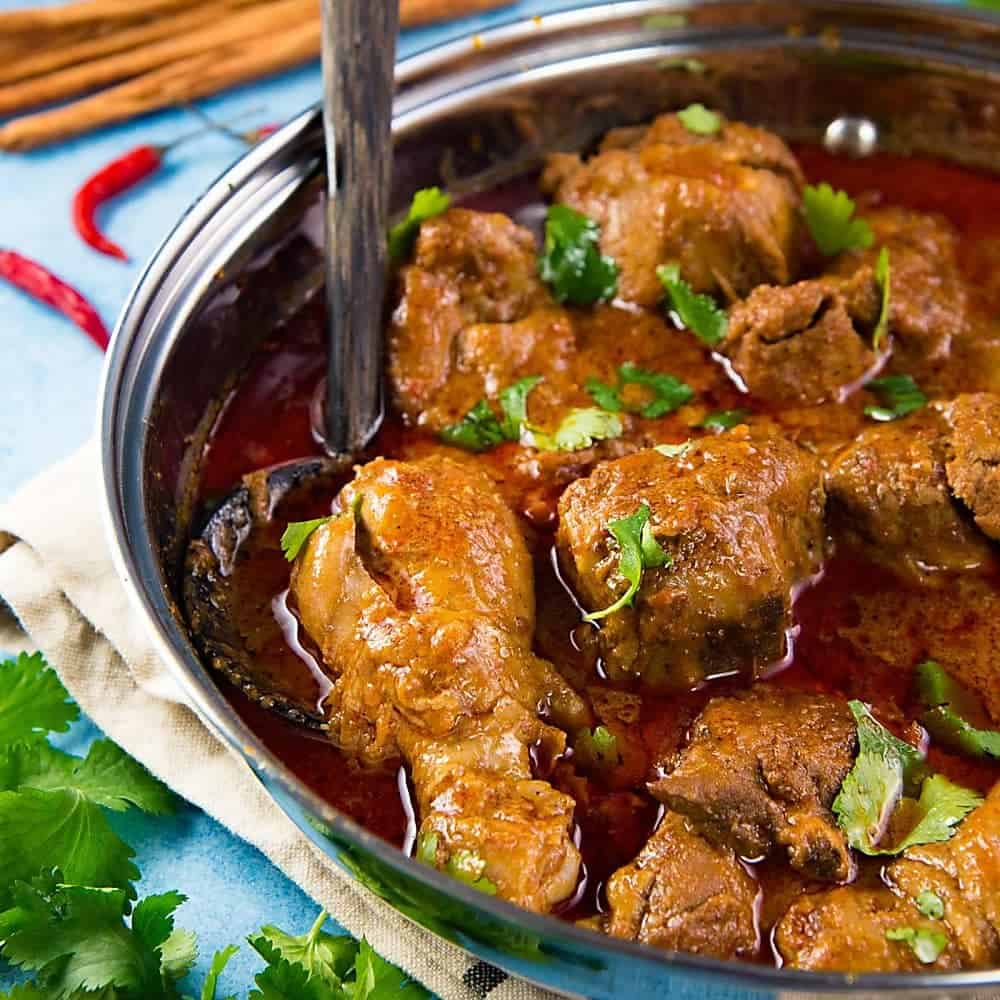
This is the Best Chicken Curry Recipe, bar none. An everyday chicken curry doesn’t have to be bland and pale and mushy. This is the most authentic chicken curry you can make with your own homemade curry powder that will upstage every other curry that you’ve ever had!
I also give you all of my tips and tricks to make the most flavorful chicken curry ever, and how to adapt it to your taste as well.
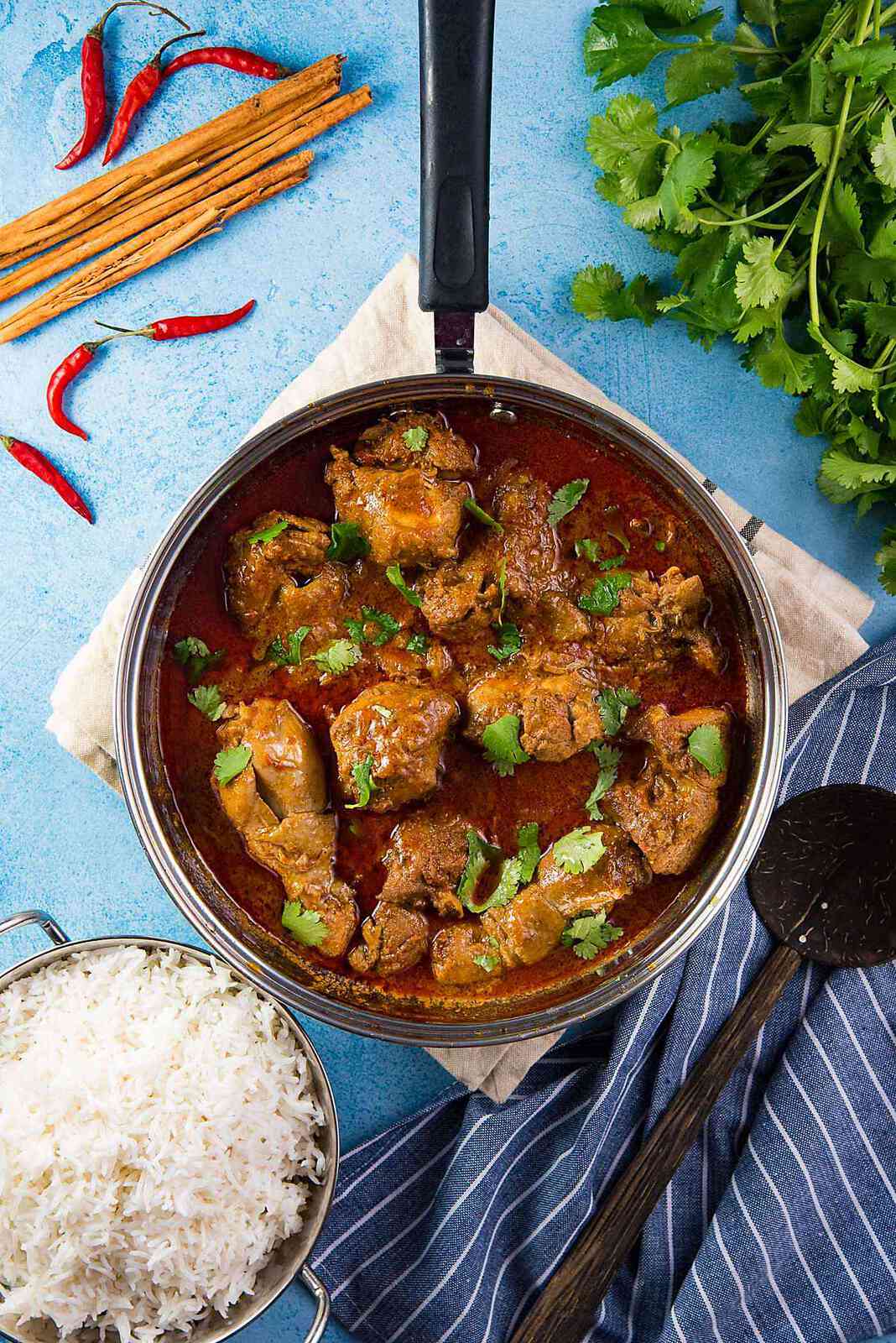
If there’s one dish that I could make with my eyes closed, then it’s this chicken curry recipe. That is no exaggeration and I mean that quite literally. Just a rough calculation in my head estimates that I’ve made this chicken curry and variations of it over four thousand times in my life so far.
This is quintessential comfort food for my husband and myself. Every time we cook this chicken curry, we are instantly reminded of Sri Lanka, of our childhood, of home, of full and comforting meals.
While we do like any type of curry (check out my vast collection of curry recipes on the blog), this chicken curry really is our go-to. Plus, chicken curry is probably the most common type of meat curry eaten in Sri Lanka and other parts of the world for that matter.
If you’re new to the world of curries, or even if you are a seasoned pro, this curry is a must try!
Why this chicken curry is special
- This is an easy recipe that is also truly authentic!
- Many recipes use store-bought curry powder that changes the flavor of the curry depending on the brand. This is CONSISTENTLY delicious, because YOU make your own homemade curry powder.
- You will honestly never have to follow any other curry recipes on the internet once you’ve made your own (roasted or unroasted) curry powder with my recipe.
- While it’s authentic, this recipe is also so adaptable! That’s the beauty of it. Don’t have coconut milk – no problem! Don’t like chili? No problem! Don’t have tomatoes? Just don’t add ‘em!
- This is a step by step recipe, and very it’s easy to follow even for novice cooks, and for anyone new to curries.
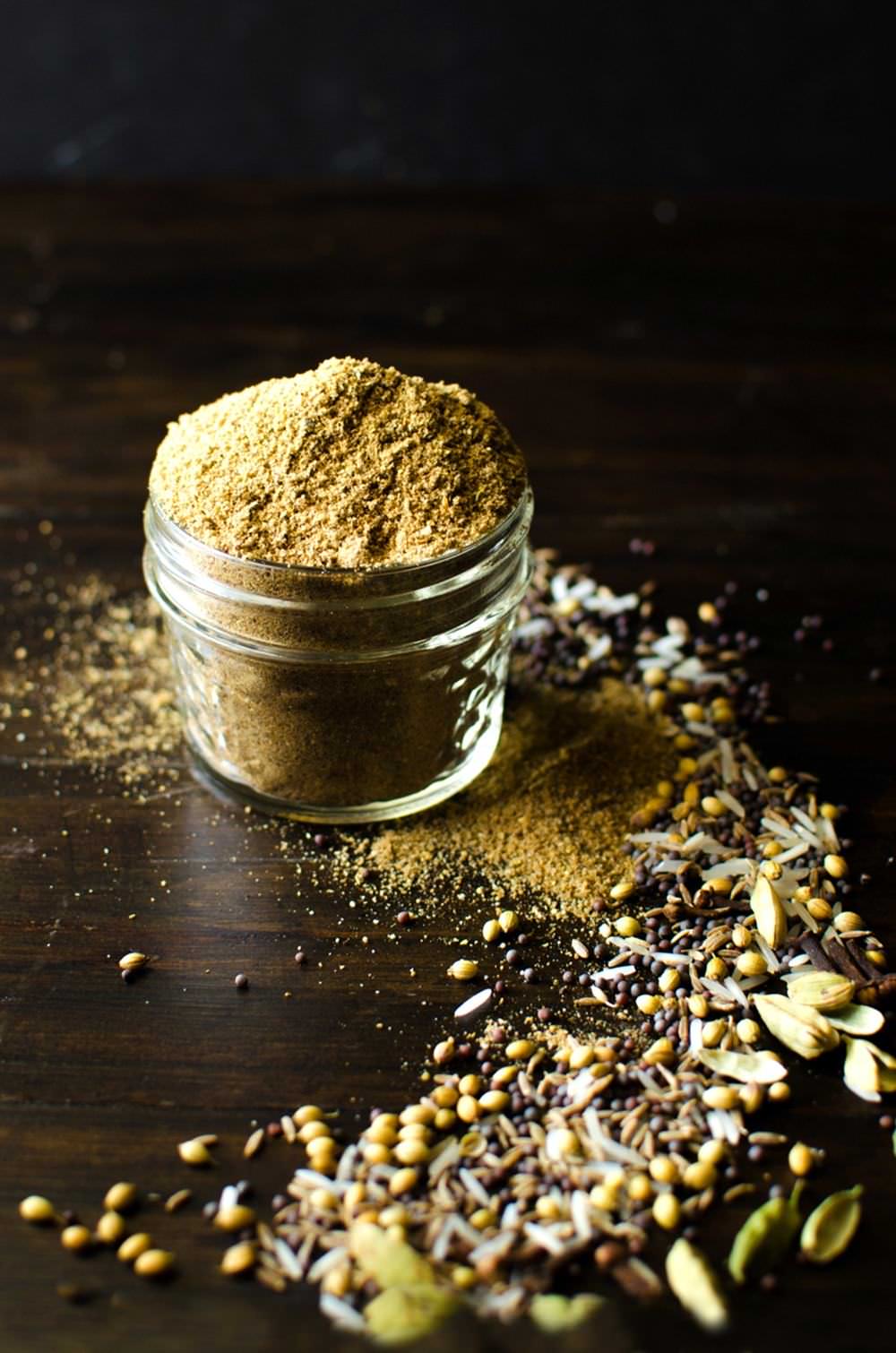
Chicken curry
Curry is a popular dish in Asian cuisine, and it refers to many dishes that are made with a mix of spices cooked together with either meat, fish, or vegetables. There is actually no one type of curry powder or curry paste, as this will change from region to region, dish to dish, and even from house to house.
A chicken curry is a dish made with a mix of spices cooked together with chicken. There are also many types of chicken curry that have unique names.
This includes,
South Asian chicken curries (types of Indian chicken curry, Sri Lankan chicken curry, and other South Asian preparations)
- Madras chicken curry
- Chicken kadhai
- Jaffna chicken curry
- Murgir jhol
- Chicken salan
- Dhaba chicken curry
Plus, the flavor-packed chicken curries from South East Asia and East Asia! Such as,
- Green curry and red curry from Thailand (and many more)
- Gulai ayam and rendang chicken curry from Indonesia
- Cà ri gà from Vietnam
- Japanese chicken curry
And that is just to name a few.
Sri Lankan chicken curry is especially underrated, and I’m here to show you why it’s the most flavorful chicken curry you can make!
This is an everyday chicken curry, but tastes truly authentic (because it is!) and complex with layers of flavor.
What an authentic chicken curry should be
To me and my family, a basic and authentic Sri Lankan chicken curry should be,
- spicy (and therefore more red in color than brown or yellow!),
- there’ll be some oil floating on top (especially, if the curry is made with coconut milk. The coconut milk is cooked with the chicken to the point where the coconut milk splits and the oil separates from the milk).
- the gravy is just so damn flavorful, you can drink it on its own!
- does not require hours at the stove to develop all that flavor.
This Sri Lankan chicken curry ticks all the boxes! It’s a versatile chicken curry recipe that you can adapt to your taste and still be absolutely delicious.
Ingredients for chicken curry
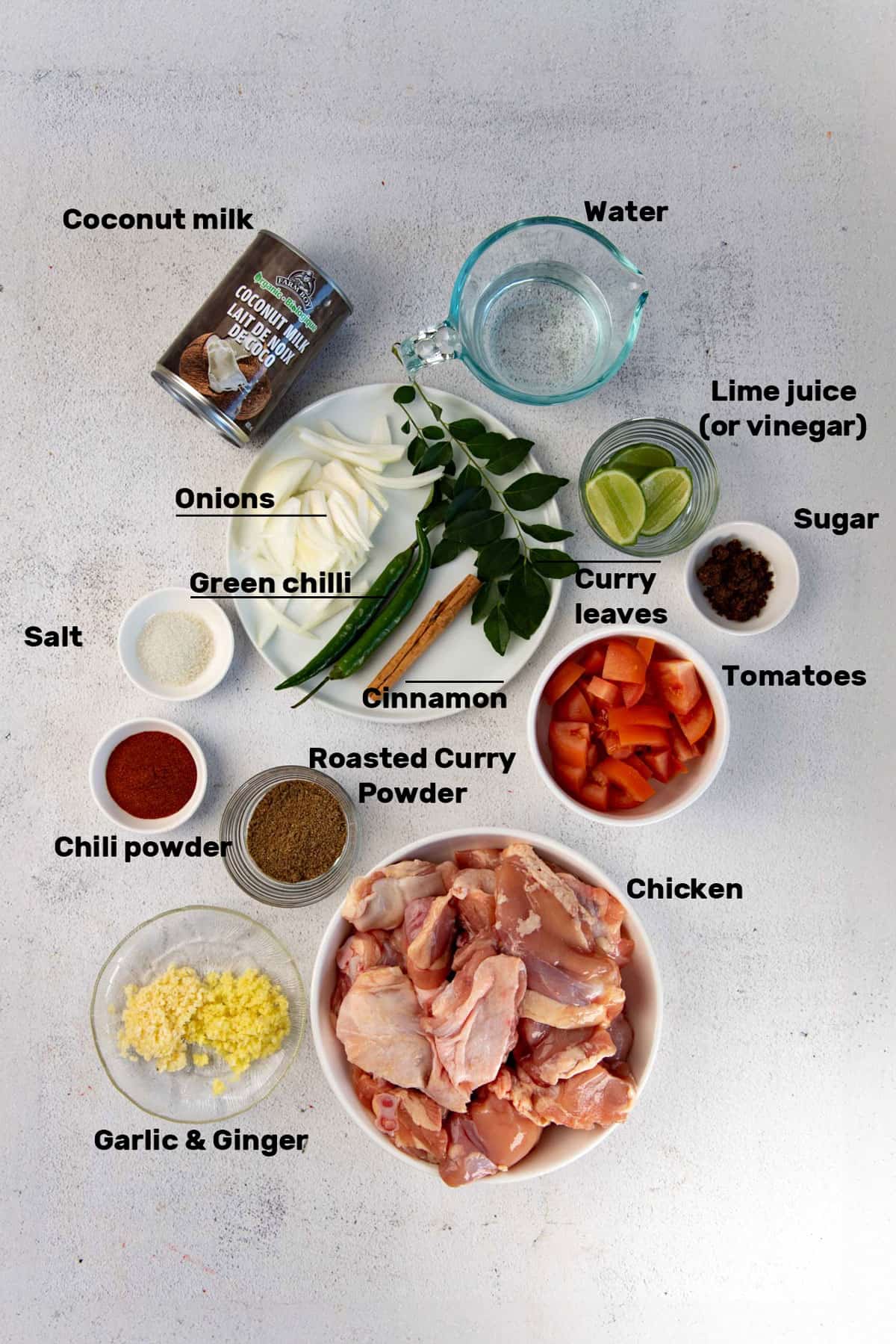
- Chicken – Bone-in chicken preferred.
- Onion, garlic and ginger
- Curry leaves – You can also use dried curry leaves that are readily available. Or bay leaves if they are easier to find.
- Cinnamon – Ceylon cinnamon is a little sweeter and preferred. But you can use regular cinnamon too.
- Curry powder – specifically a Sri Lankan curry powder. But you can also use a madras curry powder.
- Chili powder and / or paprika
- Green chili – Smaller chilies are spicier, so adjust to your taste.
- Tomatoes – optional, but add flavor!
- Coconut milk – make sure it’s CANNED full-fat coconut milk for the best flavor! You can substitute with water for a spicier curry.
- Salt and vinegar – to enhance flavor.
Notes about bone-in chicken vs boneless chicken
You can make this chicken curry with bone-in pieces from a whole chicken, or just bone-in pieces of just chicken legs or chicken thighs. If I’m using chicken thighs, I cut this in half so that we have smaller pieces of chicken. I prefer to cut the bone-in chicken into small-ish pieces so that the flavor will get into to the meat much faster during cooking time.
Or for convenience, you can just use boneless pieces of chicken. Obviously, boneless chicken will cook faster, and is my choice when I want to cook a quick curry that can be ready in less than 30 minutes.
HOWEVER, a GREAT chicken curry uses bone-in chicken pieces because the bones flavor the curry sauce (or as we call it – curry gravy).
If you’re using boneless chicken, I recommend using the red meat (over white meat) of chicken. Chicken thighs (red meat) has more flavor and won’t overcook easily and can withstand the cooking time.
For a healthier option you can use sliced boneless chicken breasts too. But make sure to cook them for a shorter amount of time OR braise them for a longer time to make it tender. Otherwise, the pieces will be too dry.
To cook with sliced chicken breasts for a quick curry, make sure to make the delicious curry sauce FIRST and then add the chicken at the end and only cook it until the chicken is cooked through.
Some choose to remove the chicken skin to lessen the fat in the chicken curry as well. I have always loved adding the skin, so I compromise and add half with the skin, and half without. So that’s totally up to you!
Ingredients for curry powder
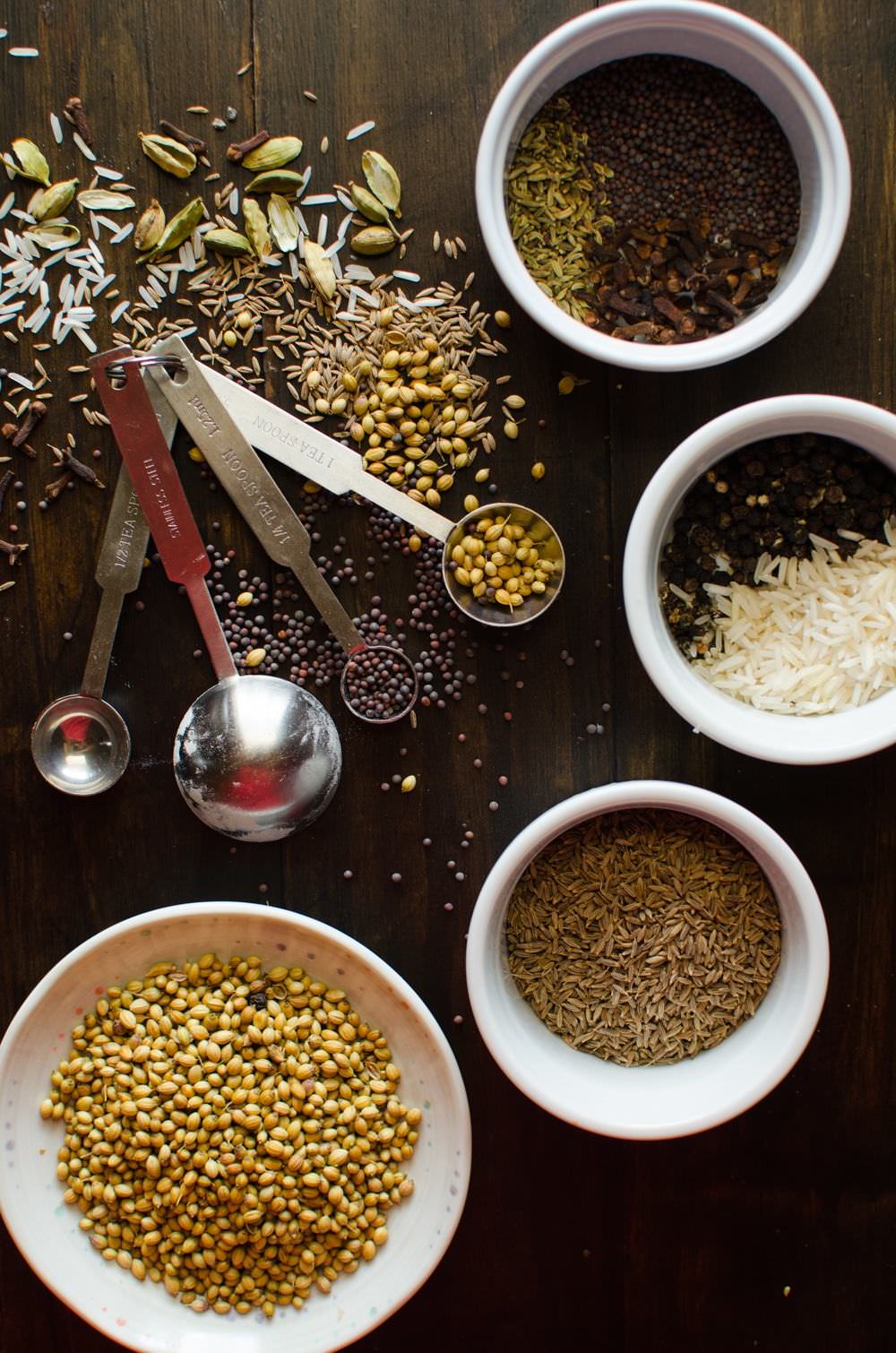
I use my own homemade roasted Sri Lankan curry powder to make this delicious chicken curry. It’s made with,
- Coriander seeds
- Cumin seeds
- Black peppercorns
- Cardamom seeds from cardamom pods
- Mustard seeds
- Cloves
- Fennel seeds
The bolded ingredients above are the most important! I leave out the rest of the ingredients if I don’t have them at home, and the curry will still come out delicious because we add additional spices to each curry we make!
This curry powder has SO MUCH robust flavor and is the perfect combination of spices for any curry, especially for classic Sri Lankan curries. And since it’s not a very spicy curry powder, you can control how much chili powder you add as well.
Notes about curry powder
A lot of chicken curry recipes use store-bought curry powder from western brands and this just can result in a bland curry. Some supermarket curry powders are absolutely listless, and make your curries taste extremely bland. So, taste and adjust if that’s the case.
The first four ingredients mentioned above are crucial for a curry powder. For a South Asian chicken curry, avoid curry powders that contain garlic powder, celery powder, and even salt.
The only “western” brands of curry powder that I recommend to make an authentic chicken curry are,
- Frontier co-op
- Simply organic
- Splendor garden
However, you can purchase excellent curry powder from South Asian stores and brands that will work beautifully with this recipe. Such as,
- Rani curry powder
- Wijaya curry powder
- Also smaller boutique curry powders – but check the prices! Since they from a boutique, they can be needlessly expensive too.
I would highly recommend making my curry powder for this curry (or other curry recipes on my blog).
How to make the best chicken curry
A great chicken curry is a very versatile and easy to make dish. Sure, there are plenty of slow cooker versions and quick versions of chicken curry that you could find online with a google search.
These recipes mostly employ the “dump and cook” method of adding all the ingredients into one pot at the same time and then cooking all the way through. That’s how you get the difference between a bland, mushy, mediocre-at-best chicken curry and a truly mind-blowingly flavorful curry!
HOW you cook the curry determines the flavors just as much as the ingredients. The proof is in the curry.
So here I share the inside scoop, some of the well-known “secrets” to cooking a fantastic chicken curry. Plus, I also share some variations to standard Sri Lankan chicken curry as well.
This Sri Lankan chicken curry (or any other curry) can be made in two different ways.
- “කිරට” (kirata = i.e. milky / creamy). A chicken curry made with coconut milk, and can be less spicy, richer in taste because of the creamy coconut milk component. OR
- “මිරිසට” (mirisata = i.e. chili / spicy). A chicken curry made without coconut milk, so can be spicier, and lighter.
You can easily adapt this same chicken curry recipe to make either of these versions of chicken curry.
We prefer the “kirata” style with the coconut milk that is a richer tasting curry because of the coconut milk.
However, we make the “mirisata” style (spicy version) more often so that I don’t use too much coconut milk, or to use less coconut milk in everyday cooking.
Equipment and tools used for this recipe
Sharp knife to cut a whole chicken into pieces.
Spice grinder to make the curry powder. I like to use an inexpensive coffee grinder to make my spice powders.
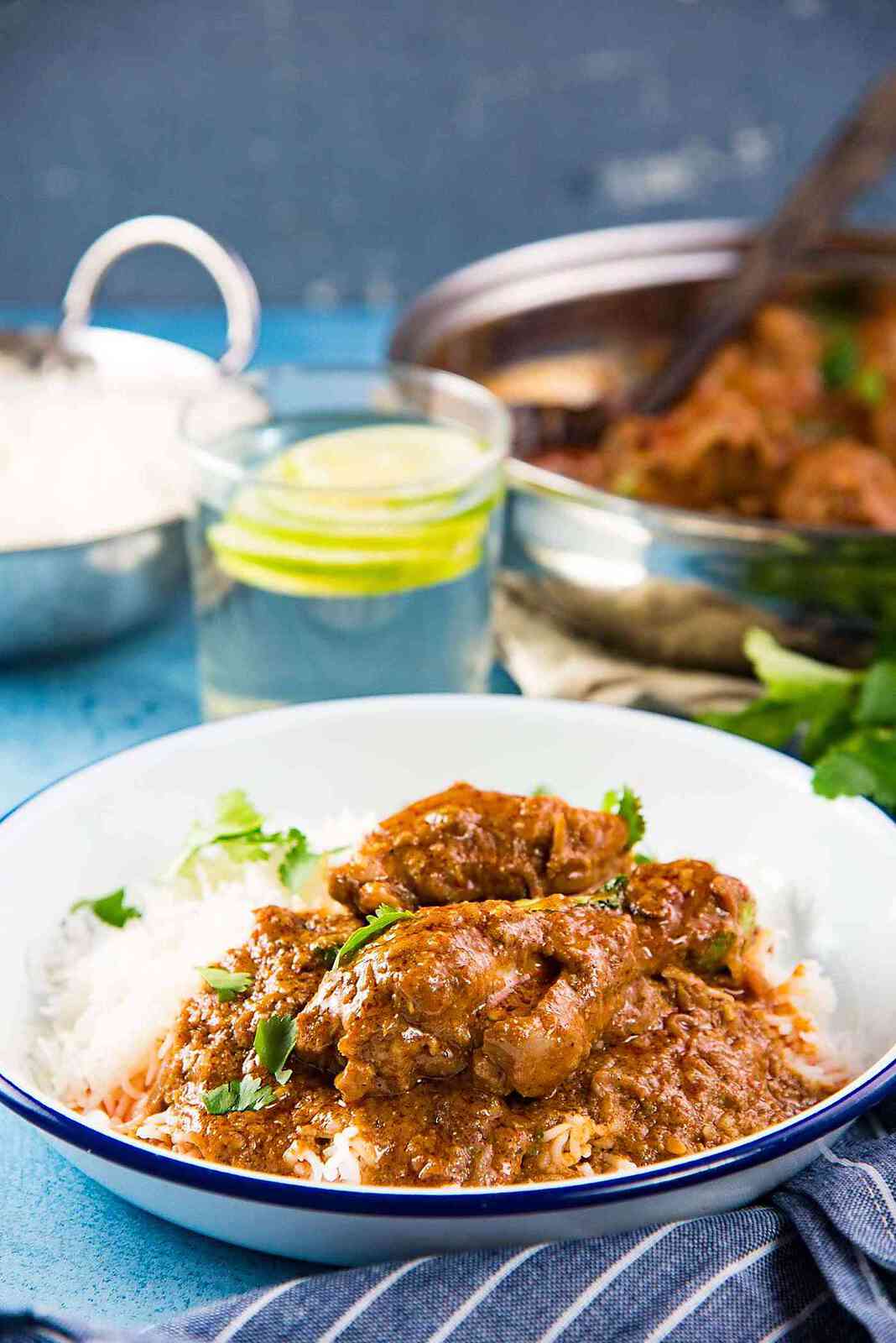
Step by step instructions (with pictures)
Step 1 – Prep all the ingredients. Make sure the chicken is prepped by cutting it into the size you want. If you use a whole chicken, you will need to break it down first and set aside. I usually have the chicken broken down ahead of time, so that I don’t have to do this at same time as I’m making the curry.
Have your curry powder ready as well. Again, I have a batch of my homemade curry powder ready to go at all times, but you can also make it just before you need it.
PRO TIP – If you’re short on time, but still want to make homemade curry powder – you can skip the roasting part in my curry powder recipe! The unroasted curry powder can also be used in curries.
Since the curry powder will be “fried” in oil, it still cooks and deepens in flavor!
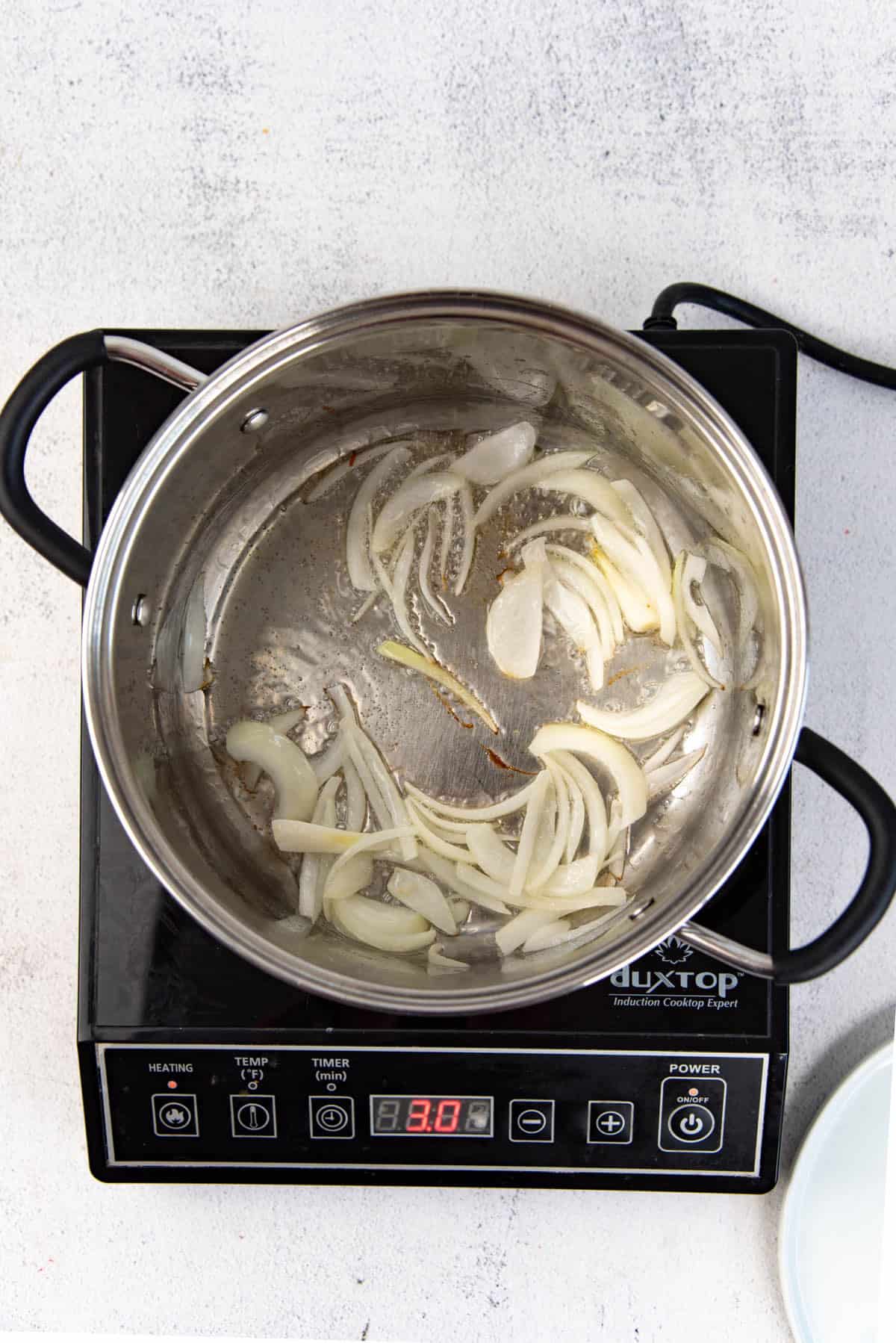
Step 2 – Heat oil in a large pot. Add onion to the hot oil. Sauté until the onions soften and just start to caramelize.
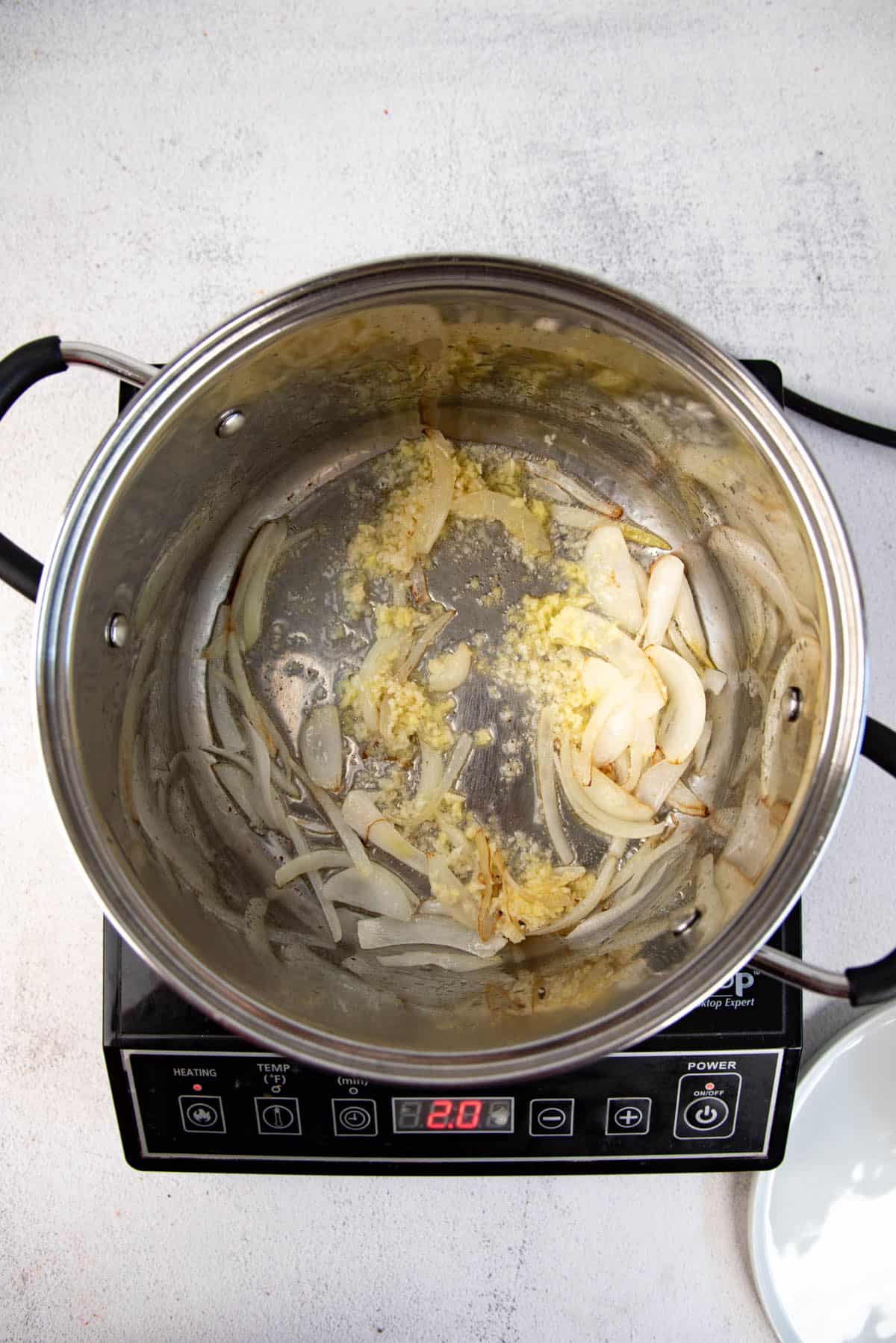
Step 3 – Add the garlic and ginger, and sauté until the garlic softens. Make sure the garlic or ginger doesn’t burn.
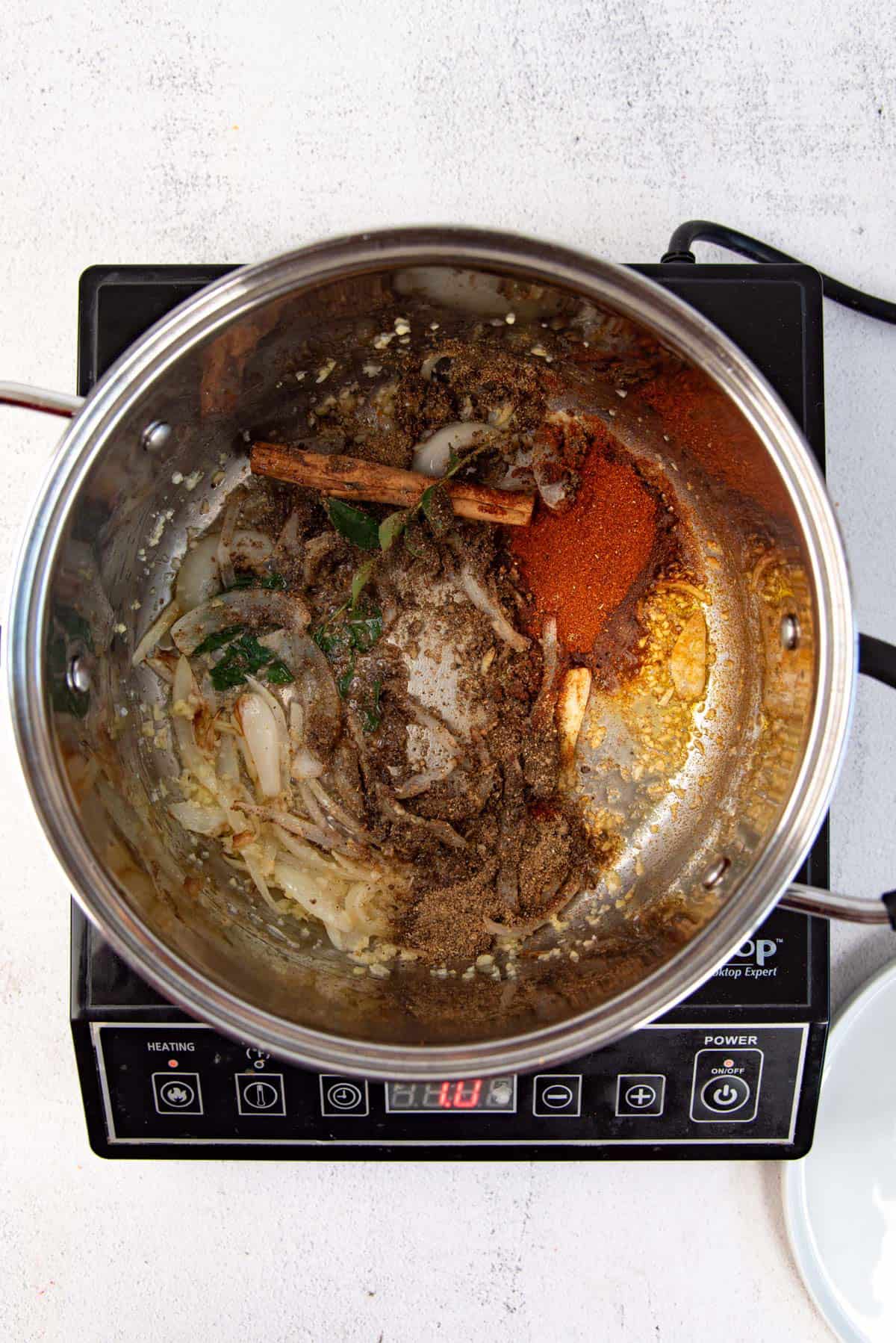
Step 4 – Add the spices, chili, and curry powder. Remember to adjust the chili to your taste, or add paprika instead, for color.
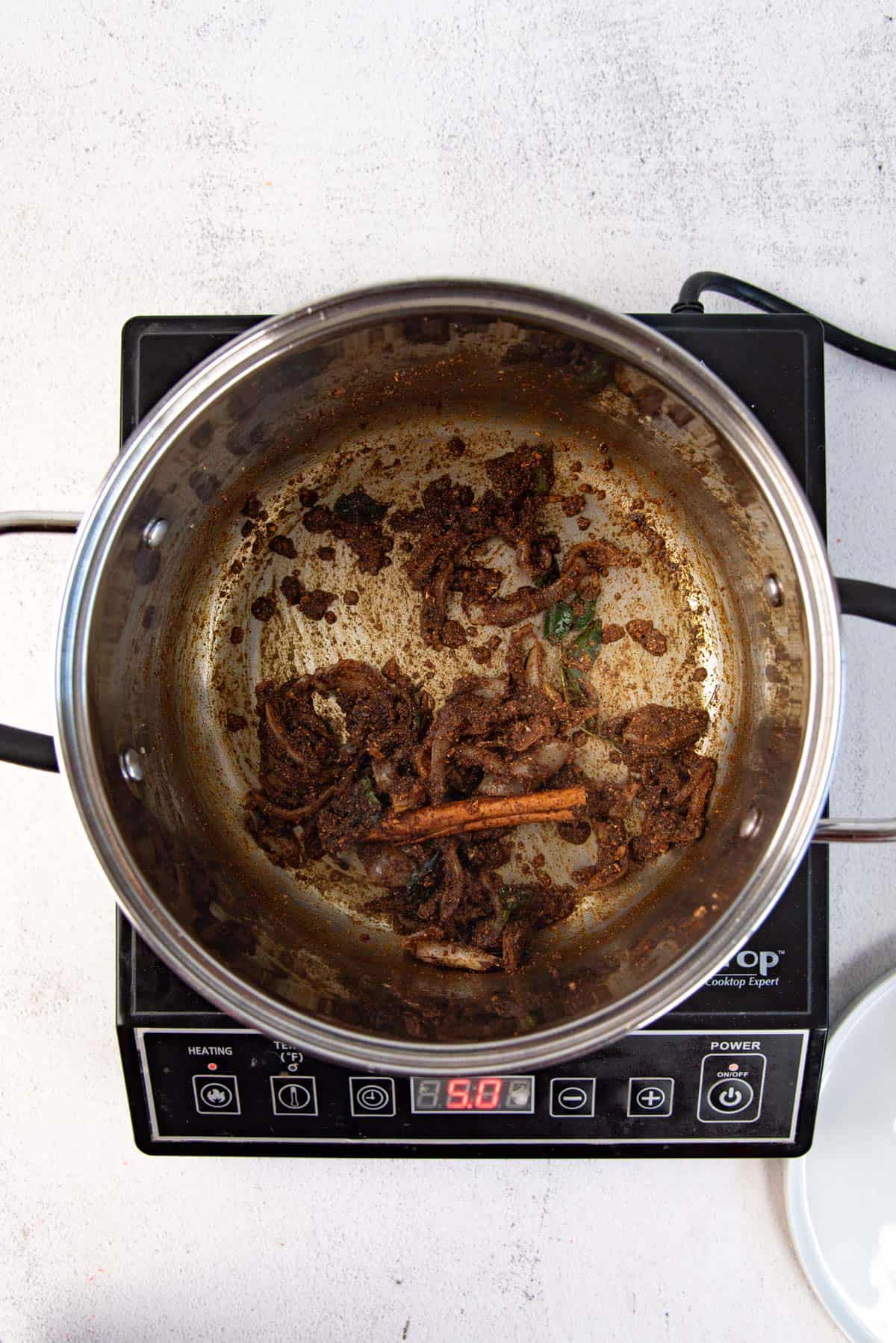
Step 5 – Sauté the spices until you start to smell the curry powder.
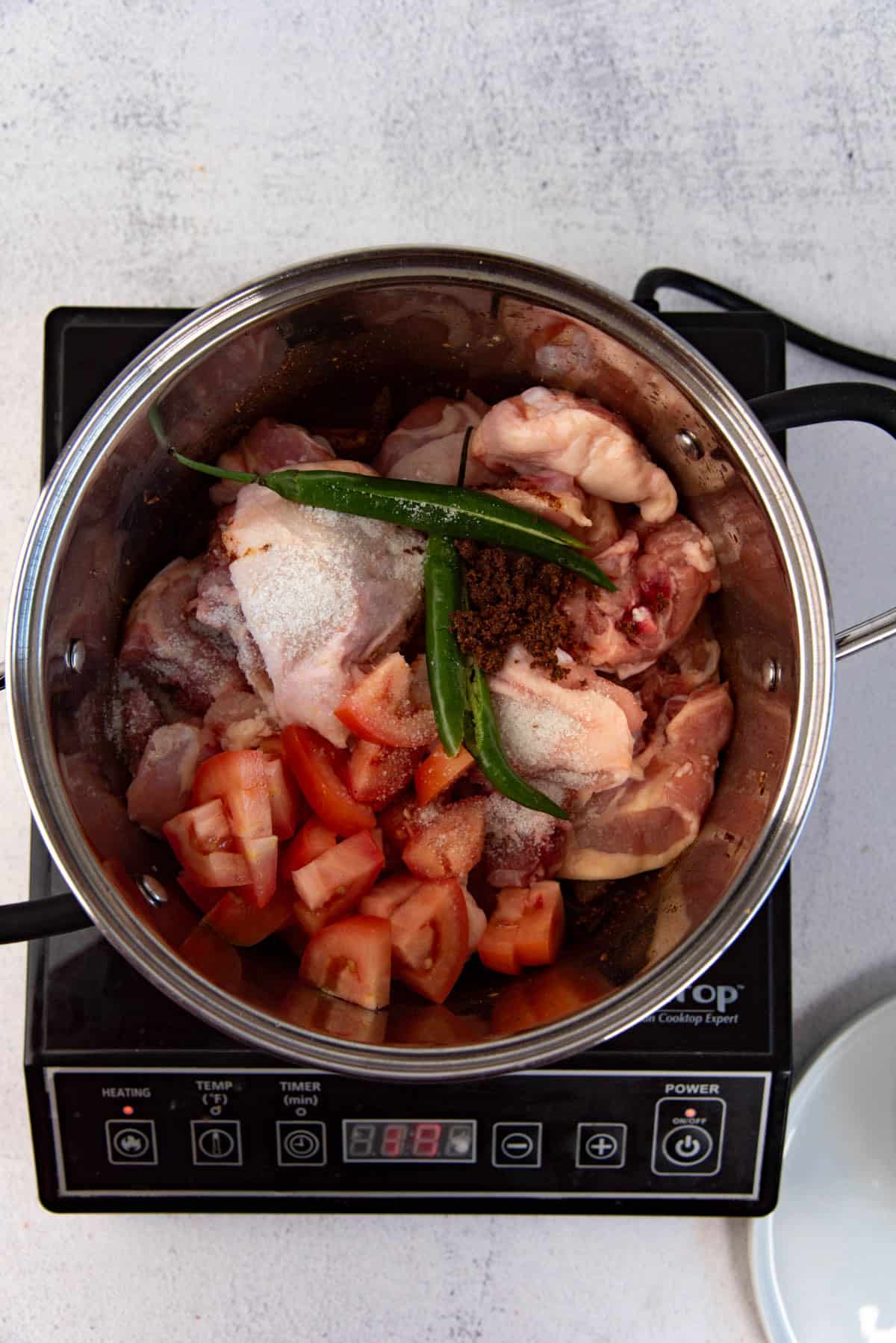
Step 6 – Add the chicken and tomatoes, along with the salt and chili. I also add a little sugar, but this can be added at the end as well.
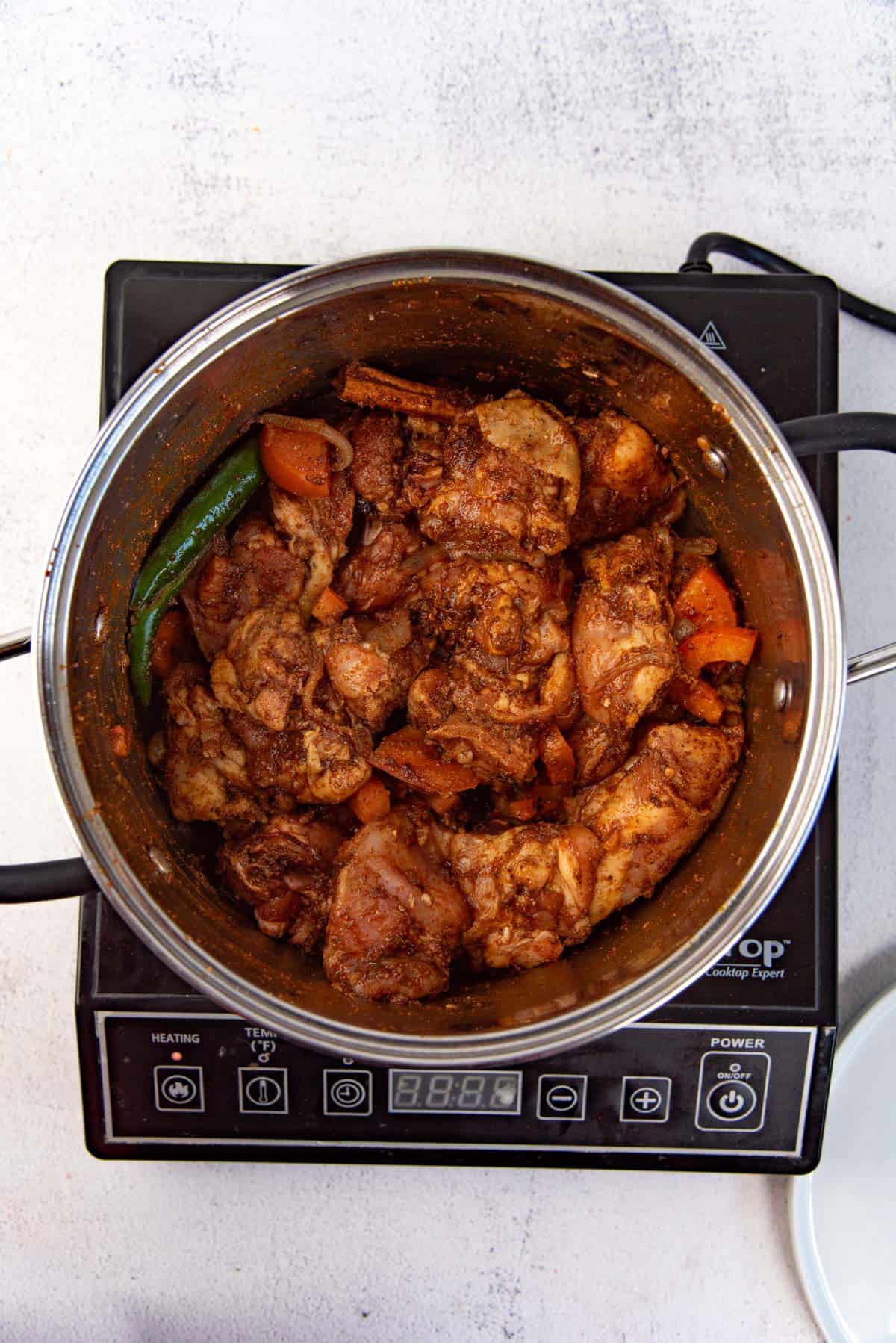
Step 7 – Mix everything together so that the chicken is coated with the spices well.
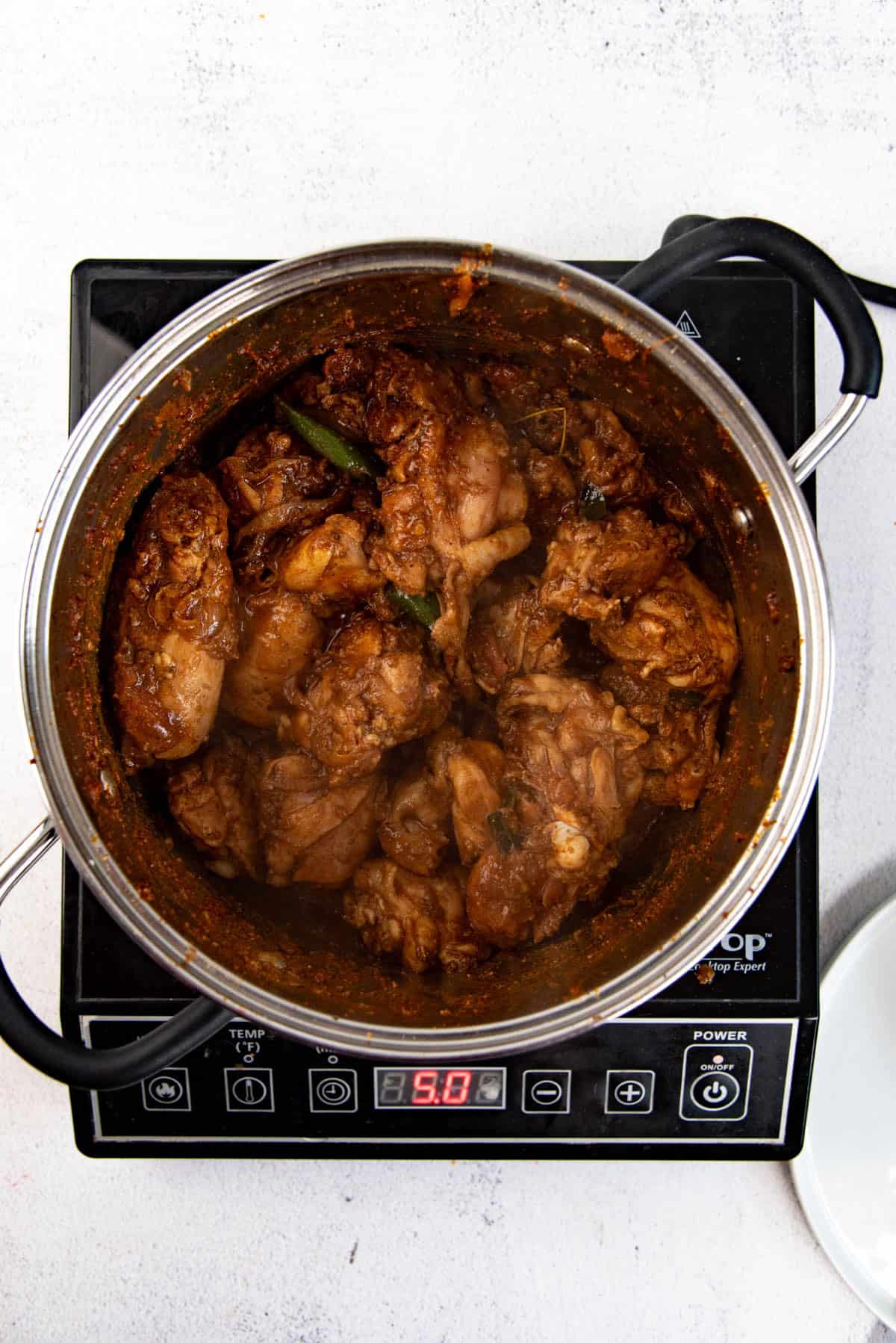
Step 8 – Let the curry simmer for about 10 – 15 minutes while stirring every few minutes to prevent it from burning. The chicken should be mostly cooked after simmering. The mixture should look dry like this, but it’s OK if there is some liquid too.
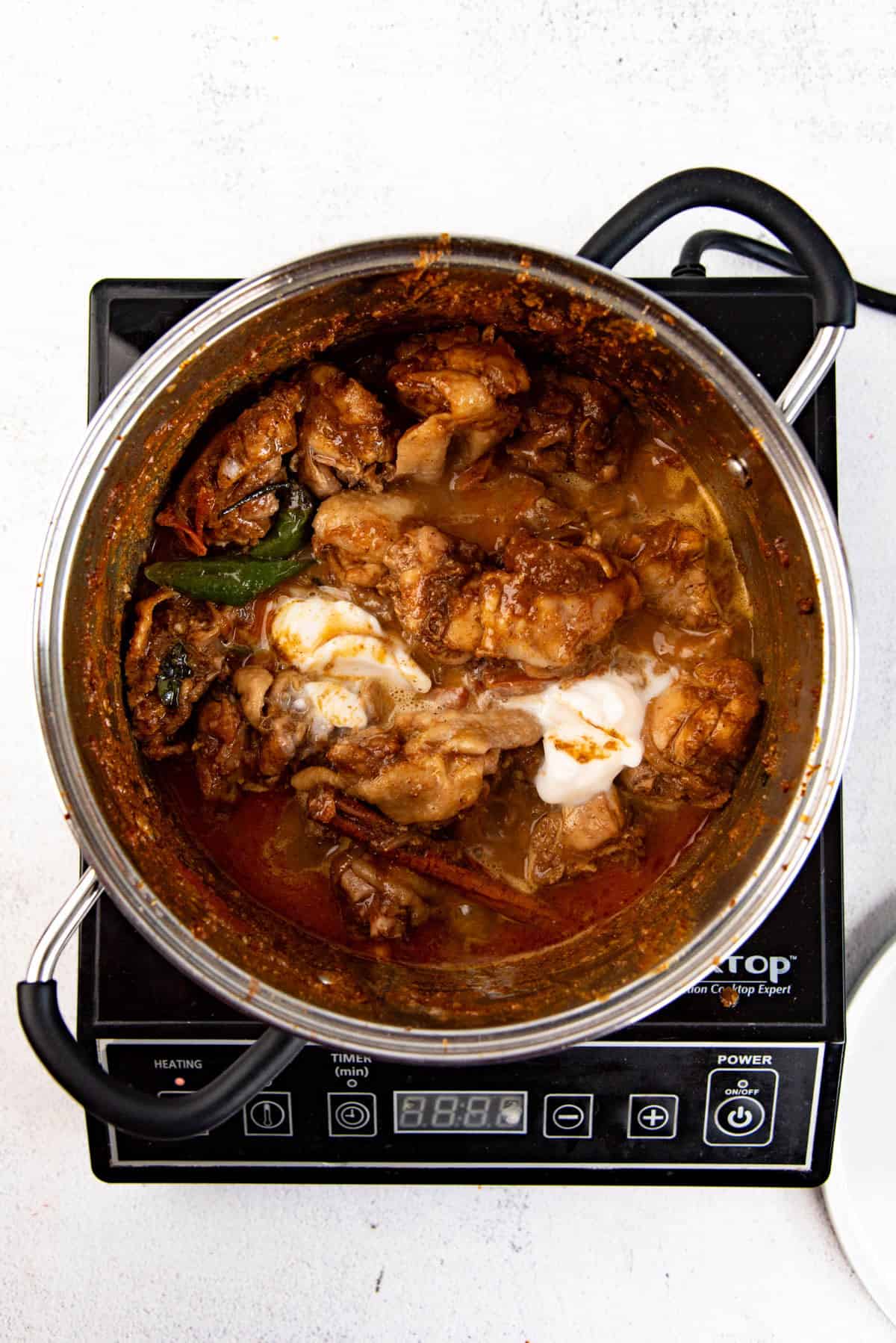
Step 9 – Add water and coconut milk. You can add less water if there is already some liquid in the curry after simmering. Adjust the level of water to your liking.
Mix in well and simmer until cooked through.
You can skip the coconut milk if you prefer. However, this will result in a spicier curry without the coconut milk to mellow out the spices.
The curry can be simmered with the lid on or off. For a curry with less gravy – simmer without the lid. If you like more gravy, you can simmer with the lid on.
I personally like to simmer the curry without the lid for at least 10 minutes because I can always add more liquid at the end.
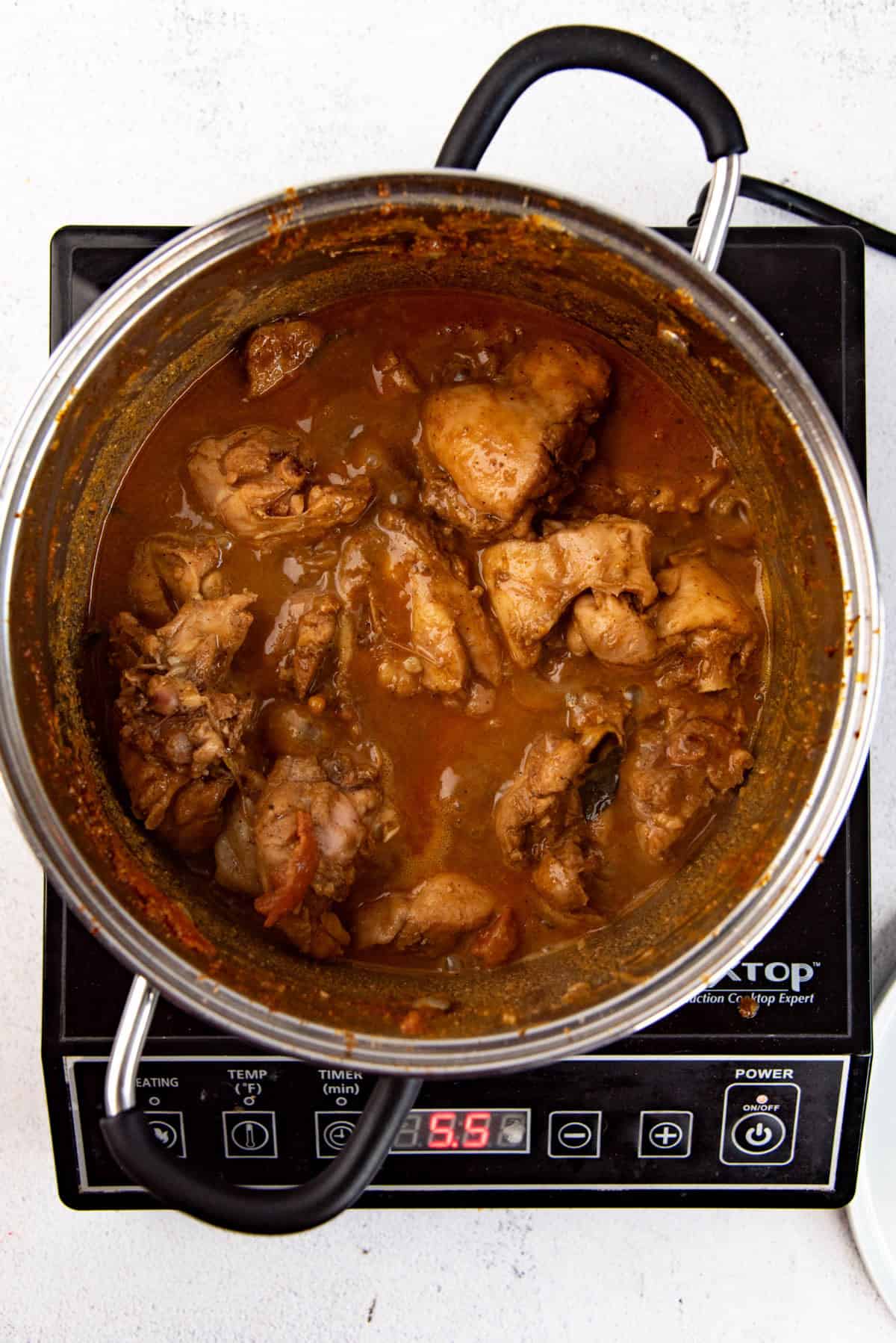
Step 10 – Once the chicken is cooked through and the curry is done, taste it. Adjust the seasoning and a add little coconut vinegar or lime juice to your taste. Add more water if needed.
For a creamier chicken curry – add the coconut milk at the end! Then bring the curry to a simmer, and then you’re done! The longer the curry simmers after adding coconut milk, the more likely it will split (which is what we like in our family!).
How to make the best curry powder for all your curries
The key for the best homemade curry powder is to,
- Have a great balance of spices.
- Use whole spices to make smaller batches more often.
What I love about my recipe for Sri Lankan curry powder is that it’s such a versatile curry powder! I sometimes skip the cloves and mustard because I’m not the biggest fan of cloves. But with a combination of coriander, cumin, black pepper, cardamom, and fennel, I can add more spices to different curries as I’m cooking to make them taste unique in their own way!
You can also make the curry powder without roasting it. Then sauté the curry powder in the oil to develop the flavor as you cook.
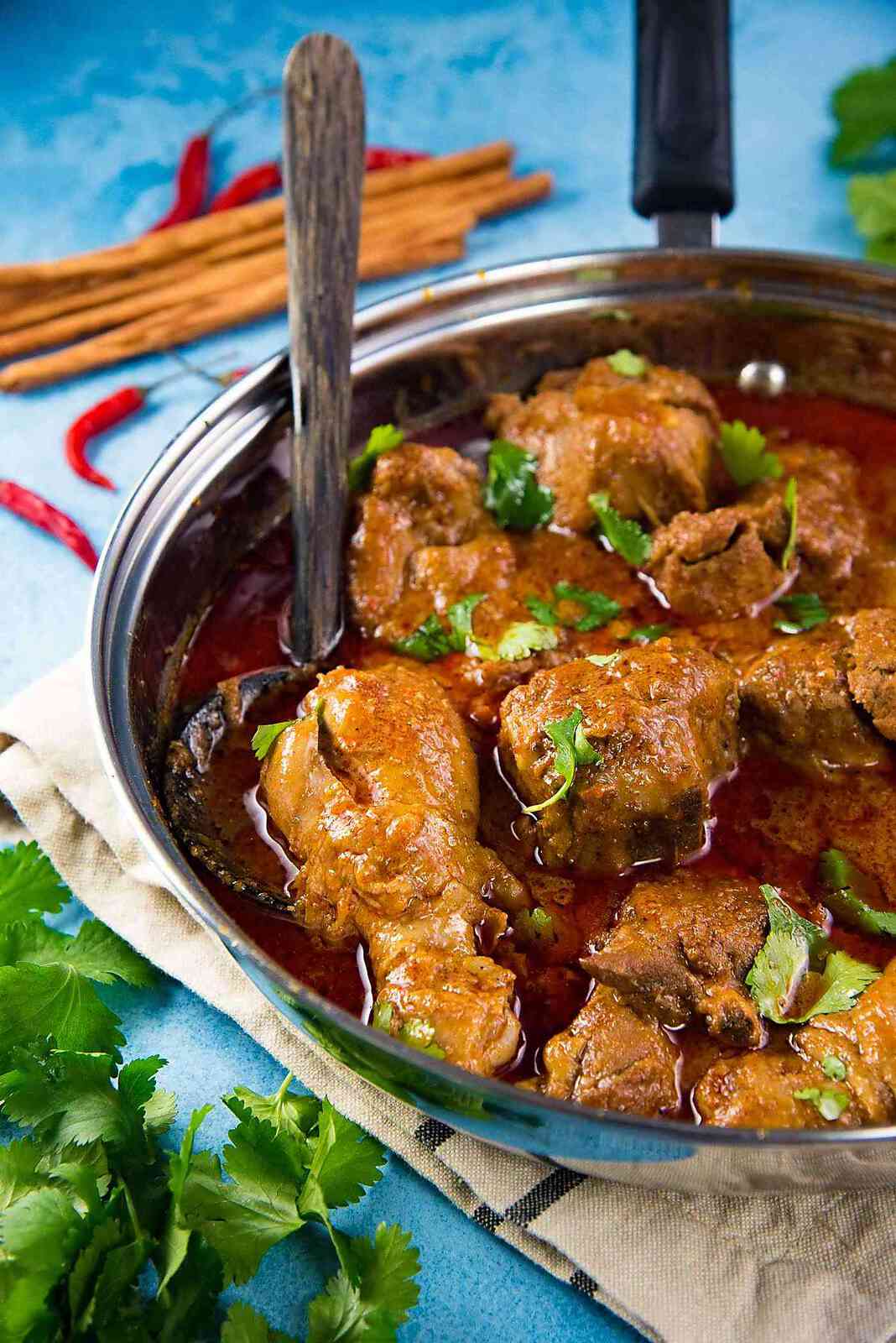
Recipe variations and tips for success
- For best results, use a whole chicken cut into pieces, OR bone-in chicken (like legs or thighs). The bones in the meat add more flavor to the curry!
- Use Sri Lankan curry powder. If you can’t find it, you can easily make your own following my homemade curry powder recipe. Sri Lankan curry powder has a lot of coriander seeds, and doesn’t have turmeric. You can add turmeric if you like, but I find that you don’t have to add it to every curry you make.
- You can substitute Sri Lankan curry powder with madras curry powder if you really must, but just remember that the taste will be different. I recommend making your own Sri Lankan curry powder, which genuinely tastes better and is quite versatile too.
- Remember the flavor of your curry powder will change depending on the curry powder you use, and the amount will need to be changed depending on the flavor. My chicken curry recipe has been developed for my homemade curry powder.
- Since there is pepper in the curry powder, you do not need to season with salt and pepper at the end too. Just season with salt to your taste.
- Use coconut oil if possible. but if you don’t have coconut oil, you can use vegetable oil.
- Use good quality canned coconut milk whenever possible. Go for full fat for the best flavor.
- After you cook the chicken curry, let the chicken curry sit for a while. This allows the chicken to absorb the flavors of the curry gravy. This is why this chicken curry tastes even better the next day!
- Curry leaves are preferred for curries, but if you can’t find them, you can substitute with bay leaf or pandan leaf.
- Layer the flavors for best results. Don’t dump in all the ingredients at once. Soften the onions and garlic and ginger first before adding the spices. This lets different flavors grow and strengthen. Using roasted spices adds an extra layer of flavor.
How to add more flavor
For an added twist and to add more flavor (which is not traditional) – roast the chicken curry in the oven towards the end. It caramelizes the chicken (which you cannot do on the stove-top), giving it an extra layer of texture that enhances the flavor.
You can also caramelize or deep fry the chicken pieces BEFORE you make the curry as well (like you would for stews). But this is not necessary for an everyday easy curry version!
We usually only do this for special occasions – like if we were having company over or for a party. Growing up, we called this “birthday chicken curry” because my aunt always made this for our birthdays!
How to adjust the spice level
If you’re not a fan of spicy, you can adjust this level to suit your preferences.
You can add less black pepper to the curry powder. Don’t eliminate it completely because black pepper is an important part of this chicken curry.
If you want that characteristic red color of the curry, but not the heat, then increase the paprika and reduce the cayenne pepper. But if you can handle spicy curries, or prefer them that way, then go ahead and add 2 tsp of cayenne pepper as I do.
And if you choose not to add chili powder / cayenne pepper OR the paprika, that will be fine too. The result will be a very mild Sri Lankan chicken curry, that’ll be mostly brown in color (and not a red curry), with a slight red tinge (from the tomatoes), but it will still be just as delicious without the heat.
How to serve this chicken curry
With rice
We serve it with rice (basmati rice, jasmine rice etc.) and some side dishes. My favorites are red lentil curry (dhal curry) and beetroot curry! I always loved chicken curry and beetroot curry together. I highly recommend that combination of sweet beetroot curry with the spicy chicken curry.
There are many more curry side dishes that you can pair with this chicken curry.
Carrot curry, cauliflower curry, green bean stir fry, mushroom curry, pumpkin curry, jackfruit curry (polos curry), mango curry, creamy cashew curry, spicy apple curry are just a few vegetable curry examples.
With roti
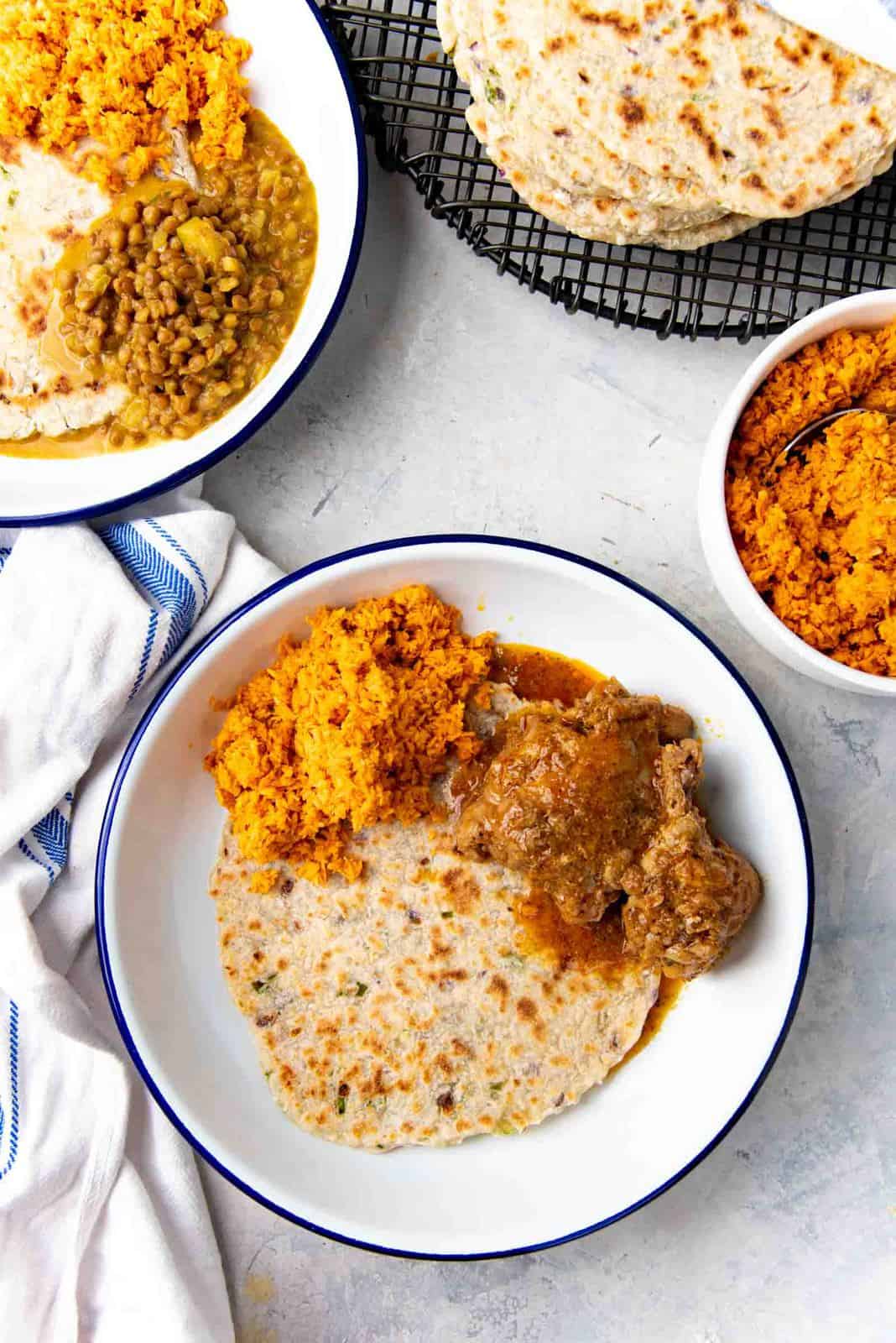
Another option is to serve it with roti. Sri Lankans love and prefer to eat pol roti (coconut roti), which is a flat bread made with coconut and wheat flour.
But we also love godhambara roti (or roti canai or roti paratha).
With bread
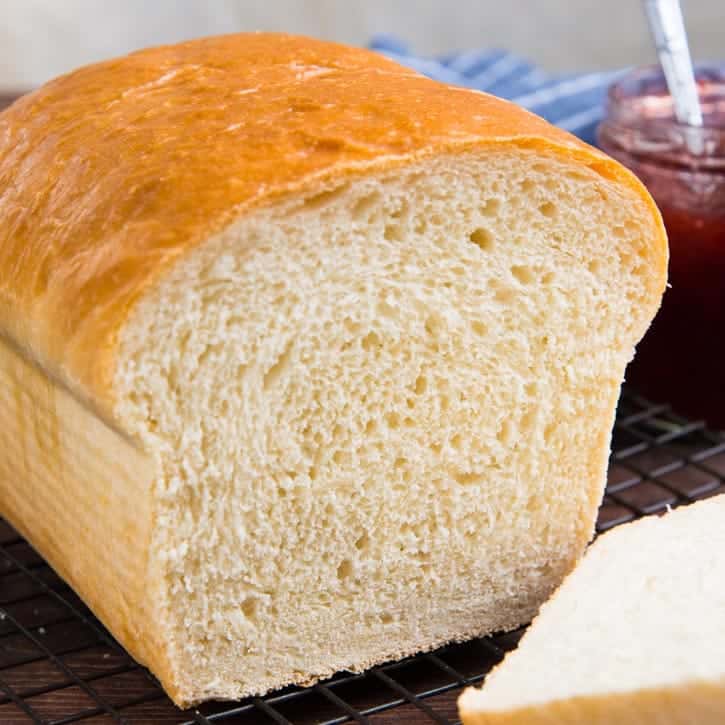
Simply regular white bread (sandwich bread) is always a good option, especially when you can dip it in that flavorful curry gravy.
And naan (like this whole wheat naan) is another popular option.
You can also serve this with,
- Hoppers (rice flour pancakes or aappa / aappam)
- String hoppers (rice flour noodle cakes – indiaappa)
What to do with leftovers?
If you have leftover chicken curry, here is my absolute favorite way to re-purpose it! Turn it into Sri Lankan chicken kottu Roti – a very popular Sri Lankan street food!
You can also make a really easy chicken curry fried rice or a curried chicken salad sandwich, or a curry chicken version of this curried beef grilled cheese sandwich!
You can also use the leftover chicken to make curried chicken buns! I’ve previously shared these curried beef buns, so simply substitute the curried beef with leftover chicken curry.
More curry recipes you’ll love
Frequently asked questions
Is this Sri Lankan chicken curry spicy?
Yes, but it’s adjustable!
We usually add 2 – 3 tsp of cayenne pepper! But if we wanted to make it mild, we reduce the chili pepper and add paprika (not smoked) for color.
In Sri Lanka, you’d only use chili powder that is pretty strong, and very vibrant in color, so it flavors the curry while making it beautifully red as well. Kashmiri chili is also a great substitution.
The additional cinnamon stick yields a nice sweet spiciness that also helps to balance the heat.
However, I show you above in my post how to easily adjust the spice level in this curry without compromising on the flavor at all!
Can I incorporate more veggies into this curry?
Yes, you can!
In fact, my parents and grandparents made chicken curries with veggies ALL the time! Be mindful that this will change the taste of the curry as well.
My favorite additions are potatoes, sweet potatoes, carrots, other root vegetables, spinach or kale, chickpeas etc.
While I do love to add extra veggies, I prefer the chicken curry on its own. So that no one else can steal the chicken’s thunder.
Recipe
Best Chicken Curry (Sri Lankan Chicken Curry)
US based cup, teaspoon, tablespoon measurements. Weight measurements are recommended for accurate results whenever available.
Common Measurement ConversionsIngredients:
- 2 – 3 tbsp coconut oil or vegetable oil
- ½ yellow onion diced or sliced
- 4 garlic cloves minced or finely chopped
- 1 inch ginger minced or finely chopped
- 6 – 7 curry leaves or 2 bay leaves
- 2 ½ tbsp roasted Sri Lankan curry powder or unroasted is fine too
- 1 cinnamon stick (preferably Ceylon cinnamon) or ½ tsp ground cinnamon
- ½ tsp salt plus more to taste
- 1 tsp cayenne pepper or kashmiri chili powder less if you like it less spicy, please see recipe notes below
- 1 tbsp paprika NOT smoked paprika
- 2 lbs chicken whole chicken cut into sections OR any bone-in chicken thigh or leg pieces (large thigh pieces should be cut in half)
- 2 serrano peppers (or regular green chili) cut length-wise, with or without seeds
- 3 small roma tomatoes cut into cubes (or 2 medium-sized regular tomatoes)
- 2 tsp brown sugar see recipe notes
- 2 tsp lime juice or apple cider vinegar see recipe notes
- ½ cup full-fat coconut milk see recipe notes
- ½ cup water
Instructions:
- Prepare the bone-in chicken by cutting it into smaller pieces. Each piece should be fairly small but not bite-sized. A regular chicken thigh should be cut in half and larger pieces should be cut into 3. A chicken breast should be cut into 3 pieces or more. The larger the chicken piece, the longer it will take to cook through, so it's important to keep the pieces fairly similar in size.
- Add the coconut oil into a large saucepan and heat the oil over medium heat. Add onions and cook until they start to soften.2 – 3 tbsp coconut oil, ½ yellow onion
- Add the garlic and ginger to the softened onions, and sauté until the garlic starts to soften. Make sure it doesn't burn.4 garlic cloves, 1 inch ginger
- Add curry powder, chili powder / cayenne pepper, paprika, cinnamon, curry leaves, and mix to combine. Cook for a few minutes until you start to smell the spices.6 – 7 curry leaves , 2 ½ tbsp roasted Sri Lankan curry powder, 1 cinnamon stick, 1 tsp cayenne pepper or kashmiri chili powder, 1 tbsp paprika
- Add the chicken, serrano peppers / green chili peppers, salt, roma tomatoes, about 1 tsp sugar, and mix to coat. Cook for 10 minutes with the lid off, on medium high heat. Frequently stir to make sure the chicken or the spices don’t burn.½ tsp salt, 2 lbs chicken, 2 serrano peppers (or regular green chili), 3 small roma tomatoes, 2 tsp brown sugar
- Add coconut milk, water, lime juice / vinegar, and bring the curry to a boil. If you want less gravy, add less liquid.½ cup full-fat coconut milk, ½ cup water, 2 tsp lime juice or apple cider vinegar
- Lower the heat and let it simmer with the lid on for about 20 minutes, stirring occasionally. Leave the lid off if you want to reduce the liquid content in the curry.
- The chicken should be completely cooked by this point. This will depend on the size of the chicken pieces and the stove you use.
- Taste the curry and season with more salt to taste if needed. You can add the rest of the sugar or more salt, or vinegar to your taste. Remember that curries can easily be adjusted to your taste!
- If the chicken curry gravy is too thin, or there's too much of it, uncover and simmer the curry for a further 10 minutes or longer. This step is optional, but it allows the water to evaporate and for the gravy to thicken. If you want more gravy, you can add more water or coconut milk, but you will need to adjust the flavor accordingly.
- Turn off the heat and let the chicken cool down slightly. Serve with rice or roti.
- For best results, store the chicken curry in the fridge overnight and eat it the next day. (Seriously, it tastes even better the next day!)
Recipe Notes
Recipe notes
NOTE 1 – if you want a less spicy curry, you can reduce the cayenne pepper to 1/4 – 1/2 tsp. If you like an extra spicy curry, you can add up to 2 tsp of cayenne pepper. We like it very spicy, and add up to 2 – 3 tsp of cayenne pepper / Kashmiri chili. Do NOT use Mexican chili powder for this curry. You should be able to find regular chili powder or Kashmiri chili at any Asian grocery store. NOTE 2 – you can replace the 1/2 cup of coconut milk with water. If you’re not adding coconut milk, this chicken curry will be spicier. The coconut milk softens the heat. NOTE 3 – if you want the curry to have a thicker gravy, you can reduce the amount of liquid by half. NOTE 4 – The sugar is added to balance the spices, and bring out the saltiness of the curry. If you’re using a different curry powder, or you’re making curry for the first time, add only half of the sugar initially, and then add the rest of the sugar if you feel like you need it at the end. NOTE 5 – If you’re using store-bought curry powder, please make sure the curry powder has a combination of at least some of the spices of my Sri Lankan curry powder. Avoid curry powders that have turmeric, garlic powder, and onion powder as the main ingredients – these are NOT curry powders. NOTE 6 – In Sri Lanka, the main type of vinegar that is used is coconut vinegar. This is harder to find, and more expensive in other parts of the world. Lime juice is a great substitute, and apple cider vinegar can also be used.Nutrition Information:
“This website provides approximate nutrition information for convenience and as a courtesy only. Nutrition data is gathered primarily from the USDA Food Composition Database, whenever available, or otherwise other online calculators.”














Leave a Reply