



Ube halaya is a super popular Filipino jam that is made with ube (purple yam). It’s a rich, creamy, sweet, delicious dessert! And it’s so easy to make it from scratch for a better-tasting purple yam jam that is so much better than store-bought!
Vibrantly purple, sweet, and creamy, this ube halaya recipe is deliciously well-balanced in flavor!

Why this ube halaya recipe works
- This is an easy and forgiving recipe. I’ve made this numerous times, in different ways, and it always comes out well!
- The addition of coconut milk, evaporated milk, and butter results in a rich, smooth ube halaya with a deeper flavor profile.
- I show you how to make this with fresh ube as well as frozen grated ube.
- You can make this with purple sweet potatoes as well, if you only have access to those. I’ve done that and it works just as well.
- I provide detailed instructions on how to cook the ube, and how to tell when it’s ready.
- I also give you different options on how to serve ube halaya, and what to pair it with, and different desserts you can make with it as well!
Just like fruit jams, this ube jam requires time and patience to get the correct consistency. However, unlike fruit jams, this is made with a starchy vegetable and as such, has a different texture. Also, this is made with a mix of dairy and sugar. But first things, first.
What is ube?
There is much confusion about Ube, Taro, and the Hawaiian sweet potato (Okinawan sweet potato). These are 3 very different vegetables.

Ube is purple yam. It’s a very popular ingredient in the Philippines, used in so many dishes (including this ube halaya of course). The beautiful purple flesh is especially popular in desserts. It’s related to sweet potatoes and roots like taro, but different.
The texture of ube is pretty similar to purple sweet potatoes that you can find in the US (Hawaiian / Okinawan sweet potatoes). Ube has a dark skin color, and usually the inside can vary from a lilac to purple color.

Okinawan sweet potatoes can also have a dark skin (some have a lighter skin), but the inside is a much deeper purple color.
It’s more starchy and sweeter than ube. Since these are more common in the US, they can be used as a replacement for ube, and they do make a kick-ass sweet potato pie!


Purple taro on the other hand is a tuber vegetable. The flesh is more lavender-like in color, or white with purple flecks. Taro is popular as a bubble tea flavor. Because these don’t have a deep purple color, food coloring is usually added to enhance the color.
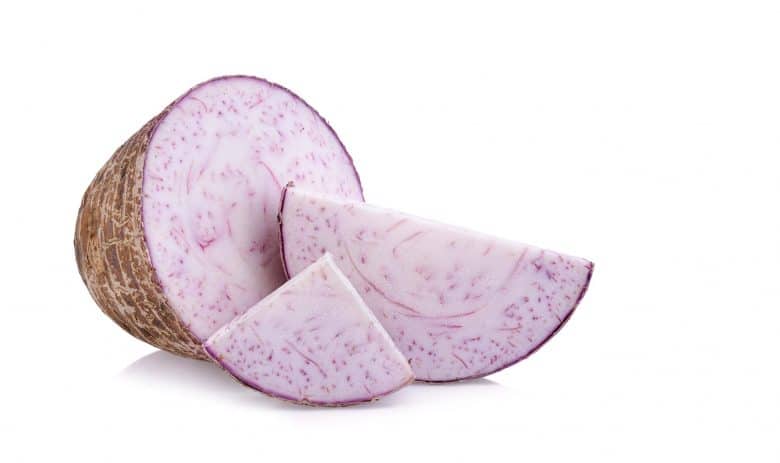
I have made ube halaya / purple yam jam with ube as well as Okinawan sweet potatoes, and have had EXCELLENT results with both. I actually really love the the flavor of purple sweet potatoes because they have an almost jasmine-like floral flavor that is really pleasant!
My introduction to ube
The first time I tasted ube, I thought I was ordering taro bubble tea. And I’m happy to say it was a delicious mistake. The second time unfortunately, was when I tried ube jam pastry from a Filipino store, and hated it. It tasted artificial, like a concoction of a lot of chemicals.
But then the third time I tried ube jam, my faith was again restored. And it quickly became a favorite for me!
So, I decided that I needed to learn how to make it myself, because I had no access to ube jam when I used to live in the US. Since fresh ube was impossible to find, I went with the next best thing – frozen purple ube. I LOVED IT!
The first batch of ube jam I made was delicious! And since then, I have fine-tuned my ube jam recipe to my absolute favorite version of ube halaya!

What if I can’t find ube?
When I first moved to Ottawa, I didn’t know where I could find any fresh or frozen ube. But I was lucky enough to find Okinawan sweet potatoes instead (I am happy to say that I have since found frozen ube from a local Filipino grocery store).
So I made ube halaya with purple sweet potatoes, and the results were truly incredible (and dare I say, I liked that version even better).
So if you can find Okinawan sweet potatoes, then you can easily substitute those for ube instead.

What is ube halaya?
Ube halaya (pronounced ooh-bay ha-la-yah) is a very popular dessert in the Philippines. It’s also called purple yam jam or ube jam or halayang ube.
Ube is cooked, mashed, and then cooked again with dairy and sugar to make a delicious, creamy, and sweet pudding-like dessert.
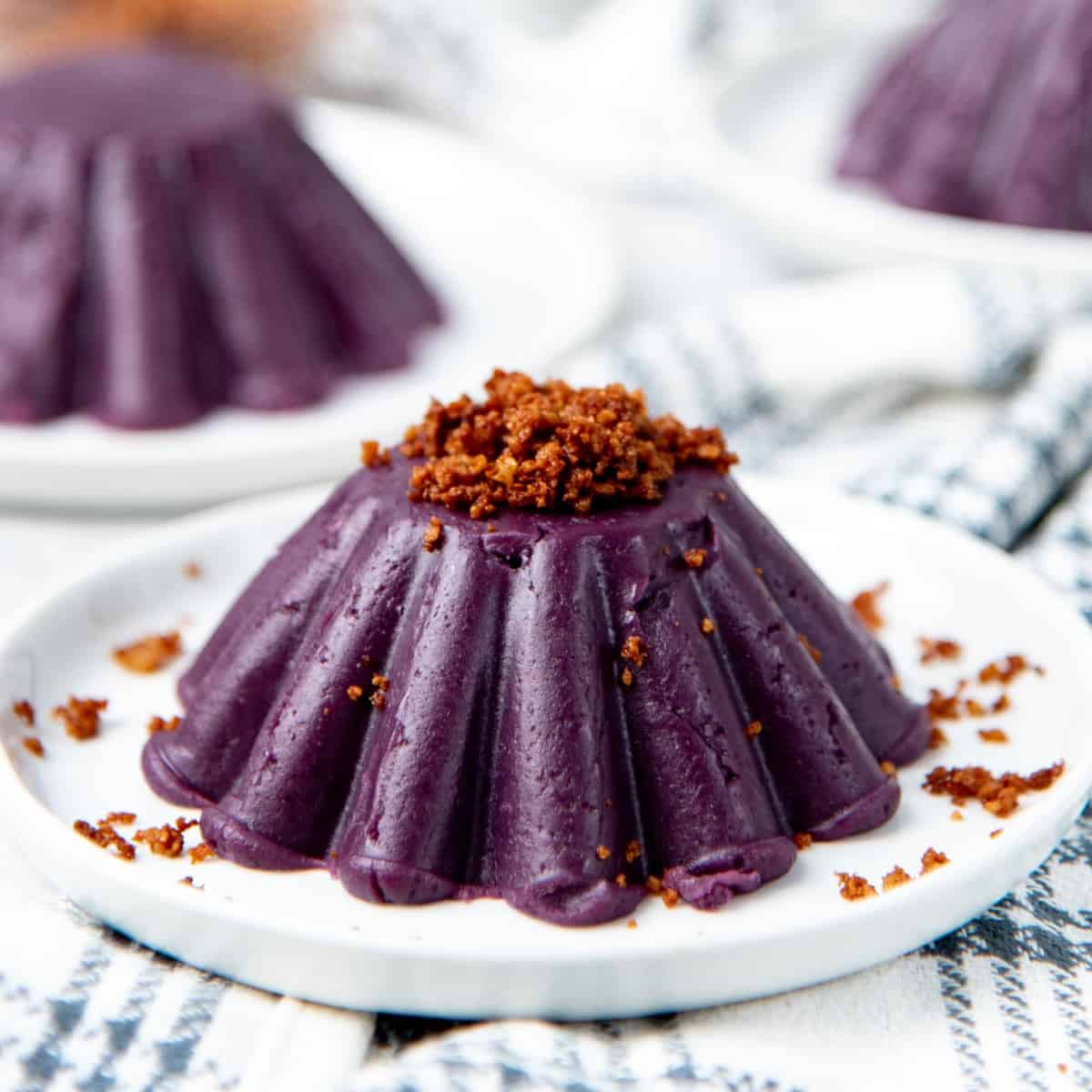
Ube jam typically served as is, molded into dishes known as llanera molds. But you can let the jam set in any greased dish as well.
Tart molds, small bundt pans, or even ramekins are perfect for small portions. While large pie dishes, loaf pans, or pyrex dishes are great for serving a crowd. Once the halaya is set, they are unmolded, sliced, and served.

Typically, ube jam served with a creamy, processed cheese that has cheddar-like flavors (known as quickmelt), or with caramelized coconut curds called Latik (like I do with my ube marshmallows). I personally love this with latik, but LOVE the saltiness that comes with the cheese too.
When I was younger, I used to eat a pudding that was served with a warm, sweet, and salty coconut sauce.
So even though it’s not traditional, I LOVE eating ube halaya with that sweet and salty coconut sauce.


How else can I use ube halaya?
- The ube jam from this ube halaya recipe can also be used as a filling for sweet breads and pastries.
- I love spreading it on a toasted slice of milk bread as a snack or for breakfast. Or you can make ube bread rolls with my milk bread dough and a delicious swirl of this ube jam.
- And it’s also perfect for ube bubble tea!
- Ube jam can also be used to make ube ice cream or ube swirled ice cream, cheesecake, and even other ube recipes that require ube jam such as ube cake.
- You can also use ube extract to make ube marshmallows for another delicious no-bake treat.

Making ube jam
The process of making ube jam or purple yam jam is pretty easy, but time consuming.
This recipe requires you to cook and constantly stir the pot until you get the correct consistency. Stirring prevents the whole mixture from sticking to the bottom of the pot and burning. In my experience, it also prevents the jam from boiling and sputtering all over you.
The very first recipe I tried, going by memory, only used sugar, evaporated milk, and butter. But I came across other recipes that use condensed milk and coconut milk, and I started to experiment with different ratios. Coconut milk adds a lovely flavor to the ube jam and I wanted the nutty, sweet flavors to be well-balanced.
So, I settled on two different recipes that I developed. The first recipe uses condensed milk, evaporated milk, as well as coconut milk. The second is if I don’t have any condensed milk at home, and only uses evaporated milk and coconut milk.
I always have evaporated milk and coconut milk at home. So the second option was a recent development – borne out of necessity to make ube jam at home, while not being able to go to the store to get condensed milk.

Ube halaya ingredients
Ube – You can buy fresh ube, or even use cooked and frozen ube (that you can find more readily in Asian or Filipino stores). If you can’t find ube, then use Okinawan sweet potatoes (purple sweet potatoes).
If you buy fresh, it’s important to first cook the vegetable. You can either steam or boil them in water. I personally prefer to steam them to avoid water-logged yam or sweet potatoes.

Evaporated milk – Evaporated milk is concentrated milk. It adds an incredibly creamy texture to the ube jam.
Condensed milk – Condensed milk is milk and sugar boiled and made into a concentrated liquid. Kind of like evaporated milk + sugar.
Sugar – You can make this recipe with white granulated sugar or brown sugar. Brown sugar adds more depth of flavor to the jam. White sugar is more neutral in terms of flavor.
Coconut milk – I use full fat coconut milk (not light coconut milk). The increased fat will make the ube jam taste richer, and the coconut flavor will be more prominent as well.
Butter – This adds flavor, and also gives that beautiful sheen at the end.
Salt, vanilla, and lemon juice – All of these ingredients enhance the flavors in the ube halaya. Just a pinch of salt balances the sweetness. Vanilla enhances the floral flavor of the jam and makes it smell amazing too. And the lemon juice adds a little brightness WITHOUT making the jam sour.
How to make ube halaya
This is a very easy and forgiving recipe. I’ve made this numerous times, and it always come out really well.
- I’ve added all the ingredients at once and cooked the jam.
- Dissolved the sugar in the liquid first before adding the grated purple yam.
- Added butter at the beginning, or added butter at the end.
- I’ve cooked the ube and butter together first, and then added the liquid.
- Made this with frozen grated ube – from frozen and thawed.
All of these method variations have worked perfectly. But I do have my favorite method (below), which I think gives the best results.

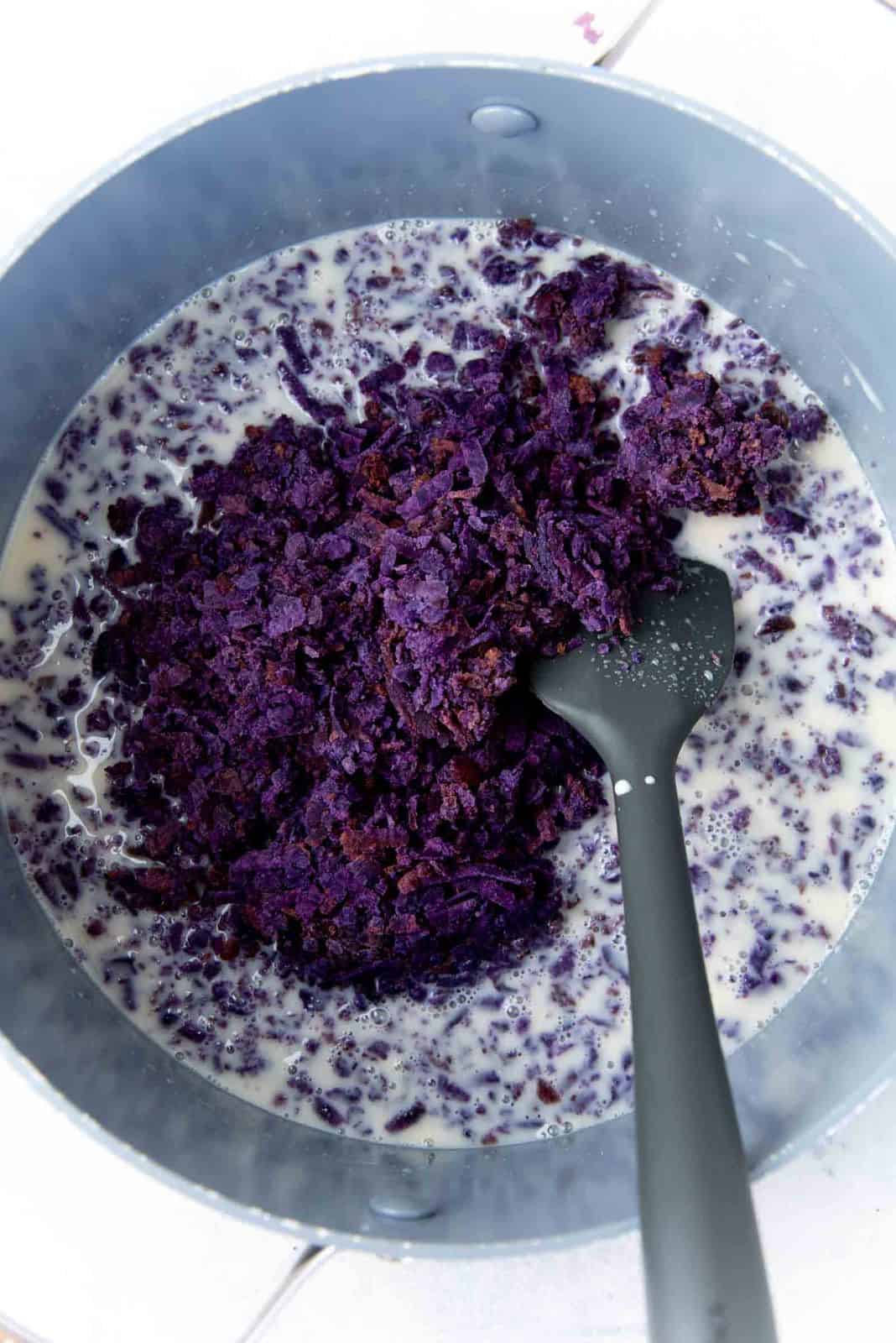

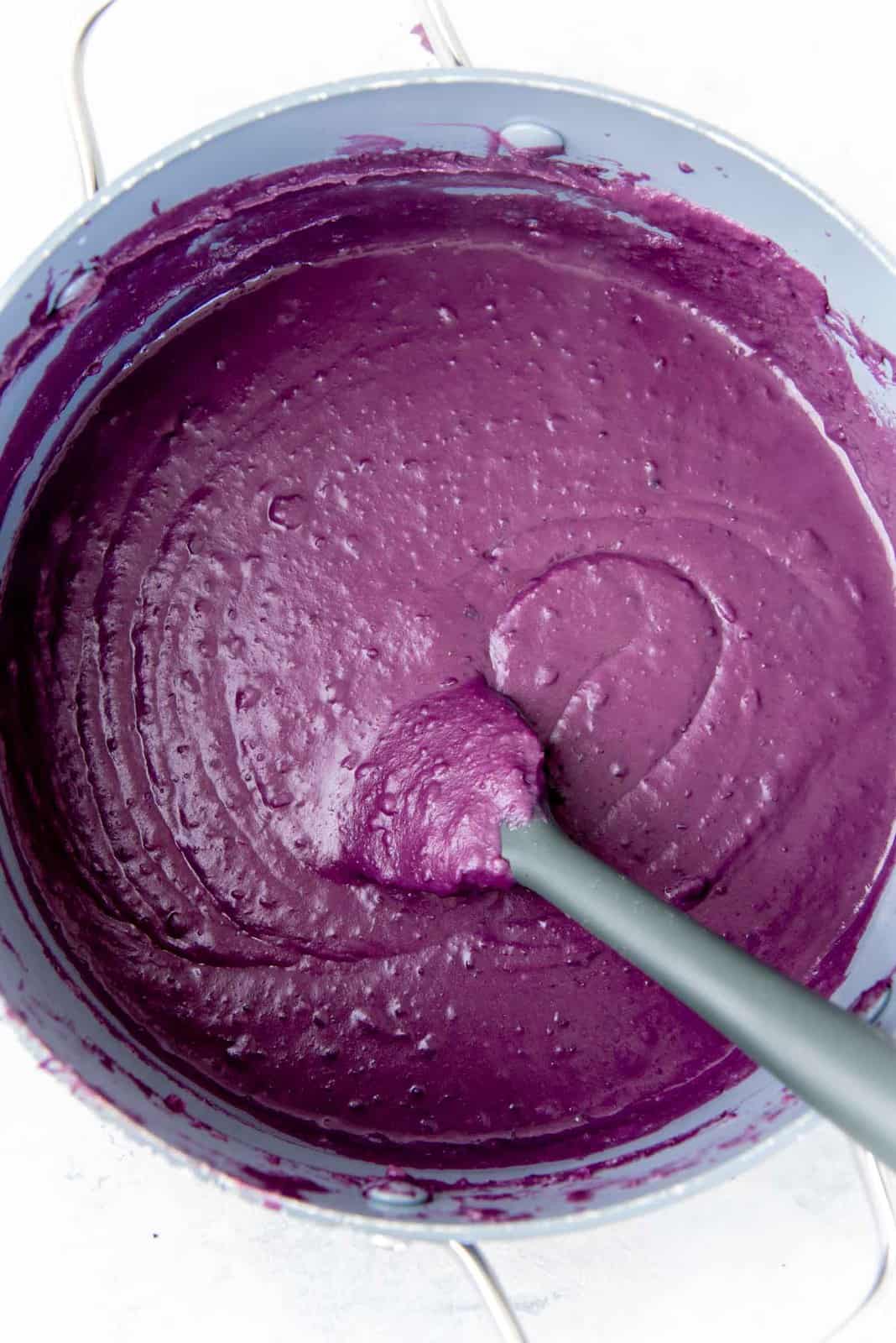
Add the liquids and sugar together and whisk to combine. Add the grated ube and mix that in very well.
Start cooking the mixture to dissolve the sugar.
Once the sugar is dissolved and the mixture is warmed up, use a stick blender to blend the ingredients very well. While this is an optional step, this step is absolutely crucial to make sure your final product is really nice and smooth and creamy with no lumps.
Keep whisking the mixture while you continue to cook the jam mixture. As the jam boils and concentrates, the bubbling will splatter everywhere and it can burn you. So make sure to keep stirring the mixture.
Stirring constantly will also prevent the ube halaya from burning at the bottom of the pan.
Add the butter towards the end of the cook time, and whisk it in.
The cook time will vary depending on various factors, so it’s best to keep an eye on the mixture to determine when it’s done.


How to tell if the ube jam is ready?
The cook time ranges from 40 to 60 minutes. The cook time depends on these factors.
- Heat level – I like to cook mine on a medium-high heat at the start, and then lower it to a medium heat or even medium-low heat as it thickens. This also helps with the sputtering. A higher heat will make the cook time shorter though.
- Type of pot – I like to use a big, wide pot. This helps with shortening the cook time, because of the larger surface are. If you make it in a smaller pot, then the cook time may be longer.
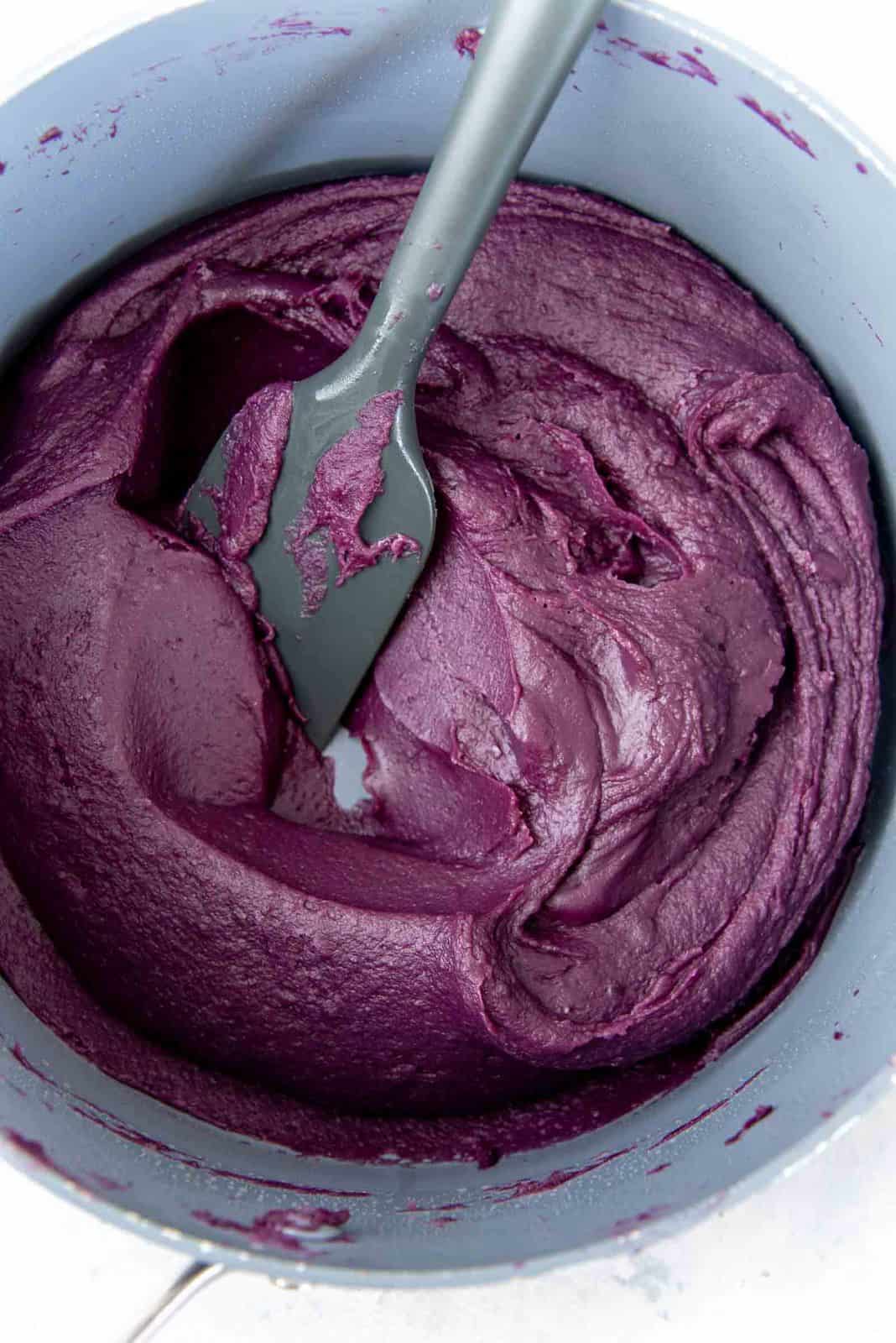
- How thick you want it to be – If you want the ube jam to be at a spreadable consistency, then you should be cooking it for a shorter time (about 45 minutes for me). If you want a pudding-like consistency that sets in molds, then you want it to be thicker and cook longer (closer to 60 minutes, in my case).
How to serve ube halaya
As a pudding
If you’re going to serve them in llaneras or some kind of mold or in a dish, make sure to lightly coat the inside of the serving dish with a little butter or coconut oil before adding the jam. This ensures that the ube halaya comes out of the mold cleanly.
Serve them the traditional way with shredded cheese (quickmelt or Eden brand cheese) on top, or caramelized coconut curds (latik).
Or try a non-traditional way by pouring some sweet and salty coconut sauce on top.

Use it in other desserts
- Add the purple yam jam into your ice cream base to make ube ice cream.
- As a filling in bread to make ube filled bread rolls.
- Spread it on toast.
- Make cheesecake, or ube caramel custard (ube flan).
- You could even use it to make ube cake or frosting too.

Pro Tips and FAQs
How to store ube halaya and how long will this jam last?
Ube halaya should be stored in an air-tight container that is dry and clean.
In the fridge – It’ll last in the fridge for up to 5 days.
In the freezer – If you want to store this for longer, you can do so by freezing it in an air-tight container for up to 6 months. I have a batch of ube halaya in the fridge that is almost 6 months old right now, and I can’t wait to thaw it out and eat it!
That being said, please follow general food safety precautions. Your ube halaya is only as good as the ingredients you used. Fresher ingredients = longer shelf life.
Improper food handling will also shorten the longevity of ube halaya.
Things such as using dirty spoons or knives, or double dipping will introduce bacteria. Keeping the ube halaya at room temperature for extended times between chilling will also cause it to go bad sooner.
So, if your ube halaya is starting to smell different, starting to discolor, or has any weird taste, please discard.
Is it better to use frozen or fresh ube?
You can use either. Fresh ube tastes much better, but frozen ube will work very well too! The only time I would recommend adding ube extract is if you use frozen ube. This will enhance the flavor.
Make sure to thaw the frozen ube so that it’ll be easier to heat and cook it in the recipe.
Frozen ube may add a little extra moisture, which can extend the cook time. If you keep an eye on the texture, you will be fine.
Fresh ube can be steamed and grated and used as per the recipe.
Can I just mash the ube instead of grating it?
Absolutely! Mashing the ube makes it more fibrous. The flavor will be unaffected, but I don’t like my halaya to be fibrous-y. That texture just feels weird to me.
BUT here’s a pro tip – if you use an immersion blender at the end, it won’t matter! You will still get that classic, authentic smooth and delicious texture that we all love in ube halaya.
Why do you steam your ube?
When you boil your ube (or sweet potatoes) in water, you can get “water-logged” yams. Essentially, the yams absorb too much water and the flavor of the yams leech into the water. So you end up with watery yam with less flavor.
Steaming ensures that you cook the yam through, but preserve the flavor better at the same time.
Can I make this recipe with less sugar?
You can, if you like. You could reduce the sugar added to ½ cup if you prefer. But I do not recommend removing the added sugar amount completely.
There will be a change in texture and taste. This is a jam-like spread, so it’s meant to be sweet. The sugar and fat from the sugar, milk, coconut milk, condensed milk, all contribute towards that final glossy jammy texture of classic ube halaya. Removing or reducing these ingredients will result in a spread that looks dry.
Why is my ube jam taking so long to cook?
The cook time will depend on many factors. The cook time here is based on my stove and my pot. Unfortunately there will be some time variations when the pot and stove, and other factors change when you make this in your kitchen.
This is why I have provided step by step visual cues on what to look for when you’re making this ube halaya recipe. This allows you to be confident that you’re going in the right direction even if the cook time is a little different.
Can I make ube halaya without stirring it for so long?
There are recipes where you would add less liquid and cook it for a shorter time. This is OK, but keep in mind that the resulting flavor will always be more bland.
The glossy, jammy, buttery texture of ube halaya comes from the cooking process. As the sugar, fat, and starch in the ingredients break down and mix together, they form a wonderfully creamy and glossy spread. All the flavors in the ingredients intensify during this cooking process, so it ideally shouldn’t be skipped or shortened.
This cooking technique is not unique to ube halaya. There are so many desserts in South Asian and South East Asian cooking that employ this technique. It results in a delightful melt-in-your-mouth, rich texture. And it’s absolutely worth it!
Have you tried ube or ube halaya before? What’s your favorite way to eat purple yam jam?
More ube recipes
Recipe
Ube Halaya (Purple yam jam recipe)
US based cup, teaspoon, tablespoon measurements. Weight measurements are recommended for accurate results whenever available.
Common Measurement ConversionsIngredients:
- 675 g cooked ube 1.5 lbs, or an equal amount of cooked purple Okinawan sweet potato
- 240 mL evaporated milk 1 cup
- 240 mL full fat coconut milk 1 cup
- 240 mL condensed milk 1 cup, see recipe notes for substitutions
- 200 g white or brown sugar 1 cup
- ¼ tsp sea salt
- 10 mL vanilla extract 2 tsp
- 15 mL lemon juice 1 tbsp
- 115 g unsalted butter ½ cup / 1 stick, if you’re using salted butter, skip the additional salt in the ingredients list
- 1 – 2 tsp Ube extract optional (I don't use ube extract in this recipe)
Instructions:
- If you’re using fresh ube or purple sweet potatoes, steam them until tender. Then let them cool, and then peel. Once peeled, grate them with a box grater.675 g cooked ube
- Once grated, this can be stored in the freezer in an airtight container for months. I prefer to vacuum pack the cooked ube. This can be done in advance, or you can buy pre-cooked, and grated ube as well.
- If you’re using store-bought frozen ube, it’s best to let it thaw out before using, but it can be used from frozen in a pinch as well (see recipe notes).
- Use a heavy bottom, large pot (I use a 5 qt pot). Add the evaporated milk, coconut milk, condensed milk, sugar, and salt into the pot.240 mL evaporated milk, 240 mL full fat coconut milk, 240 mL condensed milk, 200 g white or brown sugar, ¼ tsp sea salt
- Add the grated ube, and stir to combine.
- Heat over medium-high heat. Stir to dissolve the sugar.
- With a stick blender, blend the mixture to make the ube as smooth as possible.
- Once blended, continue to cook the ube-dairy mix until it comes to a boil. Stir frequently.
- When the mixture comes to a boil, reduce the heat to medium or medium-low. Stir the mixture constantly while cooking, to prevent the jam from sticking to the bottom of the pot and burning. This also helps prevent the jam from sputtering and splattering everywhere.
- The cook time can range from 40 – 60 minutes.
- When the jam starts to thicken, add the vanilla, lemon juice and butter. Keep whisking to combine all the ingredients.10 mL vanilla extract, 15 mL lemon juice, 115 g unsalted butter
- If you want to add ube extract to deepen the purple color, you can do so at this stage. This is recommended if you used prefrozen ube, but isn't necessary if you used fresh ube or purple sweet potatoes.1 – 2 tsp Ube extract
- Remember that the ube halaya will thicken greatly as it cools down. So, only cook until you get a consistency that is a little runnier than you want it to be eventually.
- Carefully spoon the mixture into glass jars while hot. Then close with the lids. Allow the jam to cool down to room temperature. The ube jam will last in the fridge for about 5 days, and about 3 months in the freezer.
Recipe Notes
Nutrition Information:
“This website provides approximate nutrition information for convenience and as a courtesy only. Nutrition data is gathered primarily from the USDA Food Composition Database, whenever available, or otherwise other online calculators.”












Leave a Reply