


Here’s how to make boba pearls (tapioca pearls) at home! They are super simple to make, and heaps better than store-bought ones. Use them to make brown sugar bubble tea, classic bubble milk tea, iced matcha bubble tea, or any other type of bubble tea (like this ube bubble tea) at home!
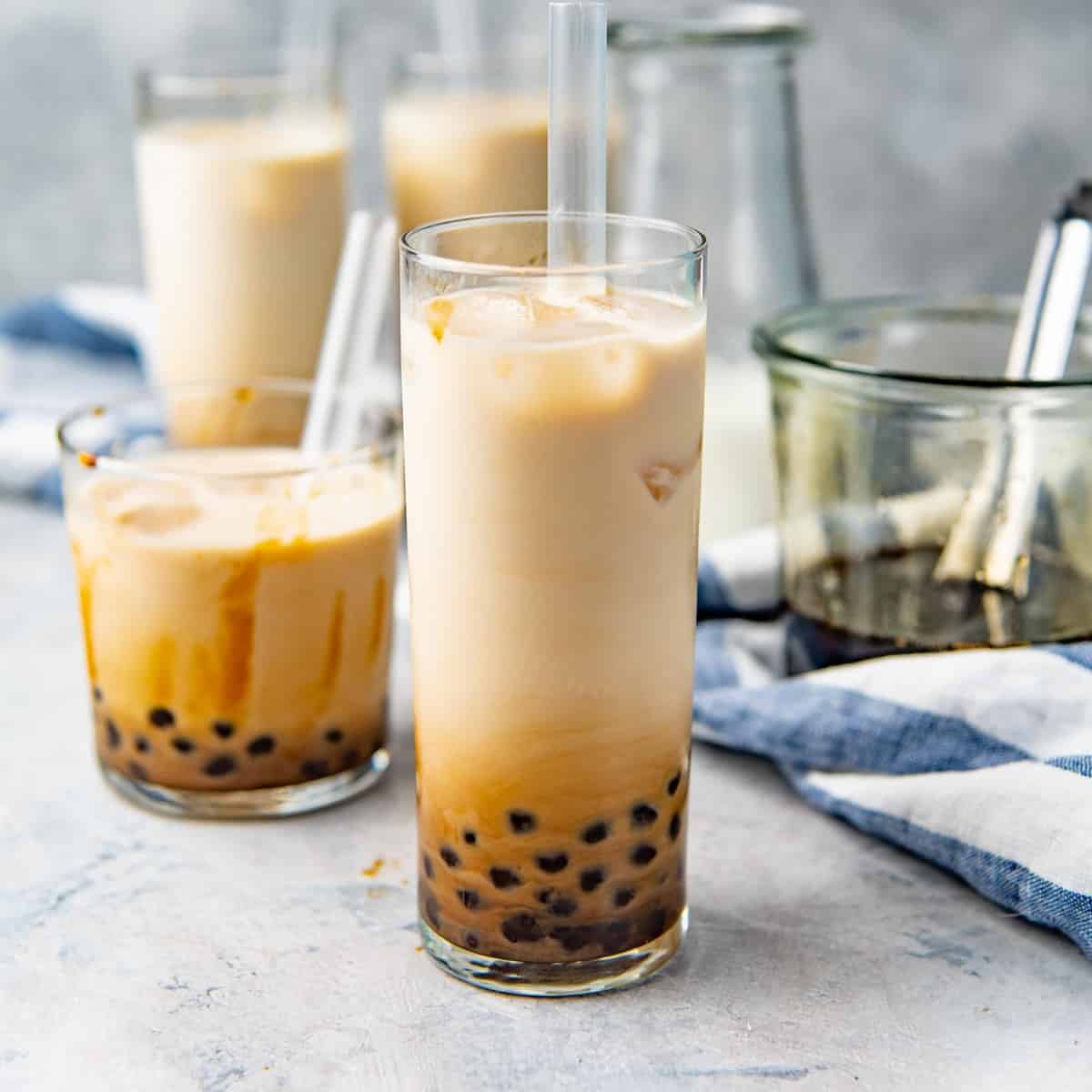
Brown sugar bubble tea with homemade boba pearls is the perfect summer treat!

My husband and I are huge bubble tea aficionados. For me, it started when my sister introduced me to bubble tea when I used to live in Australia. My favorite was usually the lychee coconut tea with boba pearls.
But since then, my preferences have expanded to include classic bubble tea, brown sugar bubble tea, taro bubble tea, ube bubble tea, and plenty more flavors! They just change according to my mood.
I started making my own boba tea when we were in the US. There weren’t very many good bubble tea places where we lived in mid-Missouri, and I had to depend on my own devices.
But I’m not gonna lie, it’s bit of a tedious task. The recipe itself is super easy, but rolling the boba pearls by hand is a PITA. You can definitely enlist help for it though. It’d be a really fun activity to do with kids. If the kids can concentrate on the same monotonous task for longer than a few minutes, that is. 🙂

Why this recipe works

- You will get a step by step detailed recipe with lots of tips for making chewy boba pearls.
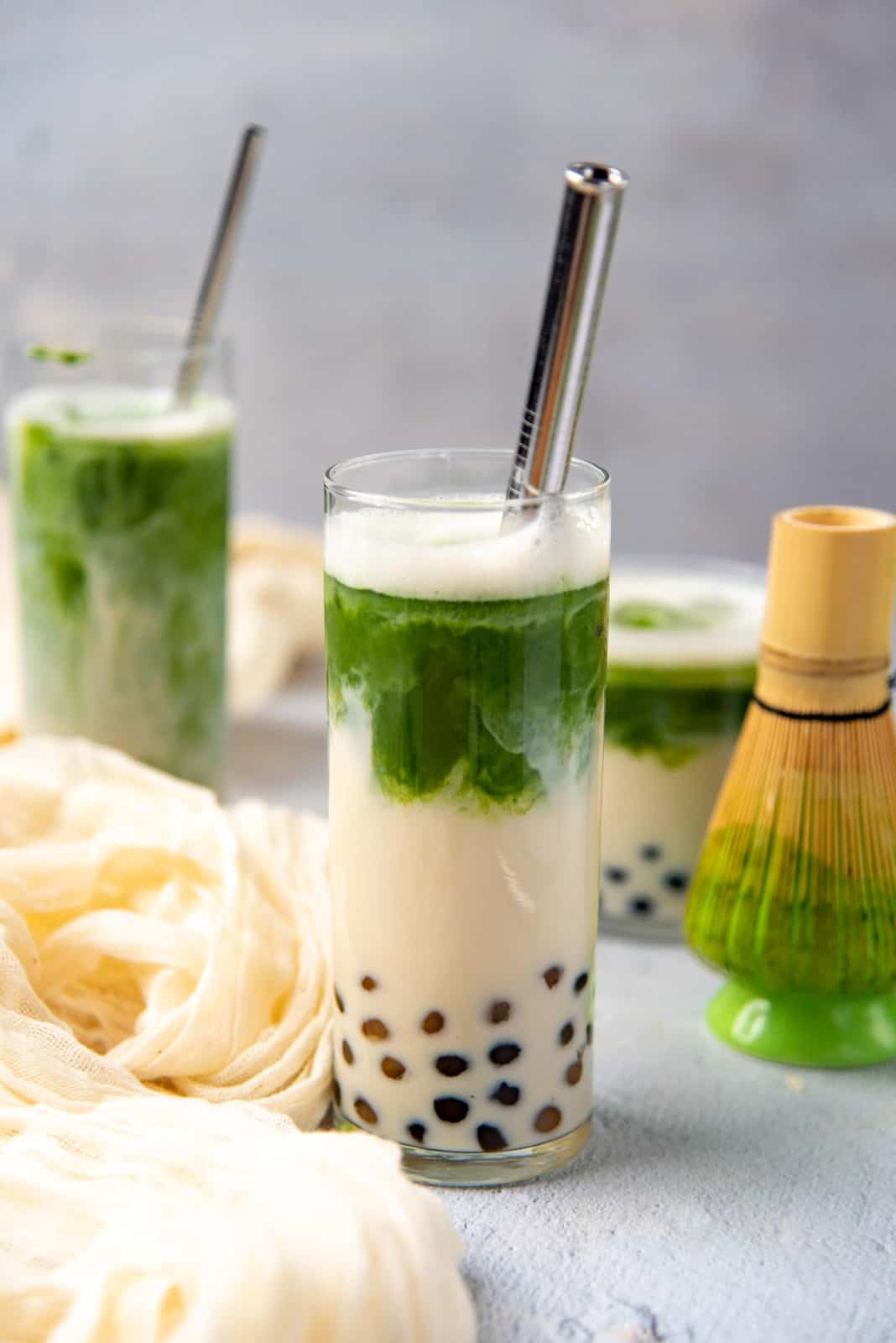
- You can learn how to make black pearls, clear pearls, as well as matcha pearls!
- You don’t need to use artificial food color, but you have the option of using it if you like.
- I provide shortcuts for shaping the dough into balls.
- You can learn how to make the brown sugar syrup that goes with the boba pearls.
- Also learn how to store the uncooked boba pearls for later, so you can make a big batch and cook them whenever you want.
- Made too much of the boba pearls? I’ll show you how to store and reuse already cooked boba pearls too!

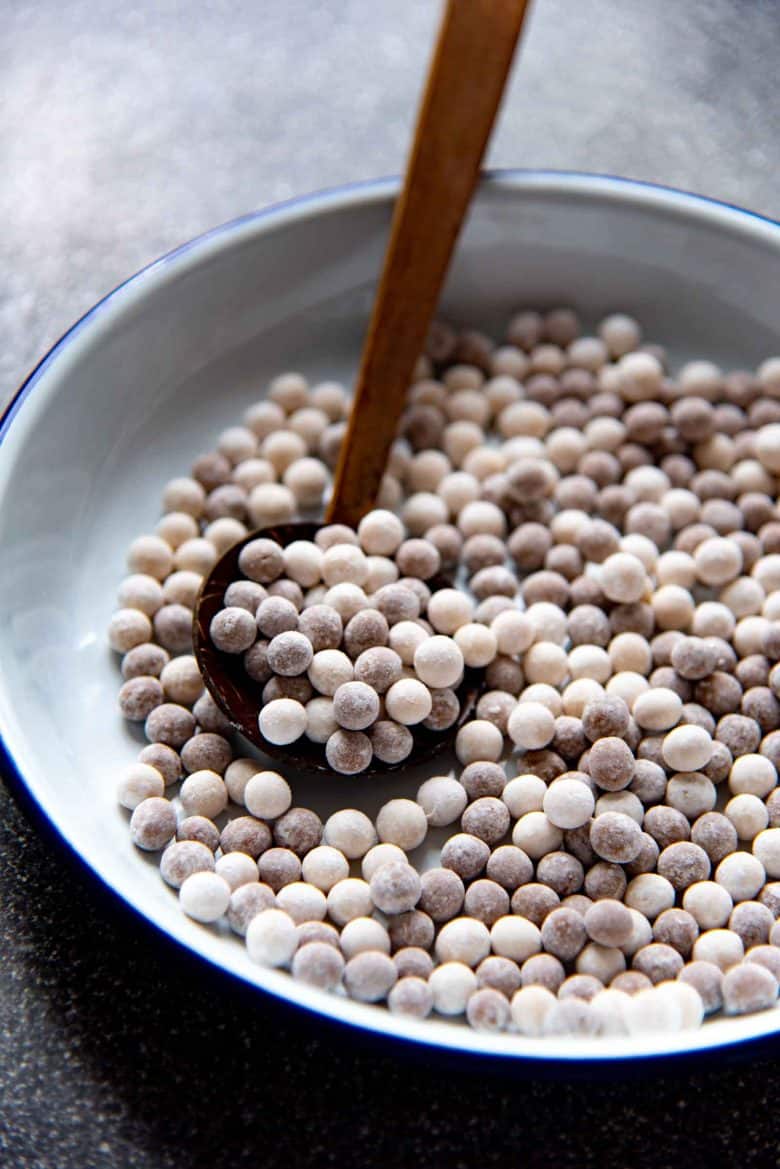
What are boba pearls (aka tapioca pearls)?
These delicious chewy blobs originated in Taiwan, but are very popular all over East Asia. They are made with tapioca starch (or starch from the cassava plant).
A lot of chewy, gelatinous desserts can be made with cassava root flour. But when it’s formed into round balls and cooked – they are known as boba pearls. Tapioca starch is also the same ingredient that is used to make small tapioca pearls for tapioca pudding.
Boba pearls are usually sold dry, and then cooked in water until soft. Store-bought boba pearls also have other additions to help keep their shape and prolong shelf life.
However, these homemade boba pearls are made with just sugar, tapioca starch, and water. Plus they are naturally gluten free!

Tapioca pearls are an important component of bubble milk tea drinks that are originally from Taiwan, but are now common everywhere.
They usually don’t have any flavor on their own, but can be a little sweet if you add sugar to the dough. They are also usually stored in a sugar syrup to keep them from sticking together. This simple syrup makes them even sweeter.
Understanding the process of making tapioca pearls
When I first started making boba pearls at home, I followed a very poorly written and explained recipe online.
As a result, I ended up with an ooblek fluid (a substance that has properties of both a liquid and a solid). A lot of recipes online require you to mix the starch with hot water – without specifying how hot the water should be.
So, today I’m sharing the step by step process of making boba pearls. And also help you understand what might have gone wrong if you didn’t get the best results.

Making boba pearls
As noted above, these are made with tapioca starch. You can buy this at any Asian store, but it’s also available at Bob’s Red Mill (sometimes as tapioca flour).
Tapioca starch is very similar to cornstarch or cornflour, and as such, it doesn’t form a dough when mixed with liquids. It just becomes a messy liquid (known as ooblek).
To prevent this, you must make a starter dough by mixing tapioca starch with boiling water to make a gelatinous mass. This starter dough can then be used to make the final dough for the boba pearls.
Why heat tapioca starch with hot water to make a dough?
The combination of hot water and tapioca starch gives rise to a process called gelatinization (like with tangzhong). In this process, the starch molecules in tapioca absorb more water until the molecules burst.
This results in an irreversible reaction, where the contents inside dissolve in the liquid, which causes the liquid to form a gel or paste.
If tapioca starch is combined with cold water, it cannot form a dough due to the absence of gluten. The starter dough creates a matrix that allows the tapioca starch to form a stable dough.
Making the starter dough
Weigh all the ingredients needed for this recipe.
- Tapioca starch
- Brown sugar – you can also use white sugar to keep the dough white (for clear boba pearls).
- Water
- Dark cocoa powder (if you want dark boba pearls) or matcha powder (for green boba pearls).
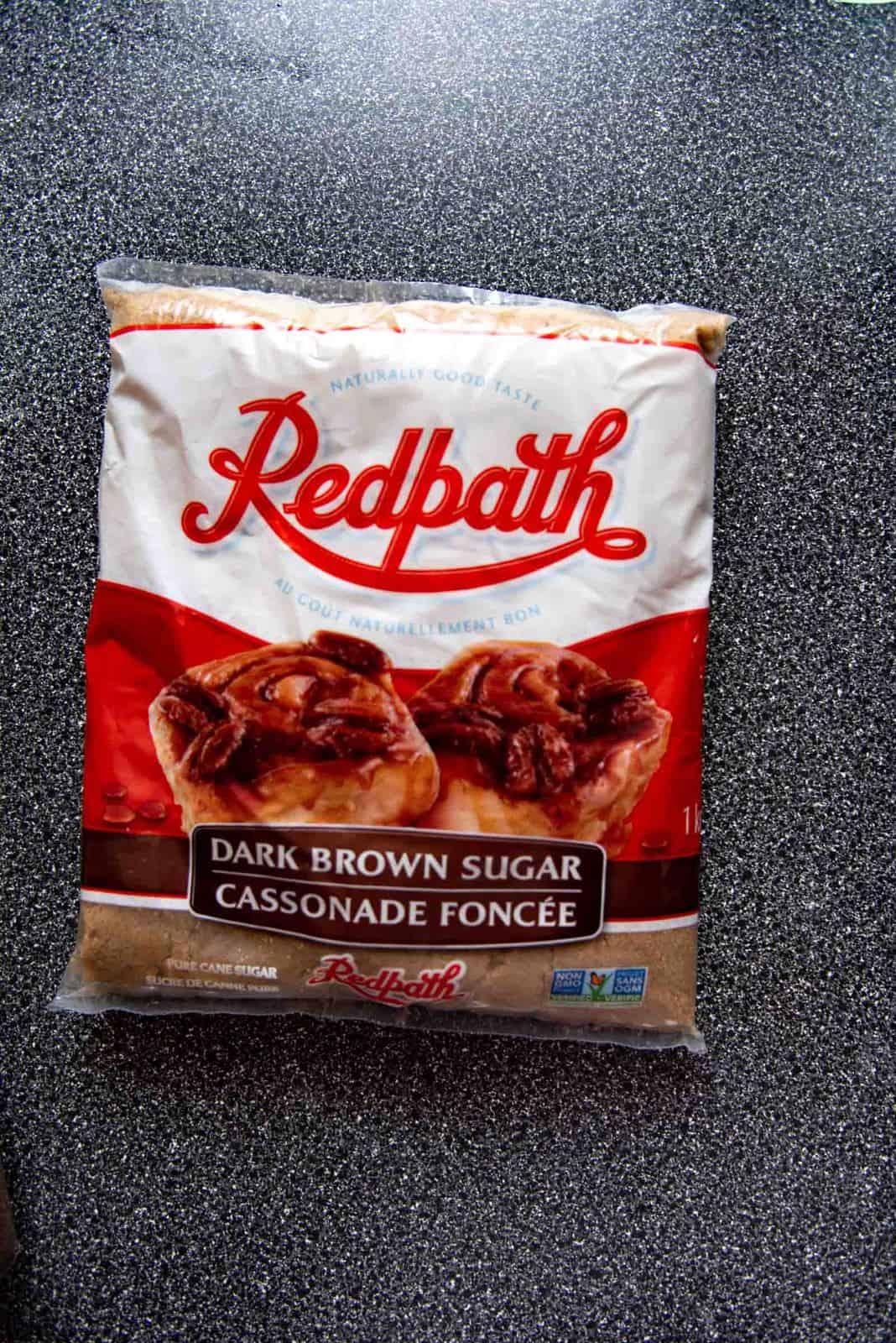
A note about brown sugar – The darker the brown sugar, the more prominent the molassey sweetness of the tapioca pearls. I prefer using the darkest brown sugar (muscavado), or the dark brown sugar available in stores.
The traditional ingredient to use is black sugar, which gives these pearls a much darker color. But it can be hard to find; so far I haven’t been able to find any in my local Asian grocery either.
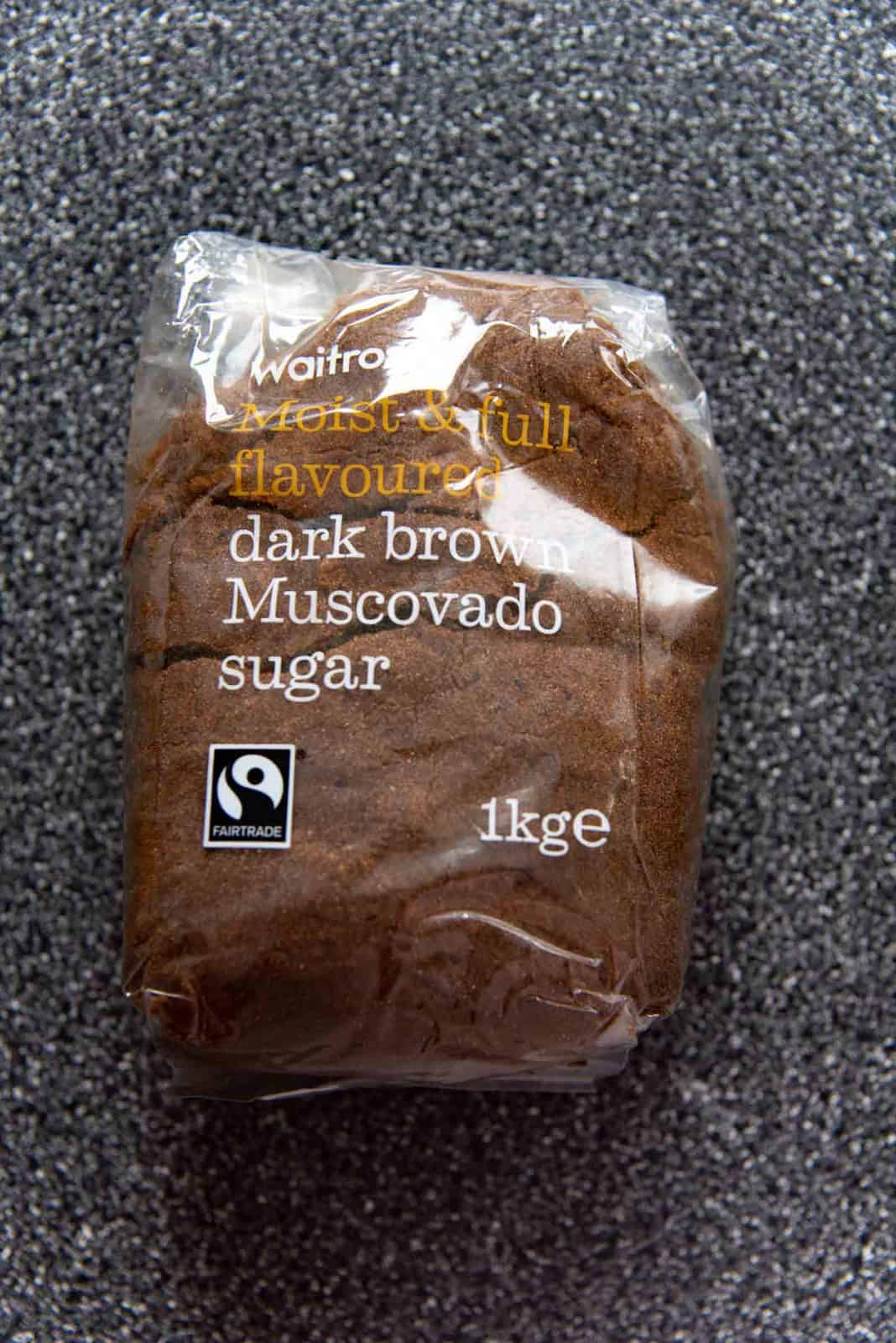
For dark boba pearls, sift the tapioca starch and cocoa powder together and set aside.
Bring the water and sugar to a boil in a saucepan over medium high heat. Make sure the sugar is dissolved as well.
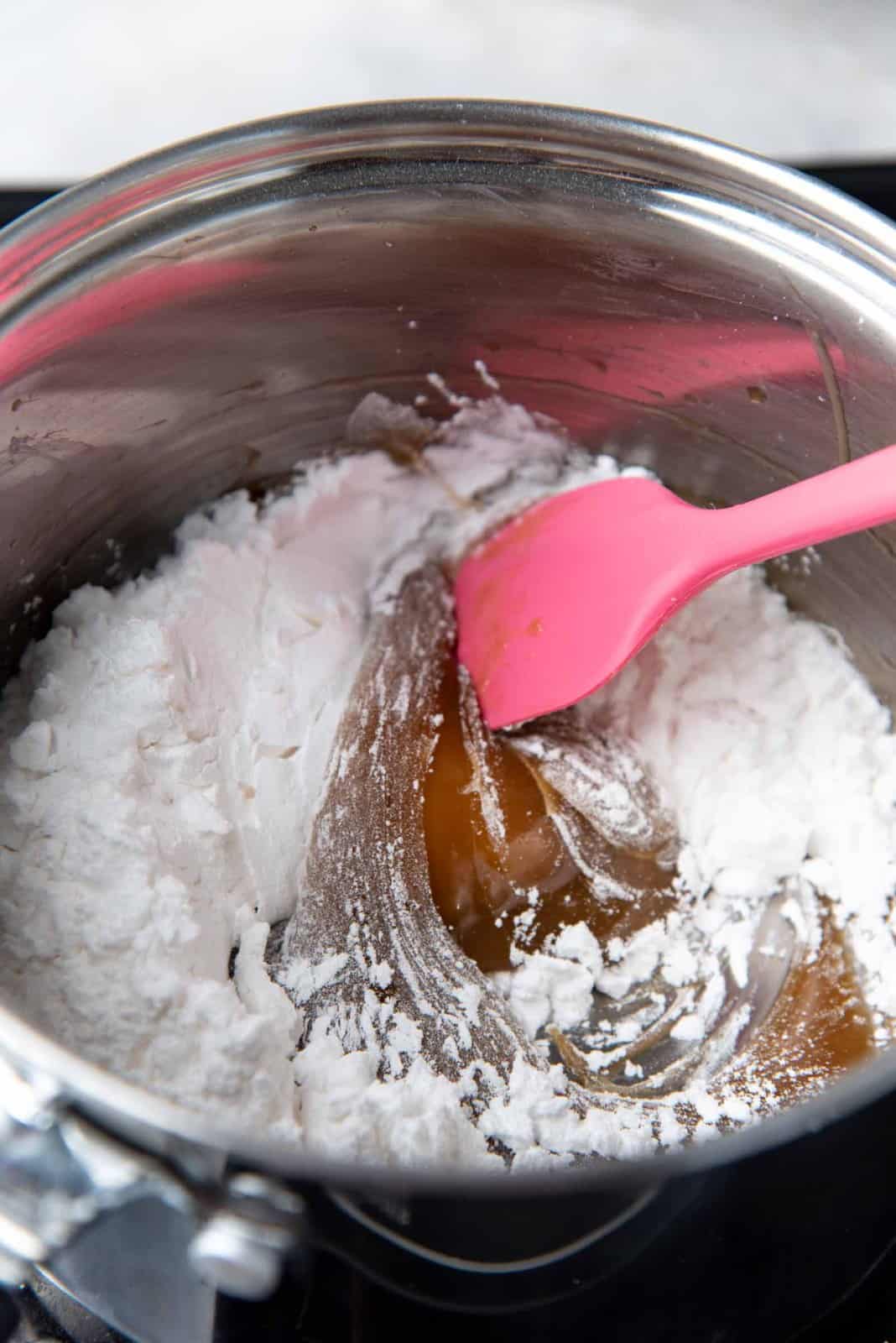
When the mixture comes to a boil, add some of the tapioca starch into the boiling water and whisk until smooth. Return it to cook over low heat until you get a nice, thick paste.
THIS is your starter dough.

Black tapioca pearls
If you add cocoa powder to your tapioca starch, then you can make much darker boba pearls that will turn into black tapioca pearls once cooked in the dark brown sugar. You can skip the cocoa powder and add black food coloring into the water as well.
Green tapioca pearls (matcha boba pearls)
Replace the brown sugar with white sugar, and the cocoa powder with matcha powder. You can also use butterfly pea powder to make blue boba pearls.
Making the tapioca pearl dough
Once you have the starter dough, you can add the rest of the tapioca starch and mix it in.
Mix until it forms a shaggy dough. Then turn it out onto a smooth work surface, and knead the dough until it becomes nice and smooth. This needs to be done while the dough is hot, so that it remains pliable.
The texture of the dough changes when it cools down.
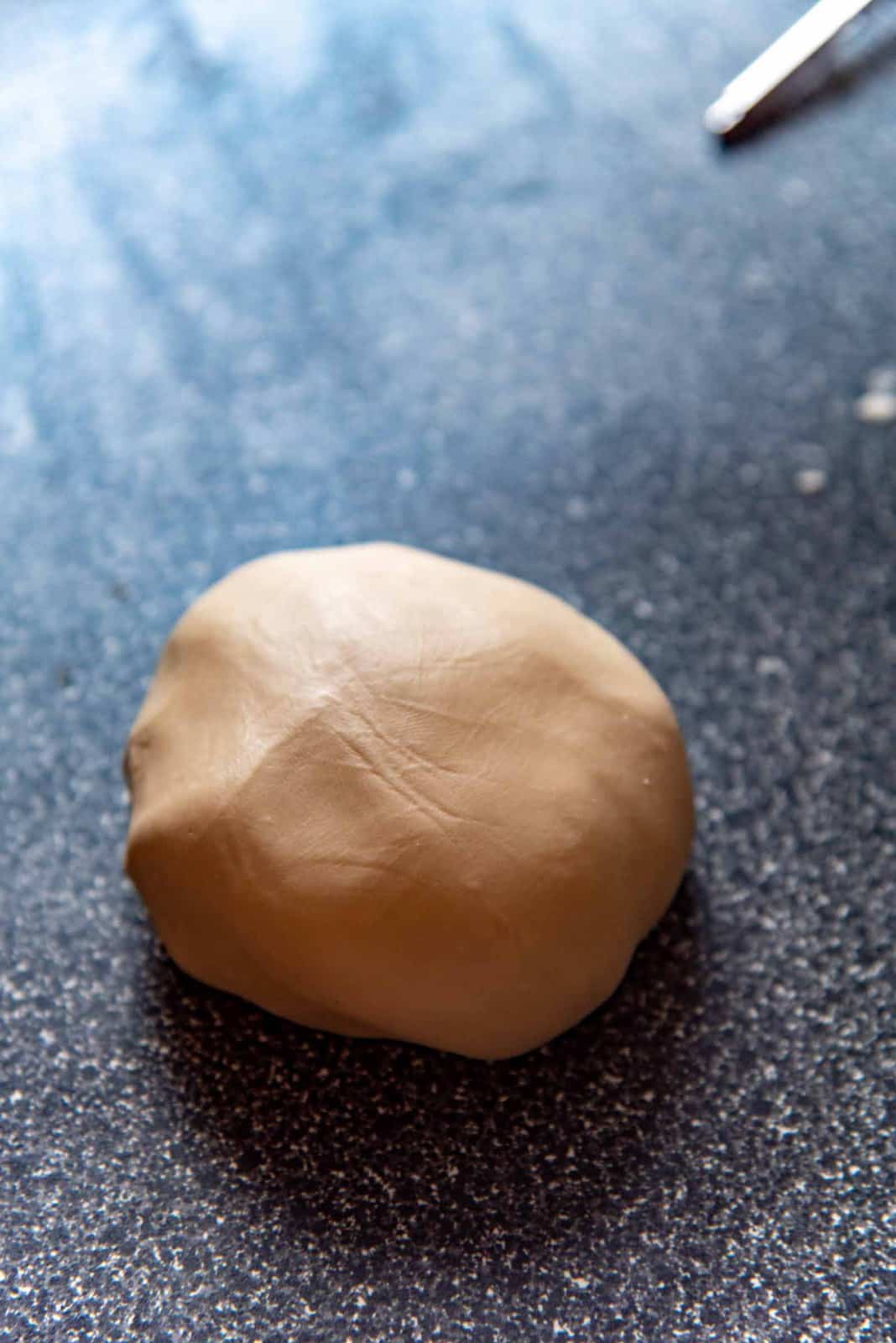
What should the texture be like?
The texture of the dough should be smooth, and not too sticky. If it’s a very wet dough, you can sprinkle some extra tapioca starch to make it less sticky.
But you do NOT want the dough to be completely non-sticky (dry surface) either. For example, if I leave the dough on the surface and try to pick it up, then it would look like it wants to stick to the surface, but I can still pull it off cleanly. This is the correct texture.
If the dough is too wet, you won’t be able to form proper smooth pearls and will end up with very ugly looking cooked boba pearls.
Once the dough is ready, you’re ready to shape them into balls.
NOTE – this dough is very prone to drying out. If you’re not shaping the dough, keep it completely wrapped in plastic wrap to prevent it from drying out.



Shaping the dough
There are a few ways to shape the boba pearls from the dough.
- Take small pieces from the dough and then ball them up in your palm. Repeat until you’re finished with all of the dough.
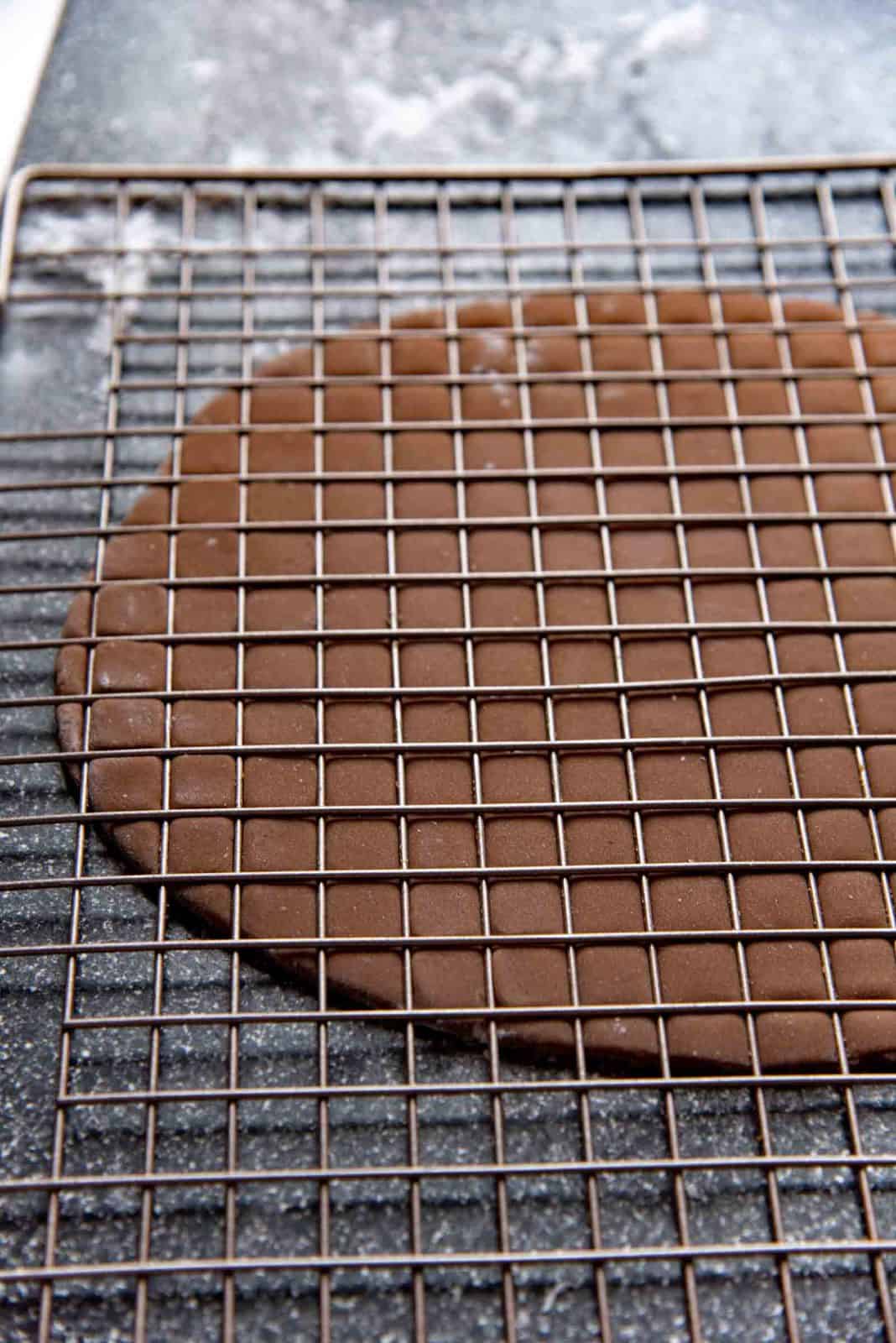
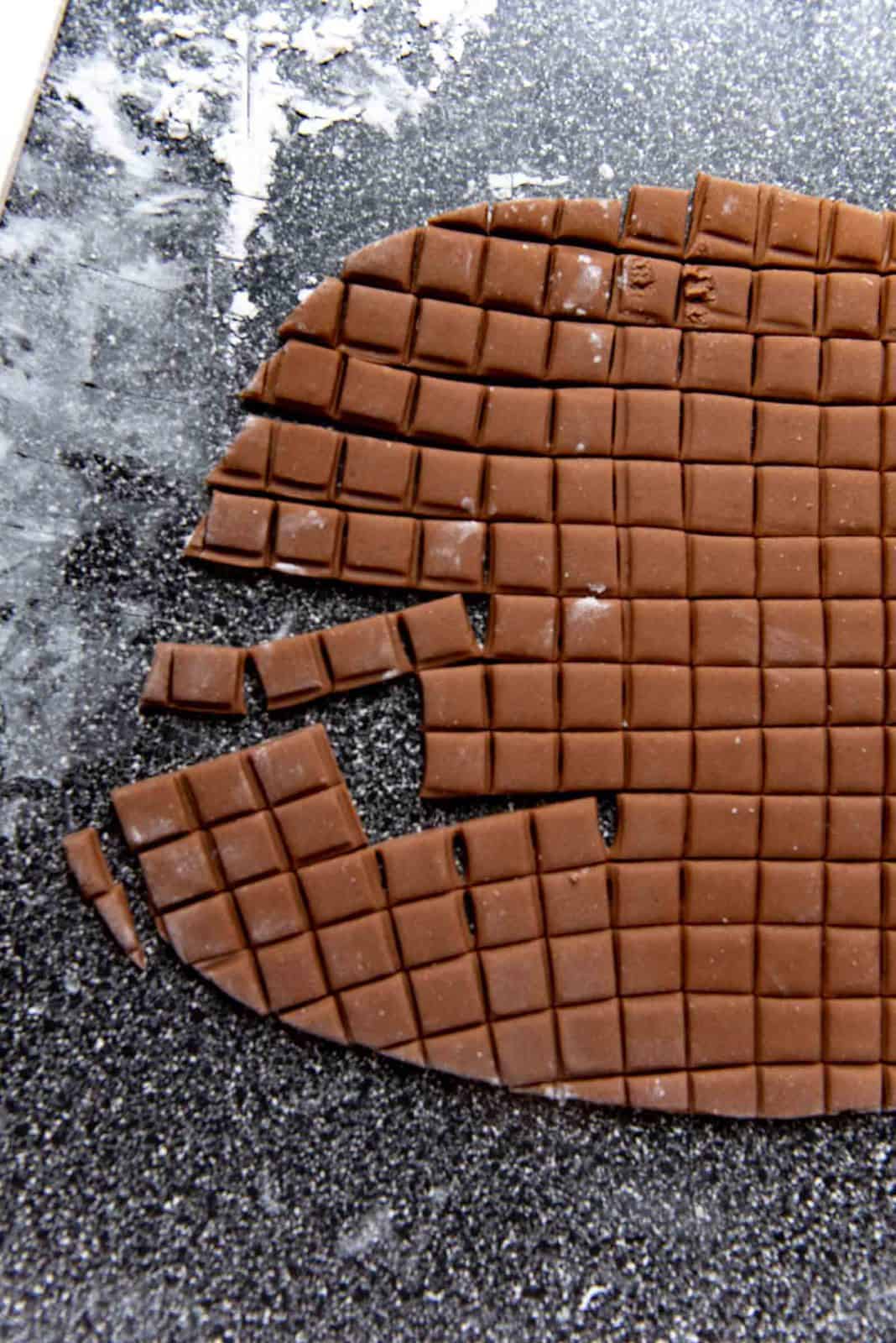
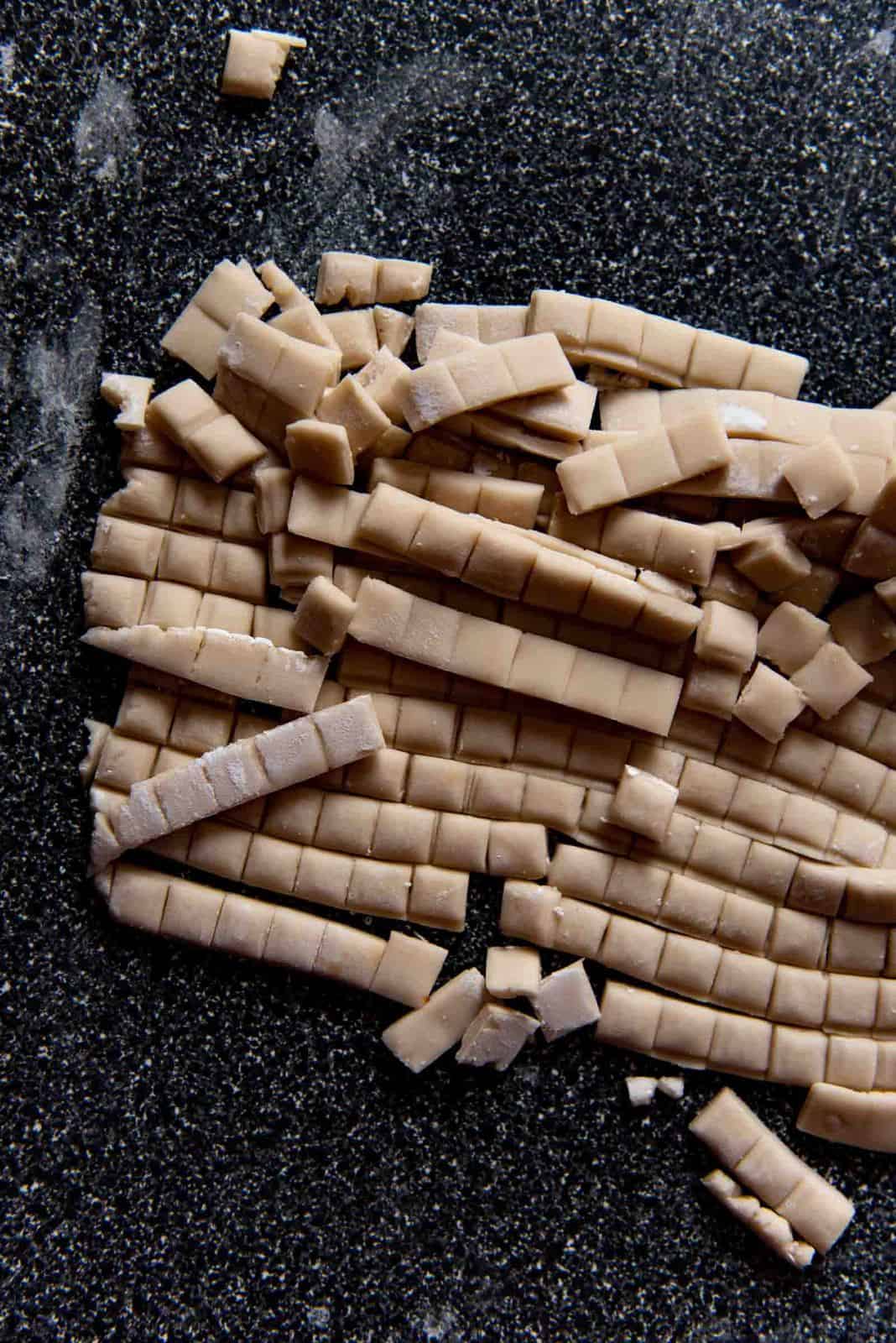
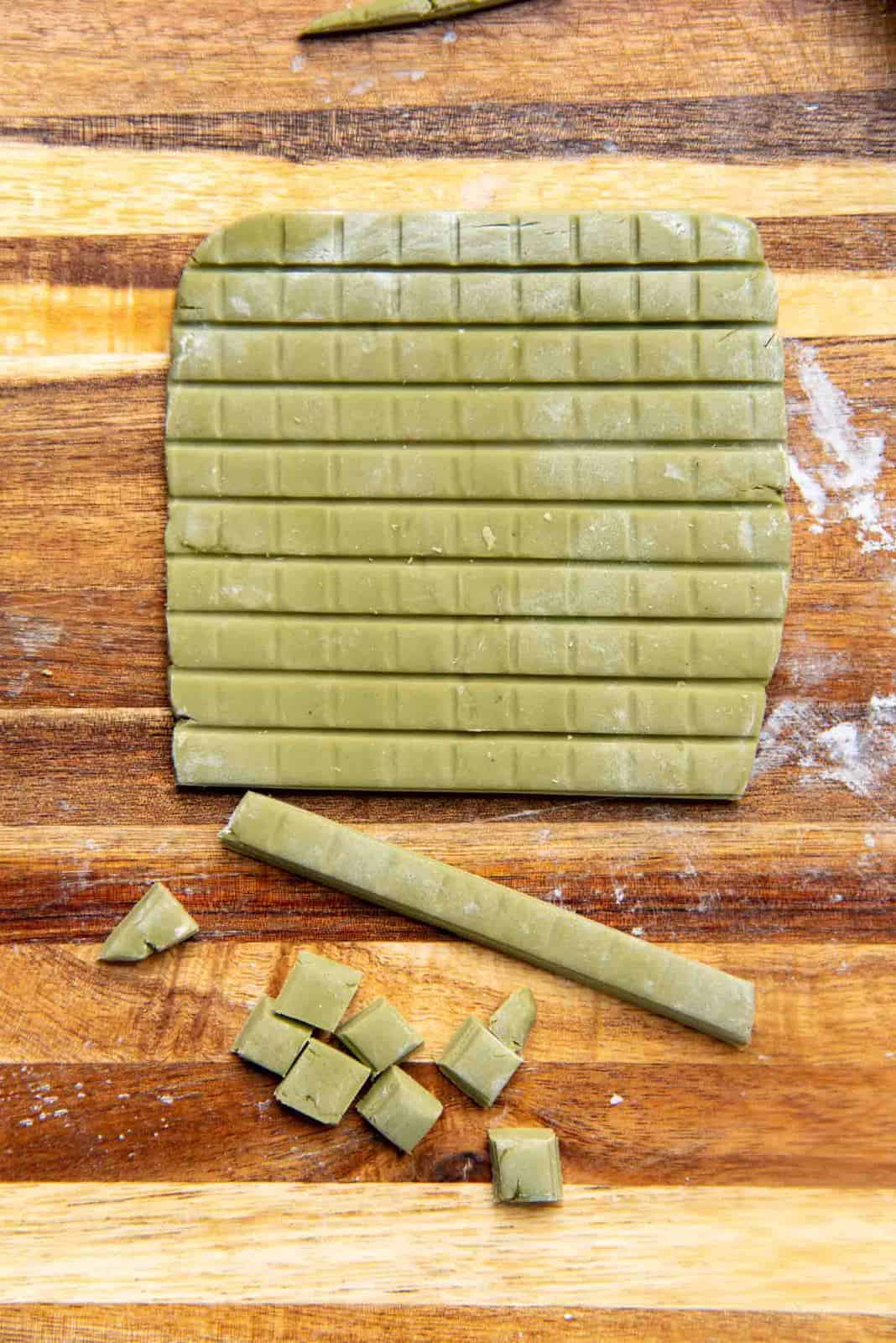
- Roll out the dough into an even thickness, cut strips in both directions to form squares. Roll the little squares into balls.
- Divide the dough into 4 equal portions, and roll out each portion into a long evenly thick rope. Cut similar-sized pieces from the rope and roll them up into balls.
- If you live in the UK, you can purchase a device used to make carp bait boilies. You can use this to create the small, round balls needed to make boba pearls too. I haven’t had any luck finding something similar in Canada so far. It’s similar to the cake pop ball makers I have seen, but much smaller.
The method I prefer to use to shape tapioca pearls
I prefer to use the second method above. I sometimes use a cake cooling rack (with 1 cm grids), and press it into the dough to create the squares. Then I cut along the lines to create similar-sized squares.
You don’t have to use the cooling rack to create the lines though. You can use a knife to cut 1 cm strips in one direction, and then in the perpendicular direction to cut similarly thick strips. Then you end up with similar-sized squares.
Cover the cut up pieces with plastic wrap, and take one portion out at a time and roll it into little balls. I usually do this in front of the TV, while watching re-watching an episode of The Office or Avatar the Last Airbender. Sometimes I get my husband to help. He likes bubble tea too much to complain.
I would love to try the carp boilie maker, but I’m still searching for one here. But if I do try it, I’ll let you know how it goes!

What if my tapioca pearls are sticking to each other?
This is normal! The dough is a little tacky while it’s warm, so the pearls will naturally stick to each other.
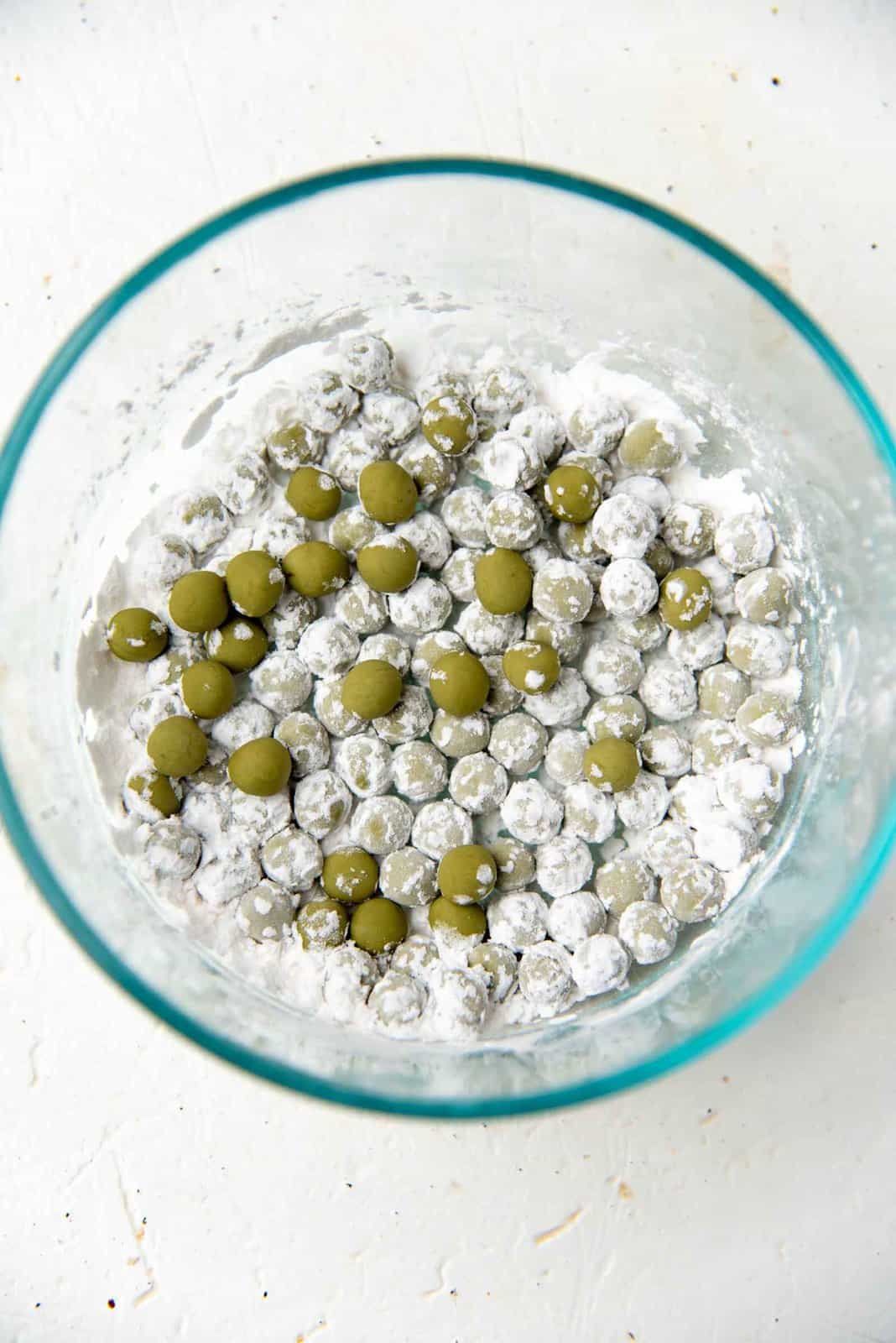
To prevent this, I like to keep a little tapioca starch in a bowl, and add the rolled up pearls into the bowl. Then I roll the ball around to make sure it’s coated in the tapioca starch.
Making sure each boba pearl is lightly coated with tapioca starch ensures they won’t stick to each other.
When the balls have all been made, they are ready to be cooked!
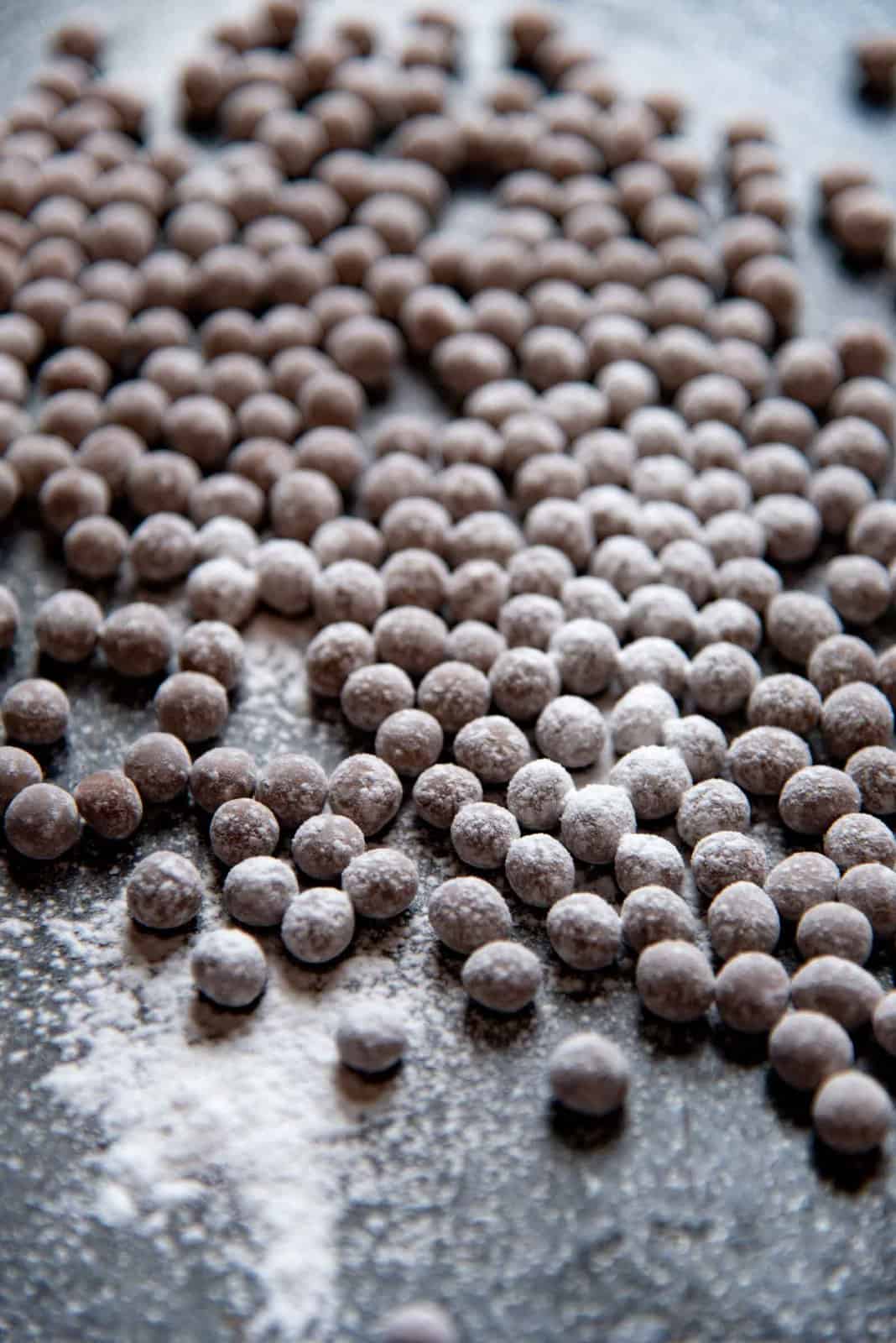
You can let the boba pearls dry for a few hours. But I have cooked the pearls fresh, dried, frozen, and they always come out well!


Drying the boba pearls
To make dried tapioca pearls – spread the boba pearls on a half sheet pan, and let them dry out for about 4 – 6 hours. Every hour or so, roll the pearls around on the pan to make sure the balls are evenly dry all over, while maintaining a nice, round shape.
How to store boba pearls
Freezing dry boba pearls
Once the boba pearls are dried, they can be frozen. Place them in an air-tight container or vacuum pack them.
Freezing fresh boba pearls
Fresh boba pearls are still going to be soft, so you don’t want to vacuum pack fresh boba pearls directly.
Since there will be some condensation, I prefer to wrap the boba pearls in some paper towels and then place them in an air-tight container.
Cooking the boba pearls
Cooking boba pearls will be done in two stages.
The first stage involves cooking the boba pearls in water. This will soften the boba pearls and make them chewy and almost translucent .
For every cup of boba pearls, use 4 cups of water.
Once the boba pearls are cooked, strain them and IMMEDIATELY dunk them in cold water. Keeping them soaked in cold water prevents them from sticking to each other.
The cook time will change according to how fresh / dry the boba pearls are. If the boba pearls are fresh (and not dried), then the cook time will be less.


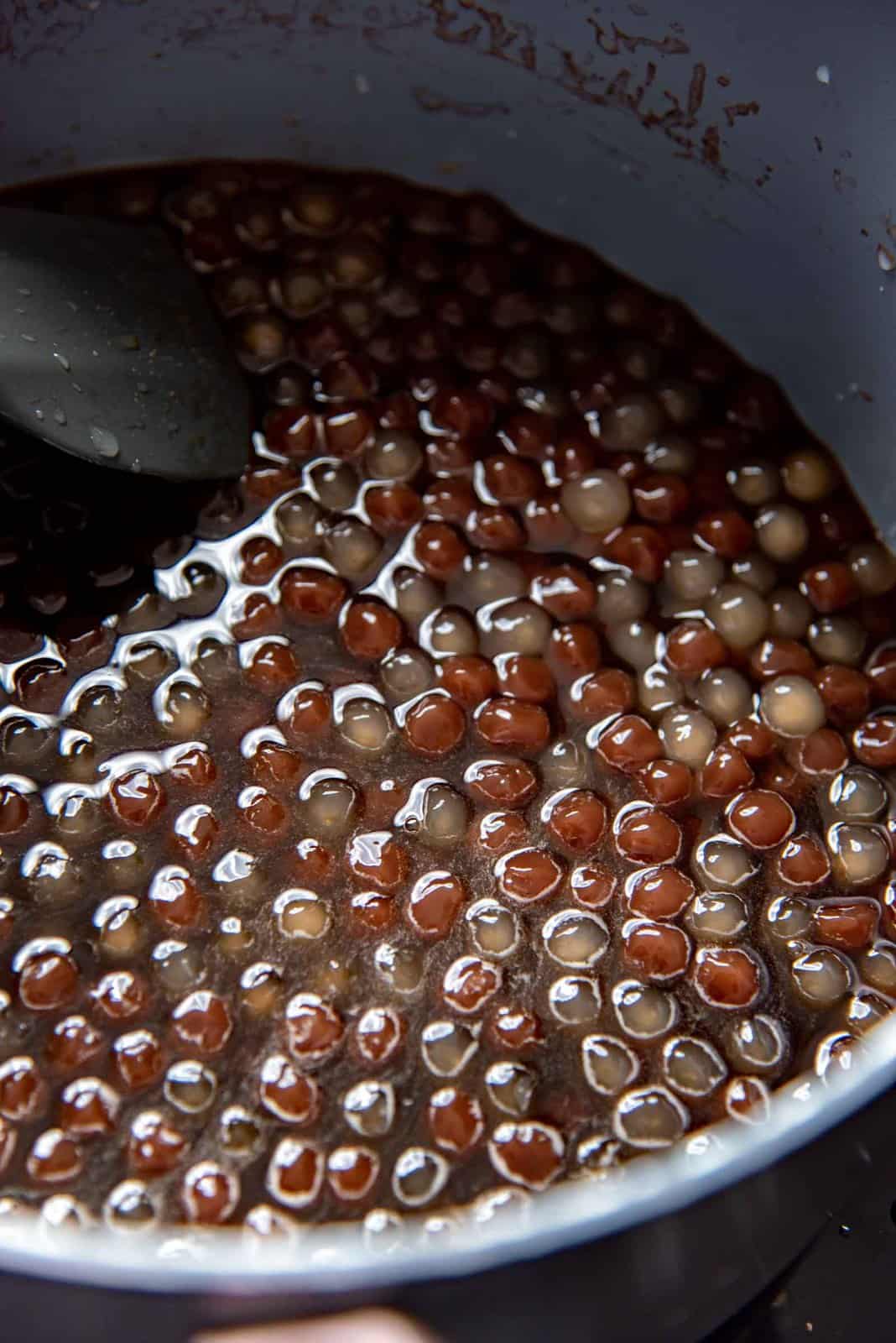
The second stage is to cook the boba pearls in a sugar syrup.
You can use white sugar or brown sugar for this part. If you want to add more flavor to the syrup, go with a beautiful molassey brown sugar. This is what is used to make brown sugar bubble tea.
If you want to keep the color of the boba pearls vibrant, then I recommend using a combination of white sugar syrup or honey.

Can I store leftover, cooked boba pearls?
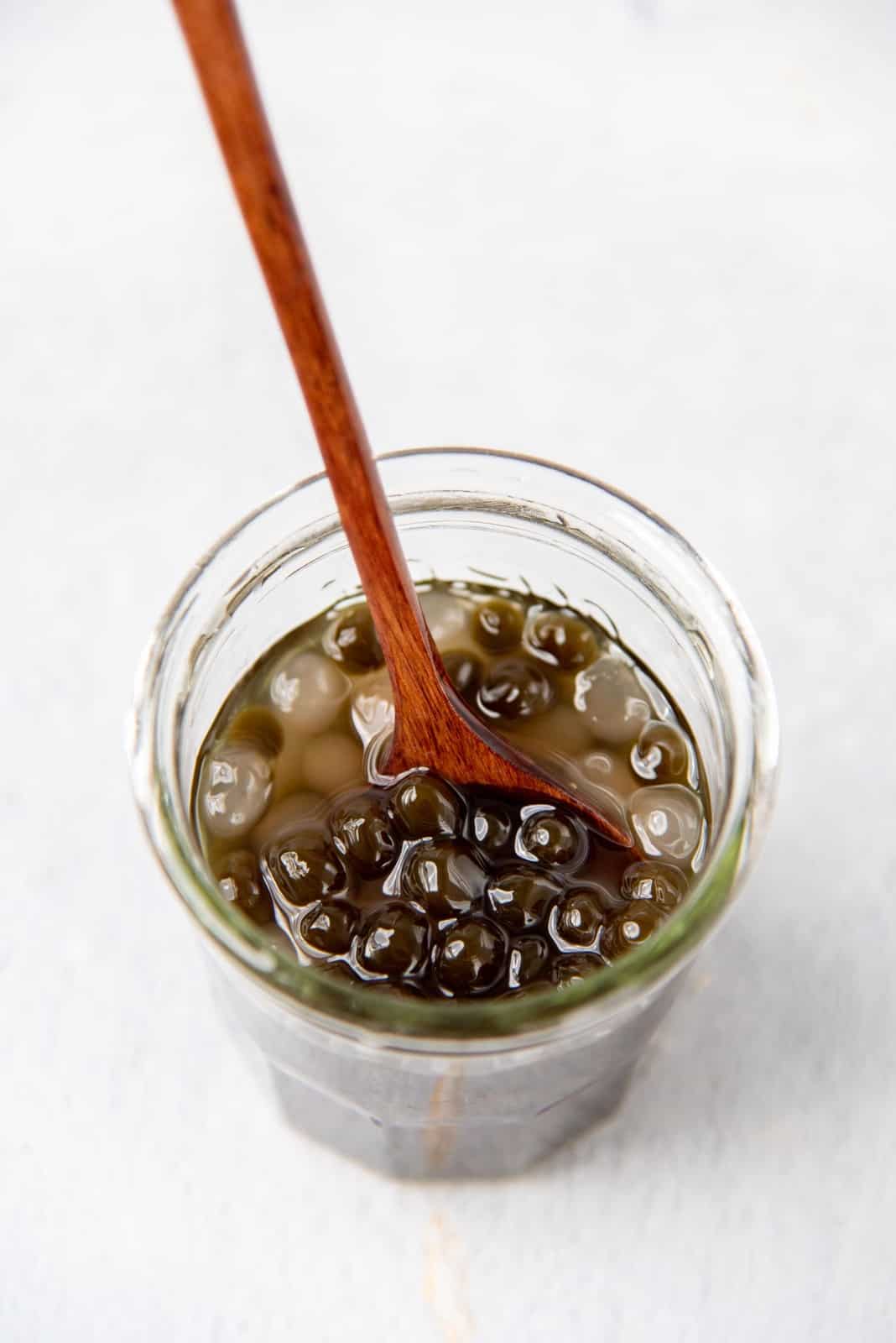
Yes! Cooked boba pearls can also be stored in the fridge for a few days. However, you must store them in the sugar syrup to prevent them from sticking to each other.
Cooked boba pearls will harden as they cool down, losing the chewy, soft texture in the process. They MUST be warm to have that soft, chewy texture.
So, to make cooked and refrigerated tapioca balls fresh again, add a little water to the syrup and re-heat in the microwave until the sugar syrup is bubbling again.
It is important that the tapioca balls are completely submerged in the liquid, and that you use a bowl or jug that is large enough to allow the syrup to boil.

How long can I store boba pearls?
I don’t keep leftover cooked boba pearls for too long – maximum 3 days (before we finish it!). So I’m not entirely sure what the shelf life of these could be. But I do know it won’t be too long.
- Dried and frozen – lasts a good 6 months.
- Fresh and frozen – will last about 1 month (condensation could make it difficult to store them for longer).
Recipe FAQs
My tapioca pearls were too hard. What went wrong?
In this recipe, I cook the boba pearls to my family’s and my liking. Soft and chewy. You can adjust the cooking time to suit your preferences. Also remember that the larger the tapioca pearls, the longer it will take for them to cook.
Drier tapioca pearls will also take longer to cook. If you’re cooking them from fresh, you may need to reduce the cook time by a few minutes. The first batch might be a test run for you, and then you can adjust the cooking time to your liking.
Also remember that the boba pearls are initially cooked until they are ALMOST translucent in the center. The pearls are cooked all the way through in the sugar syrup.
Why are my boba pearls not keeping their shape (i.e. dissolving)?
If the boba pearl dough was too soft, then the pearls that you made were also too soft. Boba pearls that are too soft will dissolve in water and / or not keep their shape while cooking.
This can also happen if the boba pearls have too many cracks in them.
The process of making boba pearls is easy, but the more familiar you are with the dough consistency, the better your results will be.
Using boba pearls in drinks (brown sugar bubble tea)


You can simply add the boba pearls to a glass, and top it with ice and any drink you prefer!
However, serving brown sugar boba pearls for brown sugar bubble tea is a little different.
Place the boba pearls and the thick brown sugar syrup at the bottom of a glass. Using a spoon, drag some of the brown sugar syrup along the side of the glass to create brown syrup streaks (see pictures in the post).
Fill the glass with some ice, and then top it with some ice cold milk. The brown sugar streaks will be more visible, but will dissolve in the milk with time.
Serve with a boba tea straw. Stir well to mix the syrup at the bottom, and then enjoy your delicious brown sugar bubble tea! 🙂

If you liked this recipe, you may also like,
Recipe
Brown Sugar Boba Pearls
US based cup, teaspoon, tablespoon measurements. Weight measurements are recommended for accurate results whenever available.
Common Measurement ConversionsIngredients:
Brown sugar boba pearls (1 batch)
- 50 g dark brown sugar ¼ cup
- 60 g water ¼ cup
- 100 g tapioca starch sifted, for brown sugar version
Black boba pearls (1 batch)
- 50 g dark brown sugar ¼ cup
- 60 g water ¼ cup
- 5 g dark cocoa powder
- 95 g tapioca starch sifted, for the black colored version
Matcha boba pearls (or butterfly pea pearls)
- 50 g white sugar ¼ cup
- 60 g water ¼ cup
- 5 g culinary grade matcha powder or butterfly pea powder
- 95 g tapioca starch sifted, for the matcha version
Brown sugar syrup for (1 batch)
- 240 g water 1 cup
- 150 g dark brown sugar ¾ cup – I like to use a combination of dark brown sugar and muscavado sugar.
Substitute with white sugar for a clear sugar syrup.
To serve
- Cold milk substitute with a plant based milk to keep it vegan
- Ice
Instructions:
Making boba pearls
Tapioca starch dough
- Place the sugar and water in a small saucepan. Heat over medium heat, and stir to dissolve the sugar. Make sure to choose brown sugar or white sugar to the type of boba pearls you decide to make.50 g dark brown sugar, 60 g water, 50 g dark brown sugar, 60 g water, 50 g white sugar, 60 g water
- Bring the water and sugar mixture to a boil. If you want to use food color to color the dough, add a few drops to the water at this stage.
- While the water is coming to a boil, mix the cocoa powder (or matcha powder or butterfly pea powder if you're making those versions) and tapioca starch together if you’re making black or colored boba pearls.100 g tapioca starch, 5 g dark cocoa powder, 95 g tapioca starch, 5 g culinary grade matcha powder, 95 g tapioca starch
- As soon as the liquid comes to a proper boil, remove the pan from the heat.
- Add roughly 3 – 4 tbsp of the tapioca starch (or tapioca starch + cocoa mix for black boba pearls), into the water. Whisk well (but quickly), to completely dissolve the starch in the water.
- Return the mixture back to the stove, and heat over medium low heat while whisking quickly and constantly. If the dough is heating too quickly, you can momentarily remove it from the heat to whisk the dough to temper the heat.
- The mixture will start to thicken and form a gelatinous mass within 2 – 3 minutes. This is your starter dough.
- Add the rest of the tapioca starch to this, and fold it in to mix it as well as possible.
- Turn the dough out onto a clean, smooth work surface. It is normal to have some dry spots of tapioca starch, and you may have a few lumps as well. These will disappear when you knead the dough. Scrape as much of the dough from the saucepan as possible.
- The dough will be hot, so be careful when handling the dough. Knead the dough while it’s hot until you get a nice, smooth dough, that is still soft while warm, and a little tacky. Knead quickly, as the dough will harden as it cools down and become hard to knead.
- The dough will be smooth, soft, and tacky while warm.
- Optional – Wrap the dough tightly in plastic wrap, and set aside until it comes to room temperature.You can still work with the dough while it's warm as well.
- Dust your work surface very lighty, and roll out the tapioca dough until it’s about ¼ inch thick.
- Cut 1 cm strips in one direction first. Then, cut 1 cm strips in the perpendicular direction. This will create small squares (see pictures in the post). You can also use a cooling wire rack to create the grid pattern, to use as a guide to cut the dough.
- Cover the cut up squares in plastic wrap. Also, add some tapioca starch to a bowl and set aside.
- Start rolling the small dough squares into balls, a little at a time (keep the rest of the squares covered in plastic wrap, as the dough can dry out quickly if exposed). Place each ball in the bowl with tapioca starch, and move it around to coat the ball.
- Repeat with all the square pieces of dough. This is the time consuming step of the recipe.
- If a piece of dough feels dry and doesn’t form into a smooth ball (and develops cracks), you can dip a finger in a little cold water and use it to moisten the piece of dough. This will make it easier to roll it up again.
- When all the dough squares have been rolled into little balls and are coated in tapioca starch, place them on a quarter sheet pan (or half sheet pan).
- Let them dry for 4 hours (if you want to store them for a long time). Then, at one hour intervals, use your palm to lightly roll the balls on the surface of the half sheet pan. After 4 hours, the pearls should be firm, and they will remain nice and round.
- Store them in air-tight containers, or vacuum seal them and freeze for later.
Cooking the boba pearls
- Measure out how much of the boba pearls that you will be cooking. Each batch will make about 1 cup of pearls, which should be enough for about 6 drinks. You can make as much or as little of the boba pearls as you like.
- For every cup of boba pearls you're cooking, bring at least 4 cups of water to a boil (i.e. at least 4 times the volume of the boba pearls). I like to use about 5 – 6 cups. A covered pot will come to a boil faster as well.
- When the water has come to a boil, remove the lid and add the boba pearls. Immediately start stirring to prevent the pearls from sticking to each other.
- After the boba pearls float to the surface, let them cook for about 30 – 40 minutes, stirring occasionally, until they are mostly translucent at the edges. Remove the pot from the heat. Cover the pot, and let the boba pearls sit for about 15 – 25 more minutes, until completely translucent or almost translucent.The cooking time will vary depending on how big and how dry the tapioca pearls are.
- The cooking liquid might be thick at this stage, and this is natural.
- Remove the tapioca pearls with a slotted spoon, and transfer them into a bowl with cold water.
- Let them sit in the cold water for a few minutes to rest. At this point, they may also return to their original size.
Making the brown sugar syrup
- In a clean saucepan, add the brown sugar/s and water.240 g water, 150 g dark brown sugar
- Cook over medium heat while stirring with a spatula to dissolve the sugar, and then bring it to a boil.
- Boil the mixture until it reaches the desired thickness / consistency.
- Using a slotted spoon, remove the tapioca pearls from the cold water and transfer them into the saucepan.
- Bring the sugar syrup back to a boil. Cook the syrup a little longer to thicken it. About 2 – 3 minutes. Cooking them further in the syrup will also turn the boba pearls completely translucent (if they weren't before). Then remove the saucepan from the heat. Transfer to a glass jar.
- The boba pearls are best used while warm (since they harden as they cool down).
Making brown sugar bubble tea
- Place 2 – 4 tbsp of boba pearls WITH the brown sugar syrup, in a glass.
- Using a spoon, drag the brown sugar syrup along the inside wall of the glass to create streaks. This is optional, but does make the drink look visually better.
- Add a few cubes of ice, and top with milk.Cold milk, Ice
- Serve immediately with a boba straw. Stir well before drinking.
Recipe Notes
Nutrition Information:
“This website provides approximate nutrition information for convenience and as a courtesy only. Nutrition data is gathered primarily from the USDA Food Composition Database, whenever available, or otherwise other online calculators.”












Leave a Reply