


About
My Cookbooks
Work With Me
Contact
  • Facebook
  • Instagram
  • Pinterest
  • X
  • YouTube
The Flavor Bender

Master the Science of Delicious

  • Recipe Index
    • All Recipes
    • Desserts
      • Cakes & Cupcakes
      • Candy & Bite Sizes
      • Chocolate
      • Cookies, Brownies & Bars
      • Frozen Desserts
      • Fruit Desserts
      • Puddings & Custards
      • Dessert drinks
      • No Bake
      • Pastries & Breads
      • Sweet Syrups & Spreads
      • Tarts & Pies
      • Cheesecakes
      • Healthy sweets
    • Breakfasts
      • Tarts, Quiches, & Pies
      • Waffles, Pancakes & Crepes
      • Quick Breads, Scones & Muffins
      • Breakfast Sandwiches
      • Breakfast Pastries
      • Eggs
      • Breakfast & Brunch Drinks
      • Make Ahead Breakfasts
      • Healthy Breakfasts
      • Coffee and Tea drinks
      • Breakfast Smoothies & Juices
      • Breakfast Sides
      • Casseroles
      • Jams & Spreads
    • Courses
      • Main Meals
        • Bread, Sandwiches & Burgers
        • Curries
        • Salads
        • Roasts & BBQ
        • Soups & Stews
        • Casseroles
      • Bread
      • Lunch
      • Beverages
      • Appetizers & Tapas
      • Sides
      • Dips & Condiments
      • Tea Time & Snacks
      • Desserts
      • Meal Prep
      • Cocktails
      • Pet Friendly Recipes
    • Cuisines
      • American
      • European
      • Australasian
      • Sri Lankan
      • East Asian
      • Mexican
      • Middle Eastern
      • South Asian
    • Sri Lankan
      • Main Meals
      • Drinks
      • Desserts
      • Breakfasts
      • Snacks
    • Skill Level
      • Easy
        • Easy Desserts
        • Easy Cooking
        • Easy Breads
        • Easy Breakfasts
        • Easy Dinners
      • Intermediate
        • Intermediate Desserts
        • Intermediate Cooking
        • Intermediate Breads
        • Intermediate Breakfasts
        • Intermediate Dinners
      • Advanced
        • Advanced Desserts
        • Advanced Cooking
    • Recipes by Season
      • Christmas
      • Fall & Winter
      • Halloween
      • Spring & Summer
      • Thanksgiving
      • Valentines Day
    • Recipes by Diet
      • Dairy Free
      • Eggless
      • Gluten Free
      • Paleo
      • Vegan & Vegetarian
    • Recipe Basics
      • Baking Basics
      • Cooking Basics
      • Baking & Cooking 101
  • New? Start Here
  • Measurement Conversions
  • How-To Posts
  • About
  • My Cookbooks
  • Work With Me
  • Contact
The Flavor Bender   ›   Recipes   ›   Delicious Desserts   ›   Pastry Recipes   ›   Perfect Quick and Easy Rough Puff Pastry

Perfect Quick and Easy Rough Puff Pastry

Author:

Dini Kodippili


Jump to Recipe


Updated: 1/17/2020
Total Time4 hours hrs 30 minutes mins
Quick and Easy Recipes
Pastry Recipes
Unbelievably easy Rough Puff pastry - Quick and easy to make and tasted infinitely better than store bought (30 -45 minutes only)! No long waiting times, to make this amazing pastry and NOONE will know you took a shortcut!

This homemade quick and easy rough puff pastry is beautifully flaky and buttery. Delicious puff pastry made from scratch that tastes infinitely better than frozen, store-bought puff pastry and it only takes 30 minutes of your time? Almost too good to be true!

Flaky, buttery, homemade rough puff pastry is PERFECT for a variety of starter recipes and easy pastry recipes!
Unbelievably easy Rough Puff pastry - Quick and easy to make and tasted infinitely better than store bought (30 -45 minutes only)! No long waiting times, to make this amazing pastry and NOONE will know you took a shortcut!
Contents
 [hide]
  • What is puff pastry?
  • What creates flaky pastry layers?
  • Why is homemade puff pastry better?
  • What is rough puff pastry?
  • How to make rough puff pastry (step by step overview)
  • Why make rough puff pastry at home
  • How to store this cheat’s puff pastry
  • What can rough puff pastry be used for?

What is puff pastry?

Originating from France, classic puff pastry is made using a dough called détrempe (pronounced day-trahmp, a basic dough made with flour, water and butter) to which you add more butter, roll it out, fold it, turn it, roll it out, fold it, turn it and on and on till you have made several such turns.

This process is called “turning the dough” or “laminating the dough” and the idea is to distribute the butter evenly in layers throughout the dough (laminating the dough layers, with butter layers).

What creates flaky pastry layers?

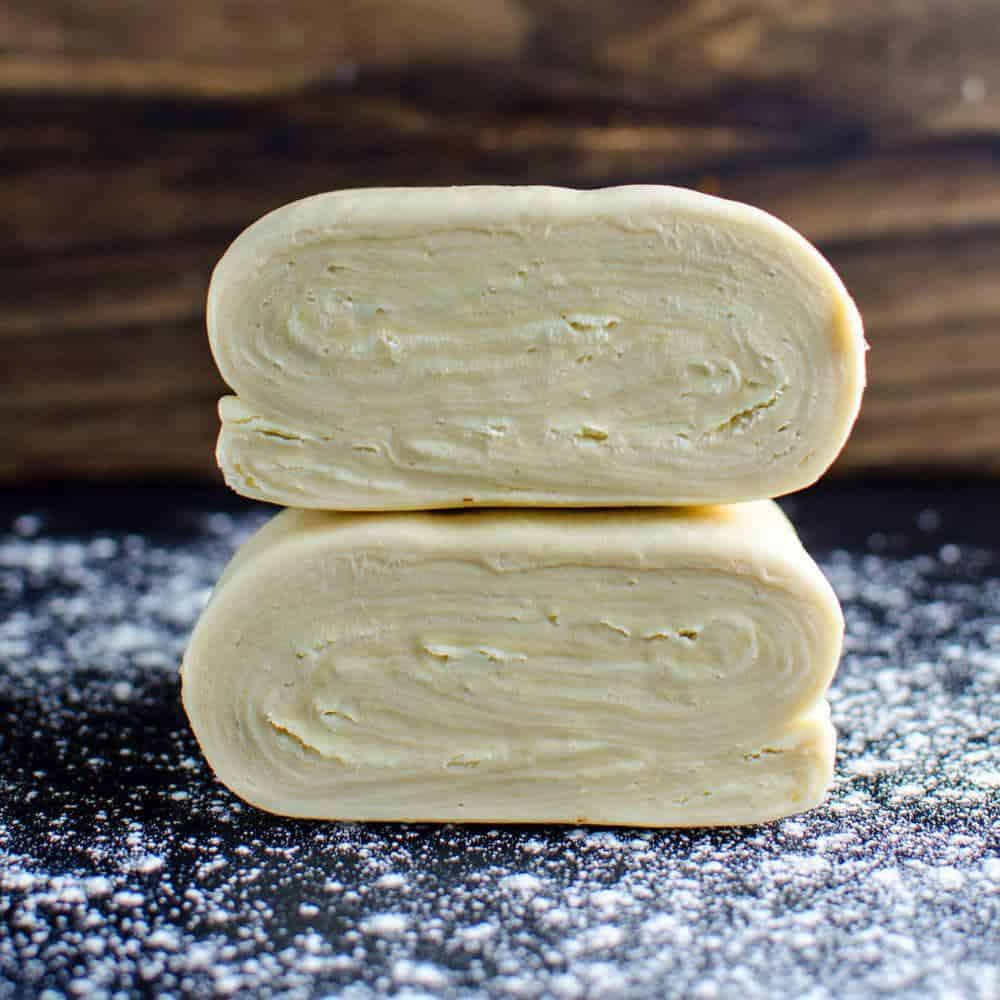
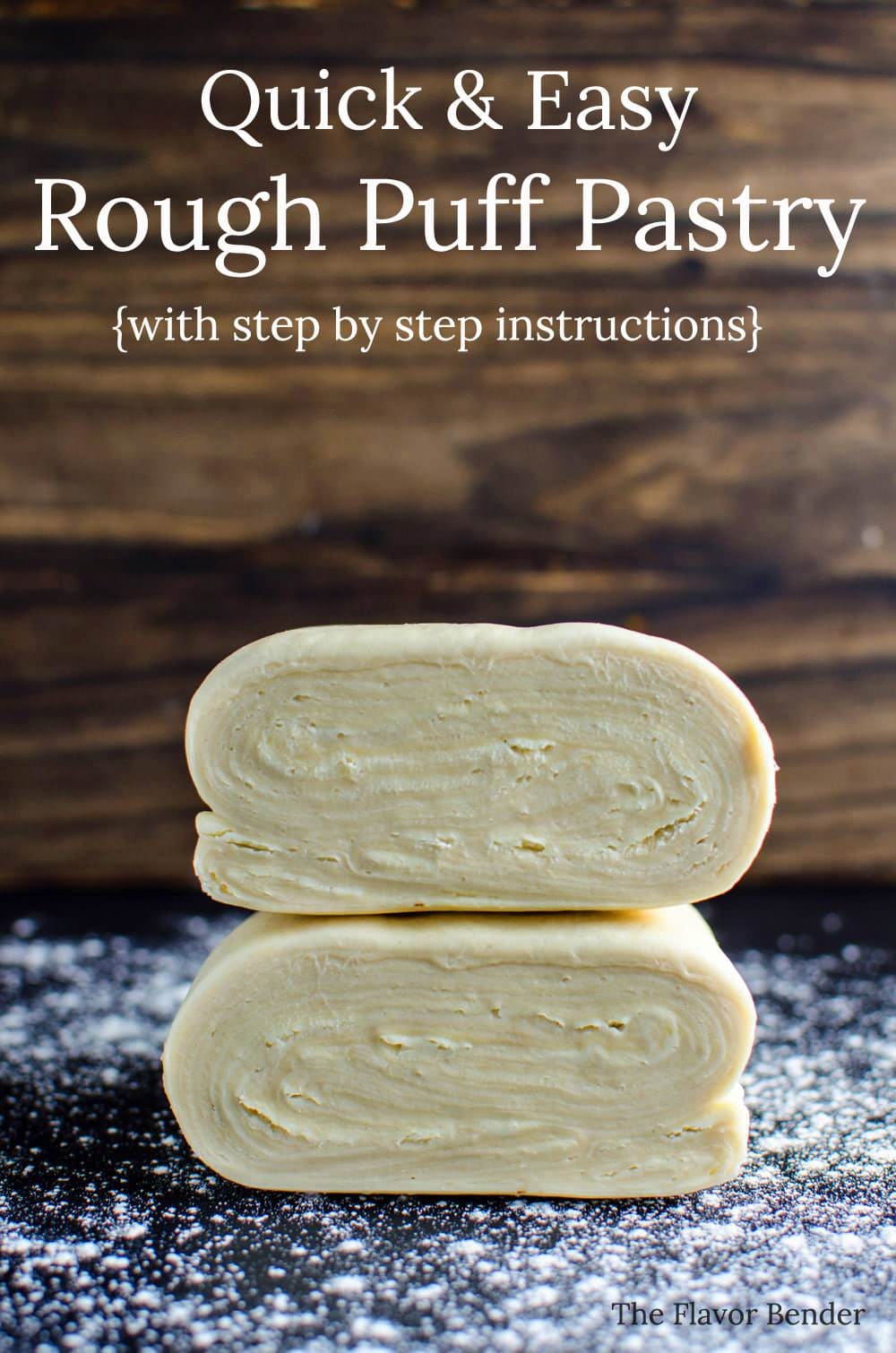
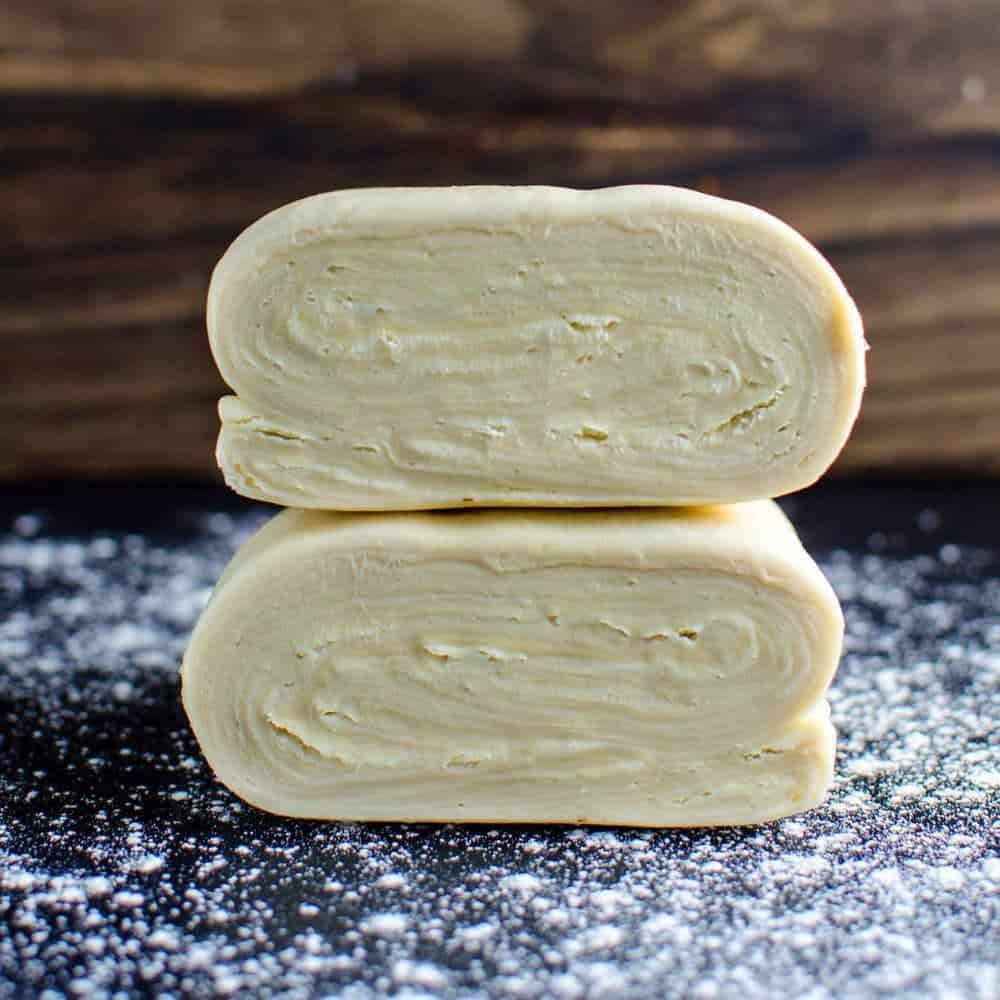
The sign of a good puff pastry dough (classic puff pastry or rough puff pastry) is the lamination layers. To laminate a dough you need to incorporate layers of butter (fat) into the dough by repeatedly rolling out and folding the dough and butter together which results in beautiful, paper-thin layers as you can see in the pictures of this rough puff pastry.

Similar to what you would do with French croissants and chocolate croissants, or with scallion pancakes (using oil instead of butter).

When this dough bakes, the moisture in the butter and dough turns to steam and lifts the layers in the dough (which is what puts the “puff” in puff pastry) resulting in thin, crispy, buttery layers of delicious pastry! 
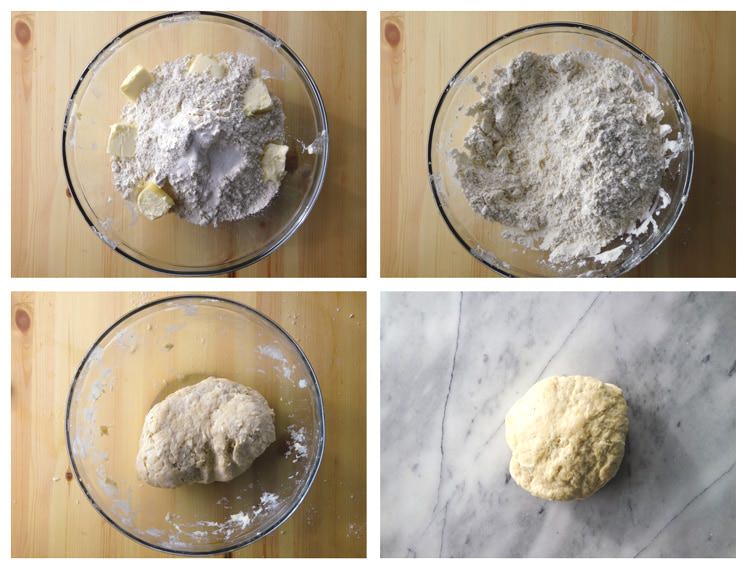
Unbelievably easy Rough Puff pastry - Quick and easy to make and tasted infinitely better than store bought (30 -45 minutes only)! No long waiting times, to make this amazing pastry and NOONE will know you took a shortcut!
making the dough (détrempe)- the only time you need to rest the dough (about 10 minutes)

Why is homemade puff pastry better?

The simple fact is homemade puff pastry is infinitely better than store-bought, and I’m not just saying that to sell you this recipe. This really is an observable fact.

Mass-produced puff pastry available at the store, often uses sub-standard ingredients and the difference between that and the stuff you make yourself at home with love and care is pretty easy to tell.

But the thing is, classic puff pastry is an absolute pain to make. So if someone has already done it for you and it’s frozen and it’s available at the store, then there’s no reason to boycott them altogether.

I do still use store-bought puff pastry for emergencies, because life ain’t always planned, you know. But what if I told you that there’s a cheat’s version of puff pastry out there? Also known as “Rough Puff Pastry”?

What is rough puff pastry?

Rough puff pastry is a cheat’s way of making puff pastry, a QUICK AND EASY Puff Pastry, if you will. This only takes 30-45 minutes of your time (30 on a cold day and 45 on a hot summer day), and is just as good as classic puff pastry and tastes downright phenomenal!

This method of making puff pastry takes short cuts, cutting down on the time it takes to make puff pastry – thus giving you a “rough” puff pastry.

There are two ways to make rough puff pastry

  1. Grating the butter, and incorporating the butter in TWO folds. This will increase the lamination layer with fewer folds. You still have to make sure the butter doesn’t melt, and the ingredients are super cold to maintain the dough and butter layers, but it is easier to fold and roll out because the butter is grated (and not in a block). Since you do maintain the laminated layers, you still get flaky, puffed layers as it bakes. 
  2. Shortcrust style puff pastry – The butter is mixed into the dough in chunks, using the food processor. The dough is folded and rolled to create layers, while there are still chunks of butter in the dough. You don’t create dough-butter laminated layers with this method, and alternatively rely on chunks of butter IN the dough to make the dough flaky. This method is faster, but the result looks more like extra flaky pie dough (instead of beautiful layers of flaky puff pastry). 

The recipe I’m sharing here is for the first method. I prefer this over the shortcrust method too. This is because the grated butter method mimics the puff pastry much better than the shortcrust method, which is more like an extra flaky pie crust. 

What can I make with this puff pastry recipe?

You can use this rough puff pastry for any recipe that calls for puff pastry! From sausage rolls to pies, to tarts, to desserts! Anything you can think of that calls for puff pastry. 

What’s the difference between the classic and shortcut version

Classic puff pastry takes several hours to make with lengthy resting steps in the middle, but this Quick and Easy rough puff pastry recipe cuts it down to about 30-45 minutes (not counting the non-active prep time to freeze the ingredients). Yet, the pastry still comes out unbelievably well.

Those beautiful flaky layers puff up as they bake (not to the same extent as classic puff pastry, but this difference is quite negligible to me). And the recipe is quite flexible too. You can use a little less butter if you prefer, and you will still get deliciously puffy, flaky pastry.

How to make rough puff pastry (step by step overview)

The basic dough (détrempe)

First step is to make the basic dough. This is easy and only requires AP flour, water, salt, butter and a little vinegar.

The butter can be incorporated into the dough in anyway you like. You can rub the butter into the four, or grate the butter and add it to the dough. Melting the butter isn’t a good idea though because you want to keep the dough as cold as possible. 

Make sure the flour, butter, and water are chilled before making the dough. Don’t forget to add the vinegar as well. You can add lemon/lime juice, or white wine vinegar or white vinegar or even citric acid powder as the vinegar. Once the dough is made, let it chill in the fridge so that the gluten is allowed to rest more. 

Why is vinegar (or an acid) important? 

The reason why an acid (typically in the form of vinegar) is important for the dough is that the acid helps relax the gluten in the flour. This makes it easier to roll out. You can use any of the following as an acid. 

  • Lemon or lime juice  – this can add some flavor to the dough as well.
  • White vinegar and white wine vinegar has less of an after-taste. 
  • Citric acid adds the least after-taste of all these options. 

Incorporate the butter layers

There is a total of FIVE lamination steps in this rough puff pastry recipe. The first two lamination steps are to incorporate the butter into the dough. This will increase the buttery lamination layers in fewer folds  (basically that means better results with less effort).

The first fold

Roll out the chilled dough into a long rectangle. The length and width don’t really matter, but I usually go for at least 6 – 7 inches in width, and 15 – 16 inches in length.

Place the half of the butter on 2/3 of the rolled out dough, and then fold over the 1/3 of the dough with no butter, over the middle 1/3 of the dough with butter. Then fold over final 1/3 of the dough with butter, over the top.
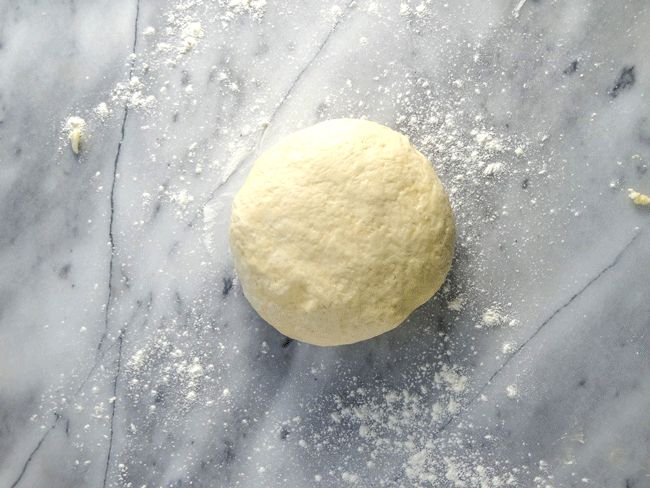
Showing the first lamination with half the butter. Also the first fold for making easy rough puff pastry.
first lamination/first fold

Second fold

Turn the dough 90 degrees and roll it out again, into a rectangle (5 – 6 inches x 15 – 16 inches). 

Repeat the same process with the remaining butter. 

Work quickly through this process so that the dough will remain nice and cold and the butter won’t melt.

If it’s summer or a particularly hot day where you live, the dough and butter might warm up and soften. Don’t worry if this happens,  just quickly put it in the fridge or freezer for a few minutes to firm up the butter again. You don’t want the butter to soften, as it can melt and incorporate into the dough while folding and rolling, and then you will lose the lamination layers. 
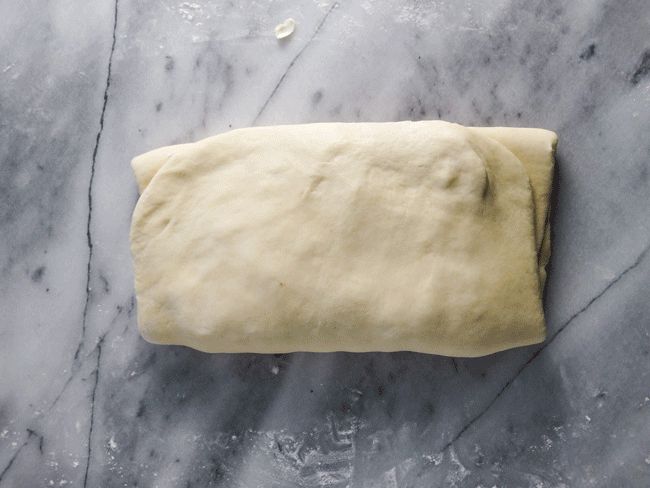
Adding the second half of butter into the dough, for the second lamination and the second fold for rough puff pastry.
Second lamination/fold

Creating more butter dough layers (increasing lamination)

After the butter has been incorporated, it’s time to repeat the folds THREE MORE TIMES.

The remaining folds

Turn the dough another quarter turn and roll it out to a similar sized rectangle as before. Fold it into thirds (just like before, but without the butter). 

Rotate the dough another quarter turn, and repeat two more times. 

In total, this recipe for rough puff pastry will create a whopping 171 layers of butter within the dough, with just five folds!
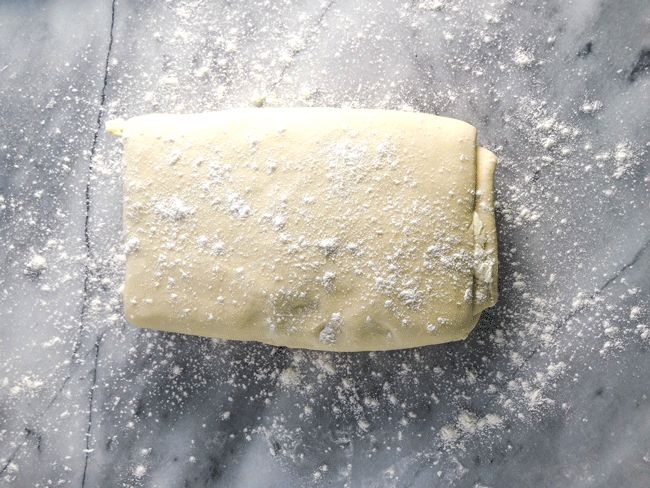
Completing the final folds to create laminating layers for this easy puff pastry.
Final folds!

Once the folds have been completed, tightly wrap the dough in plastic wrap, and refrigerate until needed. I personally prefer to cut the dough in half and wrap each portion separately (so that I can freeze the portion I don’t need for later). 

Store the wrapped dough in the fridge for at least 30 minutes (longer is even better), to rest the gluten in the dough. It will be much easier to roll out the dough the more you rest it at this stage. 

Do you find that your rough puff pastry dough isn’t rolling out easily, or rolling out nice and thin?

Or do you find that the puff pastry dough shrinks as you roll it out, or as you bake it? 

This is because you didn’t let the dough rest properly after making the puff pastry. Wrap it again, and let it rest in the fridge for longer. The amount of time you need to rest the dough can vary, so keep that in mind. 

Why make rough puff pastry at home

  • It’s cheaper to make your own puff pastry at home.
  • Tastes better. Seriously, it’s not even close. I cannot stress this enough.
  • Since it’s rough puff pastry, it’s much faster than making classic puff pastry.
  • Since all the ingredients are ice cold and the butter is grated and frozen before use, it makes it easier to handle the dough – to roll it out and fold the dough.

Take a look at that lamination in the photo right at the top of the post, if you don’t believe me. Doesn’t that look beautiful? Perfect homemade quick and easy rough puff pastry achieved in 30 minutes (might be about 45 on a hot day)!

How to store this cheat’s puff pastry

Make sure the dough is wrapped tightly with plastic wrap. Even two layers to make sure it’s not in contact with air so that it doesn’t dry out. You can wrap this again in foil, or put it in an air-tight container as well. 

I have stored this rough puff pastry in the fridge for up to 5 days. And YES, this rough puff pastry dough can be frozen too, for up to one month. After using the dough, the remaining scraps could maybe re-rolled once. However if you knead or handle it too much, the lamination layers will be lost. 
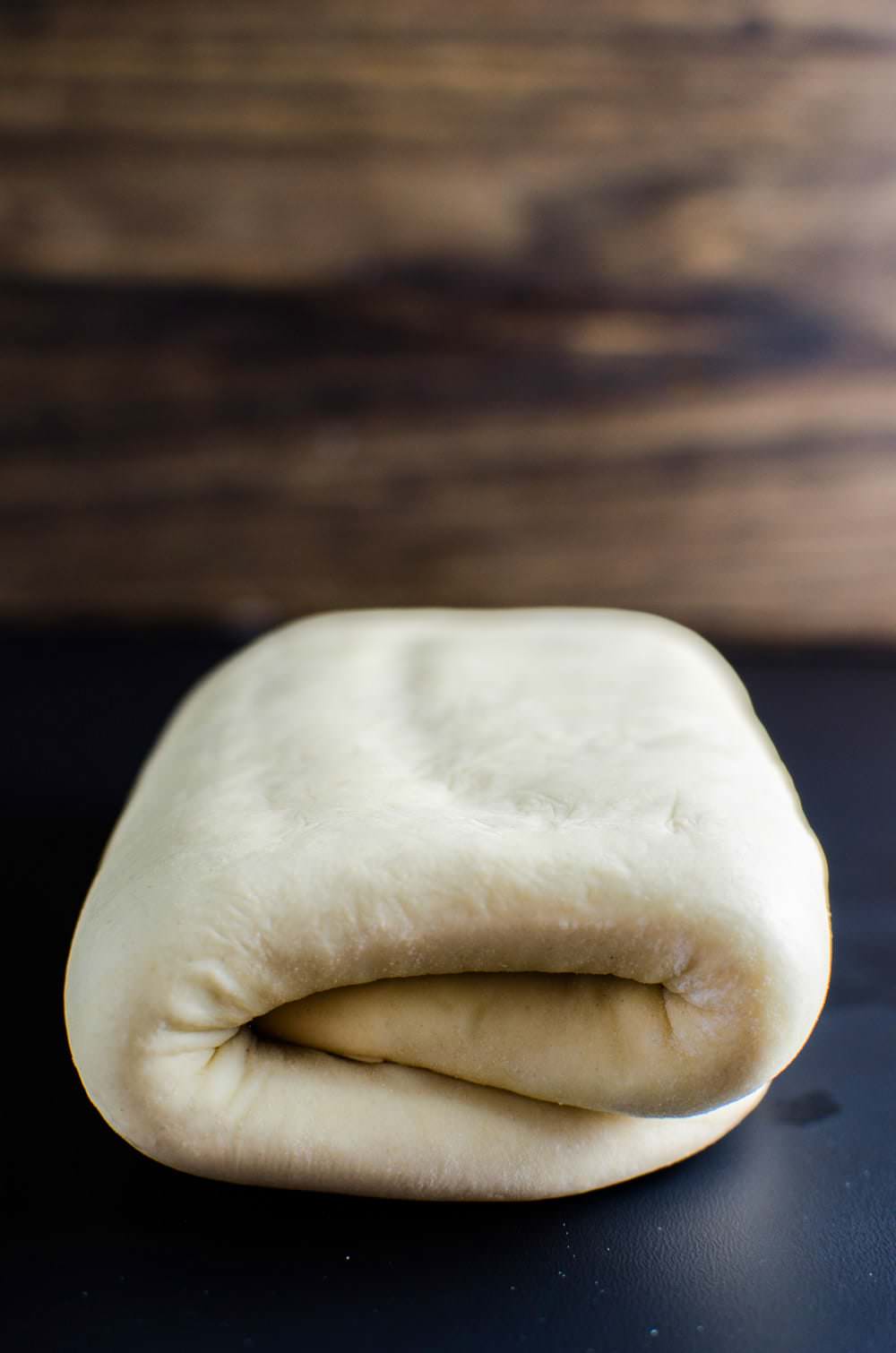
The pastry folded over after being laminated. It needs to be chilled afterwards.

What can rough puff pastry be used for?

This recipe is an absolute godsend if you’re entertaining guests or hosting a party or family festivities. Good quality puff pastry is the perfect base for tasty appetizers and party food. 

You can make so many great recipes with puff pastry. Like delicious puff pastry appetizers and snacks, desserts and even meals using this rough puff pastry like,

Sausage rolls

  • Easy sausage rolls,
  • Apple, fennel pork sausage rolls

Mini hand pies

  • Mini chicken pies
  • Vegetarian caponata pies
  • Mini French onion pies

Mini tarts

  • Super easy prosciutto, pear and honey tarts
  • Poached pear tarts
  • Halloween eyeball tarts

More appetizers

  • Easy savory palmiers
  • Vegetarian curry puffs

Great brunch or lunch or dinners

  • Bacon and egg pie
  • Bacon mushroom pie

So save, share and pin this tutorial and make your own puff pastry right at home and then even save a batch in your fridge. This rough puff pastry has been a lifesaver for me on many occasions! How do you like your puff pastry? Savory or sweet?
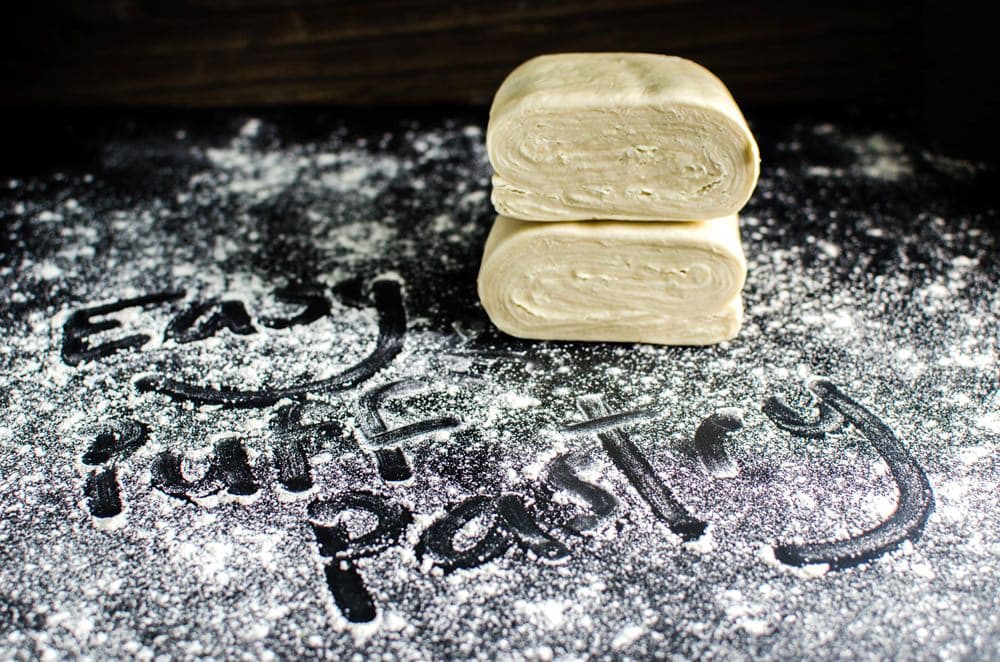
Equipment and tools I use for this recipe

  • Grater – to grate the frozen butter
  • Flat mixing bowls – I like these wide flat bowls if I’m kneading dough by hand. It’s easier to access the dough and knead it. 
  • Rolling pin – A heavy rolling pin to roll out the dough to create laminated layers

Recipe
5 from 57 votes

Easy Rough Puff Pastry

Author: Dini Kodippili
Yield: about 1 ½ lbs of puff pastry
Cuisine: European, Pastry
Unbelievably easy Rough Puff pastry - Quick and easy to make and tasted infinitely better than store bought (30 -45 minutes only)! No long waiting times, to make this amazing pastry and NOONE will know you took a shortcut!

 Difficulty: 

Easy
A quick and easy rough puff pastry recipe for deliciously crispy, flaky, buttery puff pastry that you can make from scratch in 30 minutes.
EASY – This is an EASY version of classic puff pastry. If you're making this for the first time, read the whole recipe + post first and don't rush through the process of making this. The dough may require chilling time in between if it's a very warm day.

US based cup, teaspoon, tablespoon measurements. Weight‌ ‌measurements‌ ‌are‌ ‌recommended‌ ‌for‌ ‌accurate‌ ‌results whenever available.

Common Measurement Conversions
Prep: 30 minutes mins
Chilling and Resting: 4 hours hrs
Total Time: 4 hours hrs 30 minutes mins
Print Recipe Rate SaveSaved!
Makes: 12 servings (2 ounce in weight)

Ingredients:
 

  • 60 g unsalted butter 2.1 oz. grated and frozen
  • 200 g unsalted butter 7 oz. grated and frozen (weigh the butter after grating it)
  • 350 g AP flour 12.3 oz. Flour chilled in the freezer for about 1 hour is preferable.
  • 120 – 150 mL ice cold water 8–10 tbsp. The amount varies depending on the flour and humidity in enviroment.
  • 1 tsp salt
  • ½ tsp lemon / lime juice (or white vinegar)

Instructions:
 

  • In a bowl, combine the flour, salt and the 60 g / 2.1 oz of butter. With your fingers quickly rub the butter into the flour.
  • Add the lemon and water, a tablespoon at a time, while mixing with a wooden spoon or your finger tips to bring the dough together.
  • Add enough water to form a firm dough (that is not tacky or too wet).
  • Knead the dough on a floured surface for about a minute, and leave it to rest for about 5 minutes (in the fridge).
  • Roll the dough out into a long rectangle (about 6 – 7 inches wide, and 15 – 16 inches long).
  • Sprinkle 100 g / 3.5 oz of grated butter on 2/3rds of the area of this rectangle.
  • Fold over the portion without butter, towards the middle.
  • Then fold over the other end, over the first fold. You completed one fold (while laminating butter).
  • Turn the dough 90 degrees and roll it out to form another long rectangle (about 5 – 6 inches wide, and 15 – 16 inches long).
  • Repeat with the rest of the butter and fold over, (completed 2nd fold with second lamination) and turn 90 degrees. Now you have incorporated all the butter in two folds.
  • Complete 3 more folds so you have folded the dough about 5 times. You shouldn’t need to refrigerate between folds, if you work quickly, HOWEVER if it’s a hot day and the butter starts to seep through, keep the dough in the freezer for about 10 minutes to harden the butter and continue.
  • After the fifth and final folding, wrap the dough in plastic wrap and store it in the fridge until needed.
  • Let it rest for at least 2 hours before using. (I prefer to leave it longer, even overnight for best results.)
  • If you’re not using it right away, cut the dough in half, wrap individual pieces in plastic wrap and store in the freezer.

Recipe Notes

NOTES on baking
Use this rough puff pastry in any recipe that calls for puff pastry. Follow the instructions in the recipe to bake. 
Usually puff pastry is baked in an oven preheated to between 350°F – 400°F, and baked until golden brown. 

Nutrition Information:

Serving: 57g Calories: 220kcal (11%) Carbohydrates: 22g (7%) Protein: 3g (6%) Fat: 17g (26%) Saturated Fat: 11g (69%) Cholesterol: 46mg (15%) Sodium: 196mg (9%) Potassium: 35mg (1%) Vitamin A: 535IU (11%) Calcium: 10mg (1%) Iron: 1.4mg (8%)

“This website provides approximate nutrition information for convenience and as a courtesy only. Nutrition data is gathered primarily from the USDA Food Composition Database, whenever available, or otherwise other online calculators.”

Tag me on Instagram!I love seeing what you’ve made! Tag me on Instagram at @TheFlavorBender or leave me a comment & rating below.
Dini Kodippili Avatar

About

Dini Kodippili

Dini Kodippili is a professional food writer, recipe developer, food photographer, cookbook author, and baker. Dini has been featured on HuffPost, Cosmopolitan, Forbes, Delish, Food & Wine and more. Learn More

I love hearing from you! Submit your question or recipe review here.

4.97 from 57 votes (5 ratings without comment)

Leave a Reply Cancel reply

Your email address will not be published. Required fields are marked *

Made this? Rate this recipe:


This site uses Akismet to reduce spam. Learn how your comment data is processed.

236 responses

  1. Christine Lemieux
    December 13, 2025

    5 stars
    Great instructions and, as described, easy to do. I have always wanted to make rough puff and am so glad I did. Thanks Dini!

    Reply
    1. Dini Kodippili
      December 13, 2025

      Aw I’m so happy to heat that Christine, I’m so glad you enjoyed making rough puff! 🙂

      Reply
  2. Christine Lemieux
    December 9, 2025

    Hello Dini! I tried the Rough Puff Pastry today. I tested it by rolling out two small rectangles. One was about 1/8″ thick and the other 1/4″ thick. While the oven was heating up to 400F, they were on a tray in the fridge. They puffed up and are flakey! I would like to know if it is normal for some butter to seep out while they are baking. Also, I want to use them for sausage rolls but I found that even the 1/8″ thick piece is too thick for encasing sausage. Thanks for your help!

    Reply
    1. Dini Kodippili
      December 10, 2025

      Hi Christine!
      Some butter seeping out is normal, as long as the layers are flaky.
      1/8th inch is about 3mm, which is really thin! Make sure that the puff pastry layer stays at the same thickness, and doesn’t shrnk back to a thicker thickness.
      If you wanted to, you can go thinner, but I do find that it is unnecessary and difficult to do without losing the layers.
      I hope that helps!

      Reply
      1. Christine Lemieux
        December 13, 2025

        I really enjoyed learning how to make rough puff and your instructions were fantastic. I ended up baking squares of pastry and then topping with homemade chorizo sausage and other things. Thanks so much Dini!

        Reply
  3. Teresa Duncan
    September 26, 2025

    Thank you, Dini, for demystifying rough puff!

    Reply
  4. Tula Gianni
    July 20, 2025

    Dear Dini, I have made so many of your recipes; I have yet to come out with a ‘flop’, and if it is it would be my making; love them ALL; I always open your email even when I know it might be a ‘double’ in case we have something new & delicious.
    Cheers.

    Reply
    1. Dini
      July 20, 2025

      Thank you so much for your lovely comment Tula, I’m so happy to hear that, you made my day! 🙂 If anything ever does go wrong or flops, I’m always here to help figure things out any way I can too!

      Reply
  5. Michelle Holyoak
    May 5, 2025

    Hi. I have made this pastry tonight and it is currently in the fridge chilling to be used tomorrow. Can you please advise how think I should roll out the pastry to use

    Reply
    1. Dini
      May 5, 2025

      Hi Michelle
      Usually I like to roll my puff pastry to about 3 – 5mm thick. If the dough is tough to roll out (springs back), then you can let it rest in the fridge for about 30 minutes and try again (like pie crust).
      If a recipe is using already rolled out puff pastry, then the thickness will about 5mm.
      I hope that helps!

      Reply
      1. michelle holyoak
        May 6, 2025

        5 stars
        thank you so much!

        Reply
  6. Thuraya fisher
    January 19, 2024

    Hi Dini. Could I possibly double the recipe?

    Reply
    1. Dini
      January 19, 2024

      Hi Thuraya
      Yes you can double the recipe if you like. But the chill times, and roll times will be different since you’re working with a larger amount of dough.
      I hope that helps

      Reply
  7. James
    January 9, 2024

    This will be the 3rd time I actually made puff pastry each time from this recipe, thank you for simplifying the process 🙂 good job

    Reply
  8. Maja
    January 7, 2024

    5 stars
    This is my go to rough puff pastry. So much better than most others, almost too decadent and therefore more satisfying even than my regular puff pastry recipe (I keep that one for croissant connoisseurs).
    I really love it!

    Reply
    1. Dini
      January 7, 2024

      Thanks so much for your lovely feedback Maja, I’m so glad you enjoyed the recipe! 🙂

      Reply
  9. CONRAD FERNANDES
    December 28, 2023

    I wouldn’t dare to try any of your recipes. Imagine trying to work out 2.1 & 2.3 oz. Along time ago s new system was adopted, and is known as Metric, and everything is in grams and Ml. If only you used the metric system or both, your recipes could ervice the whole world, instead of just the US & UK readers. Most of us in the rest of the world, tend to skip the site and look for something more user friendly. As a tip, i suggest that you include the weight and volumes in brackets, tha would cater to all folks on both sides of the pond.

    Reply
    1. Dini
      December 28, 2023

      Hi Conrad
      You didn’t even read the recipe properly before commenting. I do suggest reading a recipe fully before making assumptions.

      In the recipe description, I clearly say that you can access metric measurements by using the button below the ingredients list. Even in the instructions, I provide gram amounts to clarify the recipe. I hope that helps.

      Reply
      1. Bernard O’Reilly
        February 2, 2024

        5 stars
        Great recipe and zero problem switching to metric 🙂 as per your listing!

        Reply
    2. Shilpa
      February 18, 2024

      Wow Conrad. I can only assume you’re a bot, as a decent human would never make this type of comment. Do better with your life.

      Reply
      1. Tat Bat
        December 26, 2024

        Oh no! Don’t ever tell a bot to do better with its life. You’re just asking for an AI revolt.
        PS love the recipe

        Reply
←Older Comments
1 … 5 6 7

Hey There!

Hi! I’m Dini, a third culture kid by upbringing and a food-geek by nature. I was born in Sri Lanka, grew up in New Zealand and lived in Australia, and then the US, before moving to and settling down in Canada. My food is a reflection of those amazing experiences!

Read More
Front cover of the Secret Layer Cakes cookbook by Dini Kodippili.

The Flavor Bender

Cookbook

Buy now on Amazon!

Recipe Basics

  • How To Make Perfect Choux Pastry

    How To Make Perfect Choux Pastry

  • Perfect All Butter Pie Crust (For Beginners)

    Perfect All Butter Pie Crust (For Beginners)

  • How To Make Homemade Marshmallows (Foolproof Guide)

    How To Make Homemade Marshmallows (Foolproof Guide)

  • The Best Homemade Bread (White Bread Recipe)

    The Best Homemade Bread (White Bread Recipe)

  • Homemade French Croissants (Step By Step Recipe)

    Homemade French Croissants (Step By Step Recipe)

  • The BEST Pavlova Recipe (Step by step recipe and video)

    The BEST Pavlova Recipe (Step by step recipe and video)

Featured On

Master the science of baking!

Get my FREE Printable Cake Pan Conversion Chart!

So you’ll know how to substitute cake pans of different shapes, sizes & volumes in a pinch!

A must have resource for all pro bakers, novice bakers, and aspiring bakers alike!

Download now!

Reader Faves

  • How to make the Best Instant Pot Short Ribs

    How to make the Best Instant Pot Short Ribs

  • Perfect Quick and Easy Rough Puff Pastry

    Perfect Quick and Easy Rough Puff Pastry

  • The Best Spicy Sweet Chili Sauce (Easy Recipe!)

    The Best Spicy Sweet Chili Sauce (Easy Recipe!)

  • The Best Homemade Bread (White Bread Recipe)

    The Best Homemade Bread (White Bread Recipe)

The Flavor Bender

I love baking, cooking, experimenting with flavors and ingredients, and passing on all my tips and tricks to you!

Read More

About

Meet Dini
My Book
Work With Me
Contact

Browse

Recipes
Measurement Guide
Baking How-To’s
Shop My Faves
Privacy
Disclosure
Terms

Branding by MRD

Theme by OC

Back to Top
  • Facebook
  • Instagram
  • Pinterest
  • X
  • YouTube
82100 shares

Rate This Recipe

Your vote:


A rating is required
A name is required
An email is required

Recipe Ratings without Comment

Something went wrong. Please try again.