



Vanilla Crème Anglaise is a simple yet luxurious custard sauce that is delicious on its own. But this easy pouring custard is so versatile that it elevates so many other dessert recipes when paired with them! Here I’ll show you how to make the BEST crème anglaise, as well as all the amazing things you could make with this simple recipe.
Learn how to make a simple creme anglaise or pouring custard, and how to adapt this recipe for other variations and types of dessert!

Last month, I shared an article on ALL the different types of custard, and the types of dessert you can make with custard. I promised that I’ll be sharing a recipe for each of the different types of custard, so here we’ll continue that series with this recipe for crème anglaise.
What I love about this recipe
- It’s super simple to make, and I even provide tips to make the recipe more foolproof for beginners.
- This is a recipe for a basic creme anglaise, but you can easily elevate it with some simple ingredients.
- If you’re curious about what to serve with creme anglaise, I have some great suggestions in my types of custard desserts post.
- Want to know what else you can make with this sauce? I got you – that’s all described in this current post below.
What is the difference between Creme Anglaise vs Creme Patissiere?
Creme anglaise is the French term for what is also known as “English Pouring Custard” or simply pouring custard or custard sauce. Although creme anglaise literally translates to English cream, it originates from France. It’s made with a mixture of milk and/or heavy cream, along with sugar, egg yolks, and flavoring.
Both creme anglaise and creme patissiere are building blocks for many custard-based desserts, and are very similar yet also quite different! You can find out plenty more in this article about all the types of custard that I wrote. This article goes into depth about the differences, similarities, and what you can do with custards.
Similarities
Both are made with a base of milk, sugar, and eggs. And they are also both cooked on the stove.
Differences
Creme anglaise is a “thin” custard, while creme patissiere is a thick custard. With creme anglaise, the custard is cooked until it’s just a little thick, so that it’s still pourable, hence “pouring custard”. Whereas creme patissiere is much thicker and cannot easily be poured.
Creme patissiere contains cornstarch or flour, while creme anglaise traditionally does not (but can if you choose to).
Ingredients to make creme anglaise
- Milk
- Heavy cream (optional, but recommended)
- Egg yolks
- Sugar
- Vanilla
- Cornstarch (optional – use if you’re a beginner or want a slightly thicker pouring custard)
- Salt (important for a balanced flavor profile)

How to make a classic vanilla creme anglaise (pouring custard)
Making this pouring custard is easy, but it requires patience and attention. If you want to know how to make pouring custard without curdling the eggs, you are in the right place!
Heating the milk and prepping the eggs
First step is to heat the milk and cream. Place the milk and cream (if using) in a saucepan or pot. Heat over medium low heat to gently heat the milk. It does not need to come to a boil, but should start to steam.
If you’re using vanilla beans, you should add the vanilla bean caviar and the empty pod into the milk as well, so it has a chance to infuse with the milk.
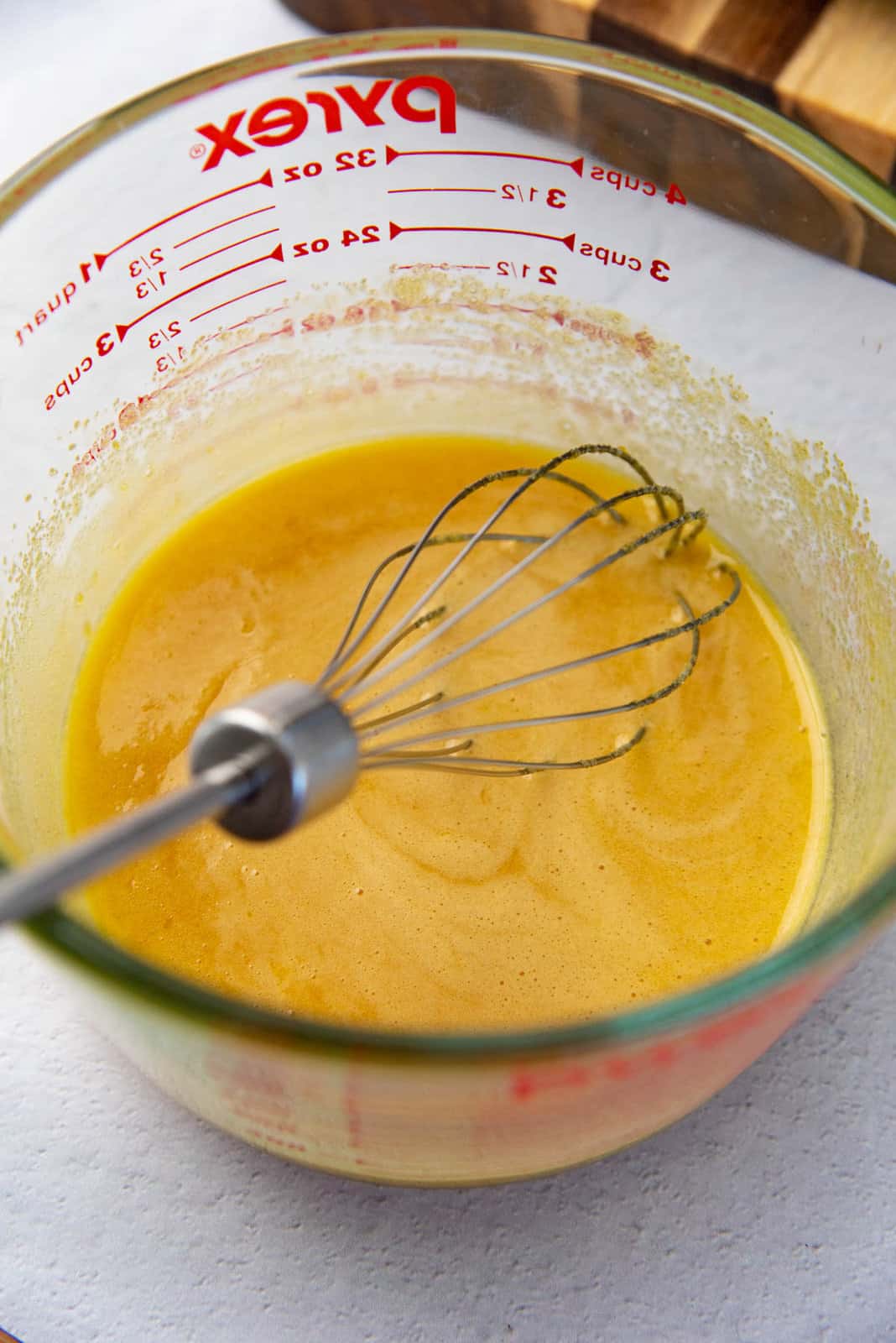
While the milk is heating, place the egg yolks, salt, and vanilla extract (if using extract) in a bowl. Whisk this until the mixture is smooth and a little pale in color. The reason why the egg mix should be thick and pale is to ensure that there are ABSOLUTELY no lumps in the eggs which could “cook” when adding the hot milk.
If you’re a beginner or would like a slightly thicker pouring custard, then you can also add a little bit of cornstarch. The cornstarch will help thicken the custard. It will also help with preventing the egg from scrambling.


Tempering the egg mixture
This is the step that most readers might feel intimidated by, but it’s really not that difficult. Tempering the eggs involves SLOWLY bringing the temperature of the egg yolks up by gradually whisking in the hot milk mixture. If the eggs are added directly to the hot milk, the eggs will curdle, so tempering the eggs is essential to prevent curdling in this creme anglaise.
Place the bowl with the egg mixture on a non-slip surface. This can be a wet kitchen towel, or a rubber mat that will not skid or slip on your kitchen counter. Use one hand to constantly whisk the egg mixture (just a fairly quick stirring motion to keep the mixture continuously moving). And use the other hand to pour the hot milk into the egg mixture in a thin stream. The constant whisking / stirring will ensure that the hot milk properly tempers the egg.
You only need to add about half of the hot milk mixture to temper the egg mixture. Once the egg and milk mixture has warmed up, pour this back into the pot with the remaining milk mixture and whisk very well to make sure everything is combined.
Cooking the custard
This is where you need to tap into your patience and attention skills.
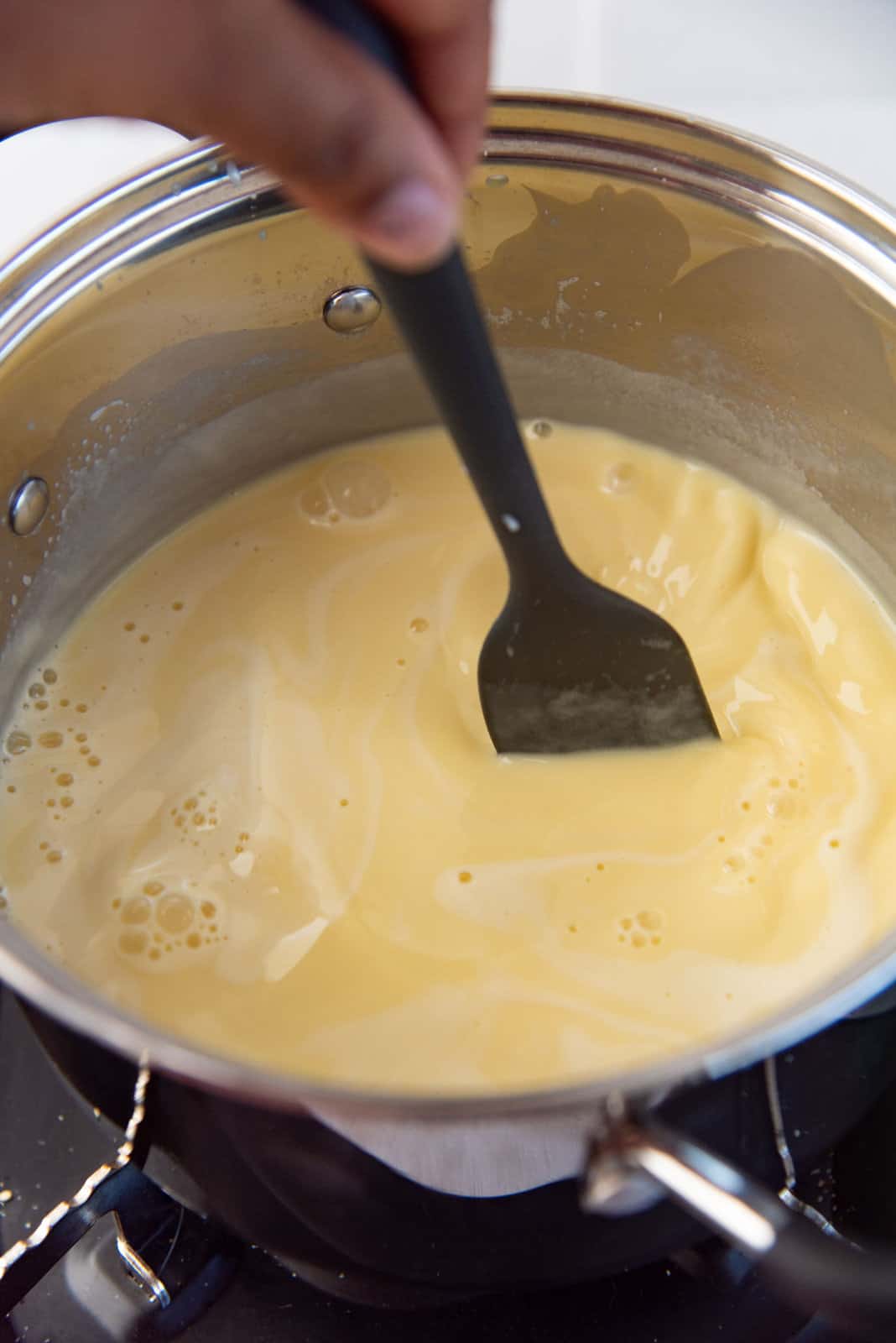
Lower the heat to a low heat (especially if you’re a beginner), or low-medium heat if you’re more comfortable. Swap your whisk for a rubber spatula that has a nice flexible tip.
Return the pot to the stove and on the lower heat, constantly stir the custard while cooking. The stirring does not need to be fast, but make sure the custard is constantly moving. Use the spatula to get all of the custard at the bottom of the pot to prevent the custard from catching. This part is essential because this is how the eggs will curdle in the creme anglaise.
Diligently stir until the pouring custard starts to thicken. This can take anywhere from 5 – 10 minutes, depending on the size of the pot you’re using, the material of the pot, and the heat of your stove.

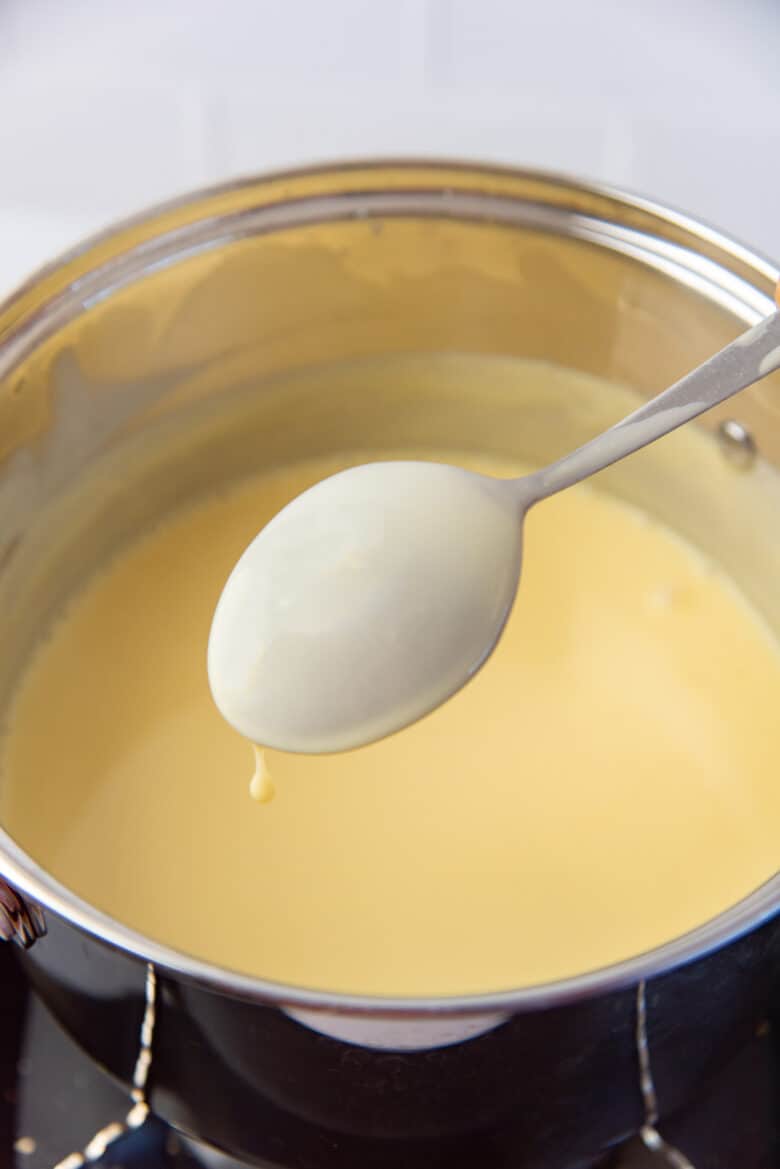

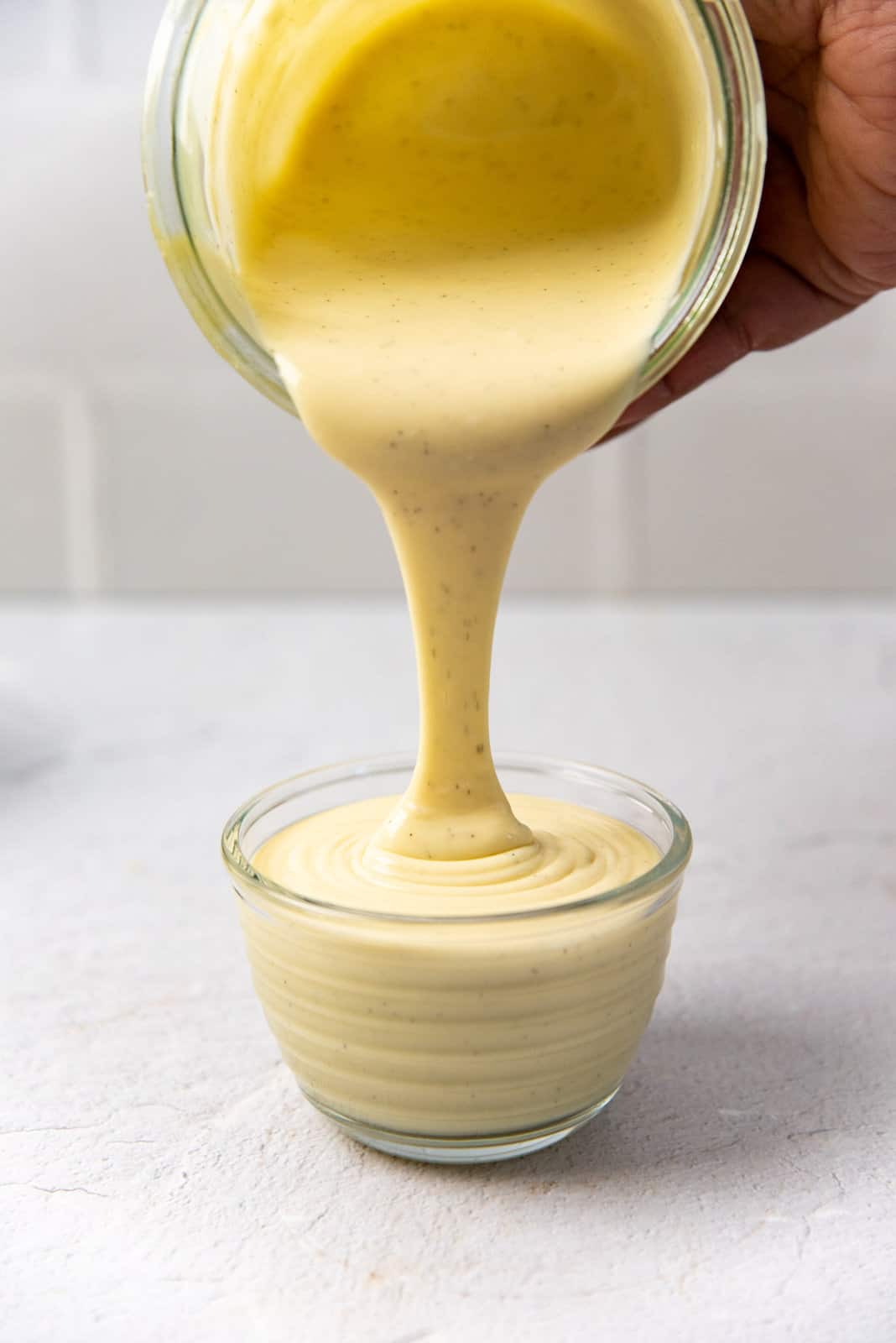
The custard is done when it coats the back of a spoon in a fairly thin layer, and if you draw a line with your fingertip on the back of the spoon, the line will remain and the custard will not move in to fill that space. You can see the pictures above and below for reference. If you have a thermometer, the custard should register at 185 F / 85 C. Anywhere between 180 F – 185 F (82 – 85 C) is fine, but I like to aim for 185 F.
Remove from the heat and pass the custard through a sieve to remove any lumps. However, if you cooked this properly, you shouldn’t get any lumps.
Pour the custard into a container or jug. Cover and let it cool down.

Serving suggestions
Serve creme anglaise while it’s warm or at room temperature for the best flavor. However, it can certainly be served chilled if you choose to as well. Refrigerated custard will also be thicker.
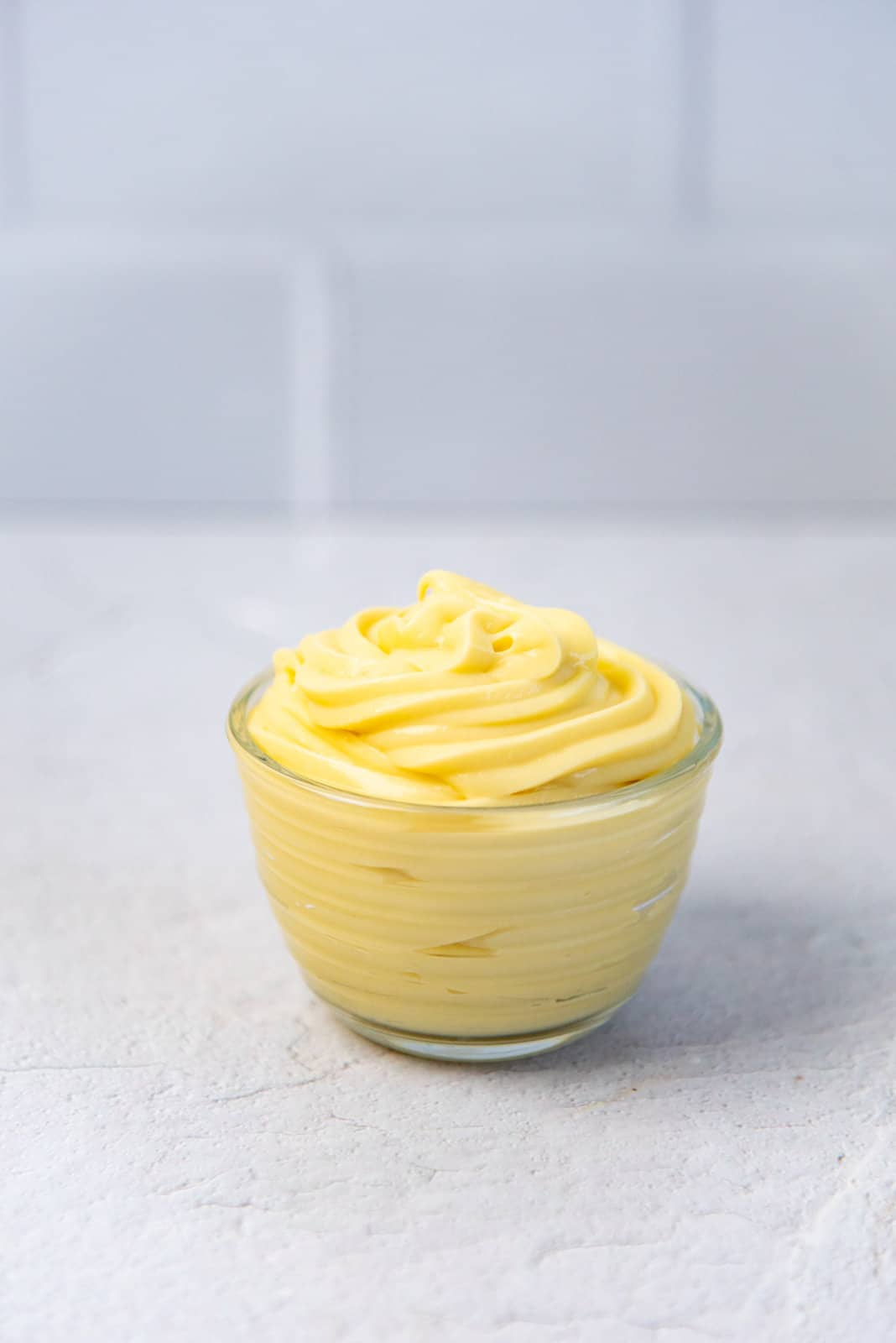
The texture of creme anglaise is so luscious, creamy, and thick. It’s also very pourable. Just a little thicker than heavy cream. It’s used in desserts, mainly as a sauce because of how thin it is compared to pastry cream.
This can either be served with a dessert, OR it can be used as an ingredient to make other desserts. As a kid, I loved eating jello with custard. But here are some other serving suggestions.
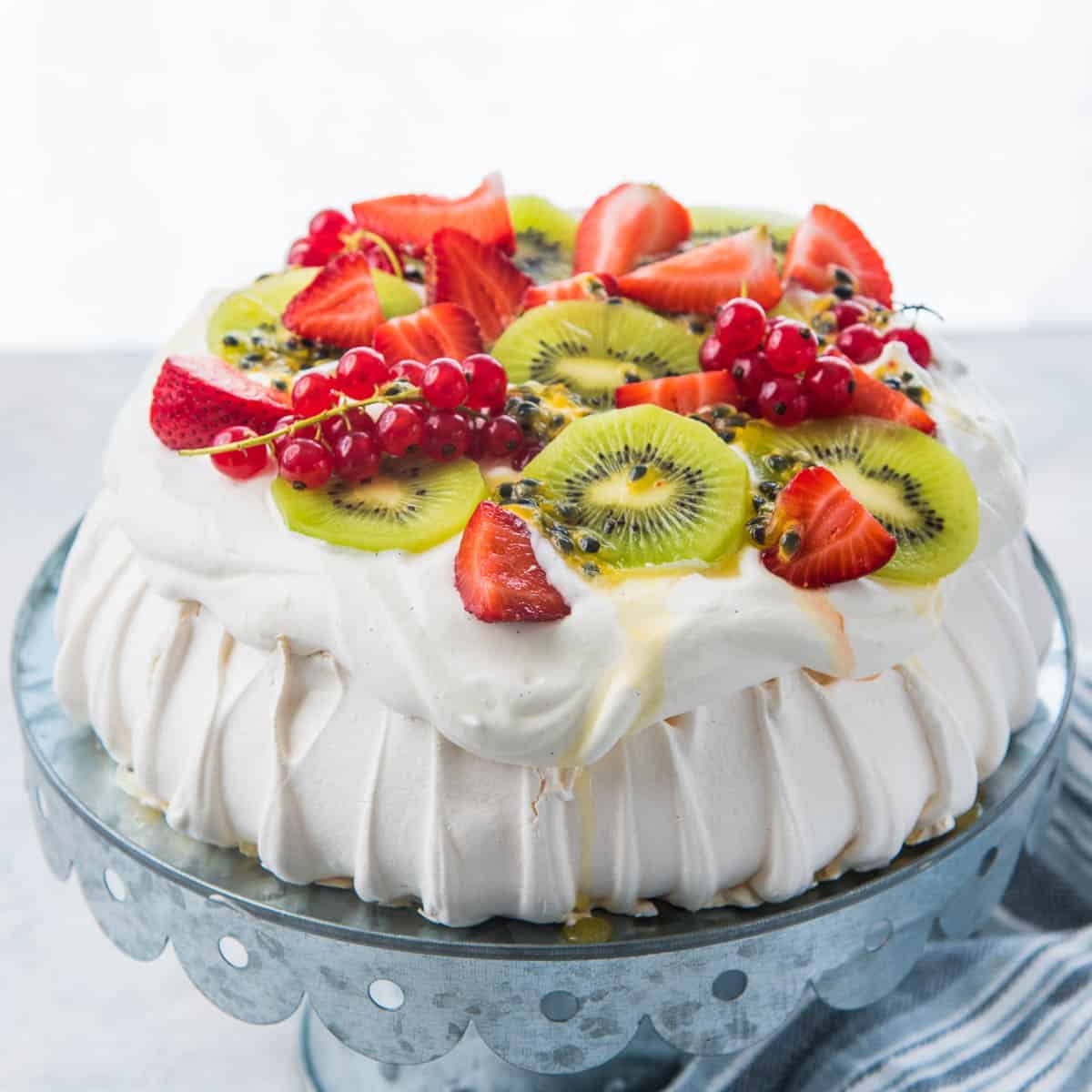
- Floating island (a poached meringue, served on top of creme anglaise)
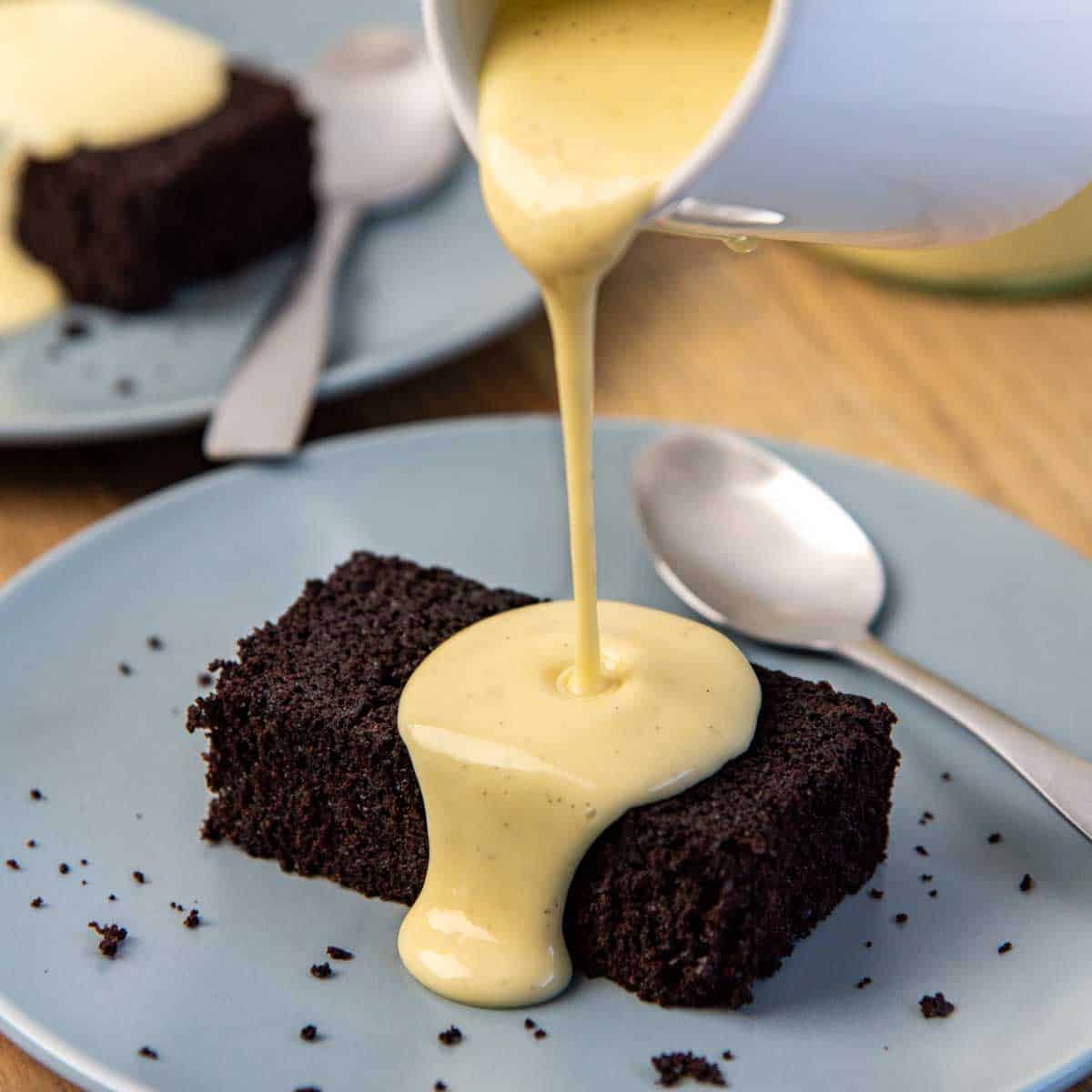
- With cake
- Bread pudding with creme anglaise sauce
- Any steamed pudding with a side of creme anglaise
- With fresh fruits

What is creme anglaise used for?
Ice cream! Chilled creme anglaise + heavy cream in an ice cream churner will make the most amazing vanilla ice cream like my vanilla ice cream recipe here.
Creme bavarois or bavarian cream. Mix gelatin and whipped cream with creme anglaise and set it in molds. It’s like an ice cream panna cotta and it’s as delicious as it sounds!
Cremeux. Probably my favorite dessert made with creme anglaise! A mash up of custard and ganache – this variation of cremeux is so rich, creamy, and so so good!
Other popular variations and flavor ideas for pouring custard
You can also add flavors to your milk to make different flavored pouring custards!
Like my red velvet creme anglaise recipe.


Chocolate creme anglaise – dissolve some cocoa powder (1 – 2 tbsp) in the milk to make a chocolate creme anglaise.
Bourbon vanilla creme anglaise – add 1 – 2 tbsp of bourbon (or rum for a different variation) to the milk to add more flavor complexity to the custard.
Lemon or lime creme anglaise – add some lemon or lime zest to the milk as it’s heating to infuse a hint of citrus flavor. This won’t really taste too much like lemon, BUT it’ll have a nice hint of citrus that will pair SO well with bread pudding!
Coffee pouring custard with the addition of some instant coffee granules.
Fruit flavored creme anglaise – to make fruit flavored pouring custard, you can add a little freeze-dried fruits to the milk base. However, please note that you want to use fruits that have a strong flavor because you want to get that flavor WITHOUT having to add too much powder.
Frequently Asked Questions
How should I store creme anglaise?
Vanilla creme anglaise is so easy to make, so I recommend making it the same day that you want to serve it. It tastes best when freshly made. However, you can store it for later if you need to, but there will be some textural changes.
You will need to store the custard in a clean and dry air-tight container, and keep it in the fridge if you’re not using it right away.
It’ll last 2 – 3 days in the fridge if you store it properly.
Can I freeze creme anglaise?
I do not recommend this. The custard will separate into layers as it thaws after freezing. It will also lose some of its thickening if you used cornstarch (since cornstarch loses its thickening ability once frozen). However, if you do choose to freeze it, let it thaw out in the fridge (slow thawing), and then reheat it on low heat so that the custard will be smooth again.
Can I leave out heavy cream?
You can make pouring custard without cream. Heavy cream will make the pouring custard taste richer and slightly thicker with the higher fat content. But you can leave it out and add the cornstarch instead to give your creme anglaise a thicker texture (optional).
Which type of milk is best for this custard? Could I use low fat milk or all cream?
The general rule for creme anglaise is that higher the fat content, the better and richer it tastes. That is why I use a combination of full fat milk and heavy cream. If you want to use low fat milk, you could, but it won’t taste as good. I definitely do not recommend using 0% fat milk.
You can also use ALL heavy cream if you like, and this will give the custard a very rich and thick mouthfeel. In the US and Canada, you can also use half and half (10% fat) instead of a mix of milk and cream.
What can I make using creme anglaise?
Please see the section “serving suggestions” in the post for ideas on how to serve pouring custard, AND for desserts that you can make using this as well.
Why is my pouring custard grainy? or scrambled?
If the custard is overheated when cooked, or if it wasn’t stirred well while cooking, the eggs in the custard will “set” at the bottom of the pot, thus creating lumps or appearing curdled.
The custard that is caught at the bottom of the pot needs to be stirred back into the custard as quickly as possible before it completely sets. If you mix it after it has set at the bottom, then it will create a lumpy or grainy custard.
See the section below for tips on how to avoid this.
Tips on how to make pouring custard without any curdling
Mix the egg yolk mixture VERY well. This is why I recommend mixing it until the egg yolks turn pale in color, so that the mixture is smooth and there is no risk of egg yolk bits that can instantly cook in the hot milk.
Carefully temper the egg yolk mixture. If holding the pot to pour the milk while whisking is hard, pour the hot milk into a smaller jug or measuring cup. This will make it easier to stream the milk into the egg yolks while whisking. Whisking is important to evenly distribute the heat to temper the eggs.
Choose the correct pot. For a smaller batch of custard, do NOT use a wider pot. The mixture will be very shallow in the dish, and the surface area for the custard to curdle is much larger. A larger surface area + shallow mixture means there is a larger risk of overcooking and curdling.
Low and slow cooking / heating. Be patient. If this is your first time making creme anglaise, you will need to be familiar with what to look out for. So going slow will help you. When you’re more familiar, you can play around with the heat to make it go faster if you like. I still prefer to go slow even after countless times of making this. Low heat and slow cook time will ensure a smooth pouring custard with no chance of curdling.
Adding cornstarch. You can add just the smallest amount of cornstarch if you like. This will create a matrix that will interfere with the curdling (to an extent). You can heat the custard to upto 190 F / 88 C without curdling with constant stirring. This will also create a thicker creme anglaise.
Use a flexible rubber spatula to stir. Make sure it can get into the corners and edges of the pot, so that when you stir the custard you’re making sure no custard sets at the bottom of the pan.
Continuously stir. Don’t leave the creme anglaise unattended. Stir in different directions and smoothly to keep the custard constantly moving. This does not have to be fast, rigorous stirring.
Heat the custard to 180 – 185 F (82 – 85 C) for best results. If you add cornstarch, you can go a little higher as mentioned above. If you don’t have a thermometer, cook until the custard thickens and coats the back of the spoon smoothly as previously described in the post.
Pass the custard through a sieve to make sure there are no lumps afterwards.

Recipe
Vanilla Creme Anglaise Recipe (Pouring Custard)
US based cup, teaspoon, tablespoon measurements. Weight measurements are recommended for accurate results whenever available.
Common Measurement ConversionsIngredients:
- 240 mL full-fat milk or 2% milk, 1 cup
- 240 mL heavy cream 35% fat, 1 cup, see recipe notes for substitutions
- 4 egg yolks from large eggs. You can also use 5 egg yolks for additional thickness and richness.
- 75 g sugar use 60 g for a less sweet version
- ¼ tsp sea salt
- 1 tbsp vanilla extract or vanilla bean paste, see recipe notes for vanilla bean instructions
- 10 g cornstarch 1 tbsp (optional)
- 30 mL bourbon 2 tbsp. (optional), please see recipe notes if using bourbon
Instructions:
Prepare the milk and egg mixture
- In a saucepan, combine the milk and heavy cream. Heat over medium / medium-high heat until the milk starts to steam. Make sure to regularly stir to prevent the milk from burning.240 mL full-fat milk, 240 mL heavy cream
- In a medium bowl or wide jug, place the egg yolks, sugar, salt, vanilla, bourbon (if using), and cornstarch (if using only). Whisk very well until the egg yolks become very smooth and start to turn pale in color. There should be NO egg yolk bits visible at this stage.4 egg yolks, 75 g sugar, ¼ tsp sea salt, 1 tbsp vanilla extract, 10 g cornstarch , 30 mL bourbon
- Once heated, remove the milk from the stove and use it to temper the egg mixture.
Tempering the egg mixture
- Place the bowl with the egg mixture on a non-slip surface (i.e. on a rubber pad or wet cloth napkin placed on the kitchen counter).
- Carefully pour the hot milk mixture in a thin stream into the egg mixture, making sure to constantly whisk the egg mix as the milk is poured in.
- When about half of the milk is added to the egg mix, the egg mixture should be warm enough. Whisk it once more to make sure all the egg yolks are mixed in well (while scraping the sides of the bowl).
- Pour this egg and milk mixture back into the saucepan with the remaining milk. Whisk well to combine.
Cooking the custard
- Lower the heat to a medium low heat, and return the saucepan to the stove. If the custard is cooking too fast (forming lumps), then lower the heat further. See notes.
- Cook the custard while constantly stirring with a rubber spatula until the custard thickens. This can take anywhere between 4 – 10 minutes, depending on the stove, size of the saucepan, and saucepan material. Make sure to scrape the edges, sides, and bottom of the pan as you stir to evenly heat the custard.
- The custard will start to thicken as it reaches the correct temperature. The custard is done when it's thick enough to coat the back of a spoon with a film of custard. When you draw a line through this custard film with your fingertip, the line will remain and the custard will not move in to fill that space (please see pictures in the post for reference). The temperature of the custard should be 180 – 185°F (82 – 85°C).
- Once the custard is cooked, remove it from the heat. Pass it through a sieve into a bowl or container and let it cool down to the desired temperature.
- You will need to gently whisk or stir the custard before you use it, since it will form a skin on top after a while.
- The custard can be served warm or at room temperature. You can also serve it chilled if you prefer.
Recipe Notes
Milk substitutions
I do not recommend using 0% fat to make this recipe. A high fat content will produce a better tasting custard. However, if you do not have cream, you can substitute the heavy cream with full fat milk. You can also use half and half (10% fat) instead of milk and cream. To make this dairy free, you can use plant-based milk. I recommend using a barista milk version (my favorite is barista oat milk), because it has a better texture and higher fat content. The bourbon is completely optional. However, if you’re using bourbon, remove the same amount of milk from the recipe, which is 2 tbsp in this recipe.Adding cornstarch
As per the post, the cornstarch is optional. Traditionally you do not need to add cornstarch and gently cooking will prevent curdling. However if you are a beginner, and are worried about egg curdling, add the cornstarch. I do not recommend using more than 1 tbsp cornstarch because adding more will give the custard a starchy taste (since the custard is not “boiled”).To make a vegan version
Instead of eggs, you can use cornstarch as a thickener. For this recipe, you will need to use about 2 tbsp of cornstarch per 2 cups of liquid. The milk will also need to be heated until it starts to boil, as the cornstarch only fully activates once the liquid is boiled.Using vanilla beans
If you’re using vanilla beans instead of extract, split the vanilla bean pod in half length-wise. Use a blunt, flat side of a knife to scrape out all the “seeds” or caviar of the vanilla bean. This will look like a black paste. Add this to the milk mixture and whisk it very well to spread the vanilla in the milk. This milk mixture can now be heated according to the recipe, and the rest of the recipe can be followed as is. The remaining vanilla bean pod (without the seeds) can be used to make vanilla sugar.Note on cooking the custard
It is important to control the heat of the stove. If the stove is too hot, then you will need to lower the heat and/or take the pot off the stove. There is a balance of heating the custard on the stove and off the stove to avoid overheating too quickly.Storage instructions
Vanilla creme anglaise is so easy to make, so I recommend making it on the same day that you want to serve it. It tastes best when freshly made. However, you can store it for later if you need to, but there will be some textural changes.For refrigeration, you will need to store the custard in a clean and dry air-tight container. It should last 2 – 3 days in the fridge.
Nutrition Information:
“This website provides approximate nutrition information for convenience and as a courtesy only. Nutrition data is gathered primarily from the USDA Food Composition Database, whenever available, or otherwise other online calculators.”













Leave a Reply