




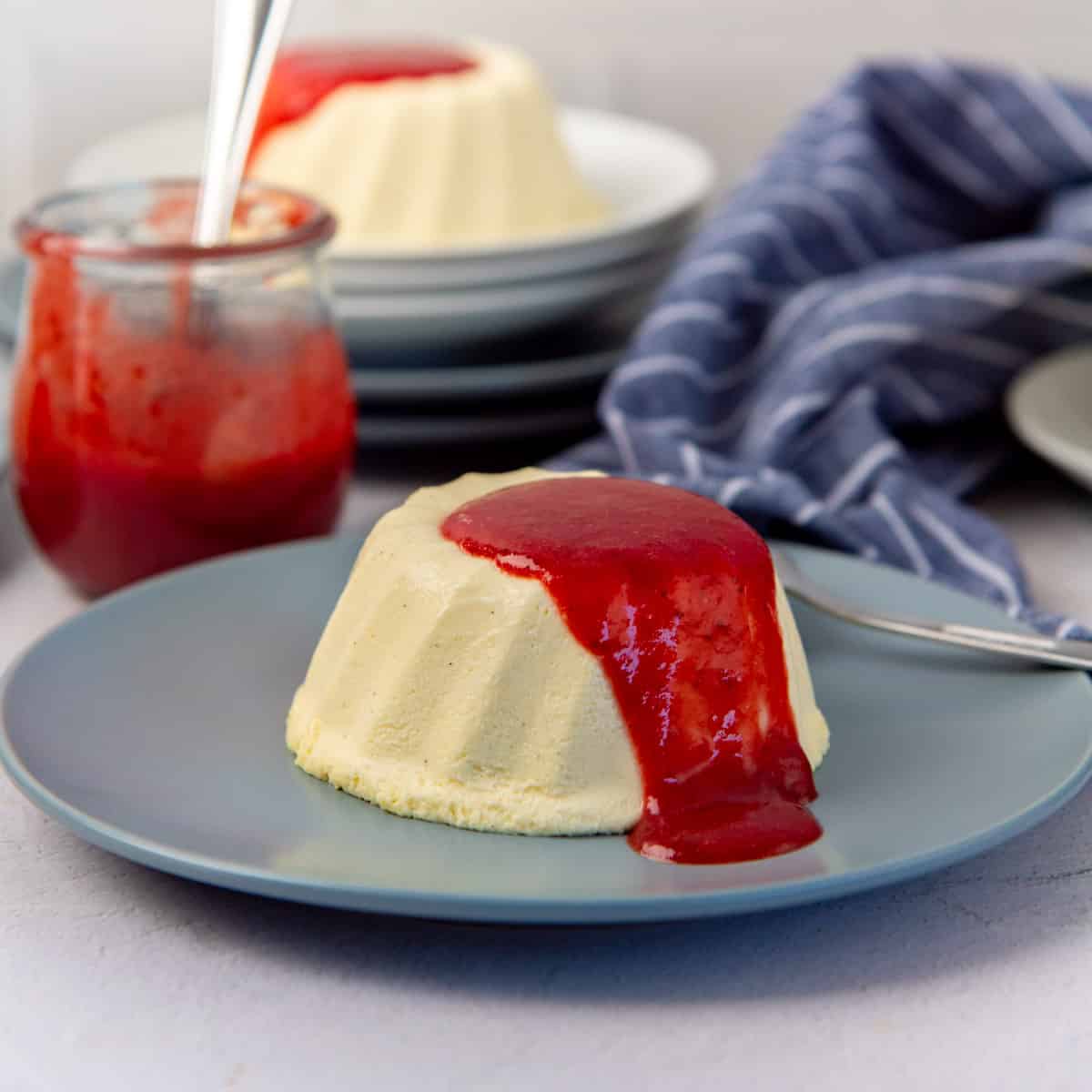
Bavarian cream, also known as crème bavarois or just simply bavarois is a simple but delicious dessert made with crème anglaise. In this post, you’ll learn how to make bavarian cream with beginner-friendly step by step instructions!
If you like ice cream, then you’ll absolutely love this bavarian cream dessert! Set in molds and served, accompanied with any flavor sauces you like.
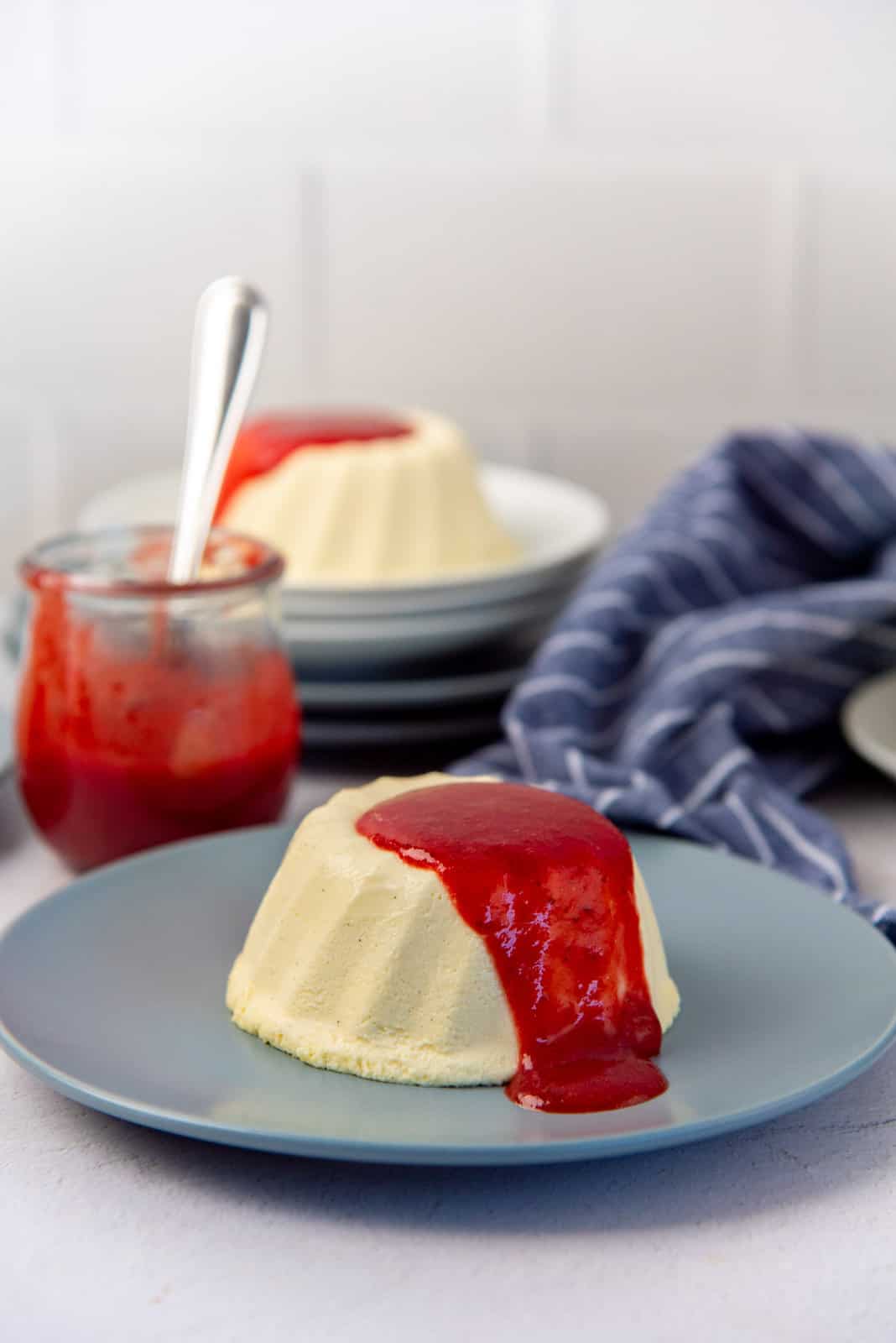
This dessert originates from South Germany (Bavaria), and is a super simple yet delightful dessert to make. The best way for me to describe this dessert is that it’s a combination of panna cotta and ice cream in one delicious, creamy, silky smooth dessert.
Why I love this recipe
- This is another easy but delicious dessert that you can make with creme anglaise (cremeux is another).
- While it’s super simple to make, the result is a very elegant and impressive dessert.
- It can be served as individual molded desserts (like classic creme caramel or panna cotta), OR in a tray so that people can serve however much they want.
- You can easily change the flavor of bavarois or serve it with different flavored sweet sauces to add more flavor and make the dessert more interesting.
- It’s a combination of two of my favorite desserts – panna cotta AND ice cream!
Before we get to how to make bavarian cream, let me quickly explain the difference between this bavarian cream dessert and bavarian cream filling for donuts.
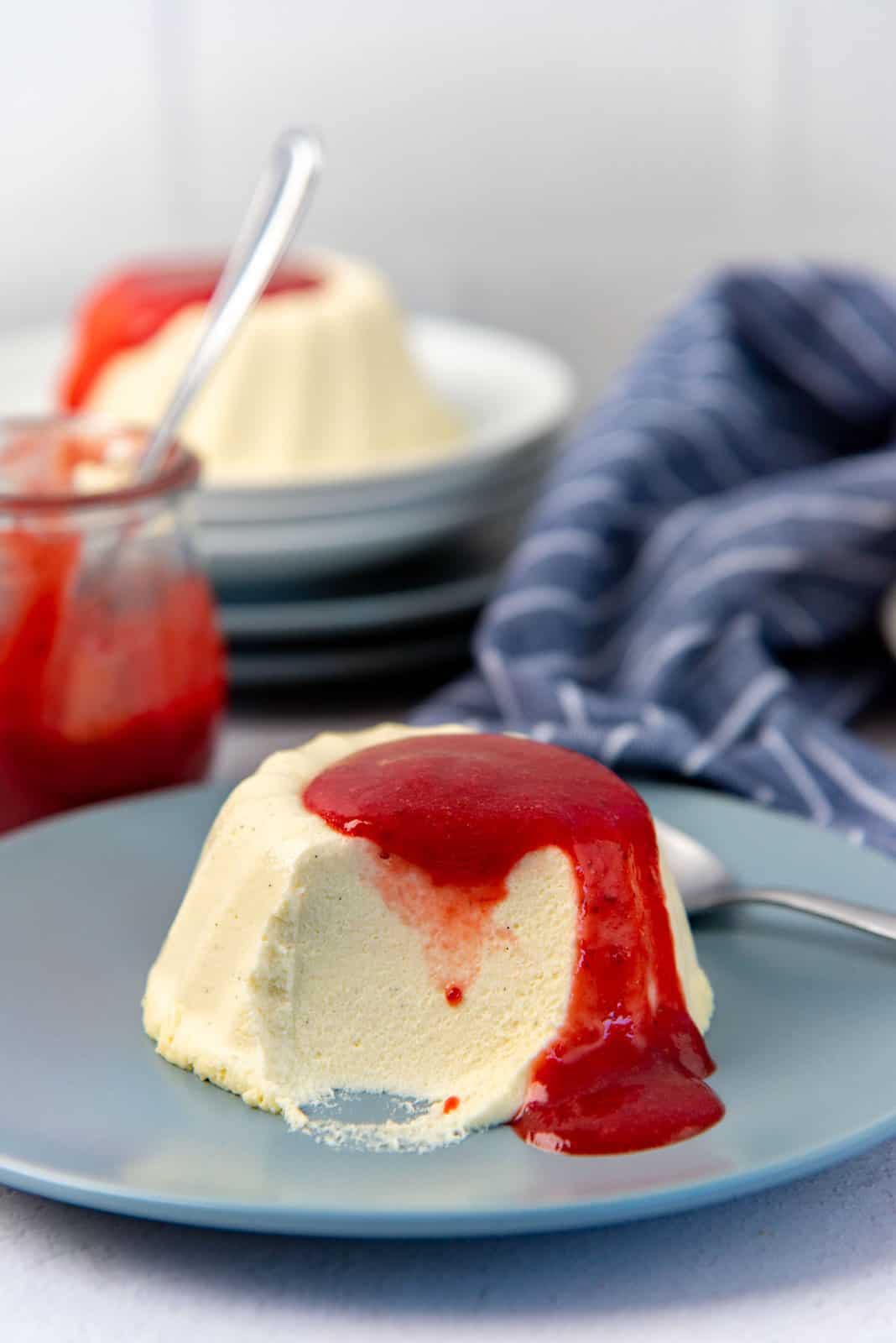
Bavarian cream dessert (creme bavarois) vs bavarian cream filling
In this recipe, we are making Creme Bavarois, which is also know as Bavarian Cream dessert! It’s a creamy custard-based dessert that is set in molds. Served in serving dishes OR unmolded onto a plate. It’s made with pouring custard mixed with gelatin and whipped cream. The gelatin helps to “set” the dessert that is usually at a pourable consistency, since it’s made with pouring custard.
Bavarian cream filling on the other hand is a creamy custard-based filling that is used to fill desserts such as donuts. It’s essentially a diplomat cream, which is pastry cream mixed with gelatin and whipped cream. This filling is thick enough to pipe, because it starts with the thicker and more stable pastry cream.
Some people confuse these two because they think the filling in bavarian cream donuts is bavarian cream. But it’s actually diplomat cream.
Bavarian cream donut – A donut with diplomat cream filling and dusted with powdered sugar or fine sugar.
Boston cream donut – A bavarian cream donut (filled with diplomat cream), topped with a chocolate glaze instead of confectioner’s sugar.
Alright, now let’s talk about how to make creme bavarois.
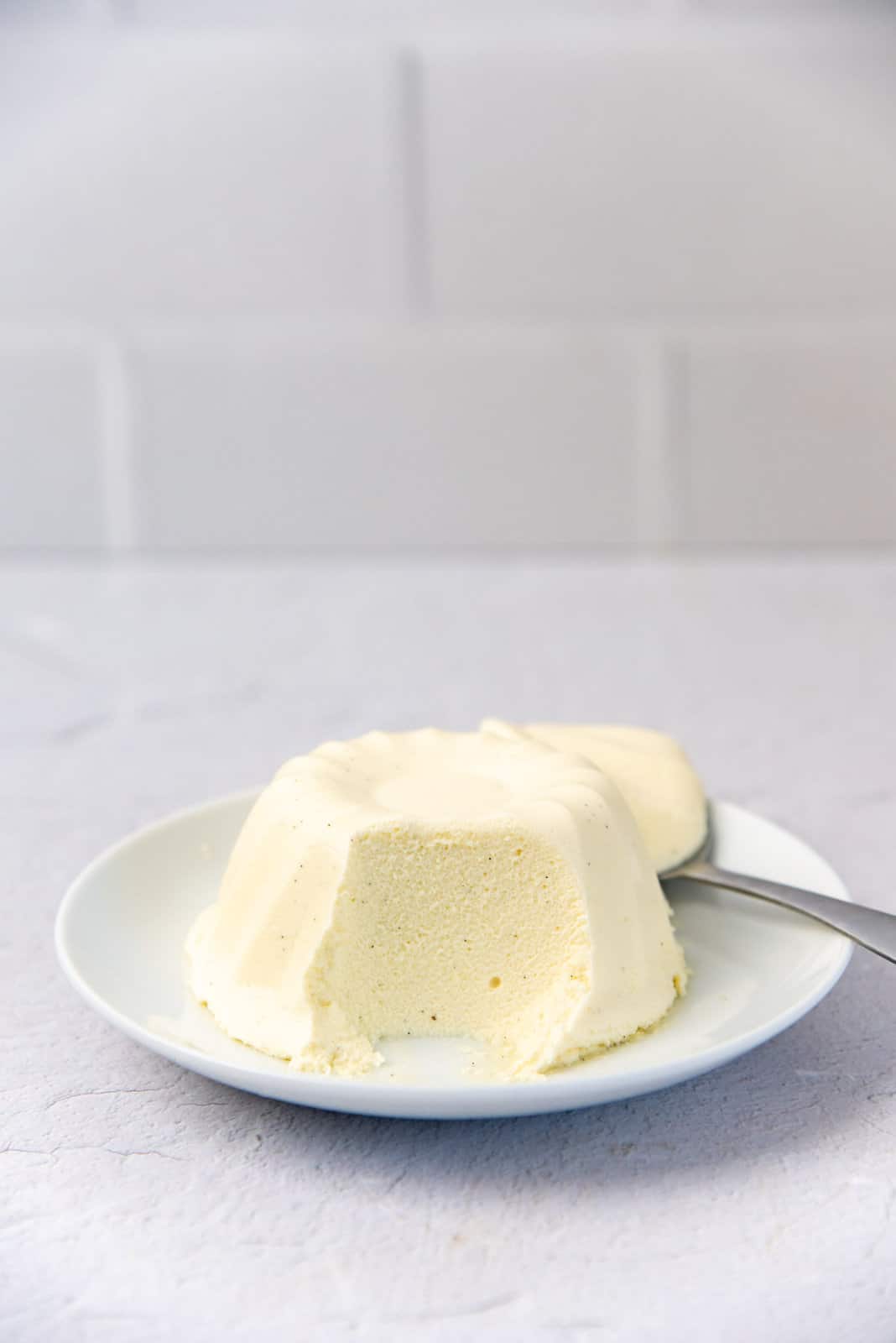
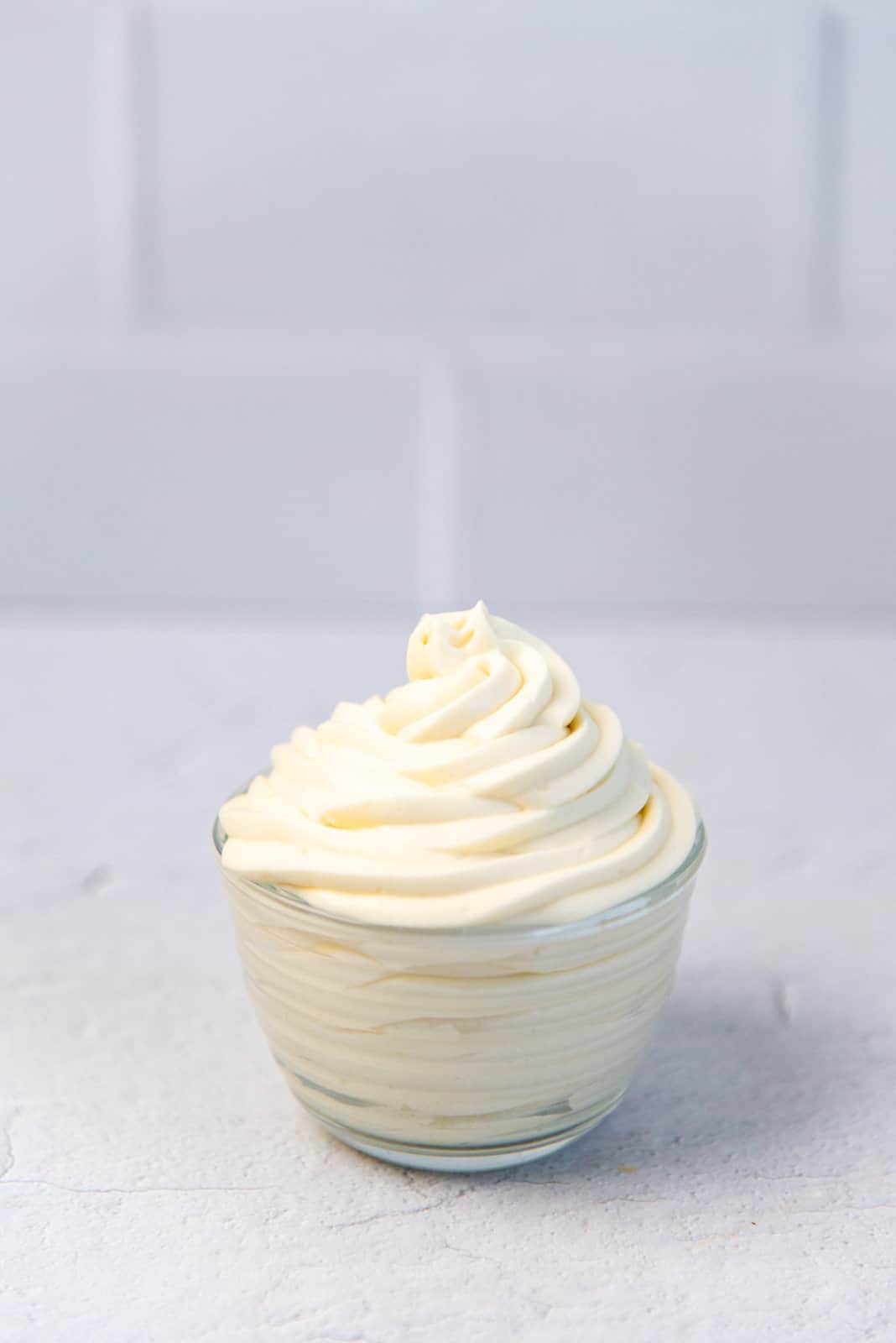
How to make Bavarian cream
Ingredients
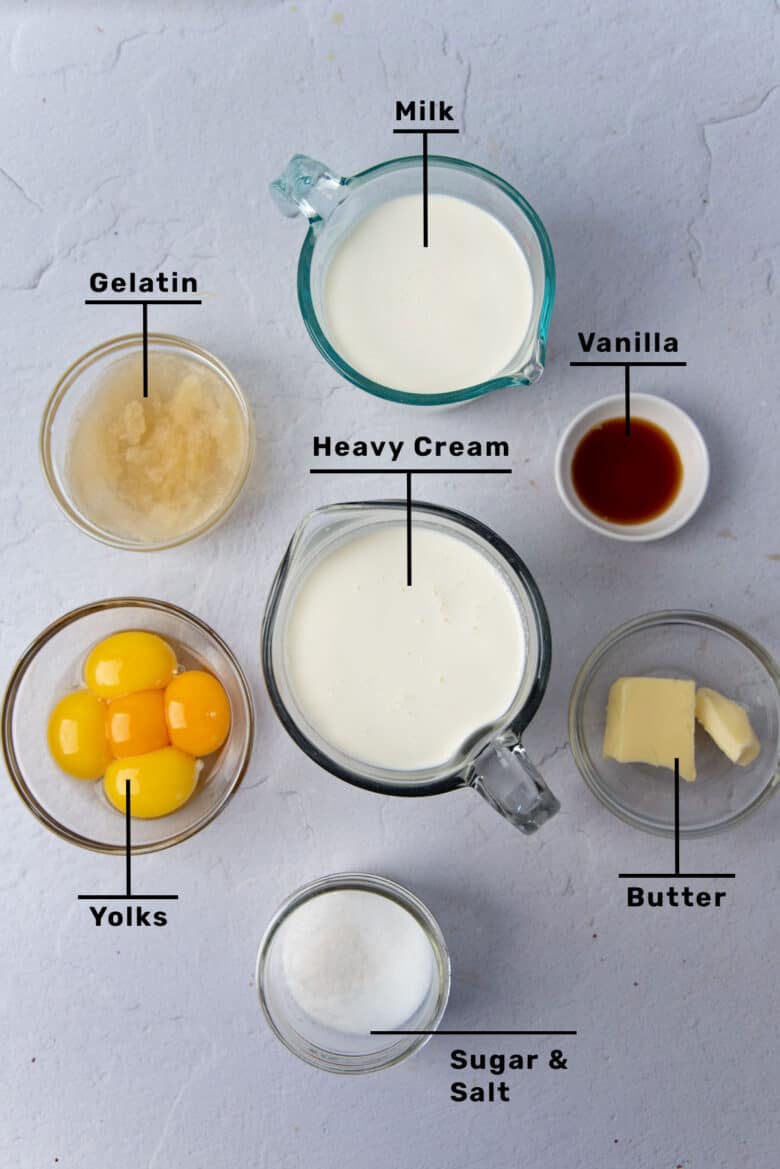
Bavarian cream is made with creme anglaise, plus whipped cream.
For this you will need,
- Milk
- Sugar
- Egg yolks
- Vanilla
- Butter
- Bloomed gelatin
- Heavy cream (35% fat) to make whipped cream.
Method
Making the creme anglaise
The first step is to make a creme anglaise (pouring custard). You can find very detailed tips on how to make creme anglaise here. I share loads of tips on how to make sure that the custard does not scramble and form lumps, so it’s certainly worth your while reading that post if you’re not familiar with making pouring custard.
The first step in this process is to bloom the gelatin. Sprinkle the gelatin over the water in a small bowl. Stir lightly to hydrate all of the gelatin and then set it aside to let it bloom while you cook the custard.
Heat the milk in a saucepan until it’s steaming. It does not need to boil but it can be simmering.
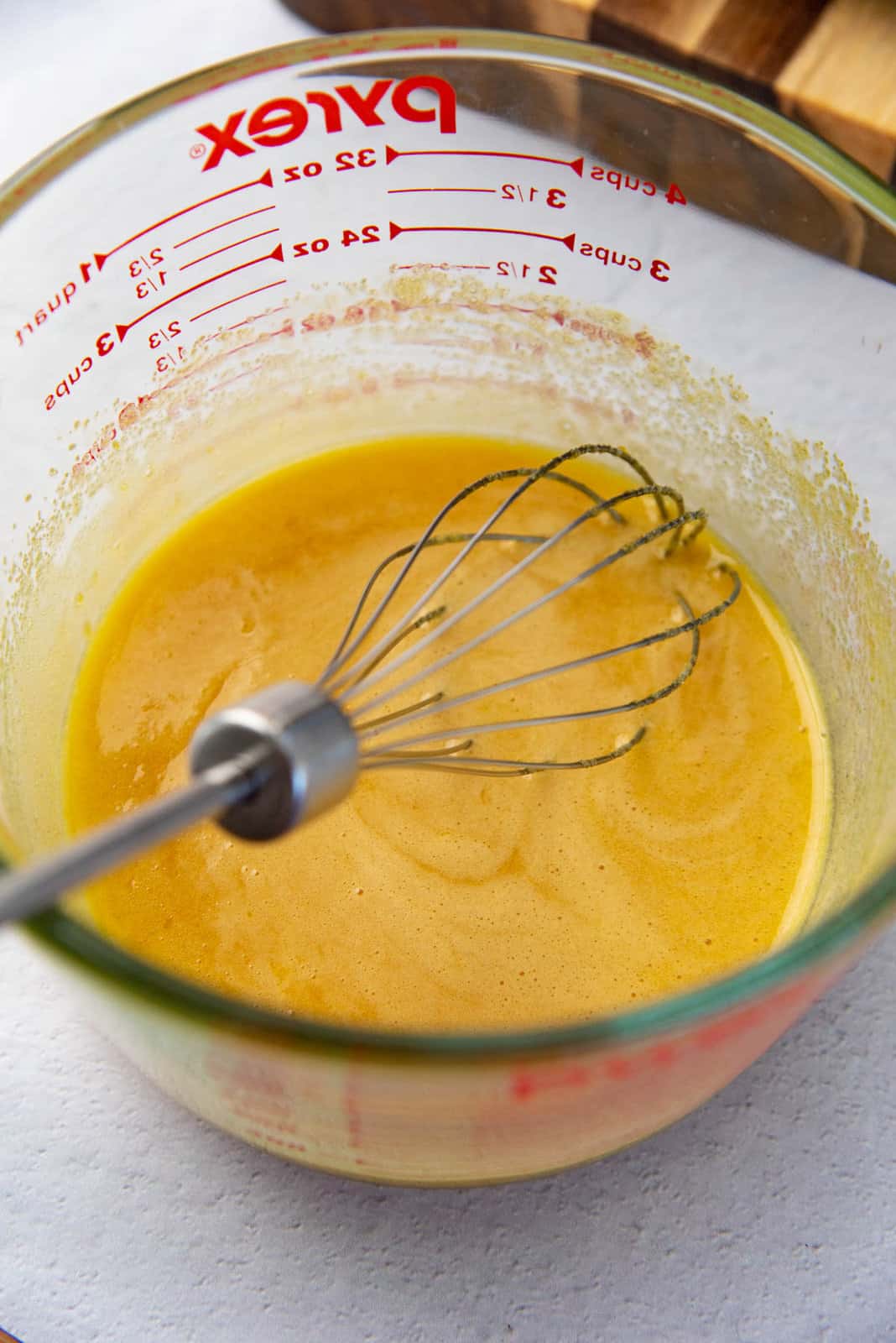
Whisk the egg yolks, sugar, salt, and vanilla until you have a smooth, pale paste.
Tempering the eggs
Pour the hot milk in a slow, thin stream into the egg mixture while constantly whisking. This is to temper the egg yolks. About half of the milk mixture is enough to properly temper the egg yolks.
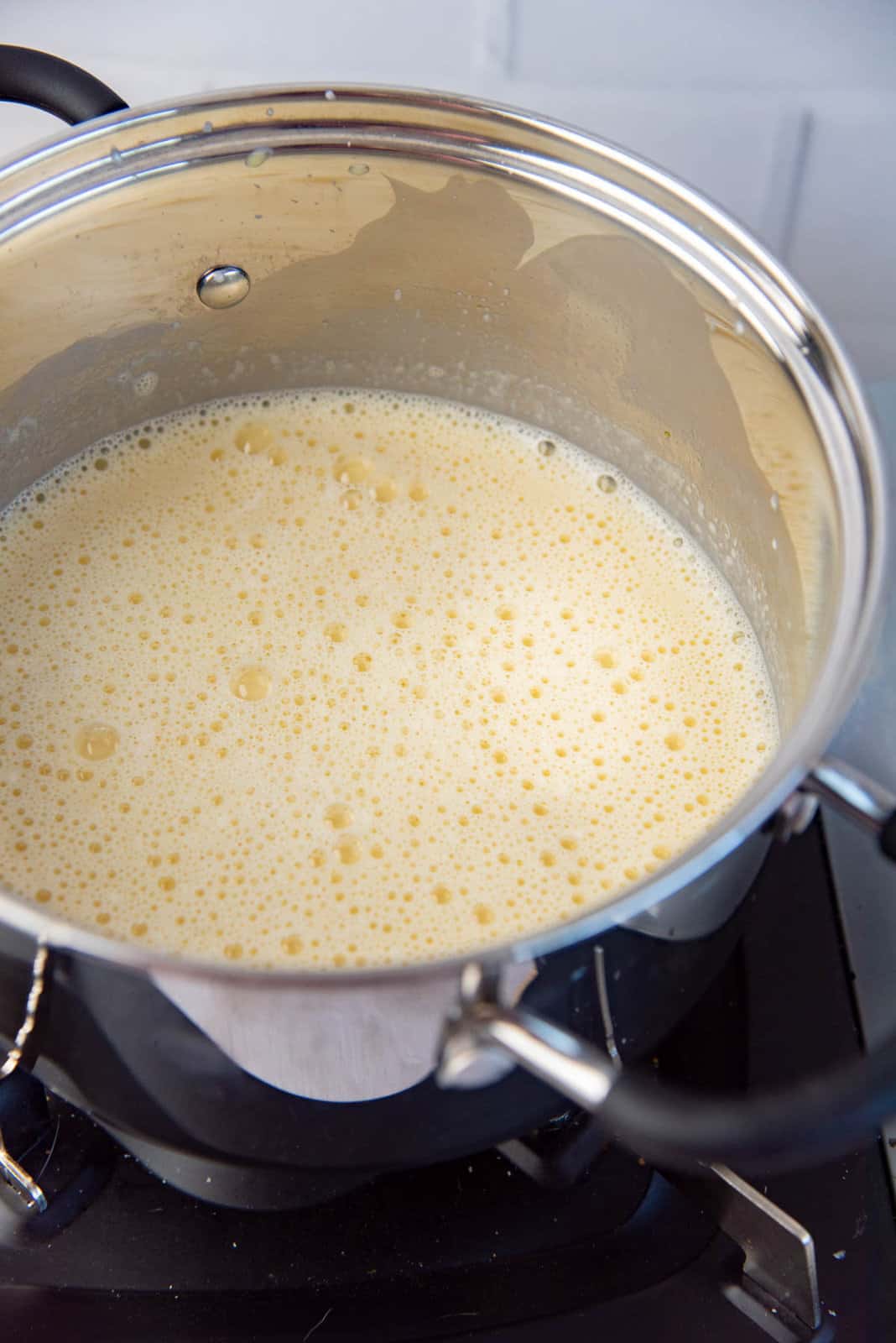
Add this egg mixture back into the saucepan with the remaining milk. Whisk very well to combine.
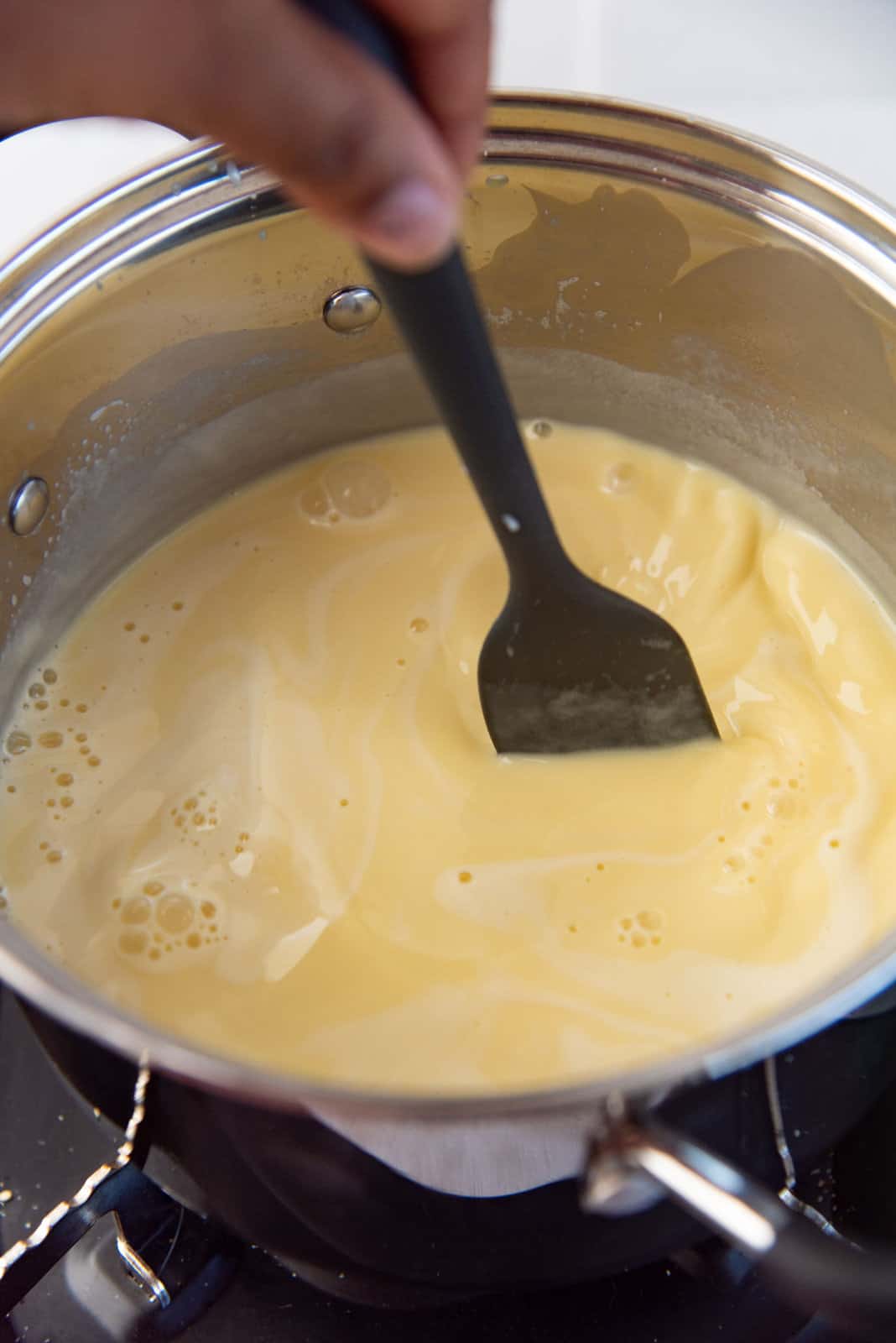
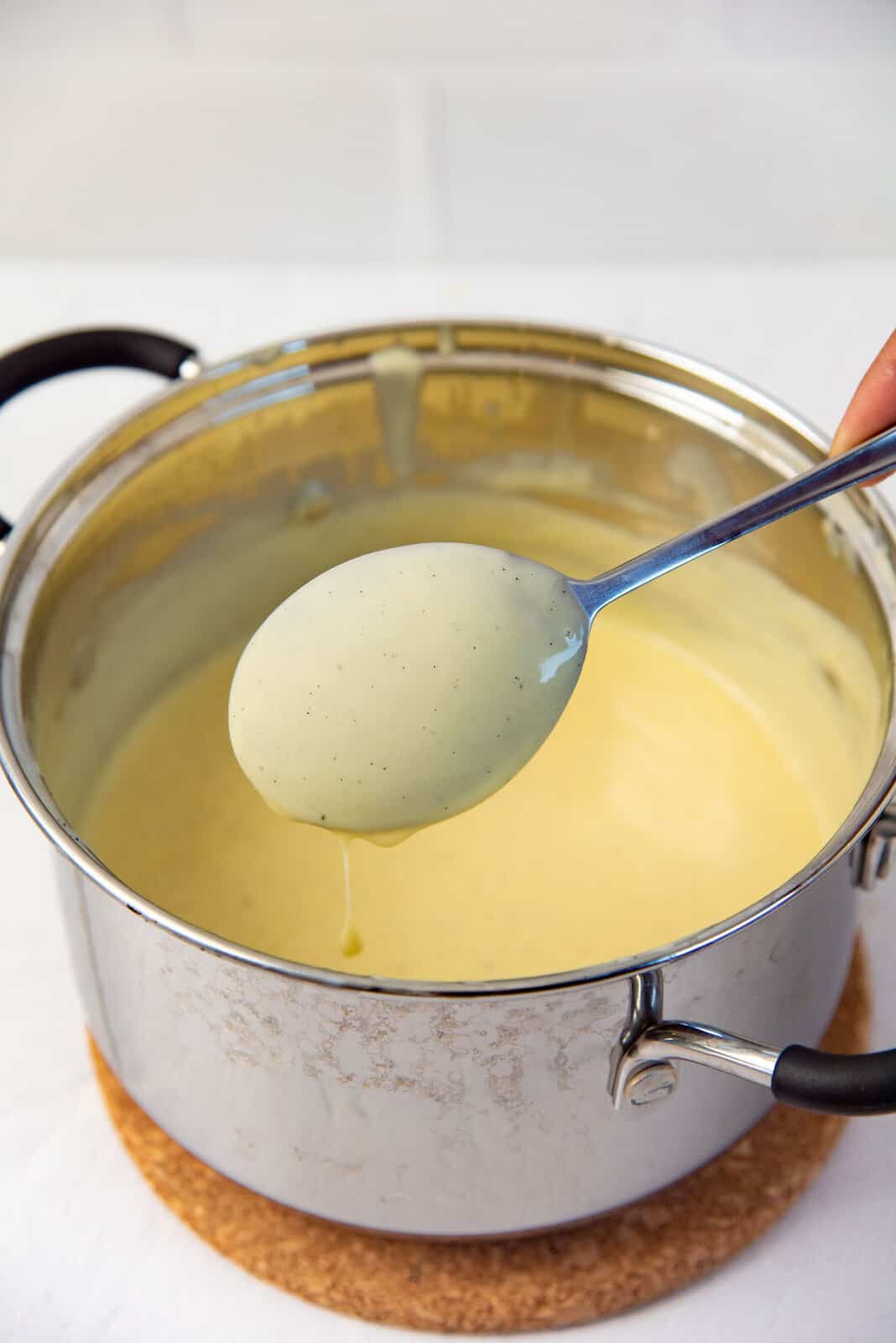
Cook the milk and egg mixture over low heat while continuously stirring until the custard starts to thicken. The custard is done when it reaches 185 F / 85 C.
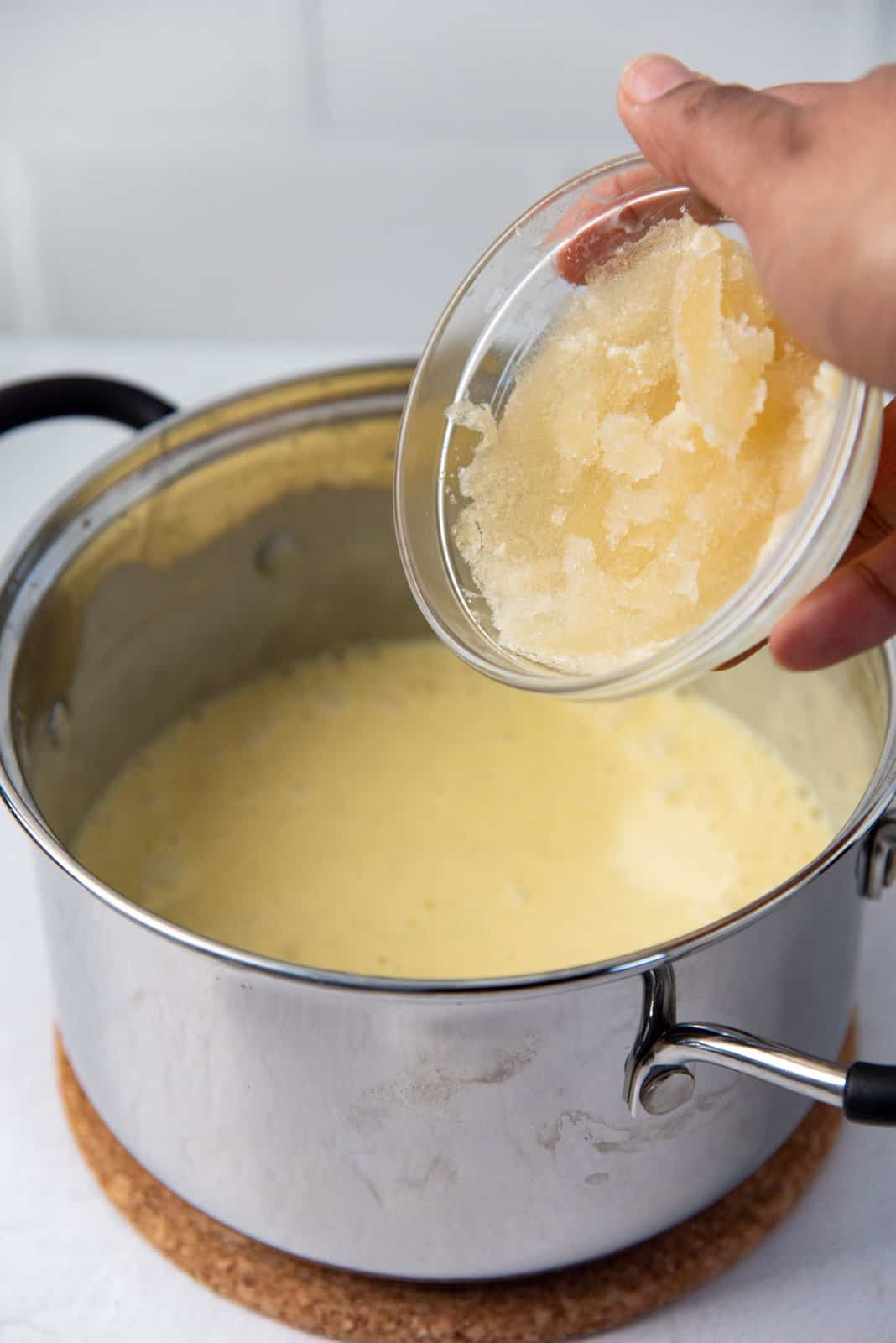
Once the custard is cooked, add the butter and bloomed gelatin and whisk them in until it’s all fully dissolved.
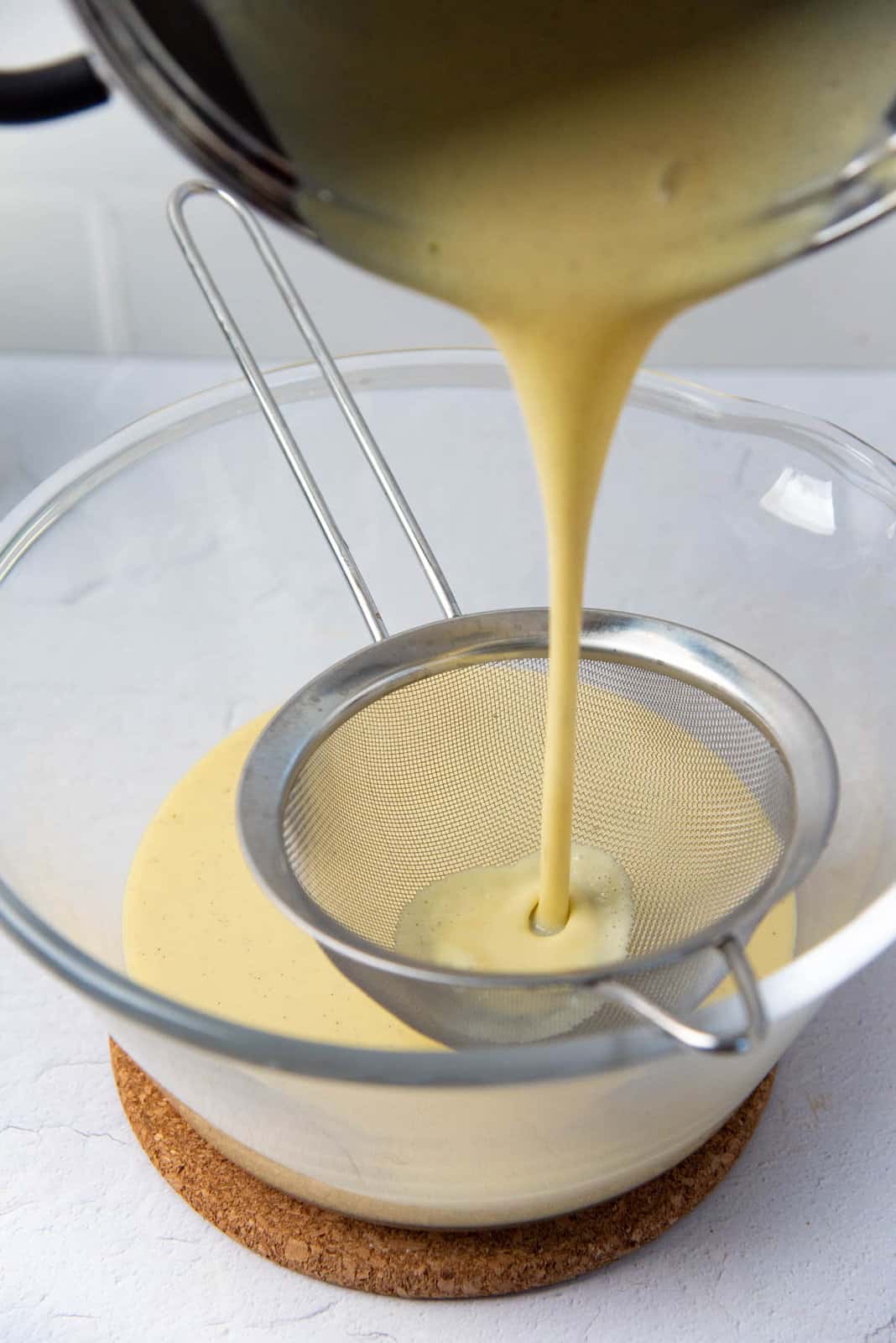
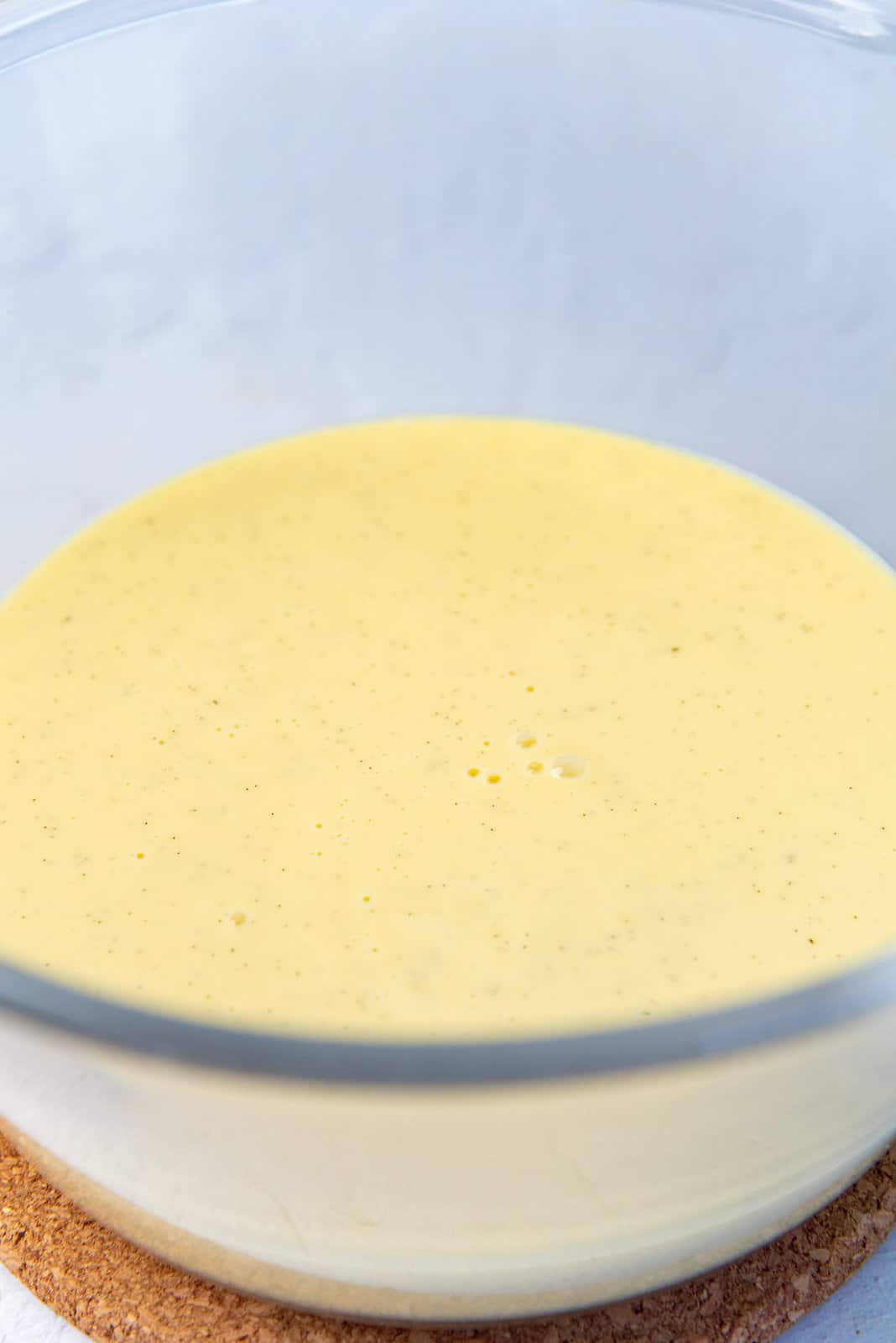
Pour the custard through the sieve into a large bowl and set the custard aside until it’s at room temperature and still liquid. Do not let it set.
The time duration for this to happen will vary depending on the bowl that the custard is in, as well as the ambient kitchen temperature. For it to cool down faster, you can transfer the custard into a large shallow dish with a large surface area. Be wary of cooling it down in the fridge though, because you don’t want it to start to set at this stage.
Occasionally check on the custard and stir / whisk it, so that it cools down evenly.
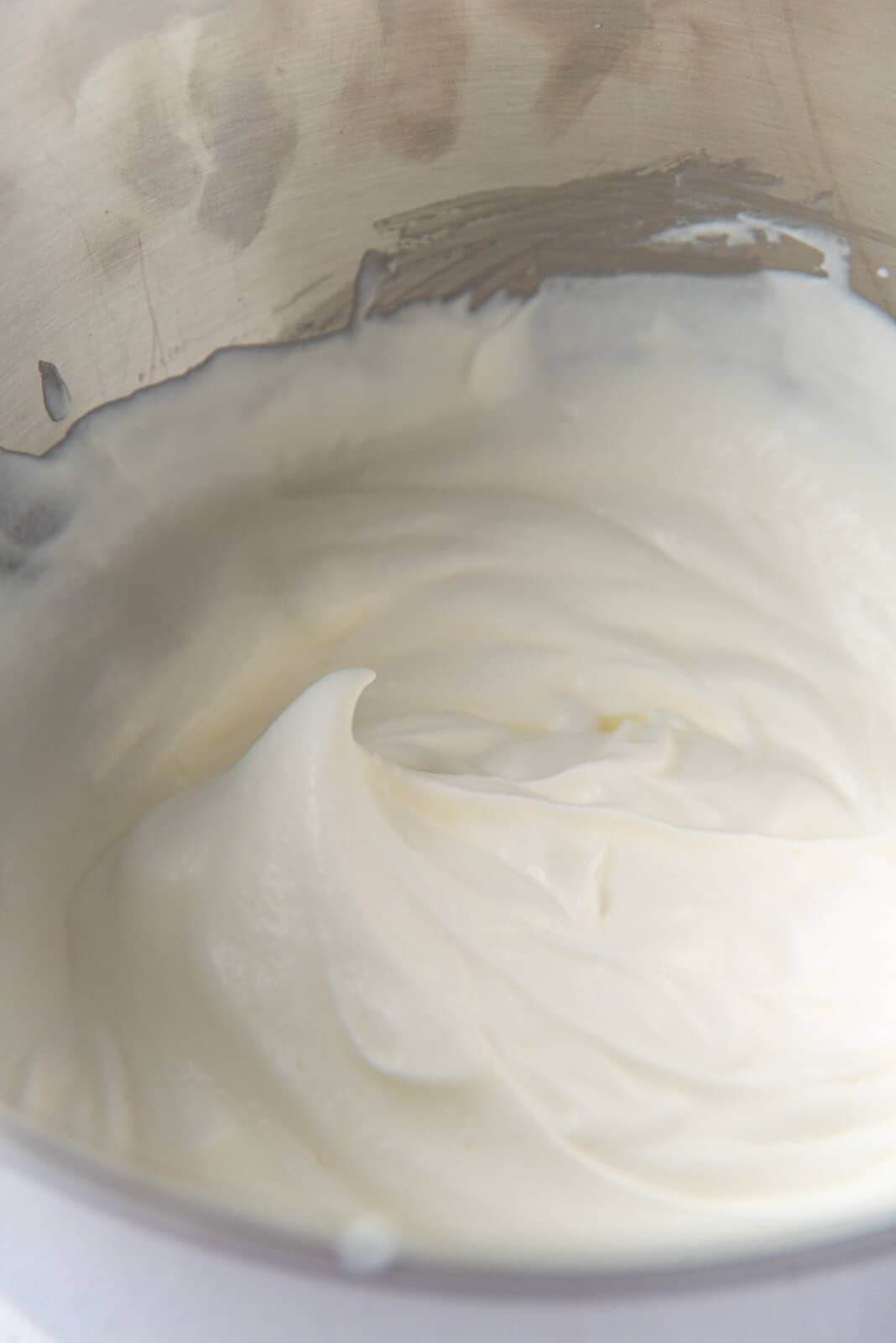
When the pouring custard is only just warm, or at a warm room temperature, whip the heavy cream to soft peaks.
Making Creme Bavarois
While the custard is cooling down, prepare the dish or dishes that you will be setting the custard in. Traditionally, fluted molds are used, so that the dessert looks beautiful once unmolded. However, you can also use other ways to serve the bavarian cream.
- In small serving dishes, without unmolding the pudding.
- In a large dish, as one big pudding and then using a spoon to serve individual portions.
Brush the insides of the dishes with a light coating of butter and set aside until needed.
To ensure that the heavy cream whips very well, chill the heavy cream as well as the bowl well.
Pour the chilled cream into the chilled mixing bowl and whip the cream on medium high speed. When the cream has soft peaks (i.e. small peaks that flop on the tip of the whisk), it can be folded into the custard.
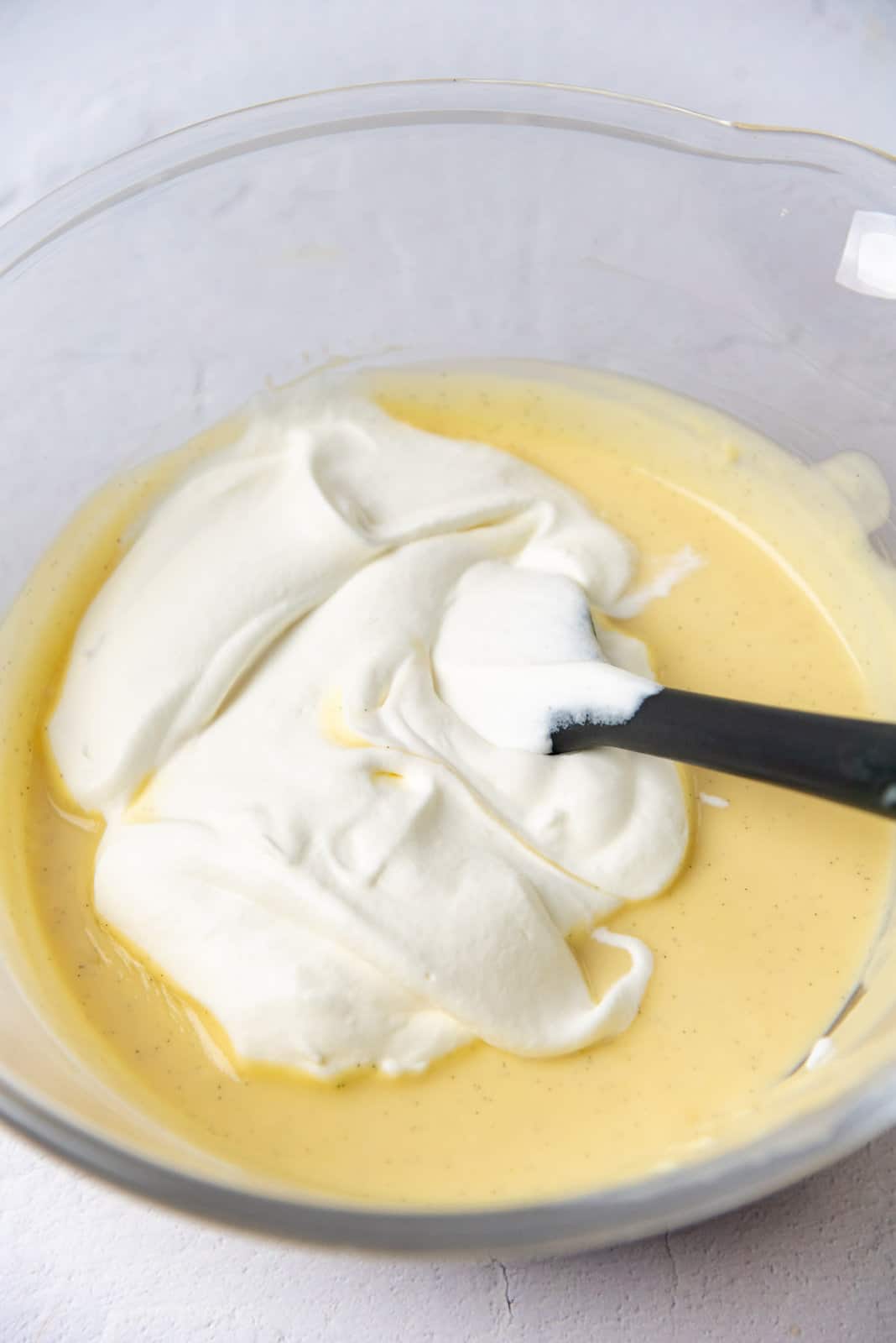
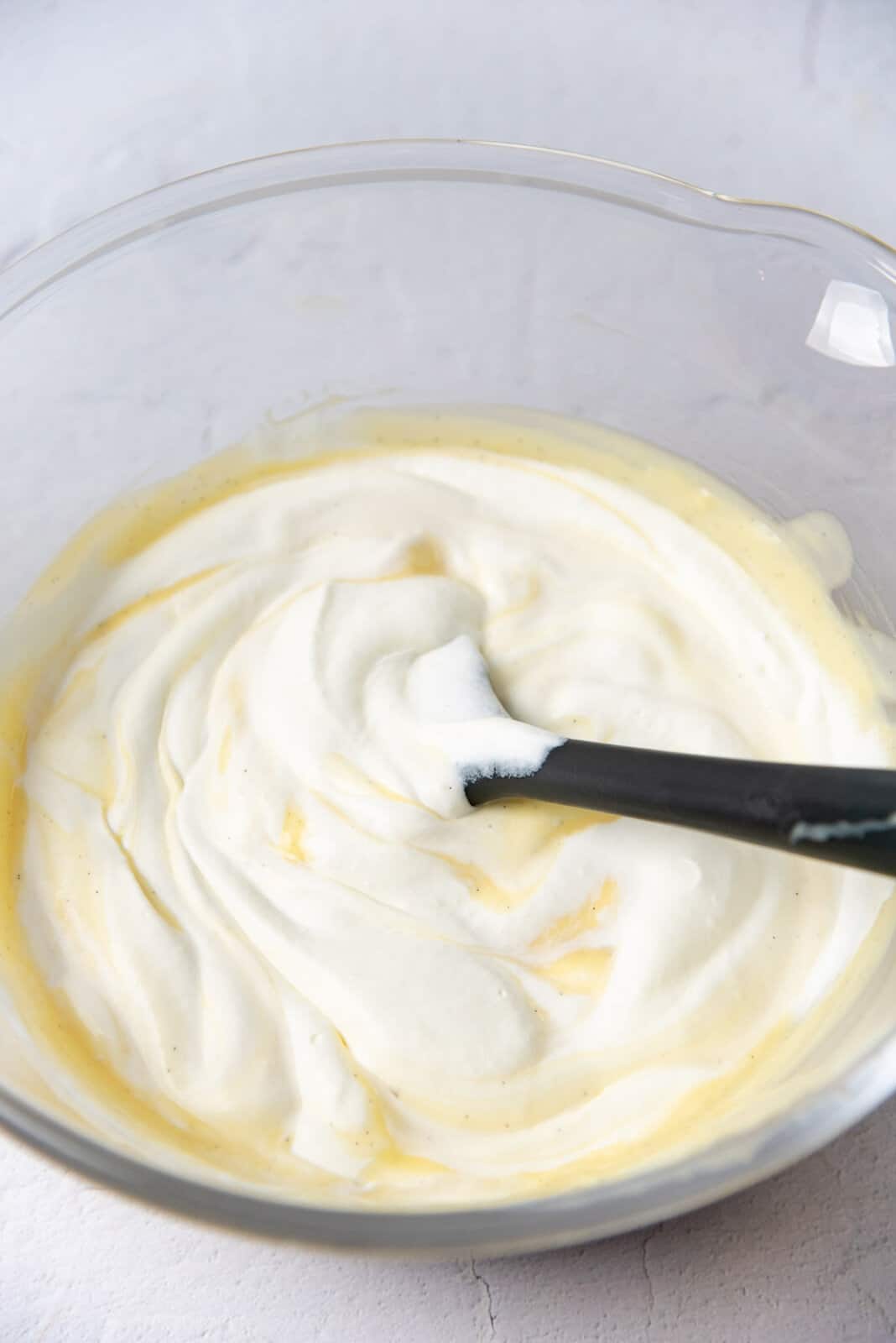
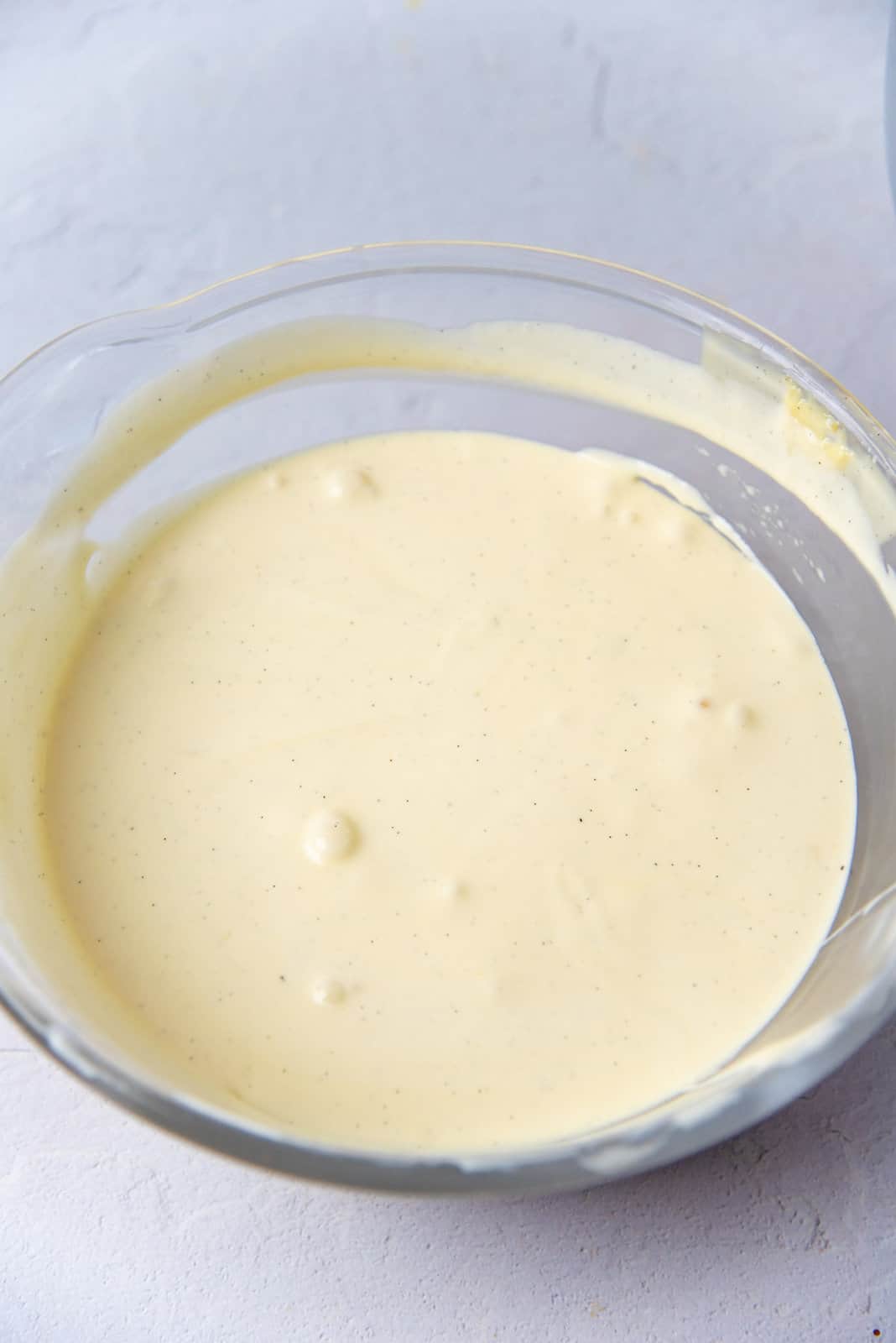
Fold in the whipped cream into the pouring custard until there are no streaks.
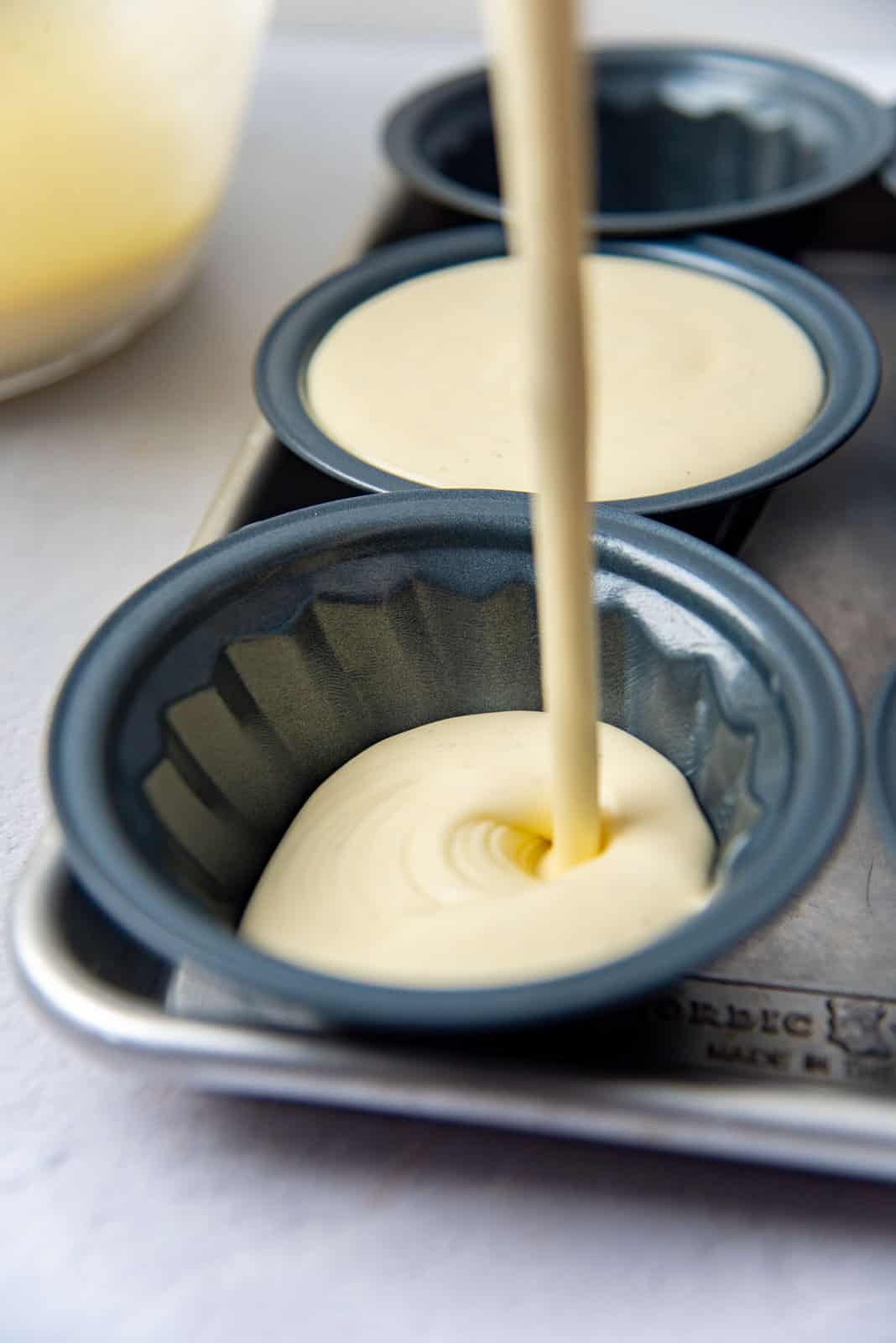
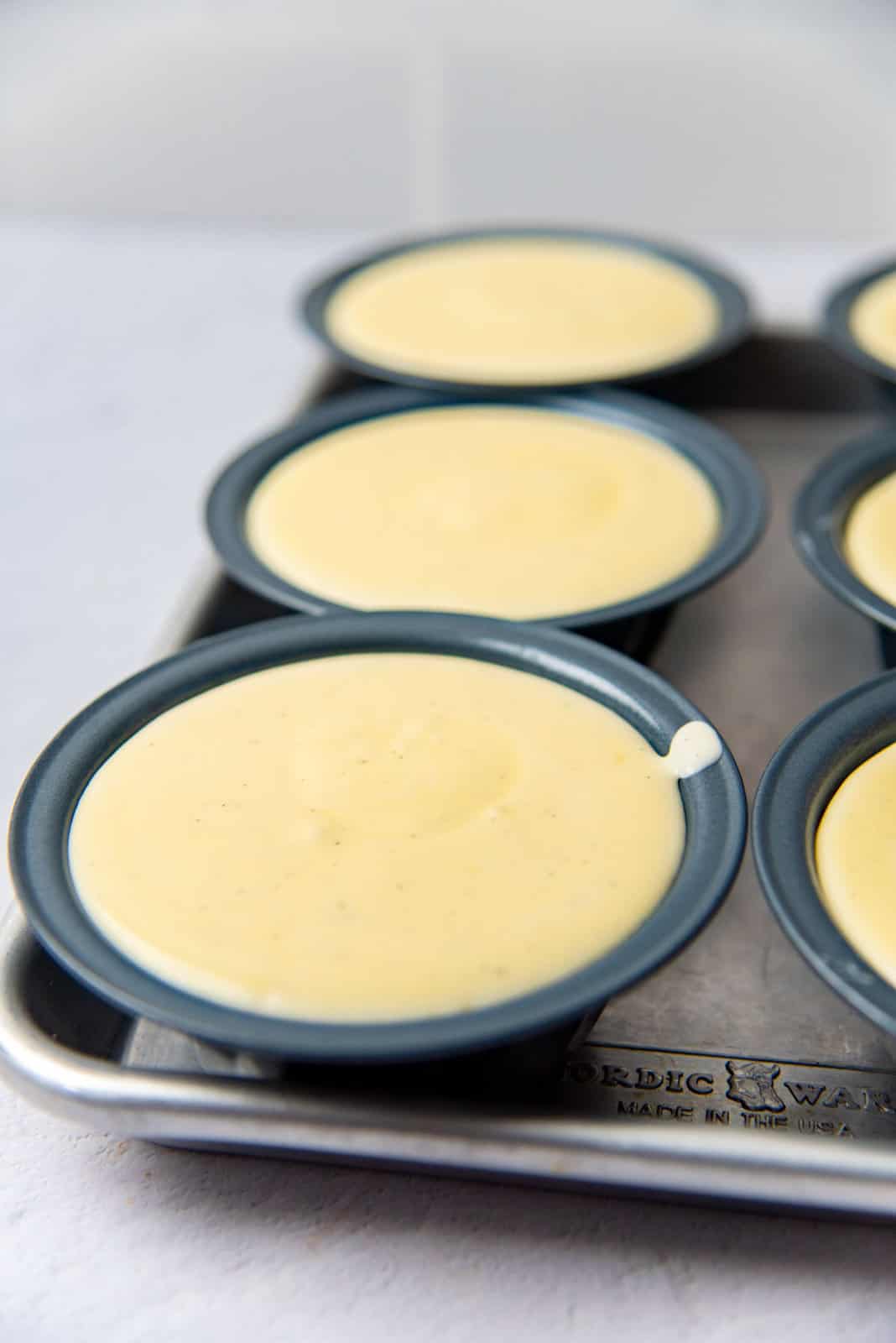
Pour the mixture into the prepared molds or serving dishes. Cover the dishes with plastic wrap and transfer to the fridge until completely set. I prefer to let it for at least 12 hours in the fridge.
Serving Creme Bavarois
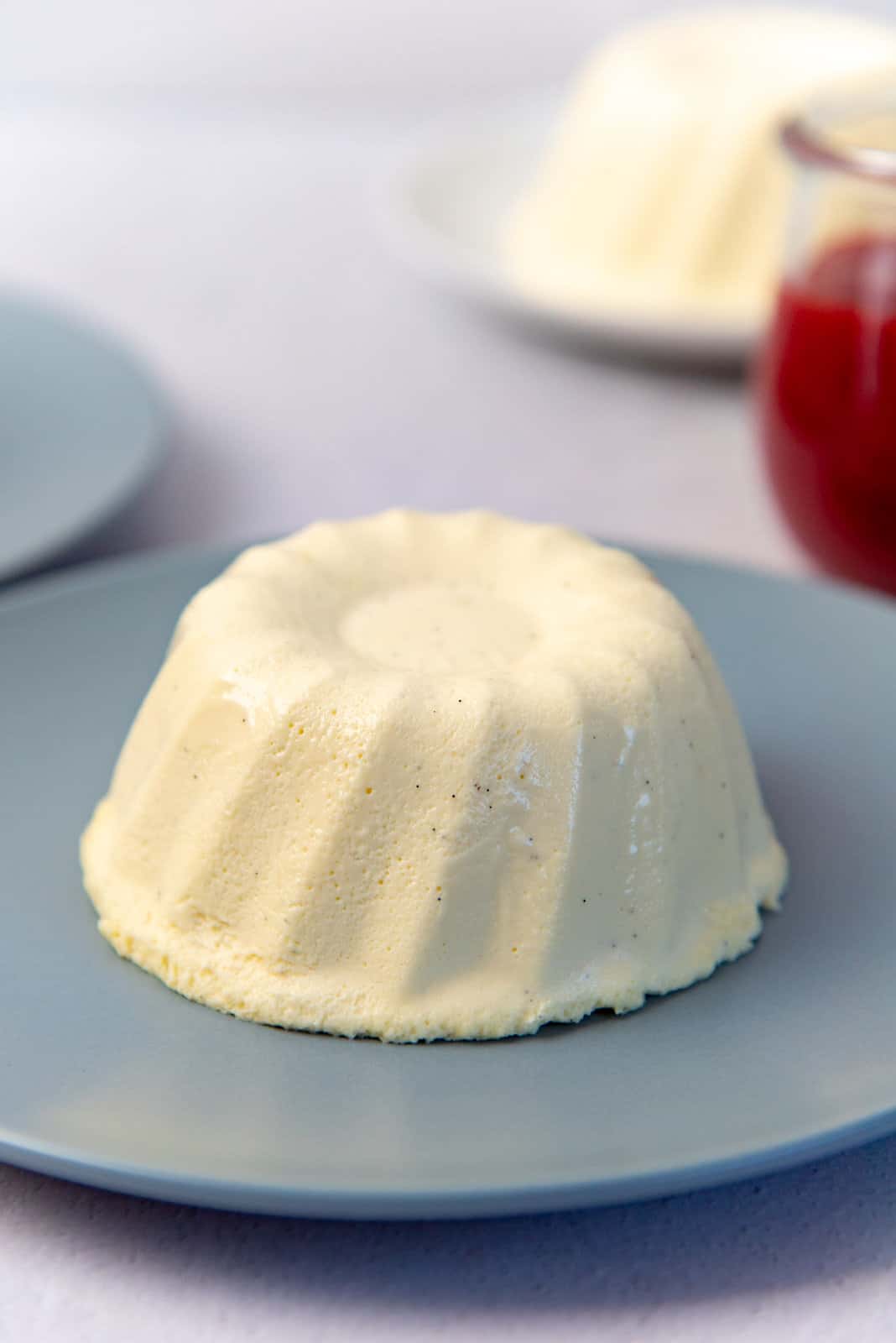
When the puddings have set, it’s time to unmold them (if you choose to). Use your fingers to gently pull the pudding away from the side of the mold to “break the seal”.
Once you break the seal, the pudding will slowly come out of the mold with a little shaking and coaxing.
Alternatively, dip the mold in hot water for just a few seconds to loosen it, and then flip the pudding over onto a plate.
You can also skip unmolding and serve the bavarian cream in individual dishes / ramekins that you poured them into.
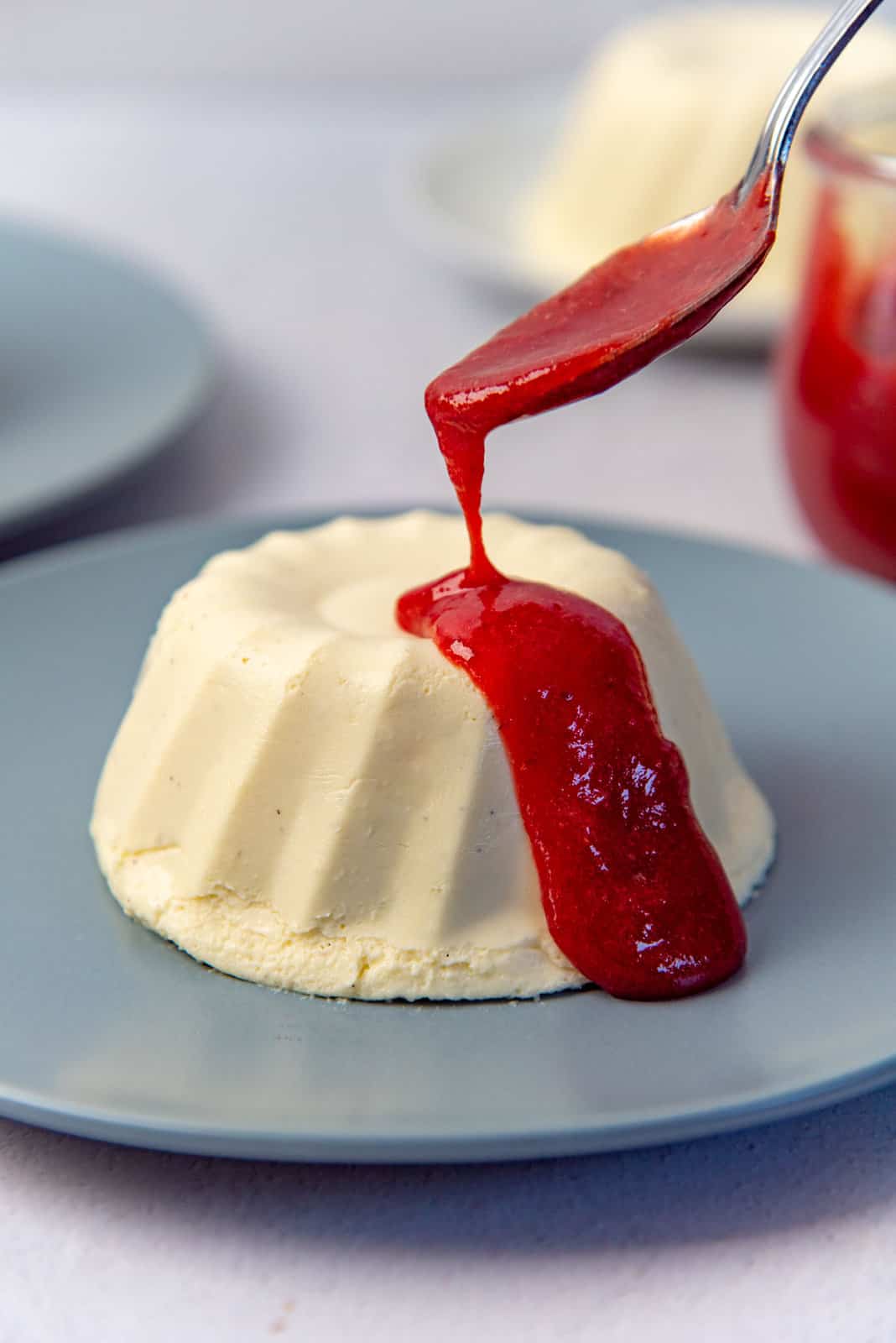
Serve the bavarian cream with a fruity sauce or compote for a delicious dessert! See serving suggestions below for more ideas.
Storage instructions
Can I refrigerate bavarian cream?
Because of the egg and dairy, I do not reocmmend storing these in the fridge for longer than 4 days. I usually like to make these the day before I serve them, and will only keep them for a further 3 days after, if I have leftovers.
Can I freeze this for later?
I haven’t tried to freeze bavarois, but it is possible. But do understand that there can be a difference in the texture after you thaw it out. You will need to thaw the bavarian cream in the fridge (not at room temperature). This should be done at least over 24 hours.
Serving suggestions and variations
This recipe for creme bavarois has a creamy, vanilla flavor. It tastes almost like ice cream pudding!
But you can absolutely change the flavor for different variations.
Here are some flavor suggestions,
- Coffee bavarian cream – Add 1 to 2 tbsp instant coffee granules to the custard to make a coffee flavored bavarian cream.
- Chocolate bavarian cream – Add 2 tbsp cocoa powder to the custard and stir to dissolve as you cook the custard.
- Fruit flavored creme bavarois – Replace 1/2 cup of the milk with 1/2 cup of fruit puree. For a stronger flavor, you can replace up to 3/4 cup of the milk. Alternatively, you can also add freeze dried powder. Please note that some fruits such Kiwi can interfere with the gelatin’s ability to set.
- Butterscotch creme bavarois – Replace the white sugar with dark brown sugar (muscavado sugar is even better!).
- Tea infused creme bavarois – Infuse the milk with tea by steeping tea in hot milk. Use this strongly infused milk to make the custard base.
Other serving suggestions
You can also add flavor to the bavarois by serving it with a sauce or something similar.
- Chocolate sauce, such as this hot fudge sauce.
- Raspberry or any berry compote.
- A tropical fruit compote such as this mango passion fruit compote that I served with matcha panna cotta.
- Fruit syrup.
- Stewed fruits.
Recipe
Bavarian Cream Recipe / Creme Bavarois
US based cup, teaspoon, tablespoon measurements. Weight measurements are recommended for accurate results whenever available.
Common Measurement ConversionsIngredients:
- 5 tsp gelatin powder
- 75 g water 5 tbsp
- 480 mL full-fat milk or 2% milk, 2 cups
- 4 egg yolks from large eggs
- 100 g white sugar ½ cup
- ¼ tsp sea salt
- 1 tbsp vanilla extract or vanilla bean paste
- 50 g unsalted butter optional
- 360 mL chilled heavy cream 1 ½ cups
Instructions:
Making the pouring custard base (creme anglaise)
- To make the pouring custard, please follow my creme anglaise recipe instructions. Do check that post for more tips on how to make the perfect creme anglaise.
- Since this custard will have gelatin added to it, you will need to bloom the gelatin first. So first place the water in a small bowl. Sprinkle the gelatin powder over the water and stir with a toothpick to hydrate all of the gelatin. Set it aside while you cook the custard.5 tsp gelatin powder, 75 g water
- Place the milk in a saucepan. Heat over medium / medium-high heat until the milk starts to steam. Make sure to regularly stir to prevent the milk from burning.480 mL full-fat milk
- In a medium bowl, place the egg yolks, sugar, salt, and vanilla. Whisk very well until the egg yolks become very smooth and start to turn pale in color.4 egg yolks , 100 g white sugar, ¼ tsp sea salt, 1 tbsp vanilla extract
- Once heated, remove the milk from the stove for the next step.
- The next step is to temper the eggs by slowly adding the milk into the egg mixture. Place the bowl with the egg mixture on a non-slip surface (i.e. on a rubber pad or wet cloth napkin placed on the kitchen counter).
- Carefully pour the hot milk mixture in a thin stream into the egg mixture, making sure to constantly whisk the egg mix as the milk is poured in.
- When about half of the milk is added to the egg mix, the egg mixture should be warm enough / tempered. Whisk it once more to make sure all the egg yolks are mixed in well (while scraping down the sides of the bowl).
- Pour this egg and milk mixture back into the saucepan with the remaining milk. Whisk well to combine.
- Lower the heat on the stove to a medium low or low heat, and return the saucepan to the stove to cook the custard. When you cook the custard, you may have to alternate cooking it on the stove and then remove it from the stove to stir and disperse the heat if the custard is overheating too quickly (and then return it to the stove once again). You may have to do this a few times depending on the heat of your stove. You can also lower the heat of your stove further.
- Cook the custard while constantly stirring with a rubber spatula until the custard has thickened to the correct consistency. This can take anywhere from 4 – 10 minutes depending on the stove, size of the saucepan, and saucepan material. Make sure to scrape the edges, sides, and bottom of the pan with the spatula to evenly heat the custard and to prevent the custard from “setting” at the bottom.
- The custard will start to thicken as it reaches the correct temperature. The custard is done when it's thick enough to coat the back of a spoon with a film of custard. The temperature of the custard should reach 180 – 185°F (82 – 85°C).
- When the custard is done, remove it from the heat and add the butter and the bloomed gelatin in and whisk until they both completely dissolve in the custard. Pour the custard through a sieve into a large bowl.50 g unsalted butter
- Let the custard cool down to room temperature. Do not put it in the fridge at this stage, since you do not want the gelatin in the custard to set. Place the pot in a cool area so that it can cool down. Occasionally stir the custard to make sure it's cooling down evenly.
Making the creme bavarois
- While the custard is cooling down, prepare the molds. This recipe makes 7 – 8 cups of bavarian cream. Lightly butter as many molds as you want to serve (i.e. either 7 – 8 one cup serving dishes, or 14 half cup serving dishes). Set aside until the custard is ready.
- When the custard has cooled to almost room temperature (but make sure that it's NOT set), you should start to whip the heavy cream.
- In a large metal bowl (preferably chilled bowl), place the chilled heavy cream. Whisk the heavy cream until you have soft peaks in the cream.360 mL chilled heavy cream
- Add about a quarter of the whipped cream into the room temperature (or slightly warm) creme anglaise. Fold it in using a whisk. Then add the rest of the whipped cream and gently fold it in until there are no more white streaks in the custard mixture.
- Pour this mixture into the prepared serving molds and cover with plastic wrap. Transfer to the fridge to chill for at least 4 hours, preferably overnight.
- To serve, carefully unmold the bavarian cream from the molds onto serving dishes. If you used silicone molds, a little squeeze should help to pop them out. However, if you used plastic or metal molds, you may need to dip them in hot water for a few seconds to release the pudding from the mold.
- However, do not let it sit in the hot water for too long, because you don't want the bavarian cream to melt. Use your fingers to gently pull the pudding away from the sides of the mold to "break the seal".
- Serve as is, or with any sweet sauce. Suggestions included below in recipe notes.
Recipe Notes
Storage
Because of the egg and dairy, I do not reocmmend storing these in the fridge for longer than 4 days. I usually like to make these the day before I serve them, and will only keep them for a further 3 days after, if I have leftovers. You can freeze them, however I have not tried this. It is likely there might be a change in textures after thawing.Serving suggestions
Raspberry coulis, or any berry coulis.Passion fruit syrup
Any citrus fruit curd such as lemon curd, pineapple curd or passion fruit curd.
Stewed (and cooled) fruits.
Chocolate sauce
Butterscotch sauce
Salted caramel sauce
Nutrition Information:
“This website provides approximate nutrition information for convenience and as a courtesy only. Nutrition data is gathered primarily from the USDA Food Composition Database, whenever available, or otherwise other online calculators.”














Leave a Reply