
About
My Cookbooks
Work With Me
Contact
  • Facebook
  • Instagram
  • Pinterest
  • X
  • YouTube
The Flavor Bender

Master the Science of Delicious

  • Recipe Index
    • All Recipes
    • Desserts
      • Cakes & Cupcakes
      • Candy & Bite Sizes
      • Chocolate
      • Cookies, Brownies & Bars
      • Frozen Desserts
      • Fruit Desserts
      • Puddings & Custards
      • Dessert drinks
      • No Bake
      • Pastries & Breads
      • Sweet Syrups & Spreads
      • Tarts & Pies
      • Cheesecakes
      • Healthy sweets
    • Breakfasts
      • Tarts, Quiches, & Pies
      • Waffles, Pancakes & Crepes
      • Quick Breads, Scones & Muffins
      • Breakfast Sandwiches
      • Breakfast Pastries
      • Eggs
      • Breakfast & Brunch Drinks
      • Make Ahead Breakfasts
      • Healthy Breakfasts
      • Coffee and Tea drinks
      • Breakfast Smoothies & Juices
      • Breakfast Sides
      • Casseroles
      • Jams & Spreads
    • Courses
      • Main Meals
        • Bread, Sandwiches & Burgers
        • Curries
        • Salads
        • Roasts & BBQ
        • Soups & Stews
        • Casseroles
      • Bread
      • Lunch
      • Beverages
      • Appetizers & Tapas
      • Sides
      • Dips & Condiments
      • Tea Time & Snacks
      • Desserts
      • Meal Prep
      • Cocktails
      • Pet Friendly Recipes
    • Cuisines
      • American
      • European
      • Australasian
      • Sri Lankan
      • East Asian
      • Mexican
      • Middle Eastern
      • South Asian
    • Sri Lankan
      • Main Meals
      • Drinks
      • Desserts
      • Breakfasts
      • Snacks
    • Skill Level
      • Easy
        • Easy Desserts
        • Easy Cooking
        • Easy Breads
        • Easy Breakfasts
        • Easy Dinners
      • Intermediate
        • Intermediate Desserts
        • Intermediate Cooking
        • Intermediate Breads
        • Intermediate Breakfasts
        • Intermediate Dinners
      • Advanced
        • Advanced Desserts
        • Advanced Cooking
    • Recipes by Season
      • Christmas
      • Fall & Winter
      • Halloween
      • Spring & Summer
      • Thanksgiving
      • Valentines Day
    • Recipes by Diet
      • Dairy Free
      • Eggless
      • Gluten Free
      • Paleo
      • Vegan & Vegetarian
    • Recipe Basics
      • Baking Basics
      • Cooking Basics
      • Baking & Cooking 101
  • New? Start Here
  • Measurement Conversions
  • How-To Posts
  • About
  • My Cookbooks
  • Work With Me
  • Contact
The Flavor Bender ย ย โ€บย ย  Recipes ย ย โ€บย ย  How to Recipes ย ย โ€บย ย  Cooked Sugar Stages (Candy Temperature Chart)

Cooked Sugar Stages (Candy Temperature Chart)

Author:

Dini Kodippili


Posted: 11/19/2022
How to Recipes
bubbling sugar pin for pinterest.

Knowing your cooked sugar stages (or candy temperatures) is CRITICAL when it comes to making candy. If you love making caramels, marshmallows, and other types of candy, this article is for you!

Learn the stages of cooked sugar with this handy information guide and chart on candy temperatures!
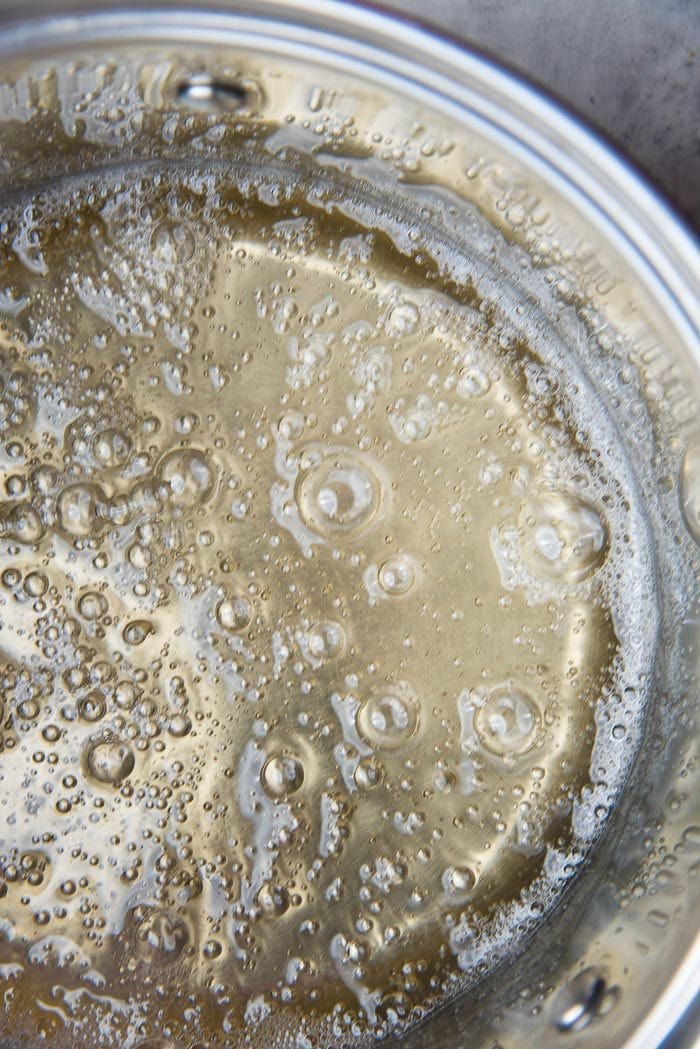
Homemade Peppermint Marshmallow recipe process - The sugar syrup bubbling at the right temperature in a saucepan.
Sugar syrup at the correct temperature, in a saucepan.
Contents
ย [hide]
  • Sugar syrup (candy) stages and temperatures, and how it all works
  • Explanation of the terminology
  • Candy temperature chart
    • Thread stage
    • Soft ball stage
    • Firm ball stage
    • Hard ball stage
    • Soft crack stage
    • Hard crack stage
    • Light caramel stage
    • Dark caramel stage

When you’re cooking sugar with water, the sugar syrup reaches distinct stages as the temperature goes up. This article will help you accurately identify those stages to help ensure perfect results when making candy! Plus, I will also show you the different types of candy that you can make at different stages of cooked sugar. (You can also read my guide to types of sugar for more information on all the different types of sugar used in baking and cooking.)

Sugar syrup (candy) stages and temperatures, and how it all works

Sugar syrup is made by mixing sugar and water, and then melting the sugar in water as the water heats up. The longer you cook the sugar syrup, the hotter it gets (duh).

At higher sugar concentrations, there is a risk of the sugar re-crystallizing, so an invert sugar such as corn syrup (also known as glucose syrup in some countries), golden syrup, or maltose is added to counteract this.

Dry Caramel made in a pan, before adding the warm milk to make salted caramel pastry cream

Explanation of the terminology

When you measure the temperature of the candy syrup in order to check the stages of the cooked sugar syrup, the most reliable method is to use a candy thermometer. However, you can also perform a “cold water test”. This is how my grandmother taught me to check the candy stages when I was young, when candy thermometers were rarer and more expensive. However, these days candy thermometers are so inexpensive and easily available.

What is sugar concentration?

When you make sugar syrup, water and sugar are heated together to help dissolve the sugar to cook the sugar syrup. The boiling point of water is 212 F / 100 C. As the water boils, it evaporates from the syrup, concentrating the amount of sugar left in the syrup.
And as there is less water in the syrup, the higher the temperature of the candy syrup, the more concentrated the syrup will become. As soon as all of the water evaporates, and the sugar concentration is 100%, the sucrose will start to breakdown. As the sucrose breaks down, the sugar syrup will change color and you will achieve caramel!

What is the “cold water test”?

Add some ice to cold water in a cup or jug and keep it in the freezer until needed. The water needs to be chilled.
When the cooked sugar syrup is ready to be tested for the stage it’s at, pour a little of the ice water into a small dish or saucer. Drop a little of the hot sugar syrup (using a spoon), into the ice water.
Depending on the sugar concentration of the candy syrup, it will form different textures as it cools down. The state of this cooled sugar syrup will correspond to the different candy temperatures in the chart.

How do I know if my candy thermometer is accurate?

To make sure your candy thermometer is accurate and calibrated, place the thermometer in boiling water. If the reading is 212 F / 100C, then it’s accurate.

The color of the sugar syrup when it reaches the right temperature

Candy temperature chart

Cooked Sugar Syrup Temperatures

Sugar stage and appearanceTemperatureUses
Thread stage
Thread stage
Sugar concentration; 80%
223 ยฐF – 235 ยฐF

106 ยฐC – 112 ยฐC
Syrups, Fruit pastes,
Candied fruit

At this stage, the sugar syrup / candy syrup will still be clear. The syrup will form a fine “thread” or line when drizzled over ice water.
The sugar at this temperature will still be liquid and will not set to make candy.


Soft ball stage
Soft ball stage
Sugar concentration; 85%
235ยฐ F – 240ยฐ F

112ยฐ C – 115ยฐ C
Fudge, Fondant,
Italian meringue,
Italian meringue buttercream,
Pรขtรฉ ร  bombe,
7 min frosting

At this stage, the sugar syrup will form a ball in ice water. The sugar ball will be soft and flatten in your hand (will not hold its shape).


Firm ball stage
Firm ball stage
Sugar concentration; 87%
240ยฐ F – 250ยฐ F

115ยฐ C – 121ยฐ C
Caramels
Italian meringue,
Italian meringue buttercream,
Pรขtรฉ ร  bombe,
Marshmallow (softer texture)

The sugar at this stage will also form a ball in ice water. The ball will not flatten in your hand and will retain its shape.
However, this ball is malleable and can be flattened with your fingertips easily.


Hard ball stage
Hard ball stage
Sugar concentration; 92%
250ยฐ F – 267ยฐ F

121ยฐ C – 130ยฐ C
Marshmallows
(with a firmer texture),
Taffy,
Nougat,
Divinity,
Cream fondant

The sugar syrup will form a ball in ice water, which will remain as a ball in your hands. Still fairly malleable, but not as much.
You can mold the ball into shapes with your fingers. The cooked sugar syrup will drop from the spoon in thick strands at hard ball stage (or look rope-like). The syrup will cling to the spoon as well.


Soft crack stage
Soft crack stage
Sugar concentration; 95%
270ยฐ F – 290ยฐ F

132ยฐ C – 143ยฐ C
Nougat,
Butterscotch,
Candy apples

When a little of this sugar syrup is dropped into ice water, it’ll harden into solid threads.
However, you should be able to bend these threads slightly before they crack. When the sugar at this stage hardens at room temperature, they will “bend” before breaking.
At this stage the cooked sugar syrup is thicker, showing smaller bubbles as they cook, compared to the previous stage.


Hard crack stage
Hard crack stage
Sugar concentration; 99%
295ยฐ F – 310ยฐ F

146ยฐ C – 154ยฐ C
Honeycomb candy,
Brittle,
Candy apples,
Hard toffees,
Cotton candy,
Lollipops

The cooked sugar syrup will harden at this stage in ice water and break into pieces when bent. When the sugar at this stage hardens at room temperature, it’ll be rock hard.
It will also be harder to break if the sugar is thick, and will require some force to do so.
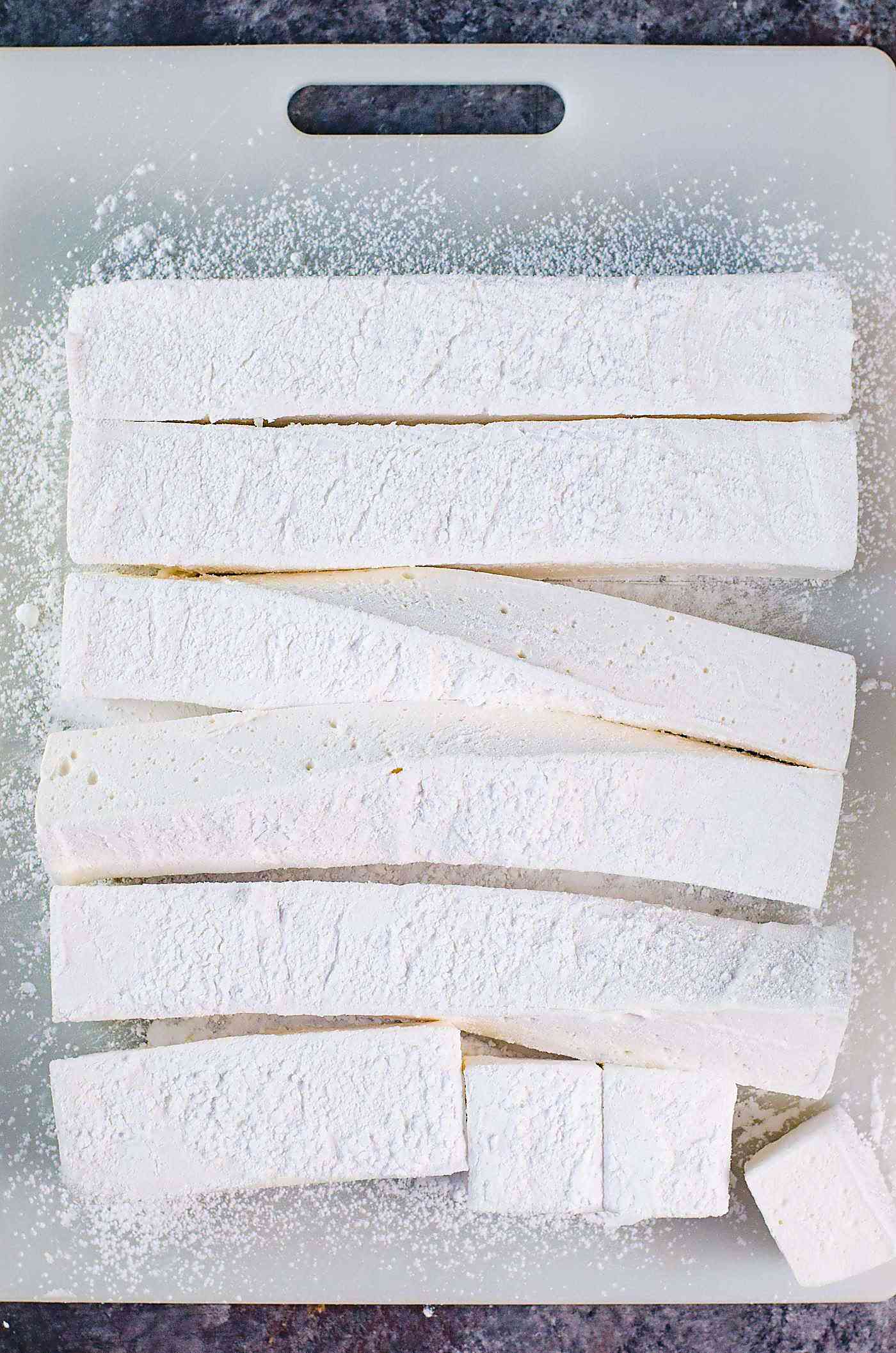
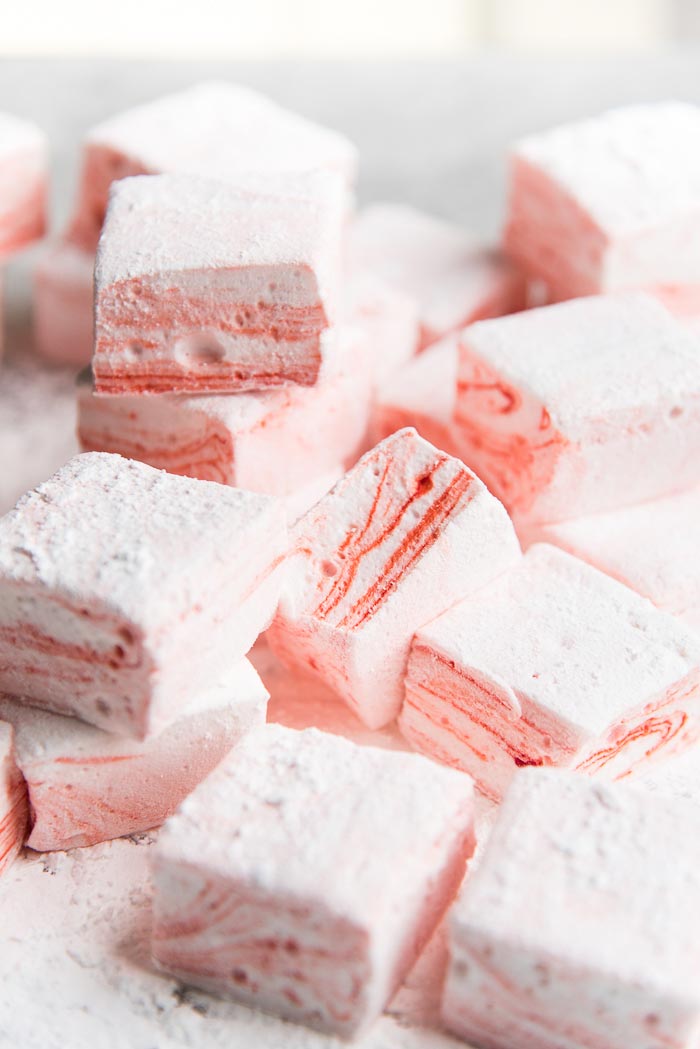
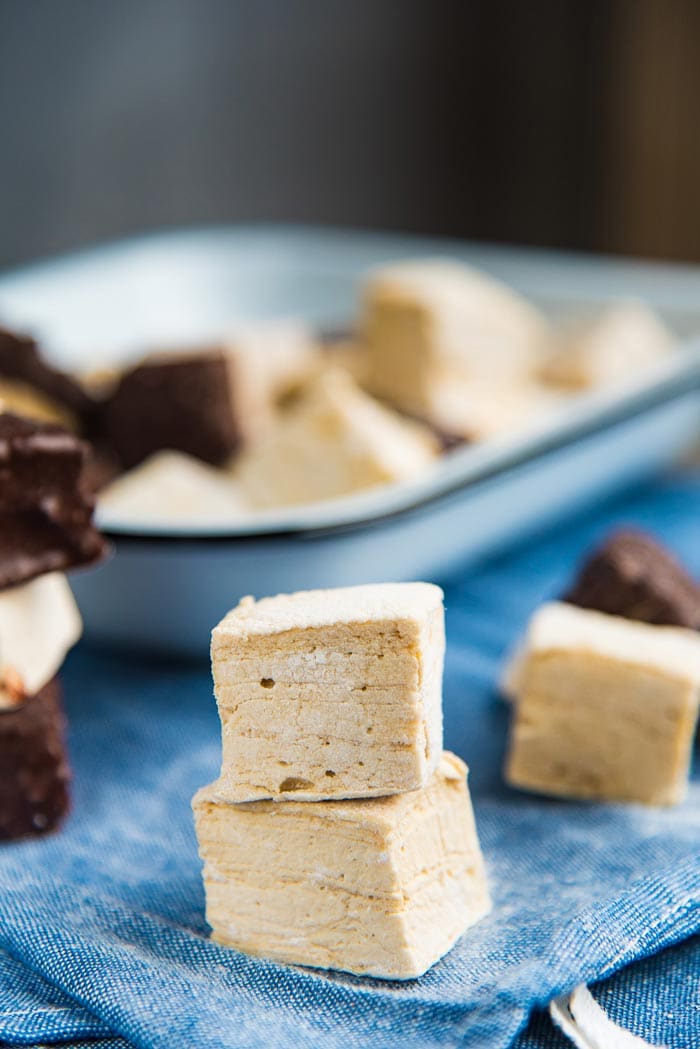
How to make Marshmallows - Learn the art of making fluffy, soft homemade marshmallows with or without corn syrup! With tips and information to make the perfect Marshmallows in many flavors.ย 
Freshly cut Peppermint marshmallows with red and white swirls, on a cutting board with mallow dusting powder.
Butterscotch marshmallows (or buttered rum marshmallows) - soft, buttery and fluffy marshmallows that are easy to make, delicious to eat and perfect for gift giving too!ย 
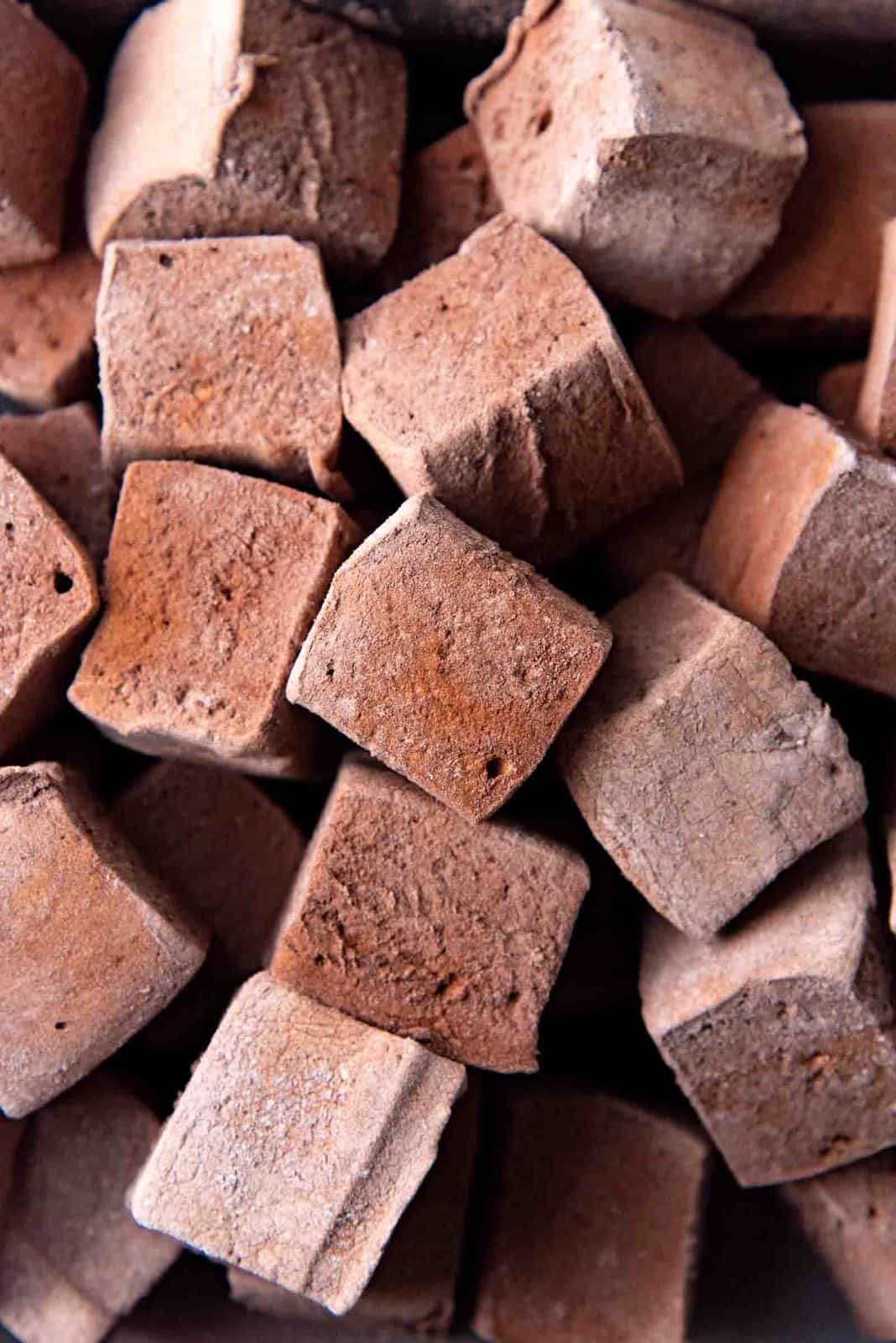
The chocolate marshmallows on a tray
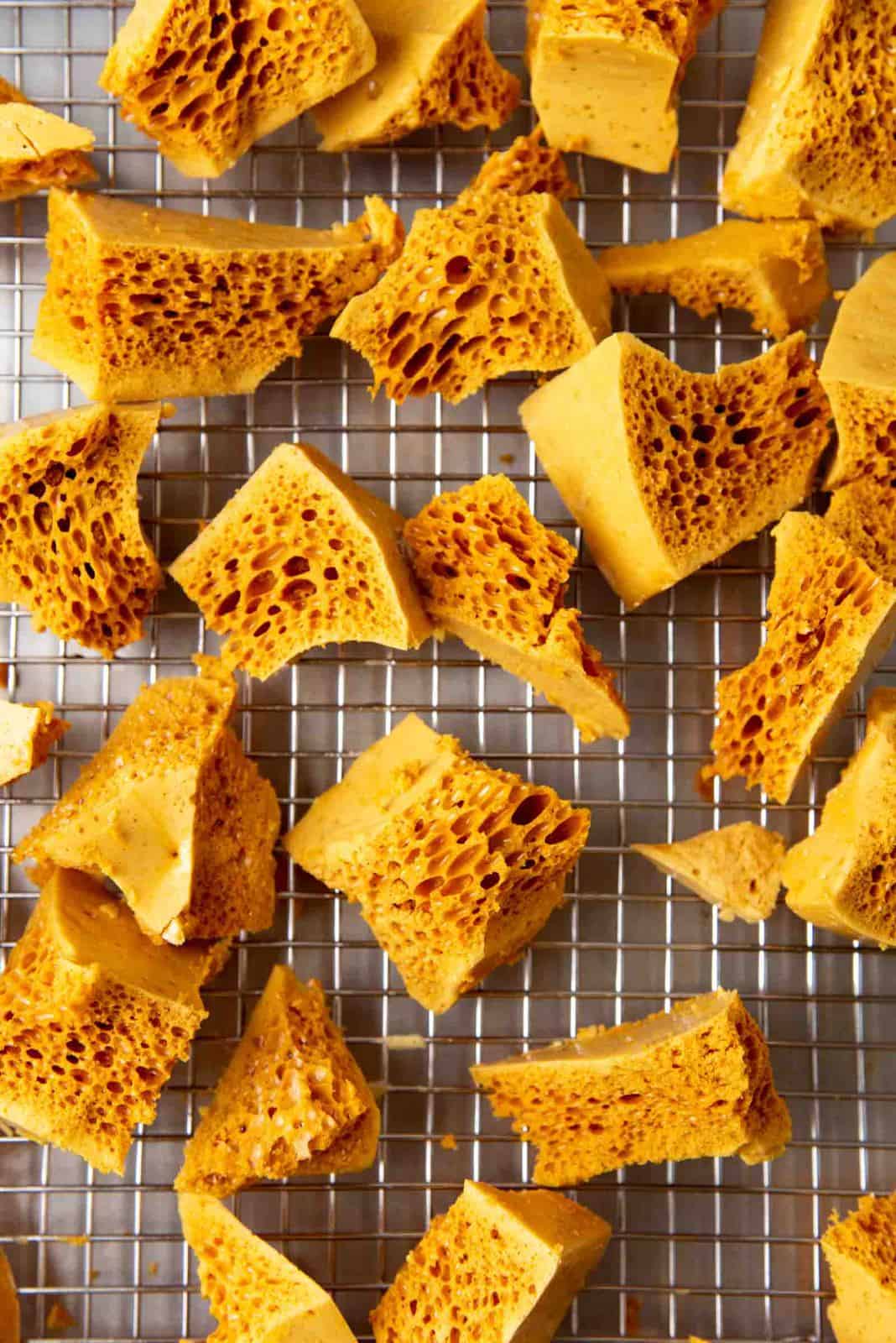
The honeycomb broken to smaller pieces on a wire rack.
A close up of the cracked nut brittle on the baking sheet

Caramel stages

At over temperatures of 320ยฐ F / 160ยฐ C

The sugar concentration is over 99%, and the sugar starts to break down and turn darker in color. Caramel adds a richer flavor to desserts and will always set hard.
At 320ยฐ F / 160ยฐ C, the syrup is still clear, but will rapidly change color as the water evaporates completely and the sucrose breaks down.

Light caramel stage
Light caramel
Sugar concentration; 100%
325ยฐ F – 340ยฐ F

163ยฐ C – 171ยฐ C
Flan / caramel pudding
topping
,
Spun sugar and sugar cages,
Decorative caramel,
Candy coatings for nuts

The caramel is light golden color to golden color. The caramel flavor is light, but it will continue to darken and deepen in flavor as long as there is residual heat.

Dark caramel stage
Dark caramel / burnt sugar
Sugar concentration; 100%
350ยฐ F – 360ยฐ F

177ยฐ C – 182ยฐ C
Great to add a deeper flavor,
Caramel based sauces (sweet and savory),
Caramelizing for creme brulee

The caramel here is a dark amber / dark brown color. It will change color from golden to a dark reddish amber as the temperature rises.
Cooked sugar syrup with dark amber color is also known as burnt sugar. This sugar stage is less sweet, and a little bitter with lots of caramel flavor.
Personally, this is my favorite sugar syrup stage for salted caramel sauce.

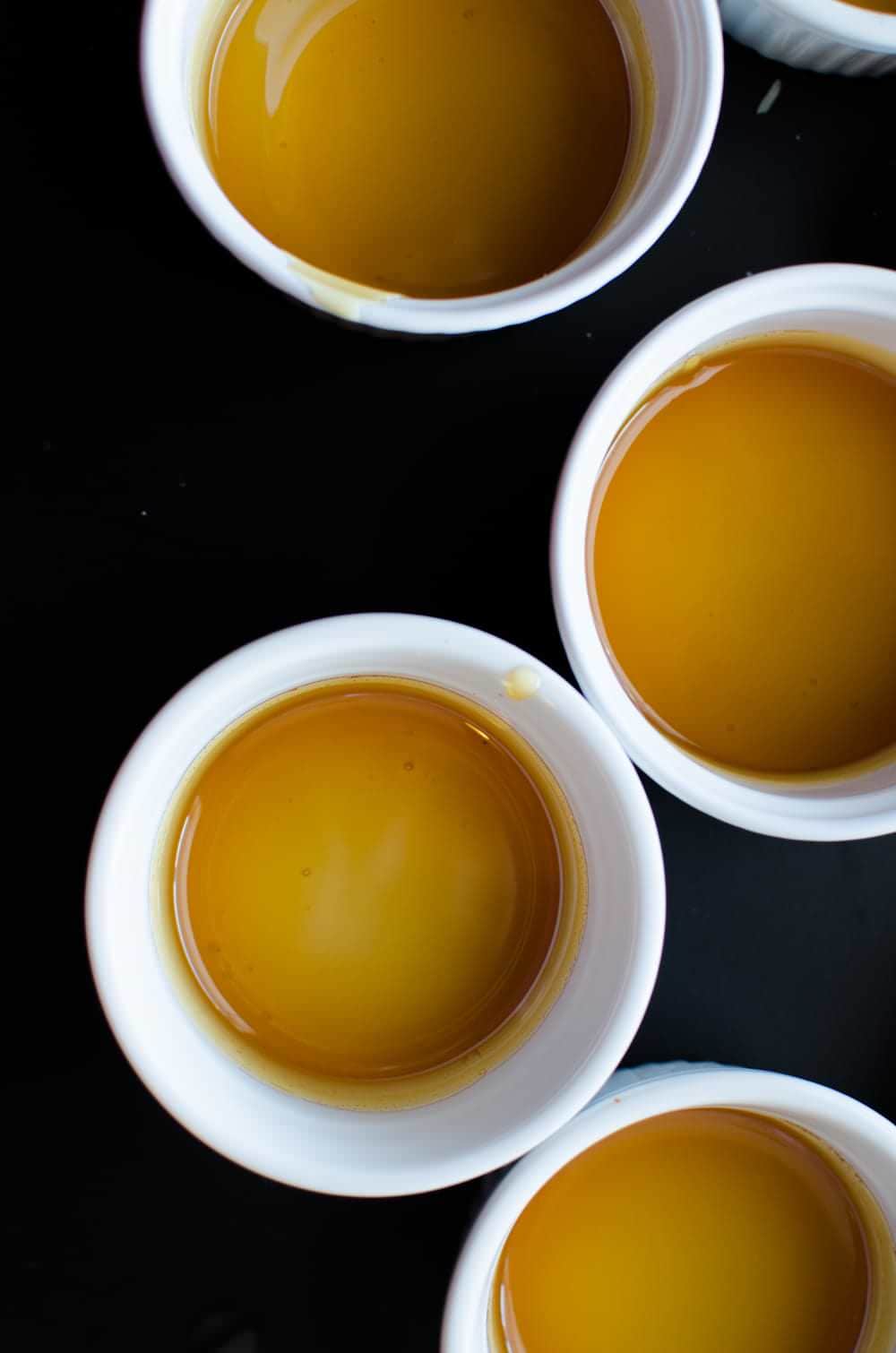
Coffee Flan - Classic Creme Caramel with a wonderful coffee twist! This Coffee creme caramel is made with coffee infused cream! Since it's so easy to make, delicate, super creamy and irrestibly addictive, it is the most requested dessert in our home. REPIN to save. CLICK to get the recipe. #TheFlavorBender
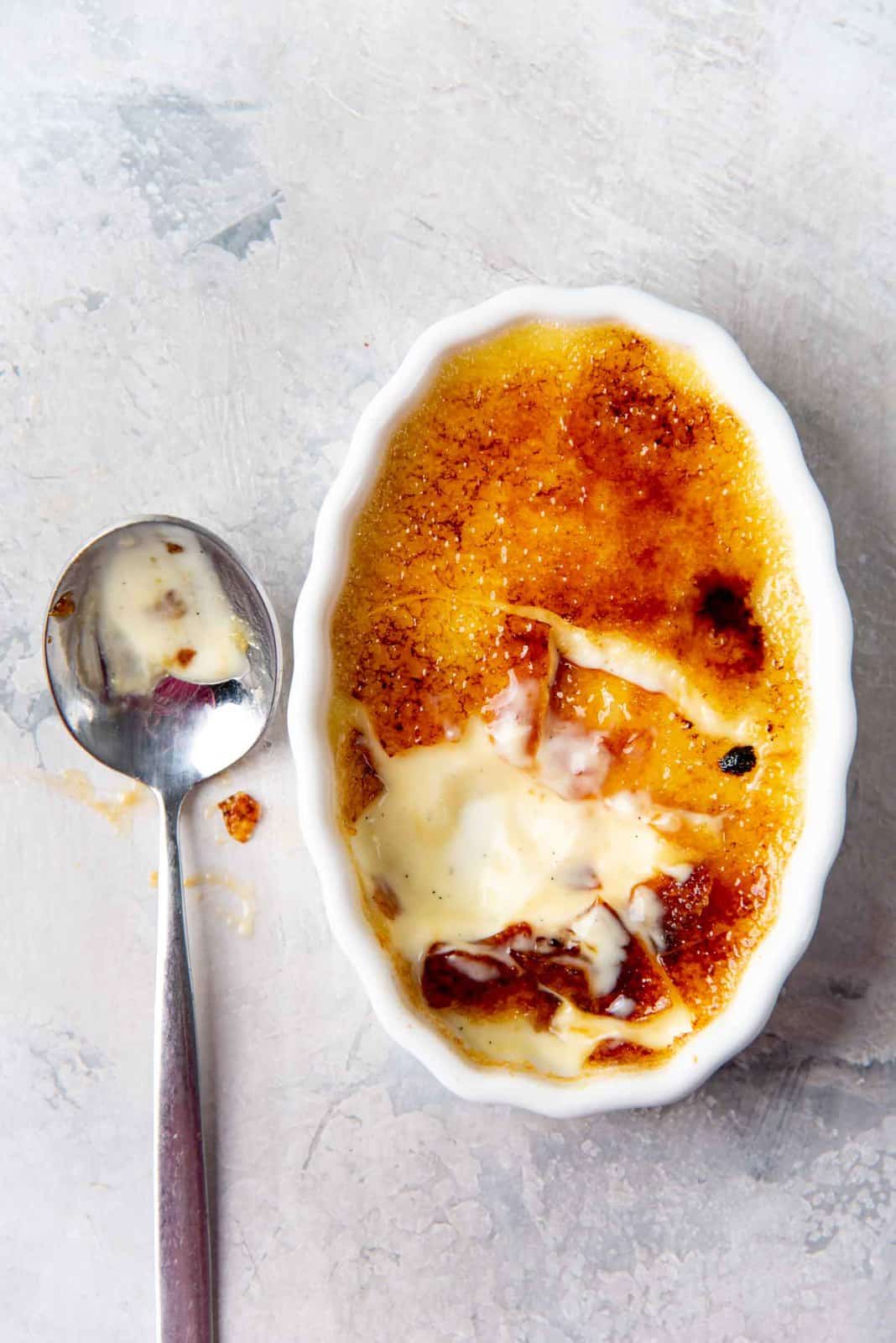
Half eated creme brulee showing the creamy custard underneath
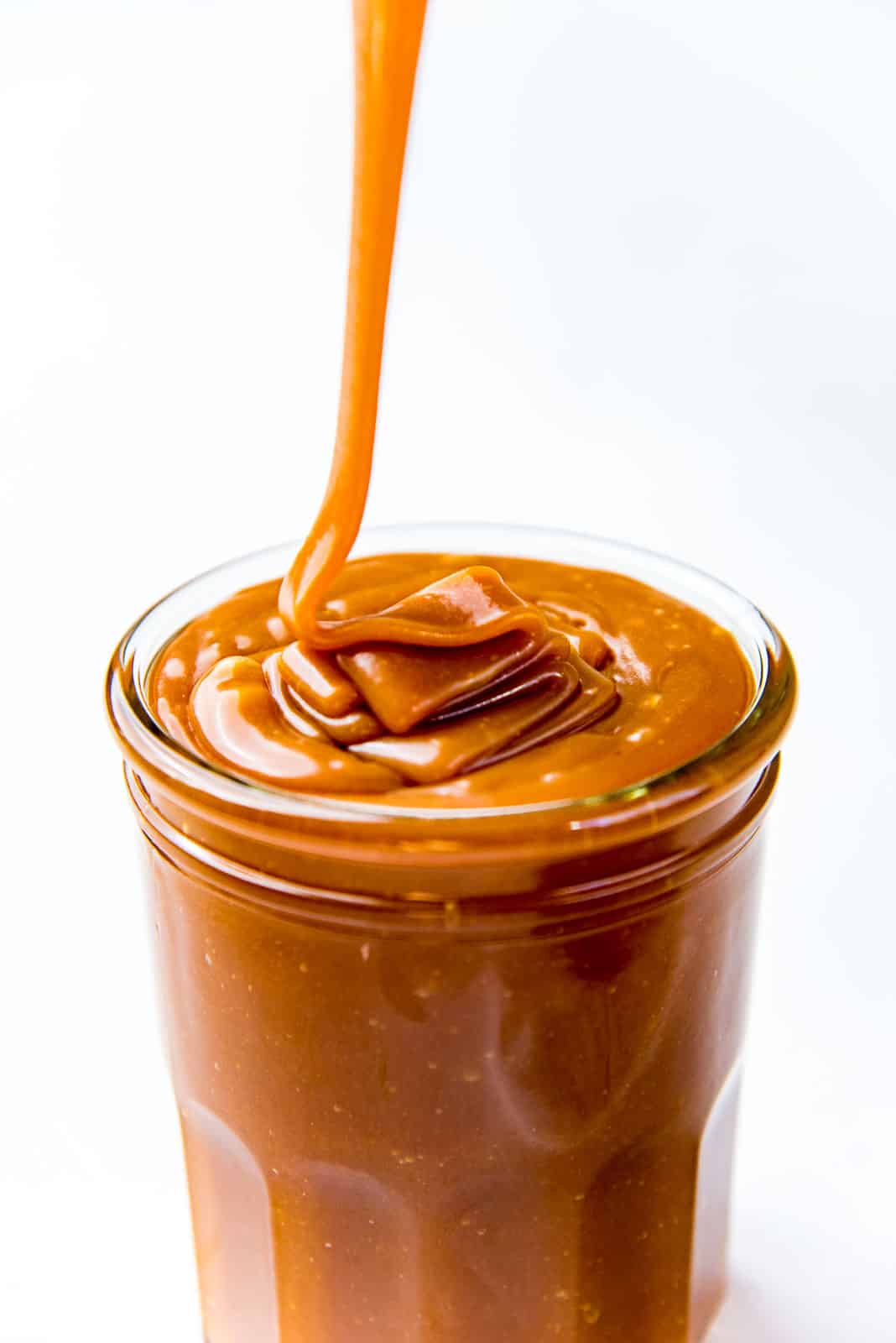
Pouring caramel sauce in glass jars
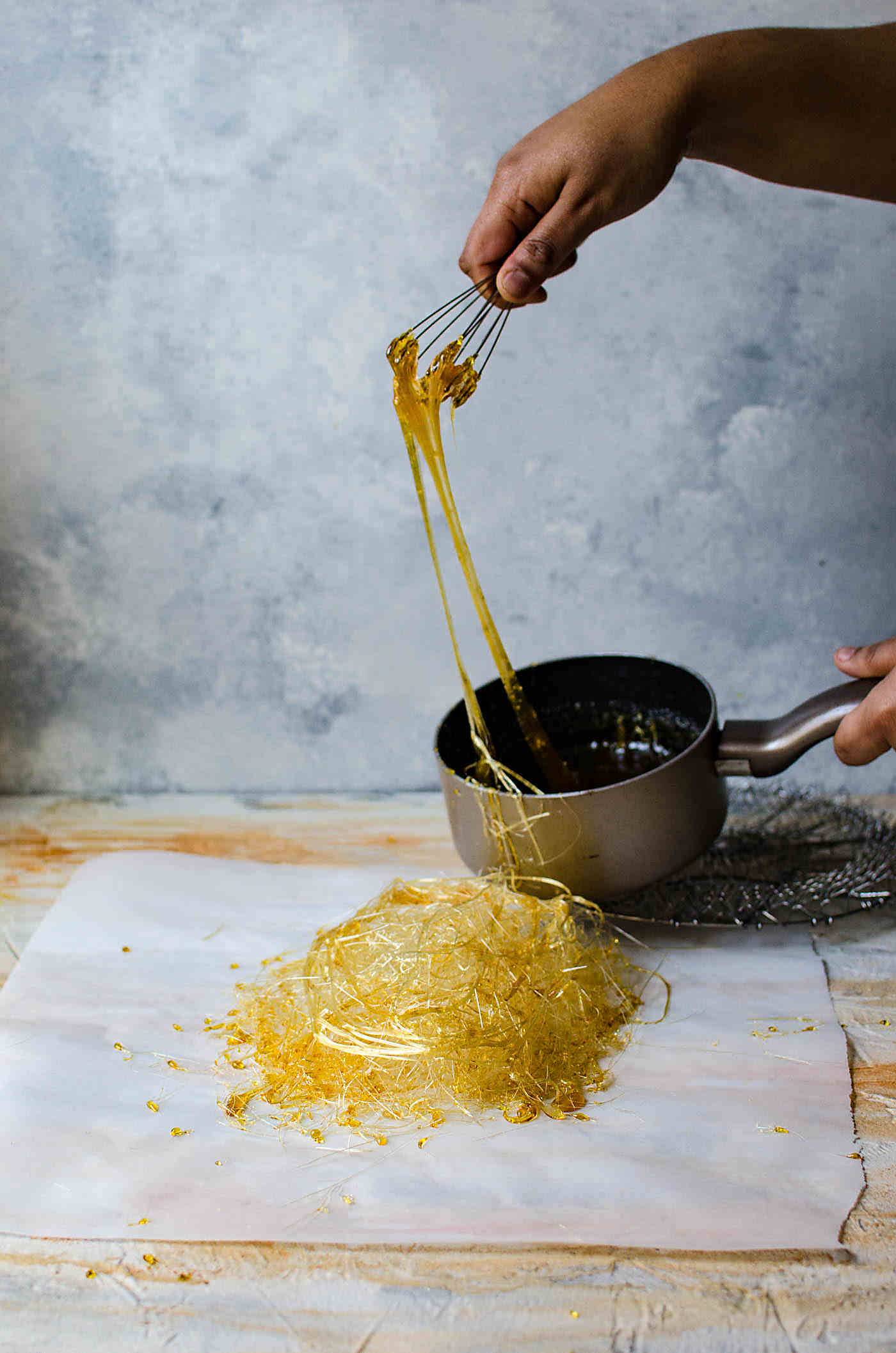
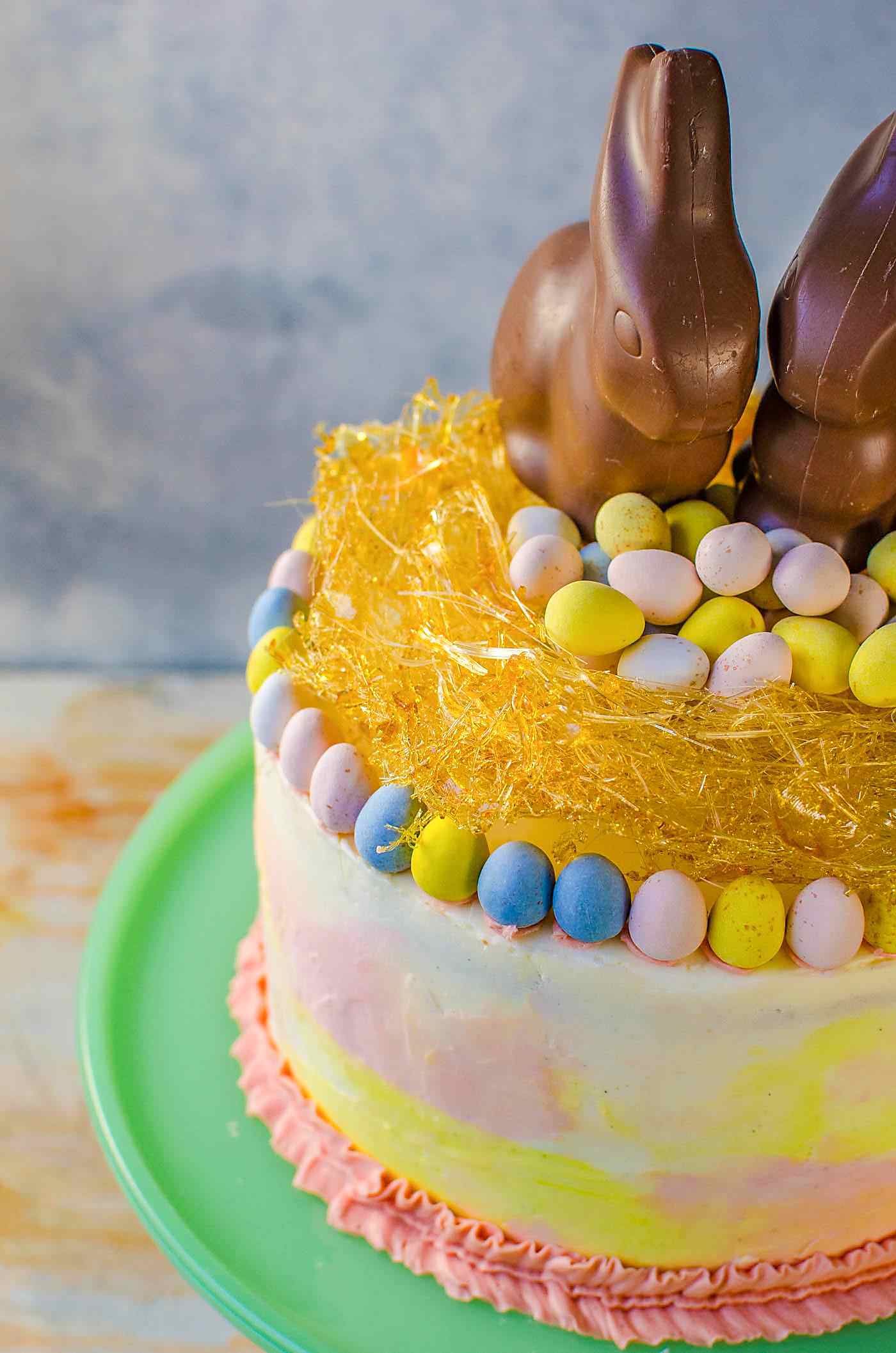
Chai and Vanilla Cake with soft, fluffy Vanilla Buttercream frosting -ย A spectacular swirled Easter cake with a gorgeous pastel watercolor effect, decorated with Easter eggs, chocolate bunnies and a caramelized nest on top! A sunny, happy and outrageously delicious cake to celebrate all of life's special occasions and nostalgic memories!
Dini Kodippili Avatar

About

Dini Kodippili

Dini Kodippili is a professional food writer, recipe developer, food photographer, cookbook author, and baker. Dini has been featured on HuffPost, Cosmopolitan, Forbes, Delish, Food & Wine and more. Learn More

I love hearing from you! Submit your question or recipe review here.

Leave a Reply Cancel reply

Your email address will not be published. Required fields are marked *

Made this? Rate this recipe:


This site uses Akismet to reduce spam. Learn how your comment data is processed.

9 responses

  1. Pamela Mineo
    November 25, 2025

    Hi, been going crazy trying to make sweet potatoes like my mother did. She isn’t here anymore and there is no one to ask. They were served cut in what seemed like quartered and candied BUT the candied part was sticky and kind of hard. All I know and remember is she used brown sugar and dark Karo syrup. Have tried making it bur CAN NOT get t it like gooey candied. Any suggestions?

    Reply
    1. Dini Kodippili
      November 25, 2025

      Hi Pamela!
      I can understand the frustration of not being able to recreate a recipe!
      I’m not familia with making candied sweet potatoes, but I will assume that it uses a sugar syrup to simmer the sweet potatoes in, like with candied citrus peel?

      Do you use a thermometer to check the temperature of the sugar syrup as the potatoes simmer in it? If so, would you know the temperature at which the syrup is at? Are the sweet potatoes hard because of the sugar or because they were not cooked through?
      If the sweet potatoes are coming out sticky and crunchy,it is very likely that the syrup was cooked too long and it reached the hard ball / soft crack stage.

      To keep it soft and gooey, the syrup must stay at a lower temperature (maybe somewhere between the soft ball and firm ball stage).

      It’s hard to provide specific advice without knowing the recipe and the process you follow currently, but I hope this provides some help!

      Reply
  2. Colleen
    January 9, 2025

    Thank you so much for sharing this in such great detail.

    Reply
  3. Colleen Gray
    January 5, 2025

    I would love it a lot more if you could print this.
    I signed up for your email thinking there was a printable version

    Reply
  4. Renuka Satchithananthan
    December 6, 2023

    This is excellent! Might you know the temperature for Sri Lankan Milk Toffee. Please thank you Dini.

    Reply
    1. Dini
      January 3, 2024

      Hi Renuka
      I haven’t checked the temperature with milk toffee unfortunately.
      With milk toffee, I do still go by what it looks like, than the temperature. But the next time I make milk toffee, Ill check and see if I can get an accurate temperature reading. This is harder for milk toffee because it burns so quickly and must be whisked very frequently.

      Reply
  5. Swapna Mazumder
    November 13, 2023

    Thanks for this Dini. I was wondering if you have any suggestions for the sugar stages to make barfi, rasgulla and chamcham. I want to make chamcham where the sugar inside the sweet is slightly crystallized while the outside stays soft and the sweet would be more of a dry sweet instead of syrupy.

    Reply
    1. Dini
      November 13, 2023

      Hi Swapna
      Unfortunately I am not very familiar with all the Indian sweets, so I don’t know if I can provide the best advice.
      As far as I remember, rasgulla and chamcham are desserts that are soaked in syrup. So the syrup is just a rich sugar syrup (2 :1 sugar to water ratio, lower concentration that even the thread stage), and does not need to be cooked to a high temperature. If the syrup does have a high sugar concentration, then it is possible that the desserts will not be able to absorb the sugar syrup because it is too thick. But you can try the thread stage to see if the desserts will still absorb enough sugar syrup.
      Barfi, is usually made with condensed milk, so the sugar syrup stages will be different due to the condensed milk.
      I hope that helps

      Reply
  6. David
    March 17, 2023

    Thank you for your clear explanation of the stages of cooking sugar.
    I have never seen this before

    Reply

Hey There!

Hi! Iโ€™m Dini, a third culture kid by upbringing and a food-geek by nature. I was born in Sri Lanka, grew up in New Zealand and lived in Australia, and then the US, before moving to and settling down in Canada. My food is a reflection of those amazing experiences!

Read More
Front cover of the Secret Layer Cakes cookbook by Dini Kodippili.

The Flavor Bender

Cookbook

Buy now on Amazon!

Recipe Basics

  • How To Make Perfect Choux Pastry

    How To Make Perfect Choux Pastry

  • Flaky All Butter Pie Crust Recipe

    Flaky All Butter Pie Crust Recipe

  • How To Make Homemade Marshmallows (Foolproof Guide)

    How To Make Homemade Marshmallows (Foolproof Guide)

  • The Best Homemade Bread (White Bread Recipe)

    The Best Homemade Bread (White Bread Recipe)

  • Homemade French Croissants (Step By Step Recipe)

    Homemade French Croissants (Step By Step Recipe)

  • The BEST Pavlova Recipe (Step by step recipe and video)

    The BEST Pavlova Recipe (Step by step recipe and video)

Featured On

Master the science of baking!

Get my FREE Printable Cake Pan Conversion Chart!

So youโ€™ll know how to substitute cake pans of different shapes, sizes & volumes in a pinch!

A must have resource for all pro bakers, novice bakers, and aspiring bakers alike!

Download now!

Reader Faves

  • How to make the Best Instant Pot Short Ribs

    How to make the Best Instant Pot Short Ribs

  • Perfect Quick and Easy Rough Puff Pastry

    Perfect Quick and Easy Rough Puff Pastry

  • The Best Spicy Sweet Chili Sauce (Easy Recipe!)

    The Best Spicy Sweet Chili Sauce (Easy Recipe!)

  • The Best Homemade Bread (White Bread Recipe)

    The Best Homemade Bread (White Bread Recipe)

The Flavor Bender

I love baking, cooking, experimenting with flavors and ingredients, and passing on all my tips and tricks to you!

Read More

About

Meet Dini
My Book
Work With Me
Contact

Browse

Recipes
Measurement Guide
Baking How-Toโ€™s
Shop My Faves
Privacy
Disclosure
Terms

Branding by MRD

Theme by OC

Back to Top
  • Facebook
  • Instagram
  • Pinterest
  • X
  • YouTube
142 shares