



Cream puffs are one of the easiest and most impressive desserts to make! A crisp, light, airy choux pastry puff filled with light, fluffy whipped cream. A guaranteed crowd-favorite, perfect for any occasion.
This step by step recipe is based on my popular choux pastry recipe, and it’s paired with a foolproof classic chantilly cream filling.

Picture perfect choux pastry (and cream puffs)
Once you’ve tried my well-loved, tried and true choux pastry recipe, these delicious cream puffs are the natural (and easy) next step.
I’ve been making choux pastry for over 30 years now. That’s a lotta choux. Over those years, and after plenty of trial and error, I’ve figured out the secrets to making the most perfect choux pastry!
My guide to making perfect, foolproof choux pastry is one of the most popular posts on the blog. I’ve also shared a host of other choux pastry-based desserts and recipes on the blog, but these cream puffs are one of the easiest and most requested!
Profiteroles vs cream puffs
Profiteroles and cream puffs are both made with choux pastry. Both of these pastries are usually round, as opposed to eclairs that are long.
The difference between these two is the filling. Profiteroles are filled with pastry cream or diplomat cream or even ice cream. They also usually have a glaze topping as well.
Cream puffs are generally filled with sweetened whipped cream (chantilly cream). Personally, I prefer not to add a glaze to my cream puffs. Though I’m not opposed to a dusting of confectioner’s sugar, or a crispy craquelin even.

Why this recipe works

- This is a well-tested, foolproof, reader-favorite recipe. I’ve shared all the tips I’ve picked up over many decades of making choux in this post and the detailed recipe video!
- You also have access to my comprehensive troubleshooting guide on choux pastry, where I explain why you get deflated choux pastries and lots of other common issues, so you can avoid all that.
- My stabilized whipped cream recipe is also extensively tested to guarantee smooth, light whipped cream that’s perfectly pipeable and does NOT deflate!
How to make cream puffs (step by step overview)
Step 1 – Making the cooked choux pastry dough
- First, make sure to have all the ingredients weighed and ready to go.
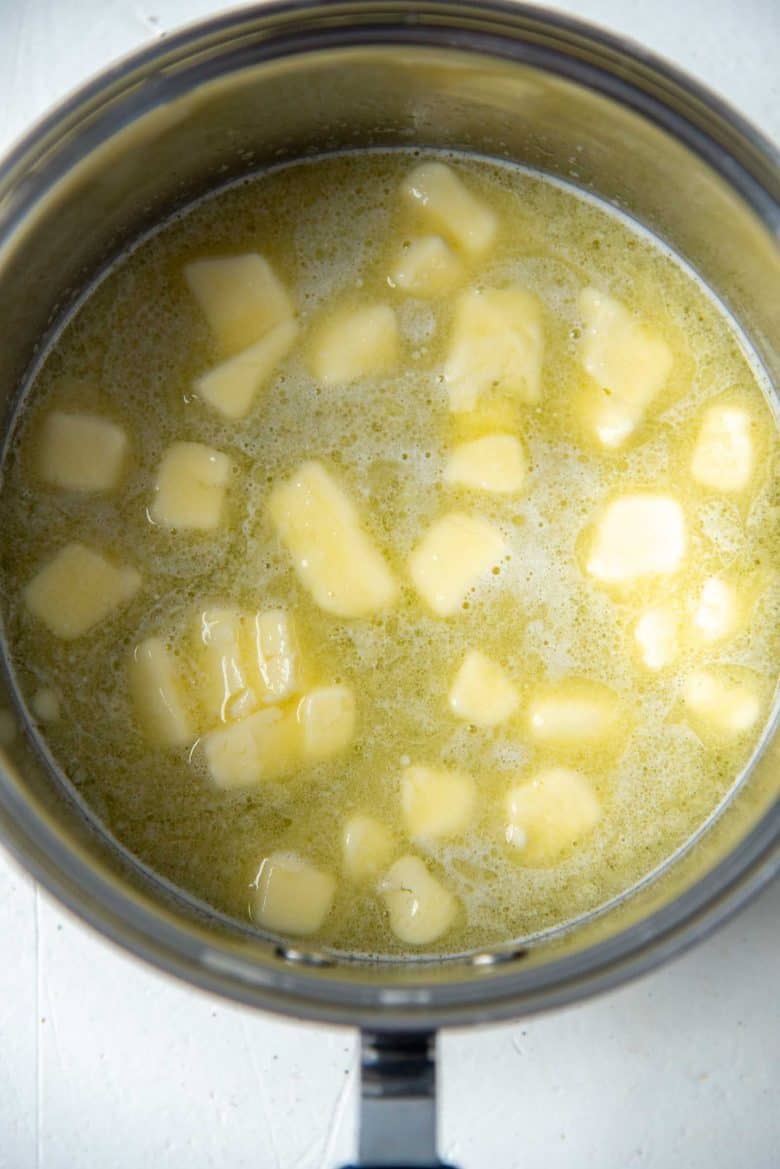
- Next, place the liquid (water and / or milk) and cubed butter, along with salt and sugar in a saucepan.
- Heat the water over medium high heat while stirring to melt the butter, salt, and sugar, and then bring the water to a boil.
- Remove the pot from the heat and tip all of the flour into the water. Mix the dough well with a rubber spatula or wooden spoon, until the water absorbs all the liquid and forms a soft dough.
- Heat the dough that’s in the saucepan over medium heat (or lower), while stirring the dough constantly for about 1 – 3 minutes if needed.
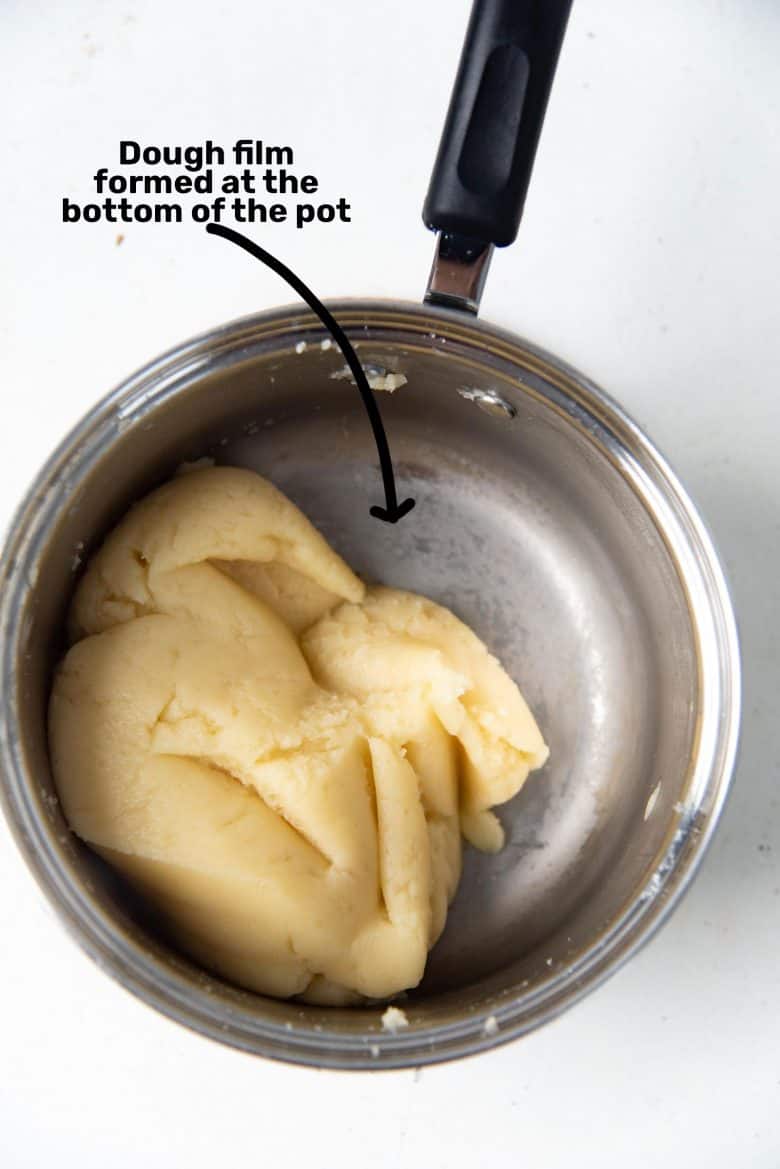
- You’re only cooking the dough to get a nice lump of soft dough that looks a little like mashed potatoes.
- If you’re using a stainless steel pot, you may find that the dough creates a thin film on the bottom of the pan. If the dough becomes oily and splits, then you’ve cooked the dough too long.
Step 2 – Adding eggs to the dough
- Place the dough in a bowl and mix it a little to let it cool down. A minute or two at most. Don’t add the eggs while the dough is too hot, since this could “cook” the eggs and give the final cream puffs an eggy taste.
- Adding the eggs is a crucial step, so keep an eye on the dough. You can use a spatula, hand mixer, or even a stand mixer for this step.
- Add one egg at a time, and mix it in well before adding the next. At first, the dough may seem to form slimy lumps, but keep mixing until the eggs fully incorporate.
- The last egg should be whisked in a bowl, and added a little at a time until you get the right consistency.


Choux pastry troubleshooting
I shared all the secrets to making PERFECT choux pastry in my original choux pastry post, where I answer all choux related questions such as,
What should be the consistency of the choux dough?
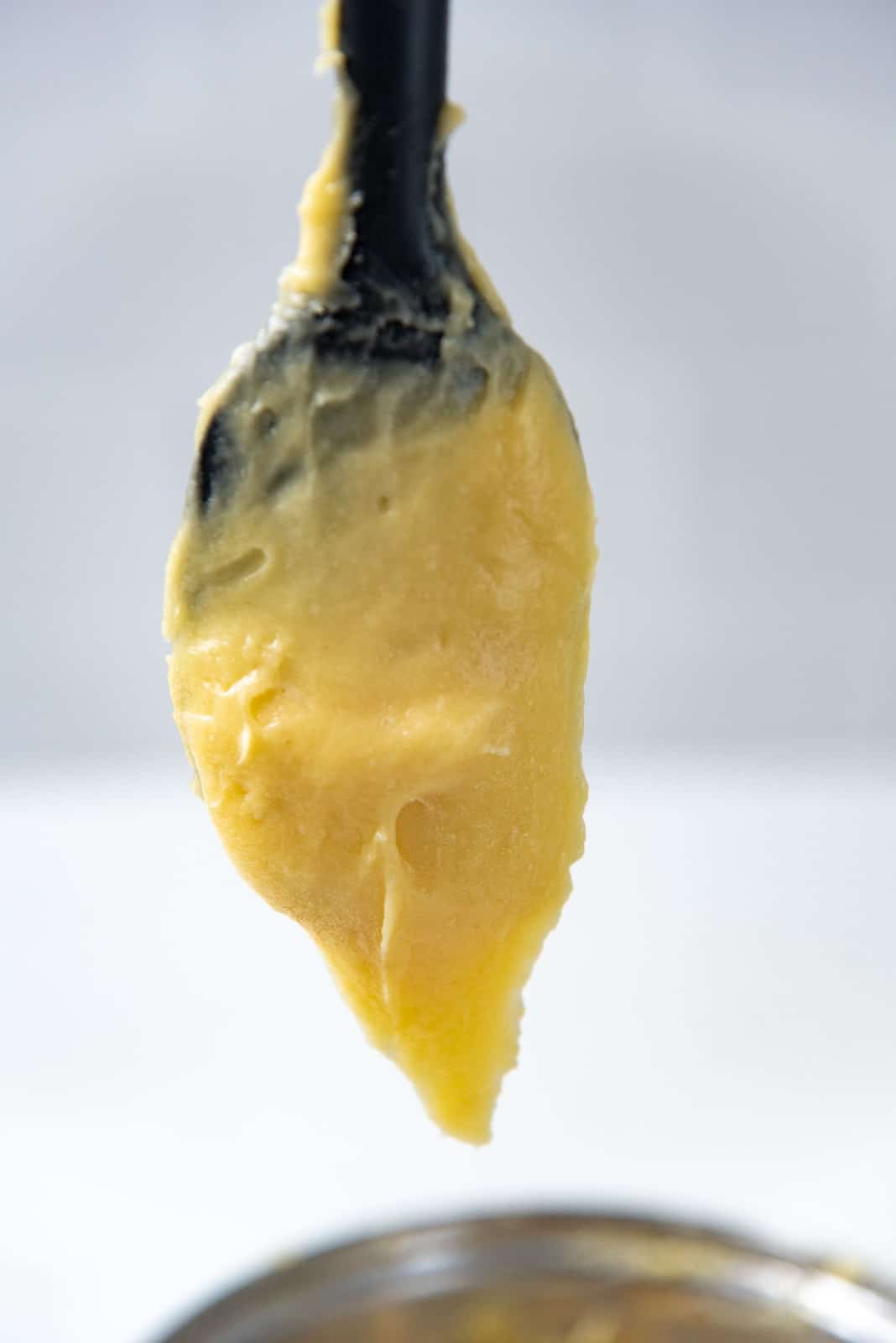
Thick, but pipeable, with a slight sheen on the dough. If you add too much egg, the pâte à choux for the cream puffs may become flat and deflate while baking.
Another test is to lift your spatula with some of the dough, and if the dough forms a V shape at the end of the spatula (as shown below), then it’s ready!
Why is my choux pastry flat, deflated, and soggy?
This usually happens because the dough was too runny, but there could be other reasons.
Find out why that happens, and how you can prevent it next time!
My pastry shells have too many cracks (or they look irregular)?
There are a few reasons why this can happen. You can read all about the reasons why your choux puffs look irregular, AND how to avoid it.
Why are my pastries doughy, dry, and crackly?
The mark of a perfect choux pastry is the light, crisp pastry, with a hollow inside that has a custard-like, soft center. If yours came out dry, doughy and heavy, it could be any one of these reasons.
Can I use other types of flour?
You can! Cake flour can give you a lighter, thinner crusted choux pastry, but it might be too soft if you want choux puffs that have good structure and won’t get soggy too quickly.
You can also use bread flour. The resulting shell can be thicker and more sturdy. It’s ideal for eclairs though where you want the pastry to hold its shape better, and not get soggy too quickly.
Step 3 – Piping the choux pastry dough
To make this cream puff recipe you’ll need to pipe the dough to form round pastry puffs. Here are a few tips you can follow to get properly baked round puffs.
- Place the dough in a pastry bag, with a pastry tip that’s about 1/2 inch in width. The tip can be a round tip or a French star tip.
- Use baking sheets with parchment paper to prevent the puffs from sticking. Use good quality parchment paper.
- Pipe the dough at a 90 degree angle. This will make sure that it rises straight up, rather than at an angle.
- Pipe the dough as smoothly as possible (and not like a poop emoji!). This prevents the dough from baking in a lopsided way, with fewer pockets.
- Press down the tip of the piped dough mound with a moistened finger.
- If you don’t have a piping bag, you can use a ziploc bag with the tip cut off. You can also use a small scoop that has a 1 1/2 or 2 tbsp capacity.


Optional steps for making choux puffs
These steps are optional for making the choux pastry for cream puffs.
- Brush the tops of the choux pastry dough mounds with egg wash for a slight sheen on the baked puffs.
- Dust the tops of the dough mounds with confectioner’s sugar. This will create a slightly sweet and caramelized top.
Step 4 – Baking the choux puffs
- Unlike other recipes online, I prefer to bake these puffs at a constant oven temperature. If I’m making very large puffs, I may increase the temperature for just a few minutes at the start to give the pastries a boost to expand better.
- But at this size, I prefer to maintain a constant temperature of 375 F. This way, I can bake multiple batches one after the other without worrying about changing the temperature.
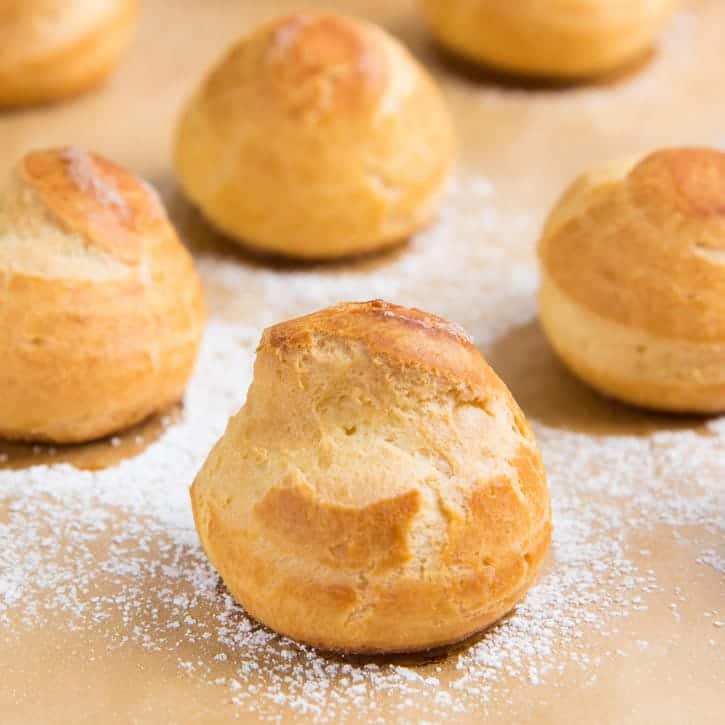
- The bake time is around 35 – 40 minutes, until the pastries are a beautiful dark golden brown in color.
- Make sure to prick the cases towards the end of the baking time to allow the steam to escape and for the cases to slightly dry out. This will prevent the pastries from collapsing when you remove them from the oven.
- Allow the choux pastry puffs to cool completely on the baking sheet or wire rack. Then they’re ready to be filled!

Step 5 – Making whipped cream filling
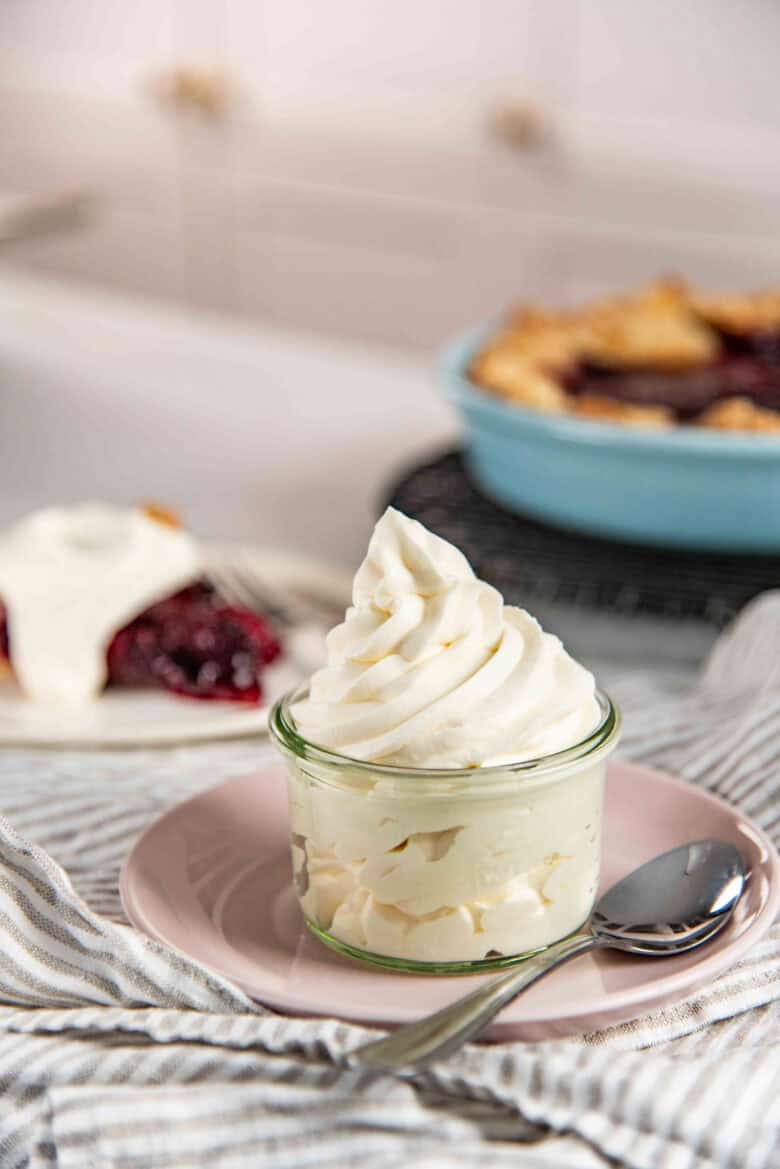
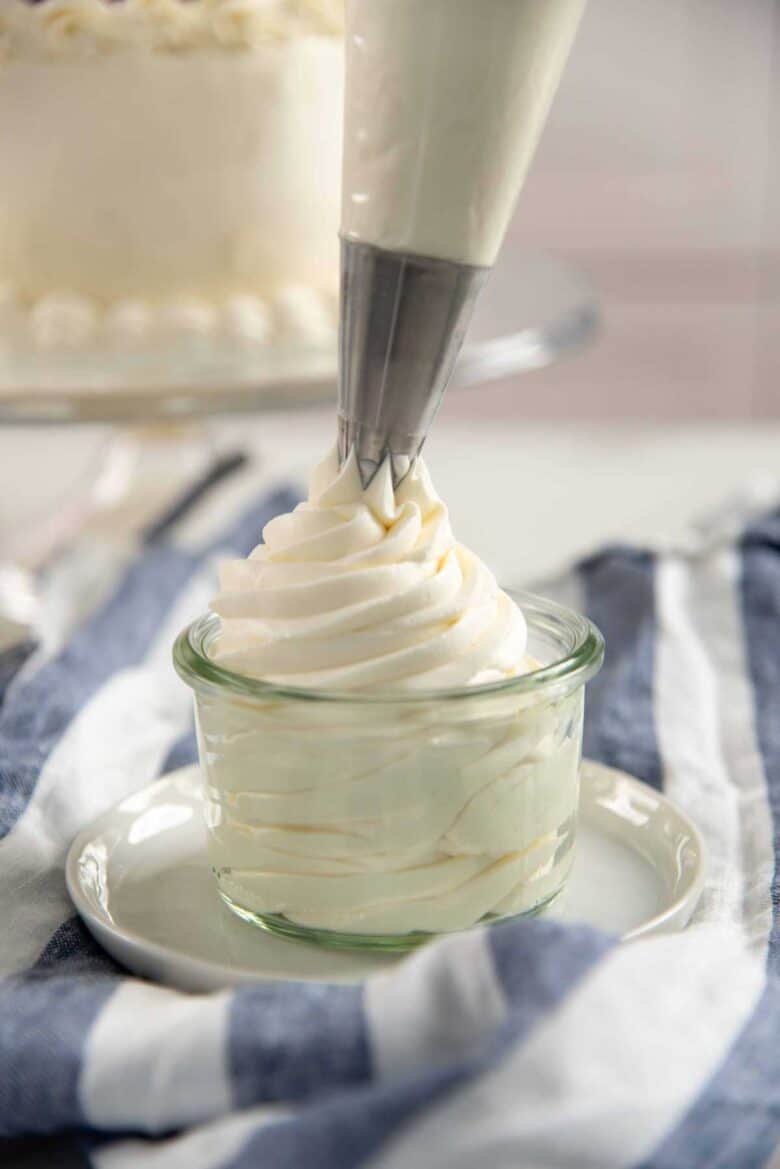
There are two ways to make sweetened whipped cream (chantilly cream) for cream puffs.
When I’m making cream puffs for my family, I simply whip some heavy cream with confectioner’s sugar and vanilla, and call it a day.
However, if I’m serving these bad boys to guests, and I need the puffs to look great and last longer, then I fill them with stabilized whipped cream.
My favorite method of making stabilized whipped cream is to add gelatin. But you can use confectioner’s sugar or cornstarch as well.
Tips to make chantilly cream and troubleshooting
- Whip the heavy cream on medium speed. Especially if you’re not using stabilizing ingredients (gelatin, cornstarch etc). It’ll take longer, but heavy cream that’s whipped at a lower speed, and for longer, will be more stable.
- Bloom the gelatin and microwave it just enough to melt the gelatin. Do NOT let it boil, since this can affect the efficacy of the gelatin.
- Temper the gelatin with a little cold cream.
- To prevent clumping of the gelatin in the whipped cream – add the gelatin into the cream in one go, while whisking on high speed. Do not add the gelatin directly onto the whisk of your mixer. But do whisk the cream quickly right where you added the gelatin, immediately after adding it.
- The goal is to get the gelatin mixed into the cream as fast as possible, without it touching the whisk when added.
- Once the gelatin is mixed in, immediately lower the speed of the mixer, and whisk until you have stiff peaks (which are also smooth).
What’s the best stabilizer for whipped cream?
For this recipe, you can use gelatin OR clearjel or instant vanilla pudding mix. They all work well.
I’ve talked about all the different whipped cream stabilizers that I’ve tested and the results I got here. Personally, I like gelatin.
Can I overwhip stabilized whipped cream?
It’s definitely harder to overwhip stabilized whipped cream compared to regular whipped cream. That’s why I prefer to use gelatin stabilized whipped cream.
Why is my whipped cream looking grainy?
Whipped cream looks grainy when it’s overwhipped. Overwhipped whipped cream can sometimes be fixed.
Check out how to fix overwhipped whipped cream here.
My stabilized whipped cream is too stiff
If you used gelatin, the whipped cream can set if not used immediately (or the next day).
But the good news is you can stir the whipped cream to make it smooth and pipeable again.
Will this hold its shape in warm weather?
Yes it will! I’ve tested stabilized whipped cream under different warm conditions, and stabilized whipped cream did great in warm conditions.

Step 6 – Filling the puffs with whipped cream
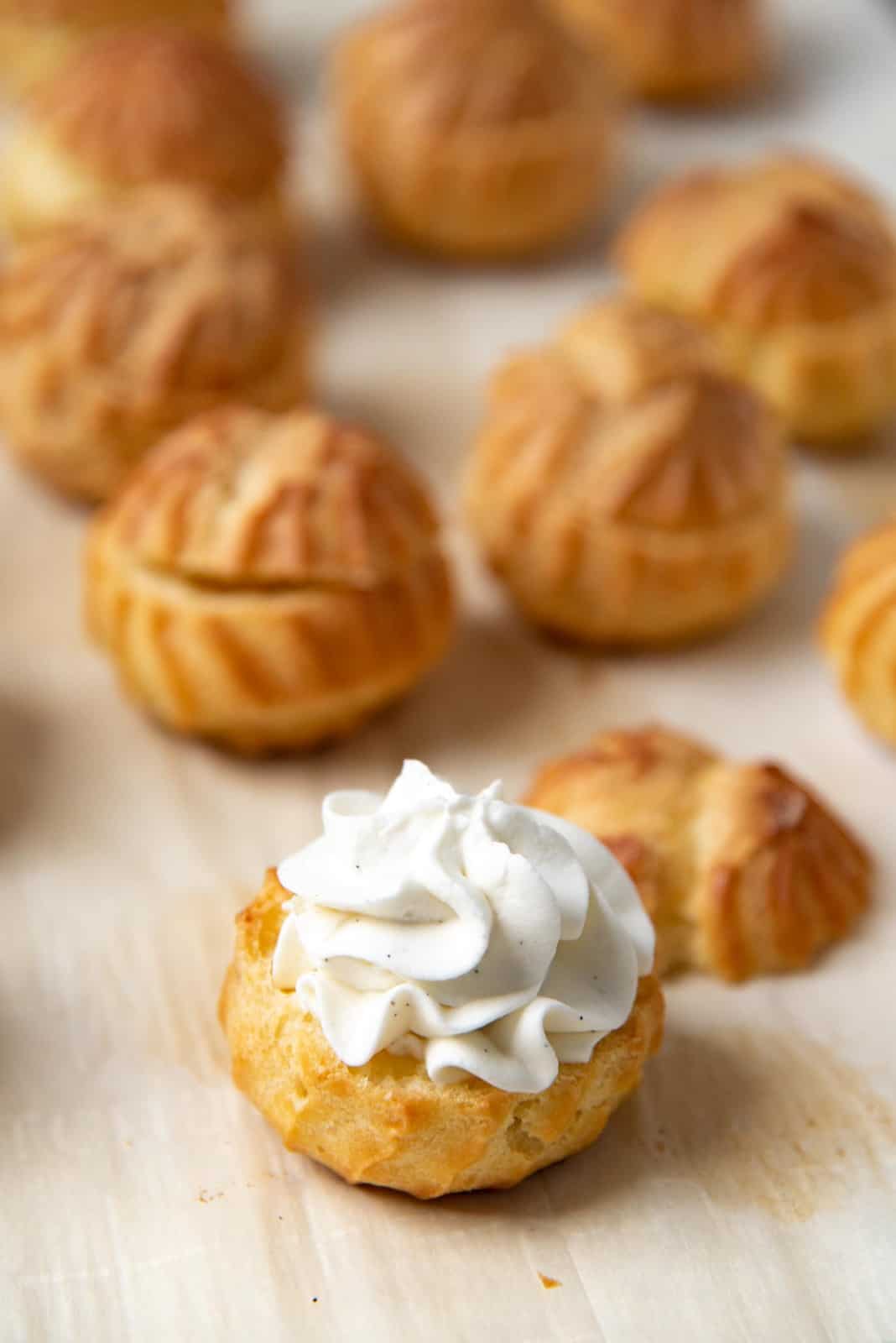
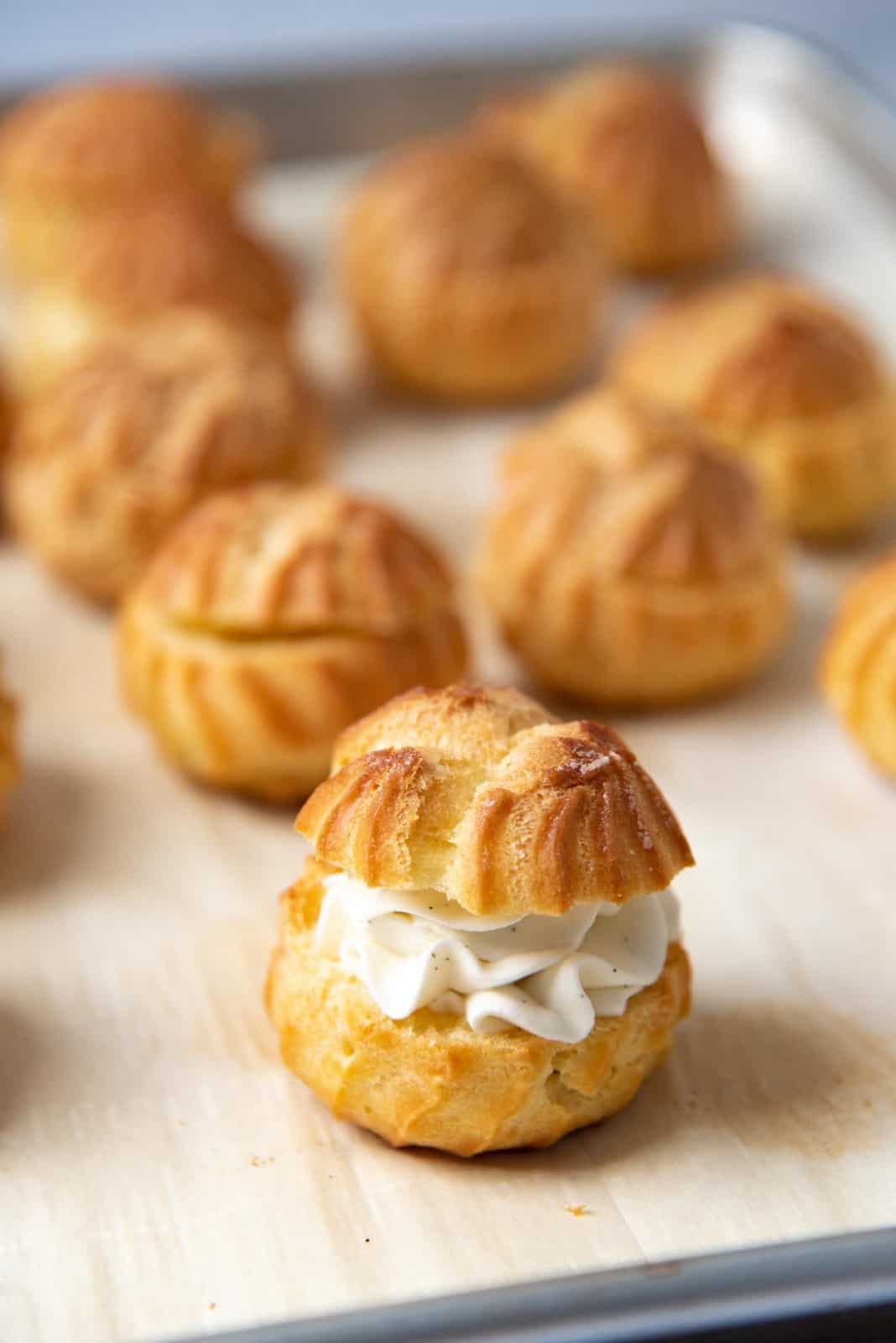
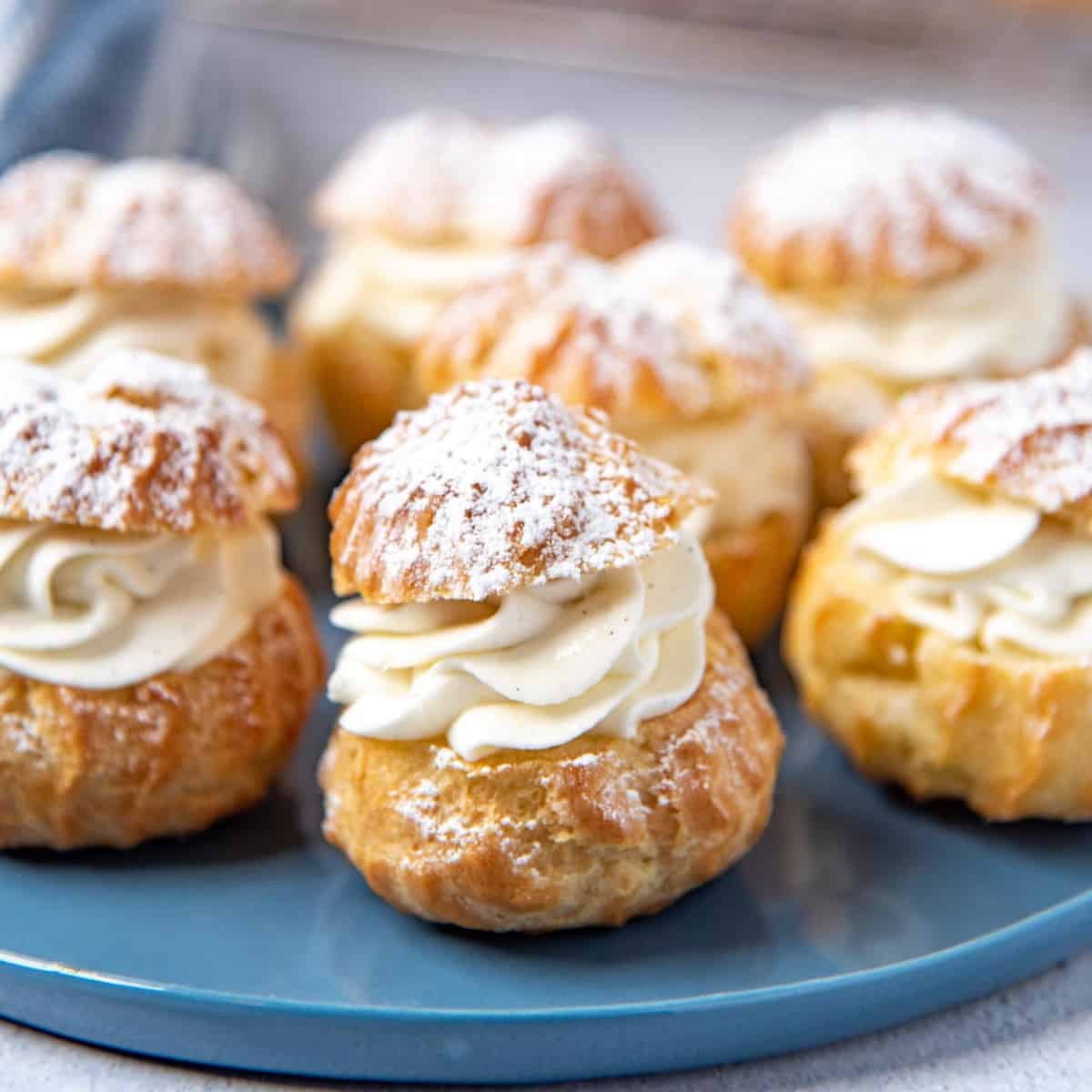
As you can see in the photos, these cream puffs are filled with a swirl of chantilly cream. This method of filling is visually more appealing, since you can see the fluffy whipped cream swirl.
Honestly though, I just prefer to fill the choux puffs with enough whipped cream to fill the cavity inside. No cutting choux pastry in half, no swirling the cream. Just get it in mah belleh, asap.
Cream puffs with swirled whipped cream filling (prettier option)
- Place the whipped cream filling in a pastry bag, attached with a star piping tip.
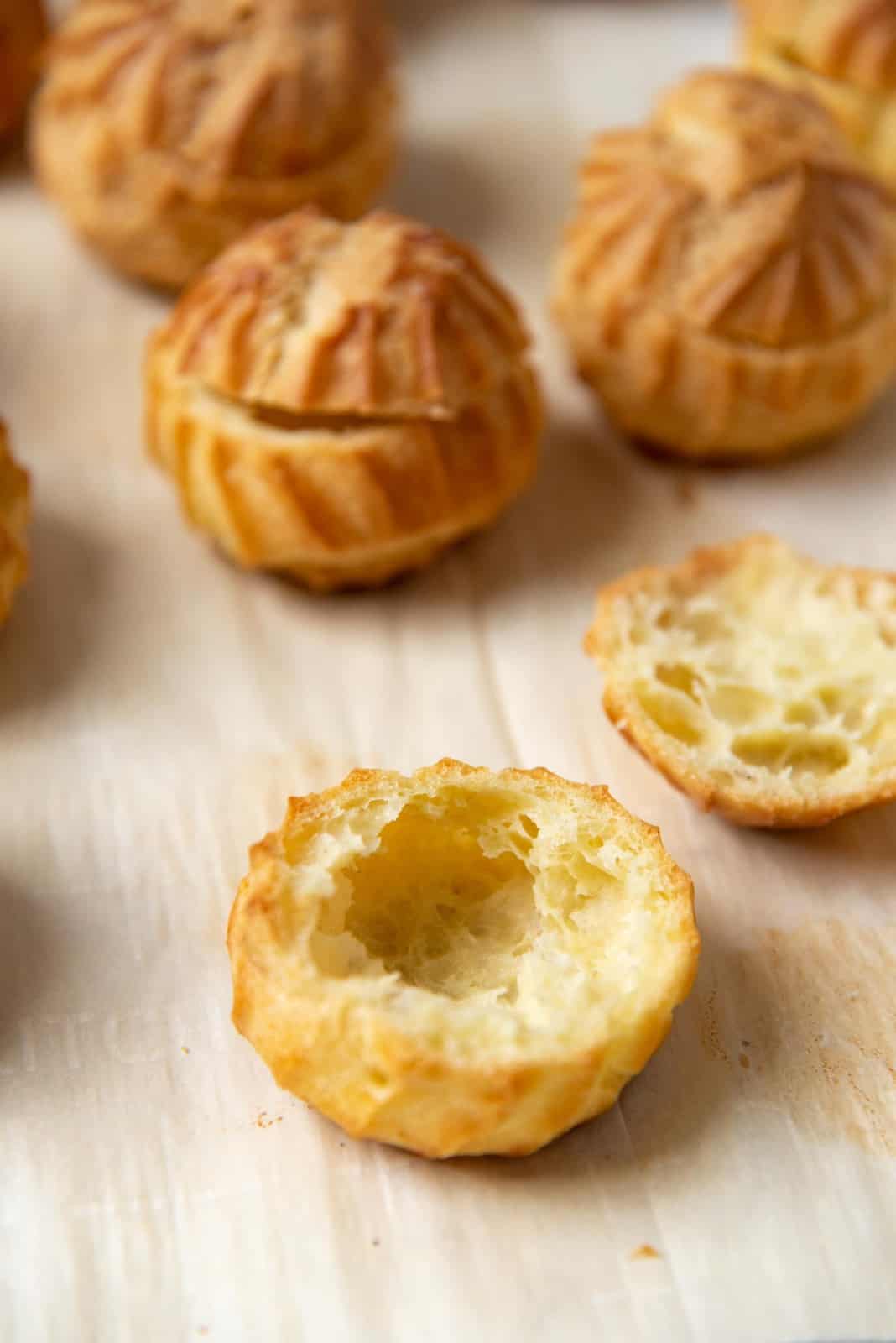
- Cut the top 1/3 of the pastries to create choux pastry “lids”. You can also only partially cut the top of the pastry. Remove any choux pastry webbings in the bottom of the pastry.
- Fill the bottom with whipped cream, while swirling the cream on top.
- Place the cut “lids” back on the cream puffs. Dust with confectioner’s sugar, and serve.


Filling the choux pastry cases (my preferred method)
- Fill a pastry bag with the filling. Attach the pastry bag with a bismarck tip, or a small round tip (about 1 cm or a little less).
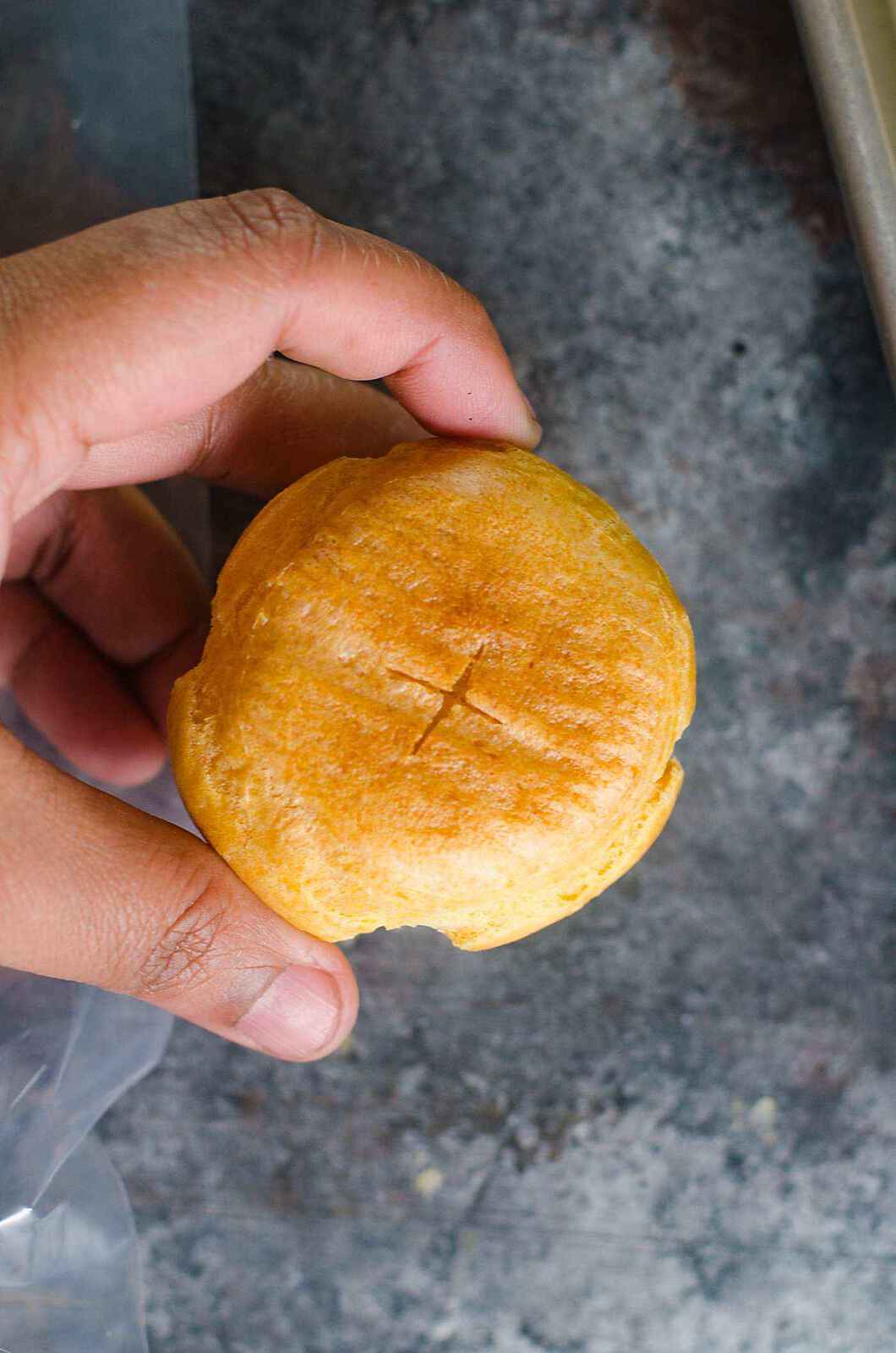
- Make a hole in the bottom of the puff using a knife or a small piping tip (round or French star).
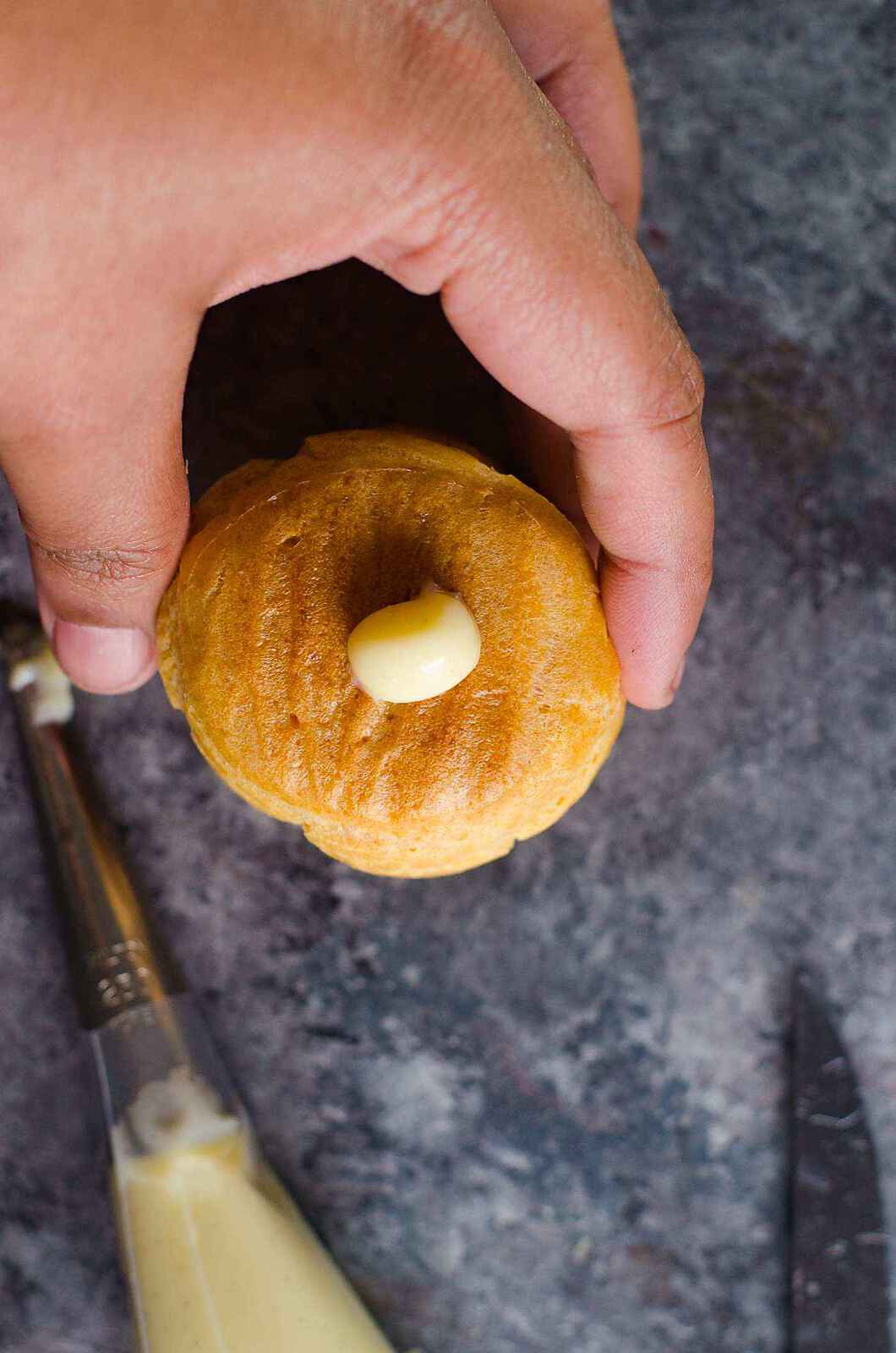
- Insert the tip of the piping bag into the pastry through the hole, and squeeze in whipped cream to get puffs that are filled with cream.
- Dust with confectioner’s sugar, and serve.
Recipe variations
- Add some cocoa powder to the heavy cream to make chocolate whipped cream.
- Or make double chocolate cream puffs filled with chocolate whipped cream.
- Strawberry cream puffs – Add berries to the bottom pastry, or make a strawberry whipped cream filling.
- Coffee cream puffs – Serve with coffee whipped cream filling.
- Choux au craquelin cream puffs – Place a cookie topping on each pastry to create craquelin cream puffs with a delightfully crunchy topping.
- Cookies and cream puffs – Add crushed cookies (oreos) to the chantilly cream to make cookies and cream cream puffs.

How to store these for later
- The best way to store choux pastry is to freeze baked and UNFILLED cases in an air-tight container.
- When you’re ready to fill them, reheat the cases in the oven to make them crisp again. Once cooled, they can be filled and served.
- If you do have filled cream puffs that are leftover, these can be placed in an air-tight container and frozen too. I find that they become stale in the fridge very quickly, so I always prefer to store leftovers in the freezer. Since the filling is so light, the cream puffs de-frost at room temperature pretty quickly.
- To dress up your leftover cream puffs, serve them with a berry coulis, chocolate ganache, or salted caramel sauce.
I LOVE making choux pastry. Absolutely ADORE it, in fact. I could probably make it with my eyes closed. It’s my go-to, whenever I crave something quick, simple, and sweet.
And once you are familiar with the dough, you’ll find that choux pastry is such a satisfying and straightforward dessert to make. And pretty soon, you’ll be pumping out (piping out?) batch after batch after batch!

Recipe
Perfect Cream Puffs
US based cup, teaspoon, tablespoon measurements. Weight measurements are recommended for accurate results whenever available.
Common Measurement ConversionsVideo
Ingredients:
Choux pastry
- 236 g water 1 cup (you can use ½ milk and ½ water, or all milk instead as well)
- 115 g unsalted butter 1 stick (cubed and at room temp.)
- 145 g all purpose flour sifted, approximately 1 ⅛ cup (measured by spoon and level method)
- 4 large eggs each egg about 2 oz / 57 g (you might not need to use all of the eggs)
- ½ tsp sea salt use less if using table salt or fine salt
- 1 tbsp white sugar optional
- ½ tsp vanilla extract optional
Chantilly cream (stabilized sweetened whipped cream)
- 1 tsp powdered gelatin 225 bloom strength
- 1 tbsp water
- 2 tbsp heavy cream to temper the gelatin mixture
- 360 mL chilled heavy cream 1 ½ cups. 35% fat
- 30 g confectioner’s sugar ¼ cup
- 2 tsp good quality vanilla extract or vanilla bean paste
- ¼ tsp sea salt use less if you’re using table salt
To serve
- Confectioner’s sugar
Instructions:
Choux pastry
- Place salt, water, sugar (if using), and butter in a saucepan, and heat over medium high heat, stirring occasionally to melt the butter, salt, and sugar.236 g water, 115 g unsalted butter, ½ tsp sea salt, 1 tbsp white sugar
- When the water is starting to boil (butter should be melted at this point), remove the pot from the heat, and immediately add the flour in one go and vigorously mix the flour in so that it absorbs all of the water. Use a spatula or wooden spoon to do this.145 g all purpose flour
- When the flour has absorbed the water and it's coming together to form a dough, return the pan to the stove (low / medium heat – depending on your stove).
- Cook the dough for 1 – 3 minutes while constantly mixing the dough and moving it around in the pan. The dough will pull away from the sides of the pan and form a film on the bottom of the pan (if using a stainless steel pan). It should look like a lump of smooth, dry mashed potatoes. (The cook time will vary depending on your stove top.) If you do this for too long, the butter will split from the dough, so if the dough starts to look too greasy, stop cooking it.
- Add the vanilla and mix it in.½ tsp vanilla extract
- Transfer the dough into a bowl and let it cool down at least a few minutes, until it's below 160°F / 71°C. Either flatten the dough against the walls of the mixer bowl, OR mix the dough with a paddle attachment on low speed to cool down the dough faster. I prefer to let the dough cool down to almost room temperature.
- Preheat your oven to 375°F (I use the same oven temperature with my conventional or convection oven settings).
- The eggs can be mixed in by hand (for small batches of dough), or with an electric hand mixer, OR with a paddle attachment in your stand mixer. The goal is to add 1 egg at a time and mix it in well before adding the next. You may not need to add all of the eggs. Because of this, the last 25% of the eggs are whisked in a bowl and then added a little at a time (to prevent adding too much egg to the dough).
- You can whisk all the eggs together in a jug. Add about 1 egg at a time (¼ cup = 1 egg), and incorporate it fully before adding the next amount of eggs. Add up to 75% of the eggs this way. Scrape the sides and bottom of the bowl at least twice during this process.4 large eggs
- With the last 25% of the eggs, add only small increments, mixing well in between. Check the consistency of the dough (i.e. a dough with a glossy sheen and pipeable consistency), and stop adding eggs when you have the correct consistency.
- Prepare a baking tray with parchment paper. Stick the parchment paper onto the baking tray with a little bit of the choux dough to keep it in place.
- Place the dough in a large piping bag that's attached with a large tip (½ inch round tip or ½ in French star tip).
- Pipe mounds of the dough on the parchment paper, with about 2 inches of space between each. Pipe the dough at a 90° angle (to the baking tray), making sure to keep the piped dough as smooth as possible. Twist the piping bag and lift it up after piping a pastry mound to get a clean finish. Then flatten the tip of the pastry mound with a dampened finger. Aim for medium sized puffs where the piped mounds are about 1.5 – 2 inches in width, and about 1 – 1.5 inches in height.
- Bake for 30 – 40 minutes in the center of your preheated oven, or until the choux pastry shells puff up and are golden brown on top. Do not open the oven door, at least until you have reached the 25 minute mark. Importantly, the baking time depends on the size of your pastry shells. If you prefer a drier shell, bake for a couple of minutes longer.
- During the last 5 minutes of baking (after the choux pastry has formed a golden brown crust), open the oven door and quickly prick each shell with a skewer or toothpick. Then close the oven door and let them bake for the remaining 5 minutes (or a little longer) and let them dry out in the oven while baking, and until the crust is slightly darker.
- Remove from the oven, and prick the cases again to let the steam escape. Let the choux pastry cases cool slightly in a draft-free area.
- Place the pastry cases on a wire rack to cool completely.
- Prepare the chantilly filling, while the choux pastry cases are cooling.
- OR you can store cooled choux pastry shells in an air-tight container for up to one day. To store them for longer, freeze them in an air-tight container. The cases can be re-crisped in an oven preheated to 300°F for a few minutes.
Stabilized whipped cream (chantilly cream) – See recipe notes for quantity
- In a small microwave-safe bowl, place the water and sprinkle the gelatin over the surface of the water. Make sure all the gelatin is saturated with water, and then let it sit for at least 10 minutes to bloom.1 tsp powdered gelatin, 1 tbsp water
- In a large bowl, place the heavy cream, confectioner’s sugar, vanilla, and salt. Stir to combine. Have it ready to be whisked with an electric hand mixer or stand mixer by the time the gelatin is ready.360 mL chilled heavy cream, 30 g confectioner’s sugar, 2 tsp good quality vanilla extract or vanilla bean paste, ¼ tsp sea salt
- After 10 minutes, microwave the gelatin in 10 second intervals to dissolve it. Do NOT let the gelatin mixture boil. Stir in the 1 tbsp of cold cream to temper the hot mixture to bring it down to room temperature.2 tbsp heavy cream
- Start whisking the heavy cream mixture on high speed, and add the gelatin into it. Do NOT add the gelatin directly onto the whisk. Instead, add it where the cream is moving quickly due to whisking action. Alternatively, as soon as you add the gelatin, move the mixer around in the cream to make sure the gelatin is mixed in well. The idea is to get the gelatin mixed into the cream as fast as possible, without it touching the whisk when added.
- Lower the mixer speed to medium (or medium high), and whisk the heavy cream until you have stiff-ish peaks. See the whipped cream stages here for reference.
- Place the whipped chantilly cream in a large pastry bag, attached with a star tip (to create swirls), or with a round tip / bismarck tip (to fill).
Cream puffs with swirled chantilly cream filling
- Cut the upper ⅓ of the choux puff with a sharp knife to create a “lid”.
- Fill the bottom part of the pastry with the stabilized whipped cream / chantilly cream. Then pipe a swirl of chantilly cream to overfill the pastry (as shown in pictures in the post or recipe video). Place the “lid” back on top. Repeat with all the puffs and then dust them with confectioner’s sugar. Now they are ready to be served.
Filled cream puffs
- Make a hole in the bottom of each choux puff. You can either use a small knife to cut an “x” to create an opening, OR use a small French star pastry tip to cut a small hole.
- Insert the piping tip into the hole and fill the choux puff with chantilly cream. Repeat with all the puffs. Dust with confectioner's sugar and serve.Confectioner’s sugar
Recipe Notes
If you’re having trouble with choux pastry
Please check out this comprehensive guide linked here. Many baking beginners have followed my recipe + tips in this post with great success on their first attempt!A note about the chantilly cream filling
This recipe makes enough for about 20 – 25 cream puffs, IF you make them the way they look in the pictures (swirled filling). However, if you’re only filling the cream puffs from the bottom, then you will need a lot less filling. Any leftover whipped cream can be served with fruits.How far in advance can I make cream puffs?
Cream puffs are best served within a few hours of being filled. You can make the choux puffs a day ahead, and then re-crisp them in the oven before filling with the chantilly cream. Stabilized whipped cream can also be made a day ahead, but may need to be re-mixed with a dash of cream to make it smooth again. I prefer to make both the pastry and filling on the same day, but to save time, I might make the choux dough the day before and store it in an uncut pastry bag that’s sealed with a rubber band (the dough should not be exposed to any air!).Storing cream puffs for longer
The best way to store choux pastry is to freeze baked and UNFILLED cases in an air-tight container. When you’re ready to fill them, reheat the cases in the oven to make them crisp again. Once cooled, they can be filled and served. If you do have filled cream puffs that are leftover, these can be placed in an air-tight container and frozen too. I find that they become stale in the fridge very quickly, so I always prefer to store leftovers in the freezer. Since the filling is so light, the cream puffs de-frost at room temperature pretty quickly.Other choux pastry related recipes
Chocolate choux pastry, Chocolate profiteroles, Chouquettes (French sugar puffs), Choux au craquelin, Chocolate eclairs, Earl grey eclairs, Chicken bouchees (chicken puffs)Nutrition Information:
“This website provides approximate nutrition information for convenience and as a courtesy only. Nutrition data is gathered primarily from the USDA Food Composition Database, whenever available, or otherwise other online calculators.”













Leave a Reply