


A simple yet delicious recipe for Vanilla Pastry Cream (Creme Patissiere). This is a rich and creamy type of custard used in many types of dessert. This recipe is gluten free, and also dairy free friendly.
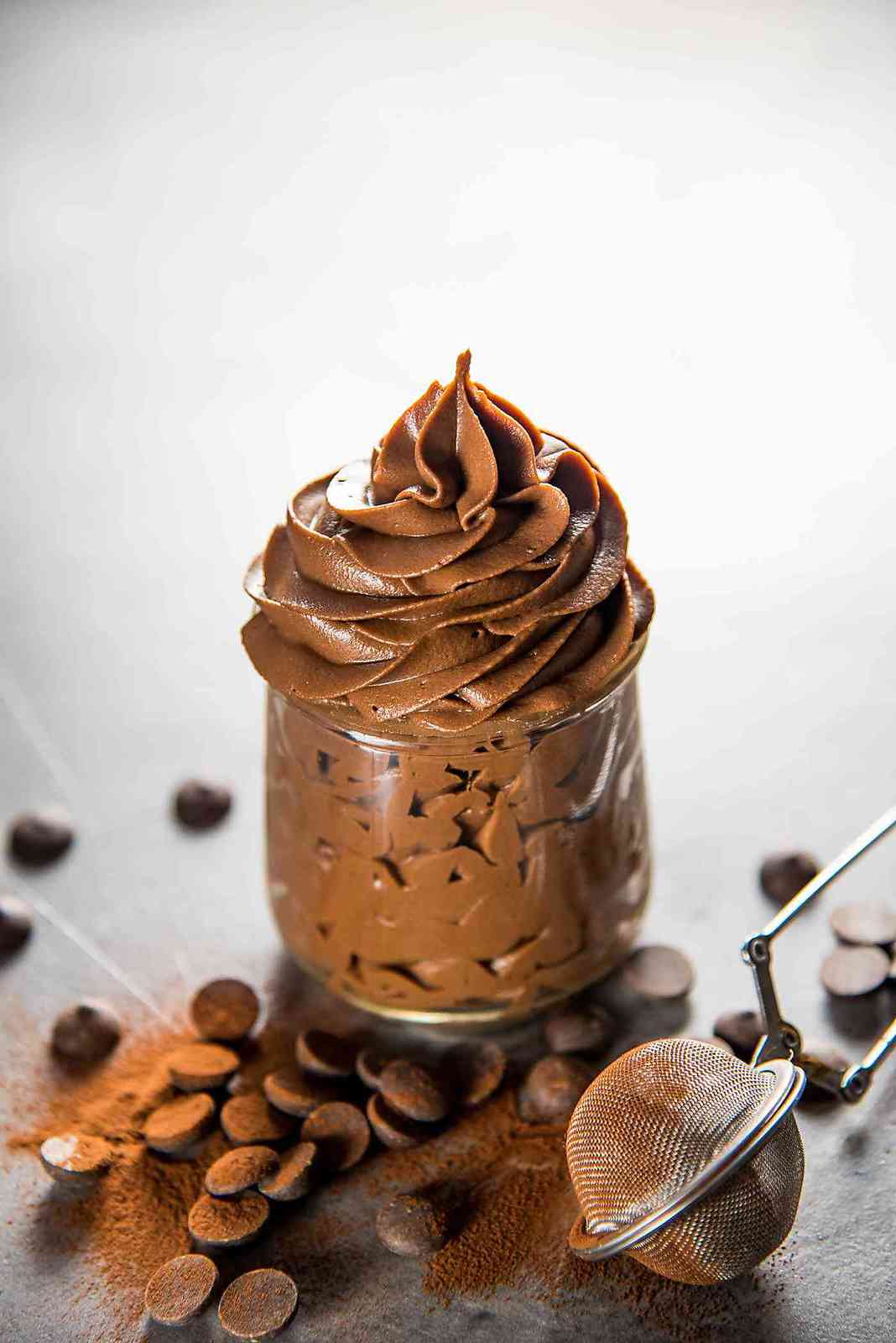
For the chocolate version, check out my chocolate pastry cream recipe. Here, I’ll show you how to make the most perfect, rich, creamy vanilla pastry cream from scratch with all the troubleshooting tips!
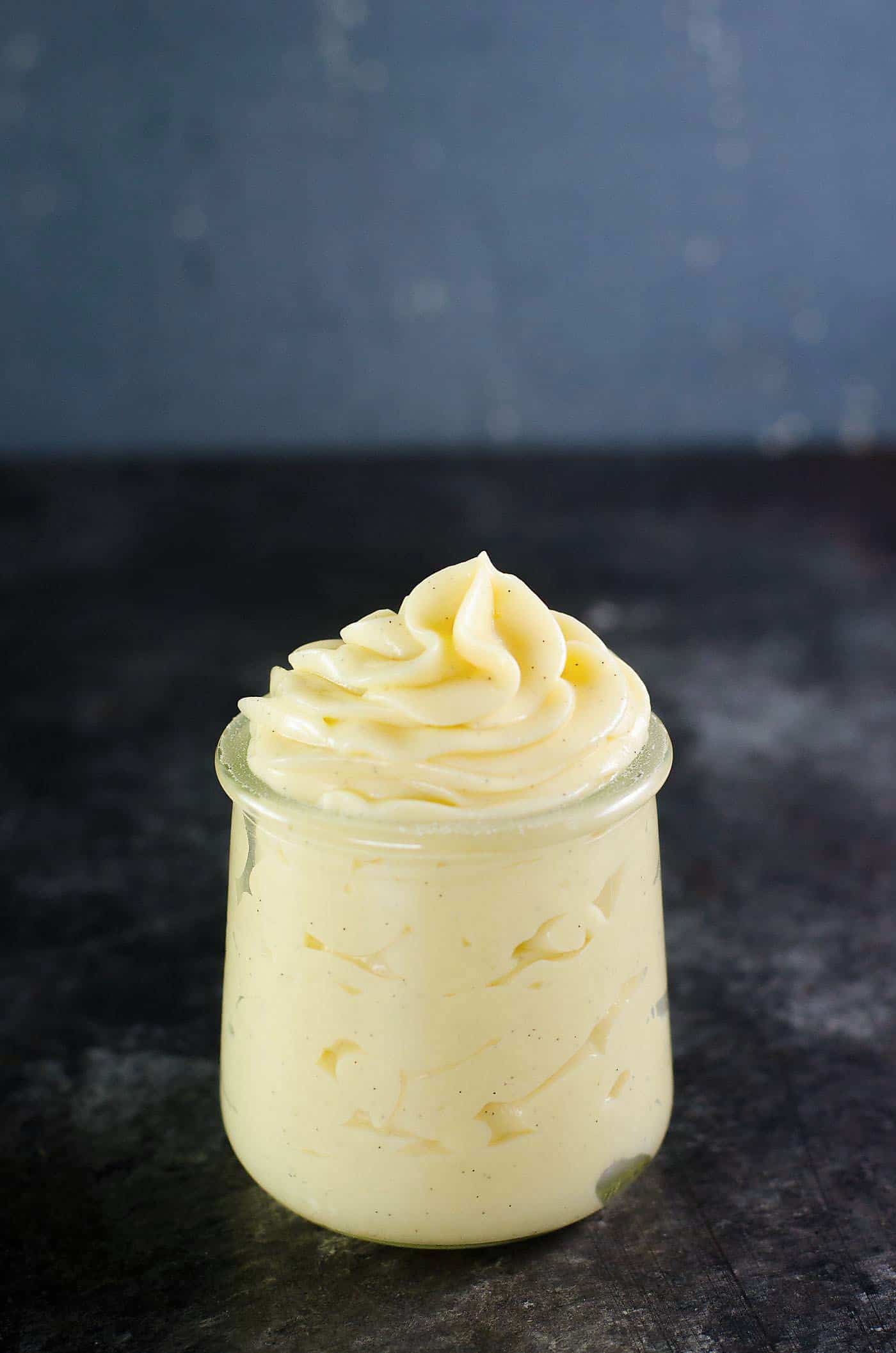
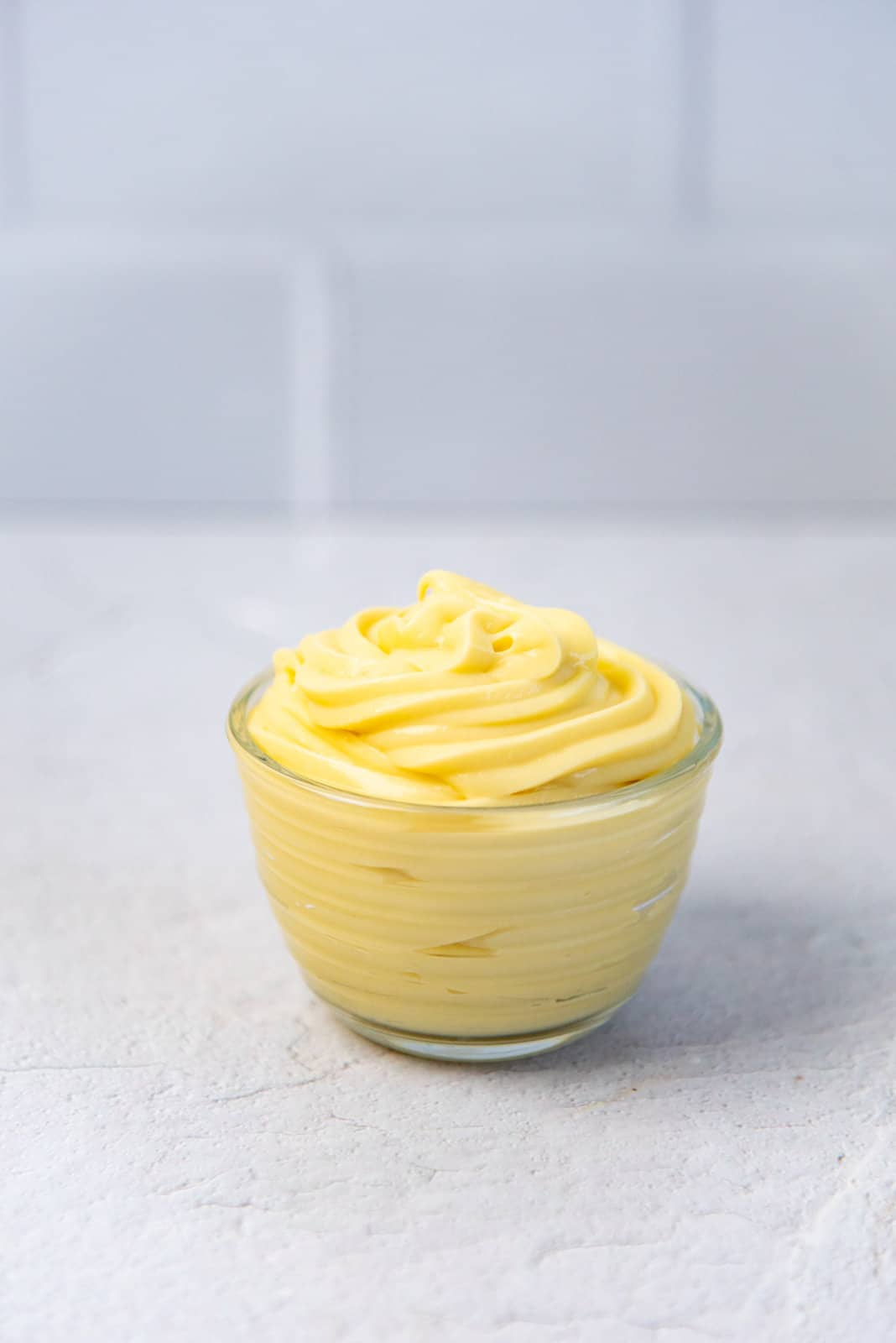
What is pastry cream?
Pastry cream (crème pâtissière) is a quintessential part of pastry making and used as a filling in many pastry recipes. Colloquially it’s also known as cream pat.
It’s an essential skill to learn if you love to bake pastries and other desserts. Creme patissiere is basically a delicious, rich, creamy custard, thickened with starch and eggs. It’s an important component for many desserts.
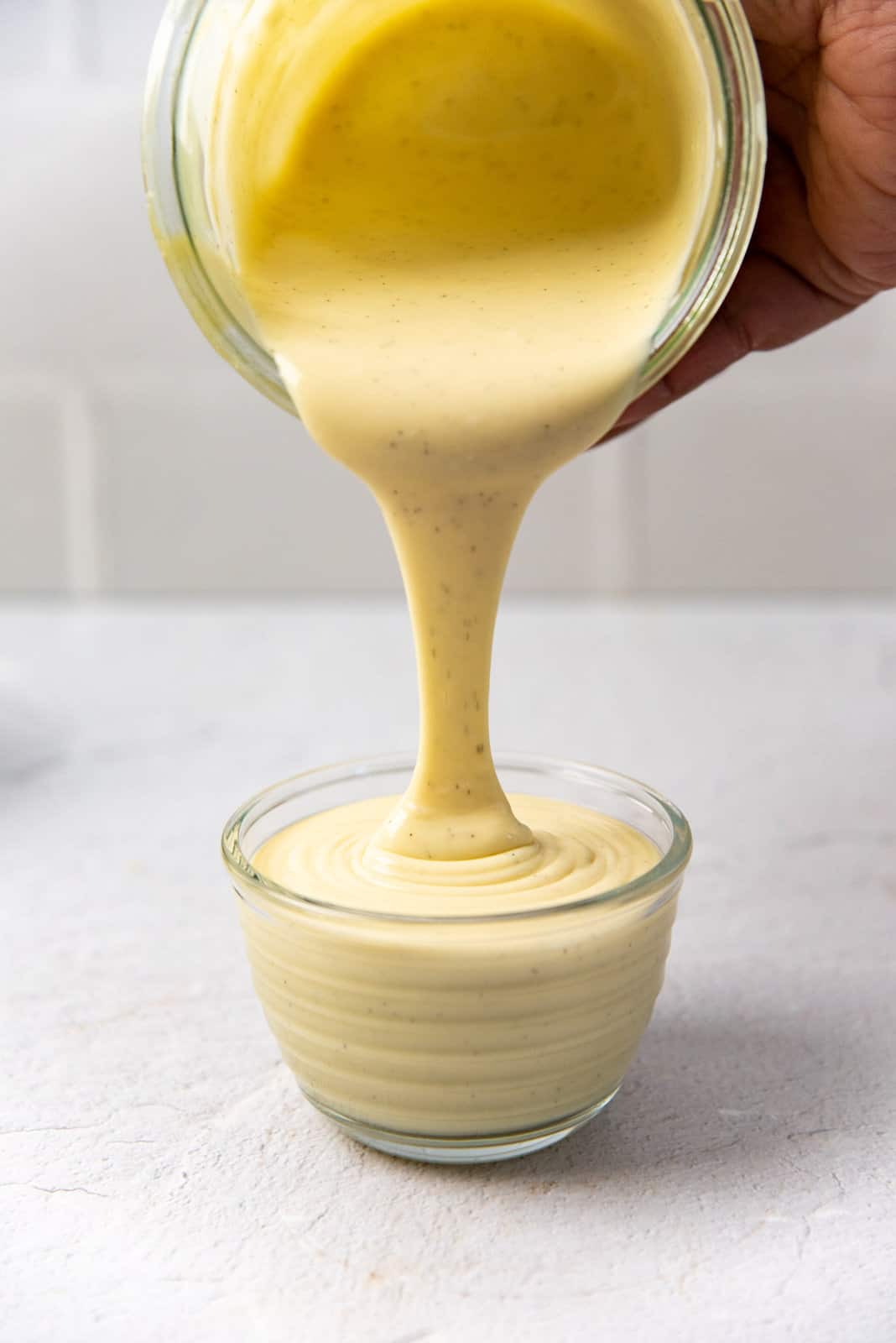
What’s the difference between pastry cream and custard?
A custard is made with milk, sugar and eggs, and pastry cream (crème pâtissière) is one of many types of custard that is made with milk, sugar, and eggs. Pastry cream is simply a thicker version of custard, due to the addition of starch in the form of cornstarch or flour.
There seems to be some confusion about custard desserts and their terminology, so I’m going to clear that up before I get into the pastry cream recipe.
- Creme Anglaise (pouring custard) is the “sauce” version of custard. It It’s not typically thickened with a starch (although some use a little cornstarch to prevent egg scrambling), and usually only uses eggs/egg yolks. It’s like a thick sauce that can be poured over desserts. This custard isn’t heated to a boil to prevent the eggs from curdling.
- Creme Chantilly is lightly whipped cream sweetened with sugar and (usually) flavored with vanilla.
- Creme Patissiere (pastry cream) is a thicker custard. It’s thickened using starch and eggs/egg yolks and can be piped. It’s mostly used to fill French pastries and desserts. Pastry cream is heated to a boil, so that it thickens well. Because of the starch, the eggs don’t curdle readily.
- Creme Legere is pastry cream (creme patissiere) with sweetened and flavored whipped cream (chantilly) added. Most people refer to crème légère as creme diplomat as well.
- Creme Diplomat is pastry cream mixed with chantilly, gelatin, and any extra flavorings (optional). It’s basically creme legere made with stabilized whipped cream.
- Creme Bavarois is a dessert on its own. It’s like panna cotta, but made with creme patissiere. It’s creme patissiere mixed with chantilly, but with extra gelatin (so that it sets like a pudding), and extra flavorings.
Crème pâtissière (pastry cream) is the base for so many pastry essentials, so I hope you give this recipe a go!
Ingredients (and ingredient notes)

- Milk – Full cream milk is preferred for better flavor. You can also mix in half milk and half cream for an even richer tasting pastry cream.
- Sugar – I use white sugar, but you can use brown sugar as well (which will change the flavor though).
- Egg yolks – Egg yolks add richness and helps to thicken the pastry cream a little.
- Cornstarch – This starch helps thicken the pastry cream to the desired thickness, while also acting as a buffer to prevent the egg yolks from curdling too quickly. Using cornstarch makes this pastry cream naturally gluten free.
- Salt – Just a pinch of salt adds depth of flavor to your pastry cream. It’s the difference between a bland tasting custard and a spectacular one!
- Vanilla – Obviously needed to add flavor. You can use vanilla extract, fresh vanilla beans, or vanilla bean paste.
- Gelatin and water – This is an optional ingredient, but gelatin will add more stability to your pastry cream, especially if you’re using it as a filling in a cake.
The importance of eggs
Eggs (specifically egg yolks) play two roles in creme patissiere (pastry cream). It adds richness (especially the yolks), and also thickens the custard.
I use large eggs in this recipe, where an egg weighs 2 oz / 57 g on average, or an egg yolk that weighs about 0.7 oz / 17 – 20 g on average. So if you’re using different-sized eggs, you can adjust accordingly. But a little extra egg (or egg yolk) won’t mess up your pastry cream.
I use 4 egg yolks from large eggs OR 3 large egg yolks, plus 1 large egg for this recipe.
This easy pastry cream is delicious and spreadable and pipeable (i.e. isn’t too stiff). If you want a RICHER tasting pastry cream then I’d suggest to use up to 5 large egg yolks instead.
This version is slightly thicker because of the extra egg yolks.
The higher the ratio of eggs to milk, the richer and better the custard will taste. BUT as soon as the balance is tipped, it will also greatly increase the chances of it turning into scrambled eggs, or turning into an omelet.
The importance of cornstarch
Pastry cream is cooked with cornstarch or flour. This helps to thicken the pastry cream further AND it also acts as a buffer to prevent the eggs from turning into scrambled eggs. But I use cornstarch here, as you need less of it AND it’s gluten free as well.
However, you still need to stir or whisk the pastry cream very frequently to prevent the eggs from scrambling. But the starch in the cornstarch will create a buffering matrix which will reduce the chances of the eggs coagulating.
The more cornstarch you add, the thicker the pastry cream will be. For example, for diplomat cream, I prefer to add much more cornstarch for a thicker pastry cream that will still be stable after mixing with whipped cream.
How to make pastry cream (with recipe tips)

Step 01 – Heat the milk
Some recipes call to scald the milk, which isn’t necessary if you’re using pasteurized milk.
However, if you’re using fresh vanilla beans, scalding the milk with the vanilla and letting it cool down a little will allow the vanilla to infuse into the milk.
I heat the milk until almost to a boil, so that it speeds up the process of dissolving the sugar and thickening. Make sure to mix the milk, to prevent the milk from burning on the bottom.

Step 02 – Mix the eggs, cornstarch, sugar together in a separate bowl
Whisk really well until you have a nice, smooth paste. I like to whisk until the egg yolk mixture turns a little pale in color. This ensures that you have NO LUMPS in the cornstarch, or the egg yolks, and will not form lumps in the hot milk.
The egg mixture being whisked until pale in color simply helps with making sure that the hot milk does not immediately scramble the egg yolks (that have not been mixed in properly).
But don’t do this too far ahead of time. I only mix it just before heating the milk, or while the milk is heating. The egg yolks will tend to “cook” in the sugar the longer you keep it together.

Step 03 – Temper the eggs
Be careful when you temper eggs with the hot milk. If you’re a beginner, you could get someone to help you whisk the egg mix while you pour the hot milk in a thin stream to temper the eggs.
Another way to temper the eggs is to keep the bowl with the egg-sugar mix on a slightly damp tea towel (to prevent slipping), and pour the hot milk from a light and small measuring cup (light enough to control with one hand).
This makes it easier to whisk the egg mix with one hand and pour hot milk with the other.
Pour hot milk, in a slow, thin stream into the egg mixture, while whisking the eggs constantly. Add just enough hot milk to warm up the egg mixture, and then use the whisk to make sure the egg mixture has been mixed in well with the milk (no egg mixture stuck to the side or bottom).

Next, pour the heated egg mixture back into the saucepan to mix with the remaining milk. Whisk to mix very well, and return the pan to the stove to thicken.

Step 04 – Thicken the pastry cream mixture
Here is the tricky part. The custard mixture should be heated to bring to a boil, BUT you absolutely must keep whisking is while the pastry cream is cooking.
It’s important to keep the milk-egg mix moving while it’s heating. The eggs in the milk will curdle when it comes closer to the boiling point, and you do NOT want that.
The whisking will help keep the custard smooth. I find that a good whisk is perfect at this, as long as you whisk constantly and well.
If you’re new to making pastry cream, use a low heat to cook the pastry cream. If the milk is “setting” at the bottom of the pan and creating scrambled-like lumps, then the heat is too high OR you’re not mixing the custard fast enough and causing it to “set” too quickly.
The bubbles or foam on top of the pastry cream mixture will reduce as it starts to thicken as well, so keep an eye on that as you whisk your mixture.
If you feel that the pastry cream is heating up too fast, lower the heat of the stove, and remove the pot from the heat periodically while stirring to re-distribute the heat in the custard and make it smooth again.
The pastry cream will thicken up just before coming to a boil.

Step 05 – Bring the vanilla pastry cream to a boil
Unlike other custards, pastry cream needs to be brought to a boil. This is essential for the consistency of the custard. The cornstarch is only able to reach its best thickening ability when it has been boiled in the liquid. This will also ensure that the cornstarch cooks through and does not leave any starchy taste.
When the pastry cream comes to a boil, the starch in the cornstarch expands, forming starch bonds that thicken and stabilize the pastry cream. Heat also allows the eggs to form strong protein bonds.
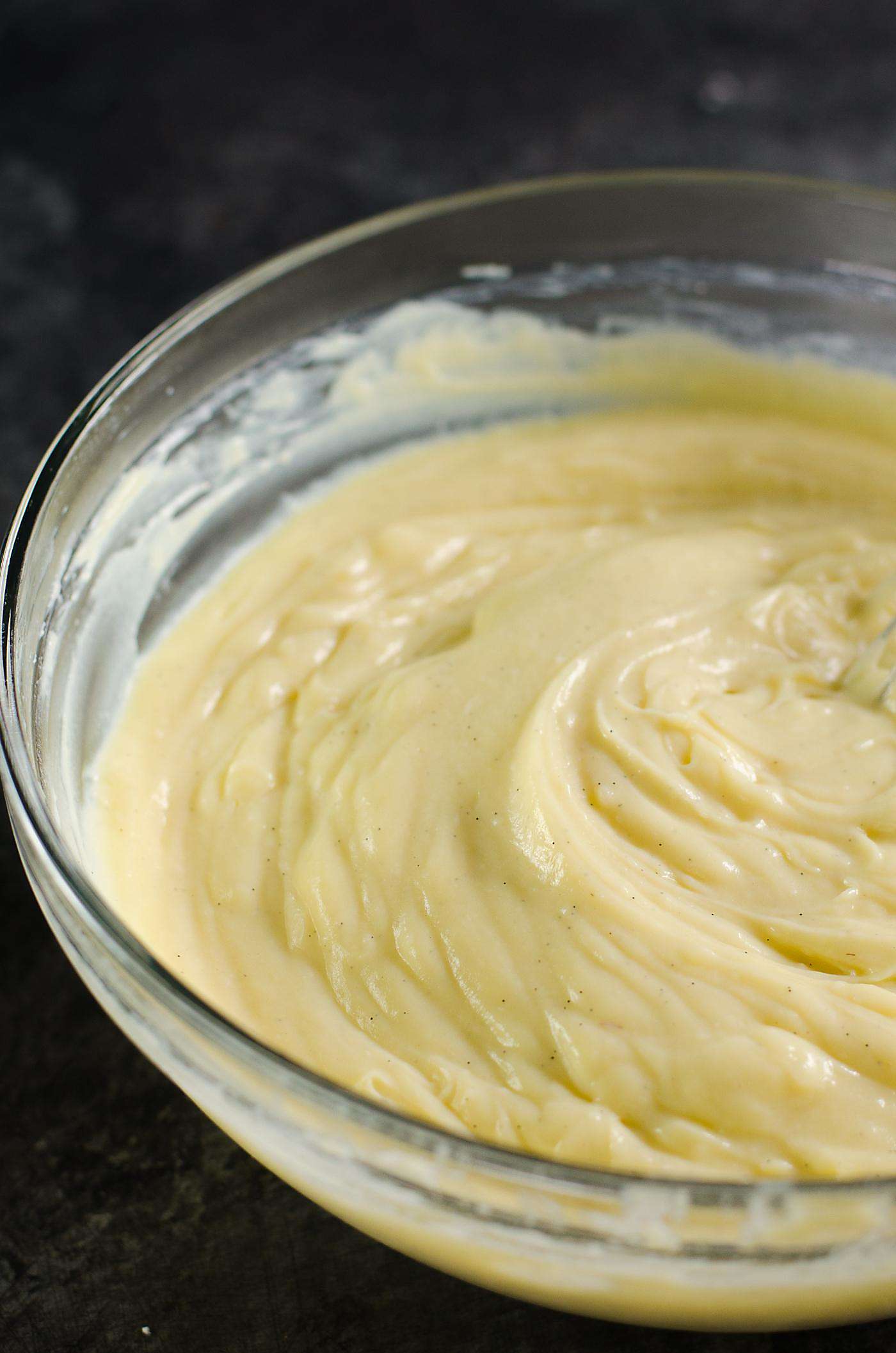
You will know that the pastry cream has come to a boil when it releases large thick bubbles on the surface, kind of like bubbling lava. I like to say that the custard makes “blub blub” sounds.
Once these bubbles break the surface, keep stirring continuously and let the pastry cream cook at least for a further 1 minute at low-medium heat.

Step 06 – Add the butter and gelatin (if using)
As soon as the cutard is done, turn off the stove and immediately add the butter and bloomed gelatin. Bloomed gelatin is gelatin that has soaked in water. While the gelatin is optional, the butter is not.
Whisk in the gelatin and butter well until it has dissolved and mixed in with the pastry cream very well. The residual heat in the custard and the turned off stove will be enough to melt the gelatin and butter.

Step 07 – Strain the pastry cream
It’s not necessary to strain the creme patissiere unless it’s lumpy, BUT it’s still a good extra measure to make sure the pastry cream is silky smooth. Another way to remove any lumps is to use a stick blender to blend the custard WHILE it’s still hot.
Place a fine-mesh sieve over a bowl, and pour the custard through the sieve into the bowl. You can use a spatula to push the custard through as well.

Step 08 – Store and cool down the pastry cream
Spread the custard evenly inside the bowl or container, and then cover it with a piece of plastic wrap or parchment paper. It’s ABSOLUTELY crucial that the plastic wrap is in contact with the entire surface of pastry cream to prevent a skin from forming as the pastry cream cools down.
Once the pastry cream has cooled down a little, then transfer it to the fridge to cool completely.
To allow the pastry cream to cool down quickly, spread it in a large bowl or shallow pan, so that the custard layer is fairly shallow.

Step 09 – Prepare the pastry cream for use
Once the pastry cream is chilled, you will find that the pastry cream sets a bit. If you added gelatin, the pastry cream will be firmer than without gelatin. Adding more cornstarch will also result in a firmer chilled custard.
Remove the chilled custard from the fridge and scrape the set custard into a large bowl. Then, use a whisk to break and mix the custard to make a smooth pastry cream.
The pastry cream is now ready to be used!
What is pastry cream used for? (Desserts with pastry cream)
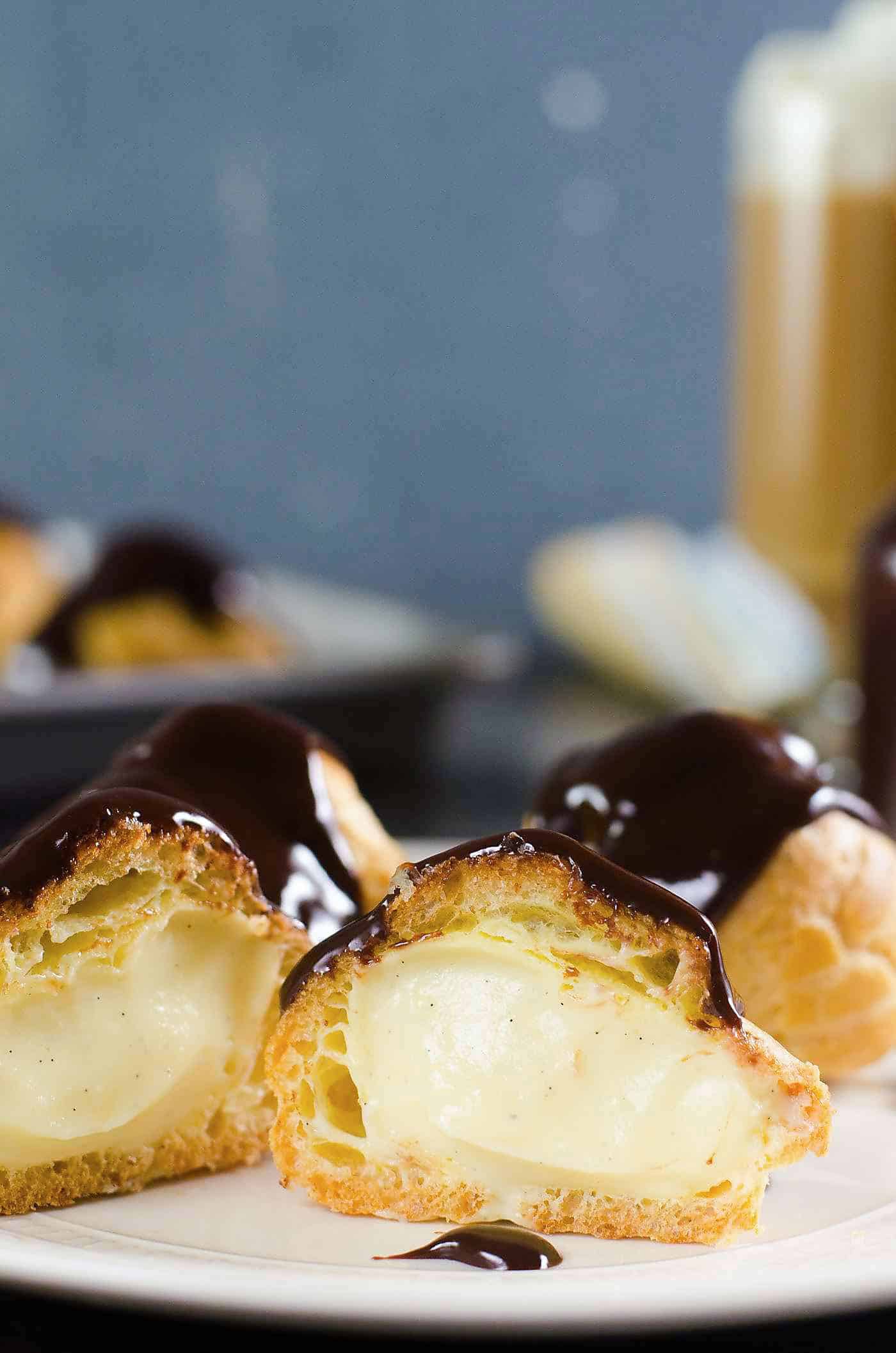
- To fill chocolate eclairs
- As filling for cakes such as Boston cream pie
- Filling for fruit tarts such as this strawberry tart
- To make mille feuille
- To make vanilla pudding or chocolate pudding
- As a filling for cakes (you may need to use buttercream as a dam to ensure the custard doesn’t squeeze out of the cake layers).
- As a filling inside croissants.
- Making baked custard breads like this brioche tart.
- To make crème mousseline for this Paris Brest pastry.
- It’s also the base for my banana pudding and banana cream pie.
- Butterscotch pastry cream is used to make this delicious butterscotch mousse.
How to use pastry cream with different textures as a filling
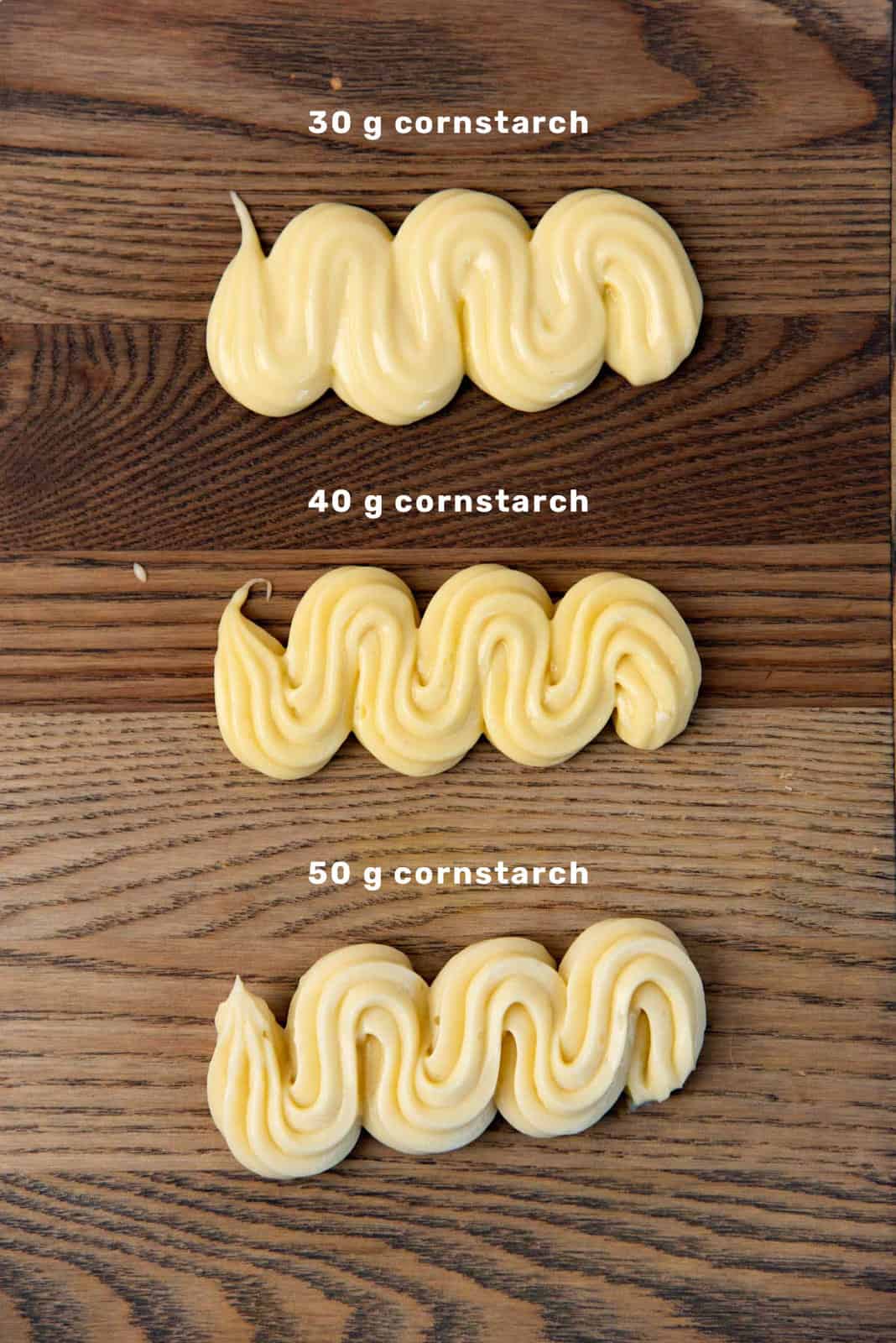
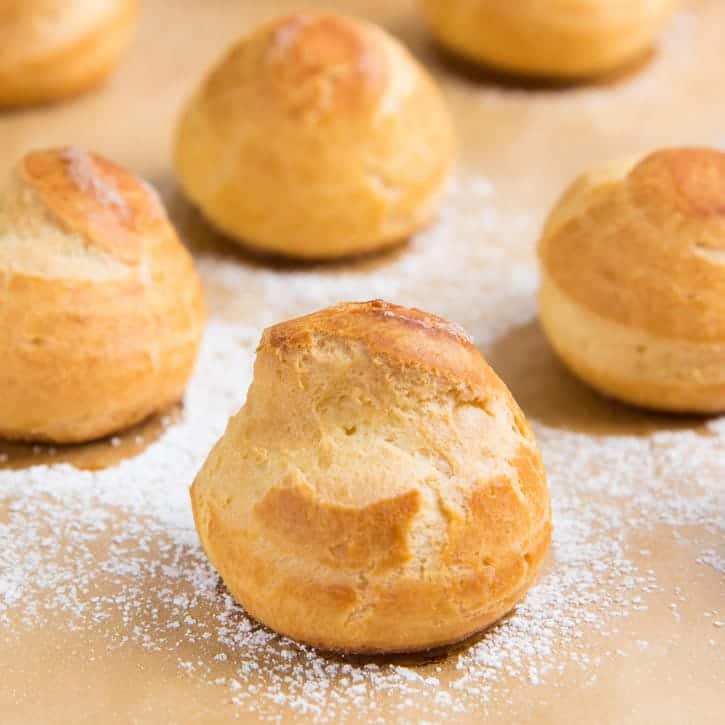
For a softer pastry cream filling, I like to add 30g of cornstarch to my pastry cream. This is great for profiteroles, or even as a thick topping for desserts. To make this more stable, but still creamy you can add a little gelatin.

For a firmer pastry cream, I add 40 g of cornstarch. This is great to use as a cake filling for lighter layer cakes, but I would also add a little gelatin to make it more stable.
You can also use a buttercream dam, and fill it with this pastry cream as well. This can also work as a filling for smaller tarts, eclairs, or profiteroles.
You can also use 50 g of cornstarch if you like an even thicker, more stable pastry cream.
This pastry cream will even pipe well and keep its shape fairly well. Great for cake fillings when used with a little gelatin. I also use this pastry cream as a base for making diplomat cream or chiboust cream.
The thickest pastry cream that I make is with 60 g of cornstarch. This pastry cream is EXETREMELY stiff.
I use this as a base for mousseline cream or German butter cream, as the extra butter will make this pastry cream much lighter.
Both diplomat cream or chiboust cream can also use this pastry cream as a base, but I prefer 50g for those versions as mentioned above.
Pastry cream with different sweetness levels
I personally don’t like my pastry cream to be too sweet. So, I only add 6 tbsp / 70 g of sugar for every 2 cups of milk.
Feel free to adjust the sweetness to your taste. This will change depending on what I will be using the pastry cream for as well.
Recipe variations
- Salted caramel diplomat cream – a lighter and sweeter version of this pastry cream.
- Banana pastry cream – This is the base for my homemade banana pudding that tastes HEAPS better than the Magnolia Bakery banana pudding!
- Butterscotch pastry cream – Use to make butterscotch mousse.
- Matcha pastry cream – Add culinary grade matcha to the milk while making pastry cream.
- Strawberry pastry cream – Add freeze dried strawberry powder to the custard to give it a lovely strawberry flavor. Remember that the dry powder will also contribute to making the custard a little thicker (depending on how much you add). Then use it to fill these strawberry cream puffs!
- Lemon pastry cream – For a lovely lemony hint in your pastry cream, add grated lemon zest to the milk when making the pastry cream.
- Orange pastry cream – Just like with lemon pastry cream, add orange zest to the milk when making the custard for a orange pastry cream.

Dietary variations
- Dairy free pastry cream – If you’d like to make this recipe dairy free, substitute the milk with a plant-based milk such as almond milk, coconut milk, cashew milk, or even soy milk. And substitute the butter with a dairy free or vegan butter.
- Vegan pastry cream – Vegan pastry cream is possible by replacing the eggs with more cornstarch. How much cornstarch to be used will depend on how thick you want the pastry cream to be. Also use a dash of kala namak to give the pastry cream at least a little hint of the egg flavor. But remember, without the eggs, the flavor of the custard will be different. Also substitute the milk and butter with vegan substitutes and skip the gelatin.
- Eggless pastry cream – Eggless pastry cream is also possible if you substitute the eggs with cornstarch. However, without eggs, the custard will lose flavor. Just as I mentioned in the vegan version, add a pinch of kala namak.

Storage instructions
Never keep the vanilla pastry cream outside. It’s made with milk and eggs that go bad when not refrigerated. The pastry cream will go bad if stored at room temperature, so it is important to store it in the fridge as soon as you can.
I prefer not to store pastry cream in the freezer, UNLESS I add gelatin. The starch in the pastry cream can cause the custard to split as it thaws out, but gelatin acts as a stabilizer.
There are some who have stored cream pat in the freezer and have still got good results, but I haven’t tried it myself WITHOUT gelatin.
I prefer to store pastry cream in the fridge, in an airtight container, with a piece of plastic wrap covering the entire surface of the pastry cream. It will last about 3 – 4 days in the fridge. This means you can make vanilla pastry cream ahead of time for your recipes too.
Frequently asked questions and troubleshooting
Is this recipe gluten free?
This pastry cream recipe is gluten free, because I use cornstarch instead of flour to thicken it. Some pastry cream recipes use flour, or both flour and cornstarch, but that’s not necessary.
I also find that using cornstarch alone makes the pastry cream less likely to taste floury, which is a common issue with pastry cream made with flour.
Can I use flour instead of cornstarch?
Yes! As stated above, some recipes make pastry cream with flour. In theory, you will need to increase the flour 3-fold to get the same thickening effect as cornstarch.
I personally have not made this recipe with flour, so it will take some experimentation to determine how much flour is needed.
What kind of vanilla is best to use for this recipe?
Since vanilla is the key flavoring in this pastry cream recipe, PLEASE make sure to use good quality vanilla. It’s the one flavoring that I never skimp out on.
Use a good vanilla extract and try to avoid vanilla essence (usually imitation flavor), and if you can use vanilla bean paste or vanilla beans, even better.
My pastry cream is lumpy?
This happens if you’ve heated the pastry cream at too high of a temperature or you didn’t stir it well when it was coming to a boil.
If the custard only formed a few lumps, don’t worry, whisk it VERY well to get rid of the lumps (off the heat), or if that doesn’t work, pass it through a sieve as soon as you’ve cooked it. You can also use a stick blender to blend the custard while it’s still hot to remove lumps as well.
My pastry cream is too thin?
This happens if you haven’t cooked the pastry cream properly. This recipe makes a pastry cream that is spreadable and pipeable, but it’s not stiff enough to hold its shape.
If you did want a stiffer and thicker vanilla pastry cream, you can increase the amount of cornstarch as mentioned above in the post and/or add gelatin as well.
If you added extra cornstarch and it’s still not thick enough, you absolutely need to allow the pastry cream to bubble (boil) and cook for a minute while whisking to activate the cornstarch thickening properties.
My pastry cream has discolored (looks gray in color)?
If you used an aluminum pot to make the custard, chances are that some of that aluminum can get into the pastry cream. Use a stainless steel pot, a copper pot, or a non-stick pot.
My pastry cream tastes like cornstarch?
If you did not cook the pastry cream properly to activate the cornstarch, then it will taste a little starchy.
My pastry cream is too thick?
Chances are you added too much cornstarch. If you compacted the cornstarch into your measuring spoon, or used an incorrect measuring spoon, this could happen.
You can fold in a little stabilized chantilly cream to loosen up the pastry cream to achieve the right consistency – like a creme diplomat.
My pastry cream feels grainy?
This happens if the pastry cream was cooked at too high of a heat and it curdled at some point. Even though you whisked the mixture to break down the curdled egg, and passed it through a sieve, some of the curdled egg is still there.
It has dispersed through the custard making it feel grainy. Unfortunately, there is no fix for this and it needs to be made again.
Can I use this pastry cream as a cake filling?
As the recipe stands, you can use this as a cake filling ONLY if you have a buttercream damn along the edge of your cake. The pastry cream is too soft and will run out the sides if not.
If you want to have a thicker pastry cream as a filling, then I recommend making the pastry cream with 40 – 50 g of cornstarch. Adding about 1 – 2 tsp of bloomed gelatin will also increase the stability of the pastry cream to be used as a filling.
And if the cake layers are heavy, I ALWAYS recommend a buttercream dam simply because the pastry cream will squeeze out the sides if the cake layers are heavy.
Equipment and tools I use for this recipe
- Whisks and silicone spatula – to stir the pastry cream
- Pyrex glass containers with lids – to store the pastry cream (remember to cover the surface with plastic wrap).
Recipe
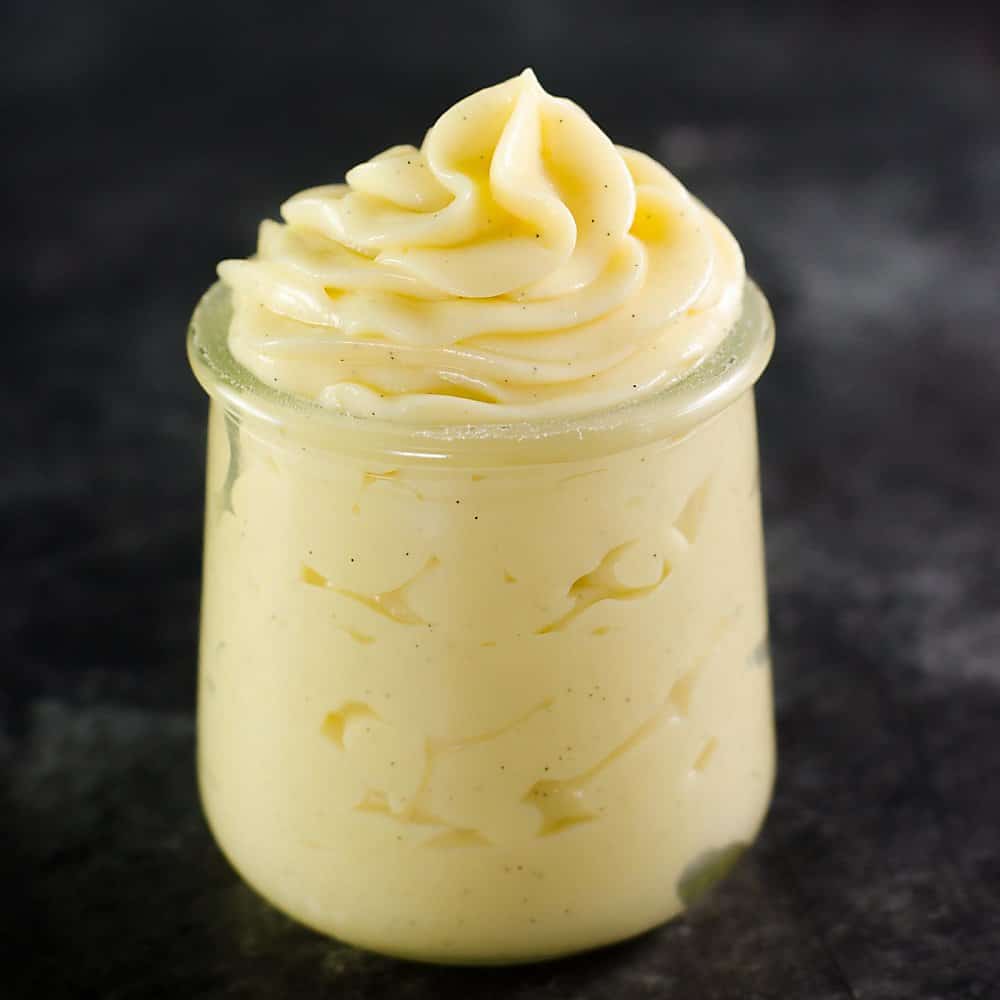
Creme Patissiere (Vanilla Pastry Cream)
US based cup, teaspoon, tablespoon measurements. Weight measurements are recommended for accurate results whenever available.
Common Measurement ConversionsIngredients:
- 480 mL milk 2 cups (Preferably whole milk, see recipe notes)
- 75 g sugar 6 tbsp (Use more if you want a sweeter pastry cream. This recipe isn't too sweet)
- Pinch sea salt kosher salt is fine too
- 30 g cornstarch (cornflour) 3 tbsp. packed tablespoons (4 tbsp / 40 g for a stiffer pastry cream OR you can also add up to 50 g / 5 tbsp if you want an even thicker, more stable pastry cream)
- 15 mL vanilla bean paste or extract 1 tbsp. 1 vanilla bean pod
- 4 large egg yolks about 17 – 20 g each (please see recipe notes)
- 43 g unsalted butter 3 tbsp, softened
Adding gelatin (optional)
- 45 mL water 3 tbsp
- 5 g powdered gelatin 1½ tsp. 225 bloom strength
Instructions:
- If using vanilla bean pods, split the bean and scrape the vanilla seeds / caviar out of the beans.15 mL vanilla bean paste or extract
- Add the bean and caviar with the milk into a saucepan. Heat the milk over medium high heat and bring it to a simmer, almost to a boil (see recipe notes below).480 mL milk
- While heating the milk, place the sugar, egg yolks, cornstarch, and salt in a bowl. Whisk until you have a thick, smooth mix. (If you're using vanilla bean paste or extract, add it to the egg mix too). Place the bowl with the egg mix on a towel or napkin (to prevent the bowl from slipping while whisking in the next step), and set aside until the milk comes to a boil (almost to a boil).75 g sugar, Pinch sea salt, 30 g cornstarch (cornflour) , 4 large egg yolks, 15 mL vanilla bean paste or extract
- As soon as the milk starts to steam or simmer, remove it from the heat. Slowly pour about a half of the hot milk in a thin stream into the egg mix, WHILE WHISKING CONSTANTLY to temper the egg mix. When the eggs have been tempered, add the egg mix back into the hot milk in the saucepan.
- Heat the custard base over medium heat, while whisking vigorously until it starts to thicken. This should take about 1 – 2 minutes depending on the heat of your stove and size of your saucepan. Make sure to reach the corners of the saucepan so that the custard does not catch at the bottom of the pan.
- While whisking, let the custard come to a boil (the custard will release bubbles). You may need to stop whisking from time to time for a few seconds to see if the custard is "bubbling". Look for big "bloops" breaking the surface of the custard (see pictures in the post for reference).
- Lower the heat and cook for a further 1 – 2 minutes after you see the first bubbles break the surface, and make sure to whisk constantly.
- Remove from the heat and add the butter. Whisk in the butter until it’s completely mixed in.43 g unsalted butter
- Pour the custard into a bowl and immediately cover the surface with plastic wrap, making sure the plastic wrap is touching the whole surface. This is to prevent a custard skin from forming on top. You can also choose to pass the custard through a sieve to remove any lumps.
- Let the custard cool down to room temperature and then let it chill in the fridge for a few hours, until completely chilled.
- The custard will "set" after chilling. So it's important to whisk the pastry cream to make it smooth again before using.
- Use as needed after the pastry cream has been chilled.
Adding gelatin
- Gelatin should be added to the pastry cream WHILE IT'S STILL HOT. Please read recipe notes below on whether adding gelatin to your pastry cream is the right option for you.
- While the milk is heating (for the pastry cream), place the water in a small bowl.45 mL water
- Sprinkle the gelatin over the water and use a toothpick or skewer (something slim) to mix the gelatin into the water so that there is no dry gelatin. Let this sit for at least 10 minutes to bloom (or until the pastry cream has cooked and thickened).5 g powdered gelatin
- While the pastry cream is hot, add the bloomed gelatin along with the butter, and thoroughly whisk to make sure all the gelatin has dissolved in the hot pastry cream.
- Cover the pastry cream with plastic wrap (same as above), and keep an eye on the pastry cream. Let it come to room temperature and then use the pastry cream as needed. If you chill the pastry cream it will harden as the gelatin sets.
Recipe Notes
- For a thicker and richer vanilla creme patissiere, you can add up to 5 egg yolks.
- For a richer taste, you can also substitute half of the milk with heavy cream or 18% fat cream (half and half).
- Increase the amount of cornstarch to 50 g for a thicker pastry cream.
- For a dairy-free version, substitute the milk and butter with a plant-based milk such as almond milk, coconut milk, cashew milk, or even soy milk, and use a plant-based butter.
- You can choose to bring the milk to a boil, or just let it come to a simmer. It was important to boil the milk back in the days when milk wasn’t pasteurized. However, I have not noticed any difference in the pastry cream consistency when using boiling milk vs steaming hot milk.
- Here’s the recipe for classic vanilla diplomat cream (crème diplomat).
- Here’s the recipe for classic chocolate pastry cream.
Adding gelatin to your pastry cream
You can absolutely add gelatin to your pastry cream for any reason. If you allow your pastry cream to cool in the fridge, the gelatin will set. You can still re-whisk and use this pastry cream as normal, but it won’t “set” the same way as before, but will be thicker and more stable than if you hadn’t used gelatin at all. For proper setting properties, allow the pastry cream to cool to slightly warmer than room temperature. Then you may use it for any application you please. But this means you cannot make it ahead of time. You can add whipped cream to it to make diplomat cream (and you do not have to add extra gelatin to the whipped cream). You may also add Italian meringue to make chiboust cream as well.Nutrition Information:
“This website provides approximate nutrition information for convenience and as a courtesy only. Nutrition data is gathered primarily from the USDA Food Composition Database, whenever available, or otherwise other online calculators.”












Leave a Reply